
Evening in the Limburg Kempen — History & Facts
This sentiment resonates deeply within the landscape, where delicate hues mask an underlying tension, a reminder of nature’s duality. Look to the heart of the canvas, where twilight descends upon the rolling hills, the sky ablaze with shades of amber and violet. The soft glow of the setting sun bathes the scene in warmth, drawing you into the tranquil yet haunting atmosphere. Notice how the gentle curves of the landscape contrast against the sharp silhouette of a distant tree line, creating a visual tension that mimics the balance between serenity and turmoil. In the foreground, the playful dance of light across the water invites contemplation.
Yet, the stillness of the lake belies an unsettling echo of what lurks beneath its surface. The golden reflections may enchant the eye, but they also suggest a hidden violence—perhaps a tumultuous history etched within the land itself. This juxtaposition of beauty and darkness compels the viewer to question the narratives woven into every landscape. Created in the 19th century, during a time when romanticism and realism often intertwined, the artist crafted this piece while navigating the rapidly changing world around him.
Influenced by the beauty of the Limburg Kempen, he sought to capture both its allure and its brooding undercurrents. As industrialization began to reshape the countryside, Coosemans found himself reflecting on the fragility of nature amidst human encroachment, revealing a deeper commentary on the landscape's resilience and vulnerability.
More Artworks by Joseph Théodore Coosemans
Browse all →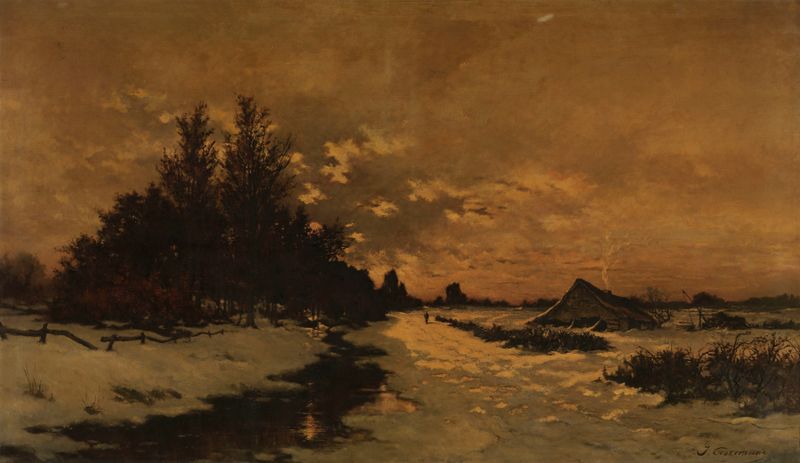
A Winter’s Day in the Kempen
Joseph Théodore Coosemans
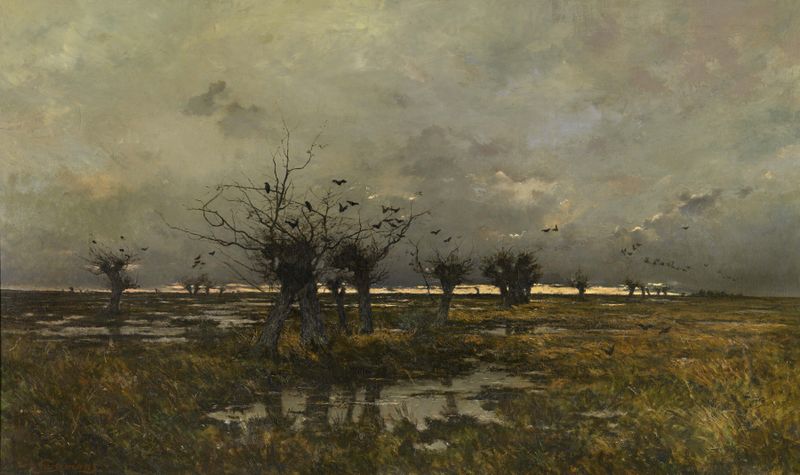
Evening in the Limburg Kempen
Joseph Théodore Coosemans
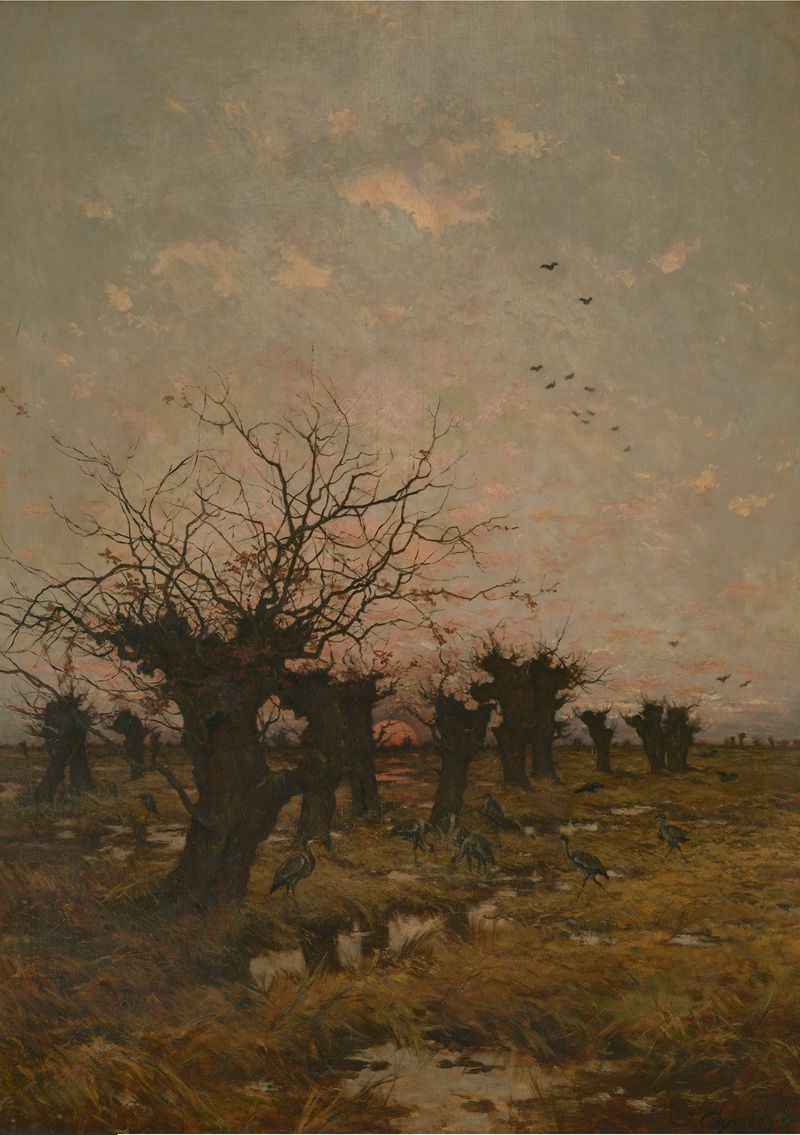
Sunset in the Kempen
Joseph Théodore Coosemans
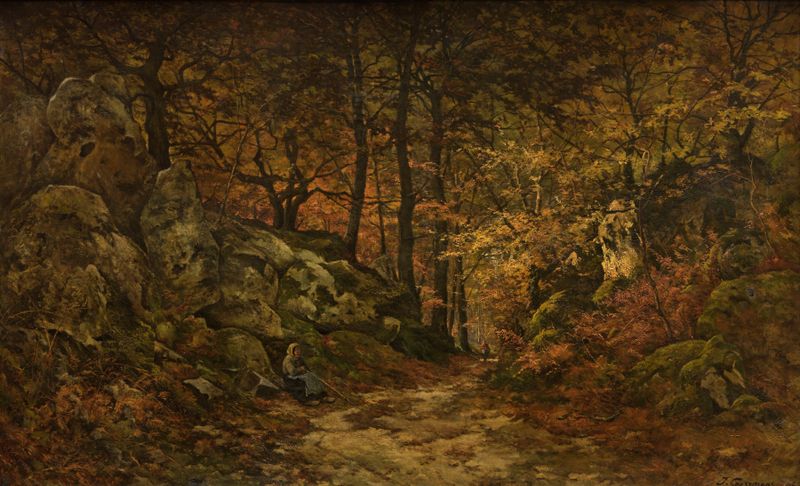
The Gorge aux Loups in Fontainebleau
Joseph Théodore Coosemans
The Ghent-Terneuzen Canal in Ghent
Joseph Théodore Coosemans
Ray of Sun after the Storm
Joseph Théodore Coosemans





