
A winter’s day outside Haarlem — History & Facts
Could a single brushstroke hold eternity? In A winter’s day outside Haarlem, the movement captured in the white whispers of snow and the dance of figures in the landscape invites us to ponder our connection to fleeting moments. Look to the left at the soft outline of a distant town, its rooftops dusted with a gentle layer of snow. Notice how the light falls upon the shimmering surface, creating an interplay of luminous whites and muted browns that speak to the chill of the season. The composition draws your eye across the expanse, leading you through a narrative of activity—figures skating, children playing, a man tending to his horse—all framed by the stark beauty of a winter’s day. Within this serene tableau, contrasts emerge subtly yet powerfully.
The warmth of human interaction stands in stark relief against the cold stillness of nature, echoing the tension between solitude and community in winter. Tiny details—a young boy's laughter, the rhythmic glide of skaters—imbue the scene with movement, reminding us that life thrives even in the frost. Each brushstroke encapsulates a moment of joy and togetherness, suggesting that winter, often seen as a season of dormancy, is vibrant with life. Isaac van Ostade painted this work between 1636 and 1649, during a time when Dutch genre painting was flourishing.
Living in Haarlem, he was surrounded by a burgeoning art scene focused on the everyday life of ordinary people. This period marked a shift toward more intimate portrayals of landscapes and the human experience, blending realism with an appreciation for the beauty in simplicity.
More Artworks by Isaac van Ostade
Browse all →
A Street in a Village or Town
Isaac van Ostade
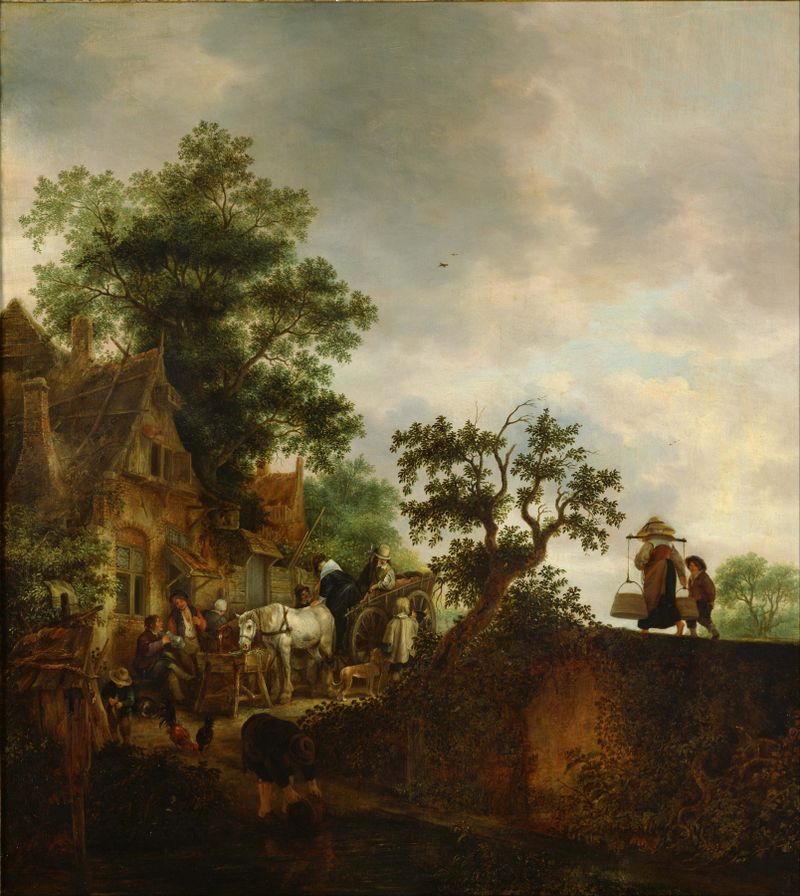
Travellers Halting at an Inn
Isaac van Ostade

Workmen before an Inn
Isaac van Ostade
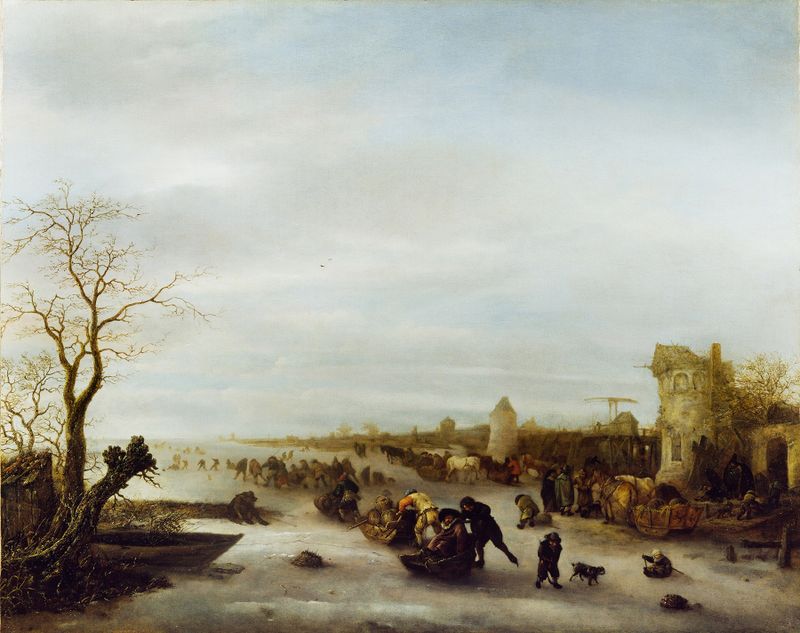
A Winter Scene
Isaac van Ostade
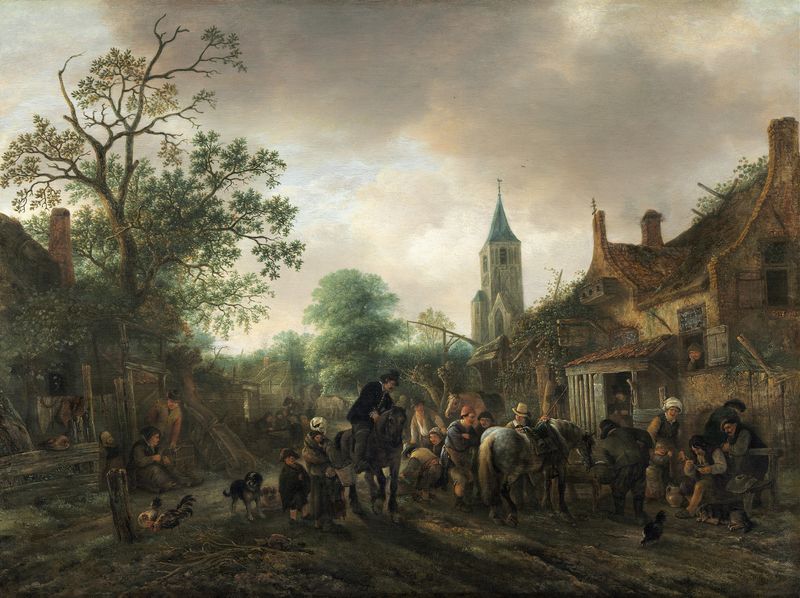
The Halt at the Inn
Isaac van Ostade

Country inn with a horse at the trough
Isaac van Ostade
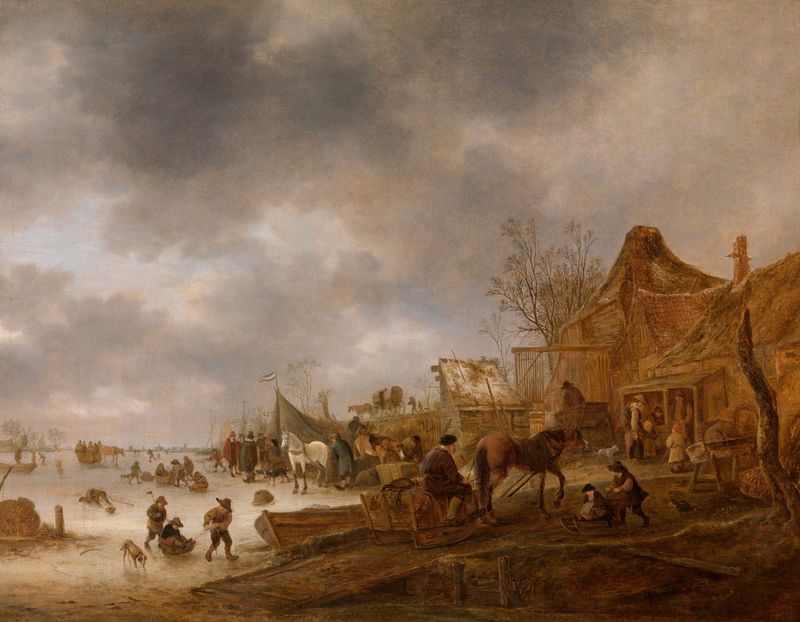
Winter Landscape
Isaac van Ostade
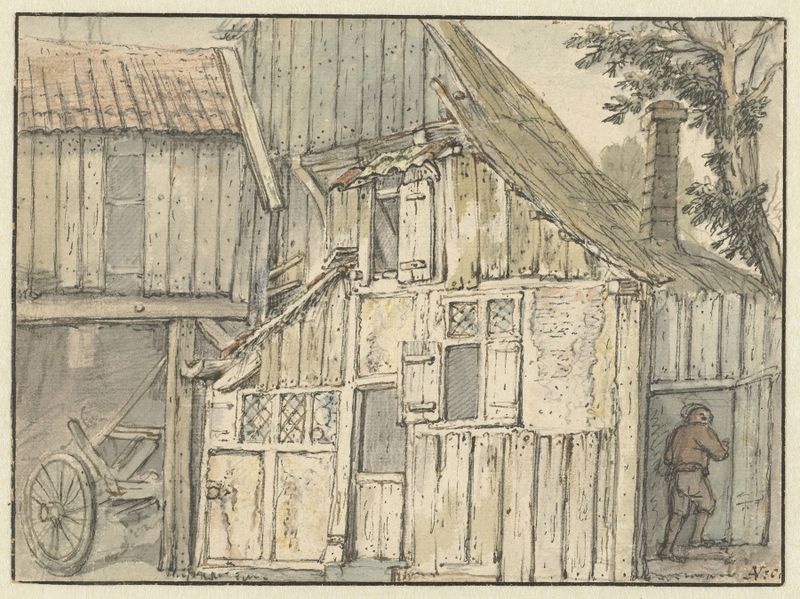
Gevel van een boerderij
Isaac van Ostade
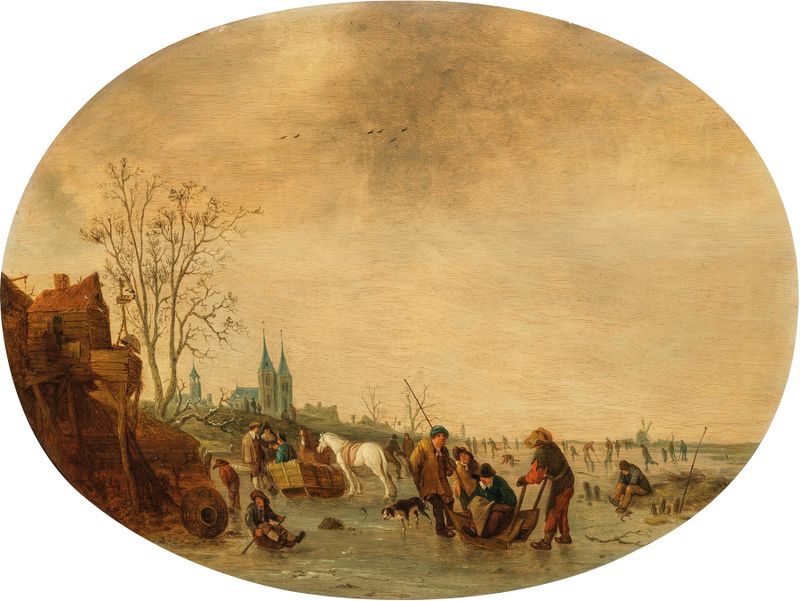
A winter landscape with skaters on the ice
Isaac van Ostade
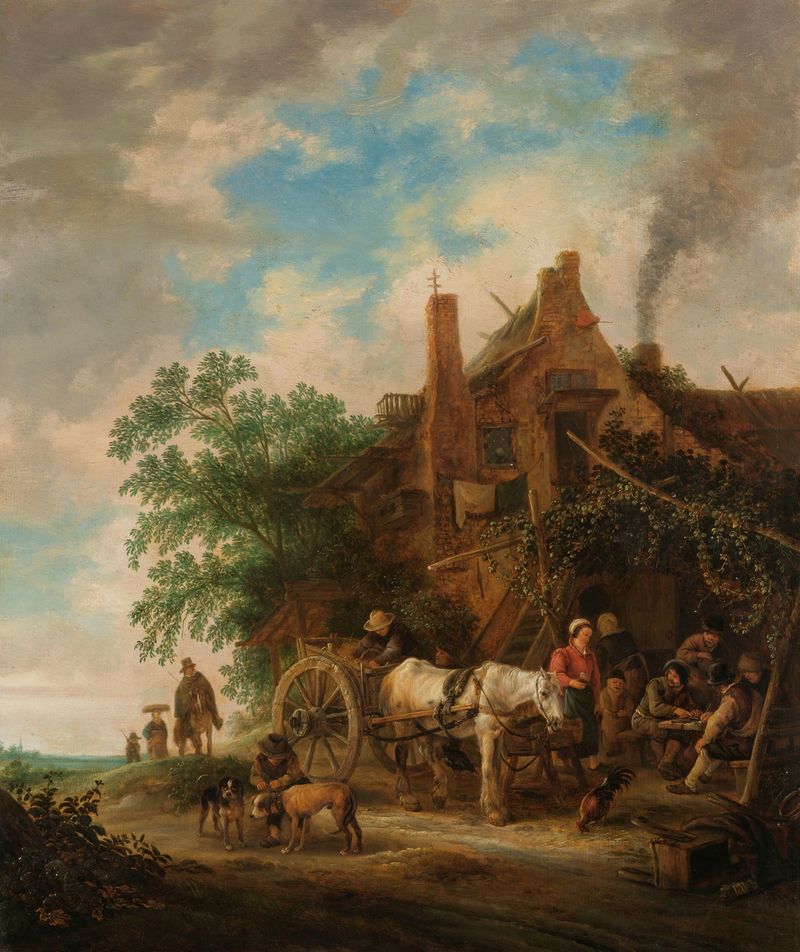
Country inn with horse and wagon
Isaac van Ostade





