
Country inn with a horse at the trough — History & Facts
Did the painter know this moment would outlive them? The gentle interplay of rural life captured on canvas invokes awe, crystallizing a fleeting instant in time that resonates across centuries. Look to the right at the weathered inn, its sturdy beams standing witness to the quietude of the countryside. Notice how the light spills over the thatched roof, casting soft shadows on the cobblestones below. The horse, with its glossy coat glistening in the soft glow, drinks peacefully at the trough, embodying the tranquil harmony of the scene.
Van Ostade’s use of earthy tones – rich browns and greens intermingled with touches of warm amber – draws your gaze around the composition, inviting a sense of serenity and connection to the land. Delve deeper into the painting and you’ll uncover layers of meaning. The horse at the trough symbolizes sustenance, both literal and metaphorical, representing the symbiosis of man and nature. The presence of the inn, a gathering place, reflects the community's social fabric, suggesting moments of shared stories and laughter.
Yet, there’s a quiet tension in the stillness, hinting at the underlying struggles of rural life, where peace is both sought and fleeting. In 1643, the artist was immersed in the vibrant tapestry of Dutch Golden Age painting, working in Haarlem. At this time, the art world was shifting towards intimate depictions of daily life, and Van Ostade was embraced for his ability to infuse familiarity and warmth into his scenes. This work embodies a moment of cultural significance, where leisure and labor intertwine, echoing the broader societal transformations occurring in the Netherlands.
More Artworks by Isaac van Ostade
Browse all →
A Street in a Village or Town
Isaac van Ostade
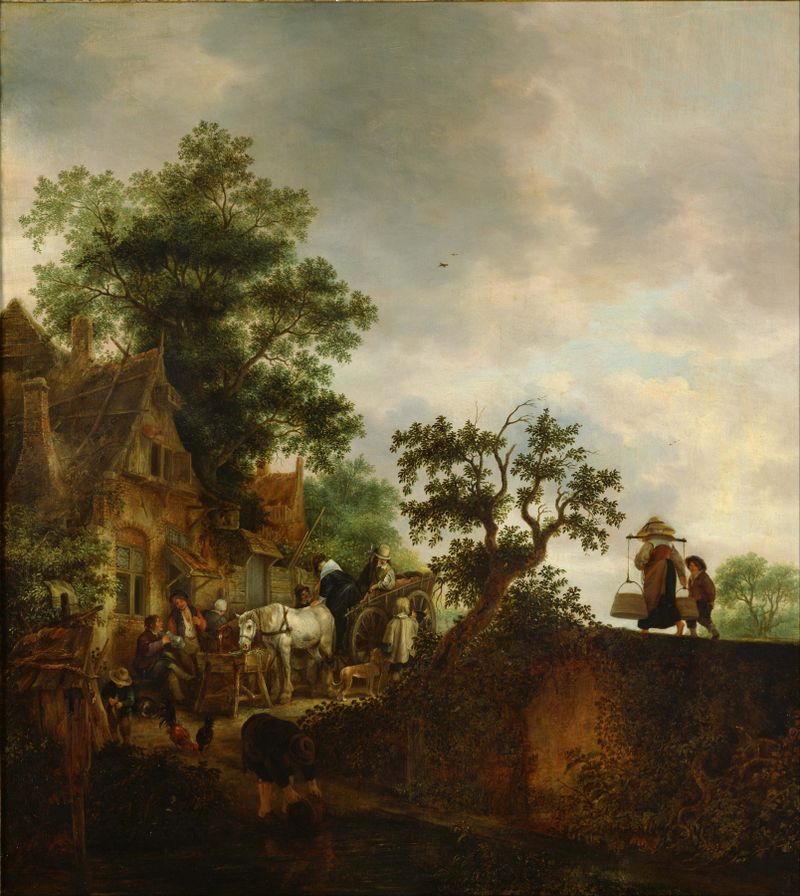
Travellers Halting at an Inn
Isaac van Ostade

Workmen before an Inn
Isaac van Ostade
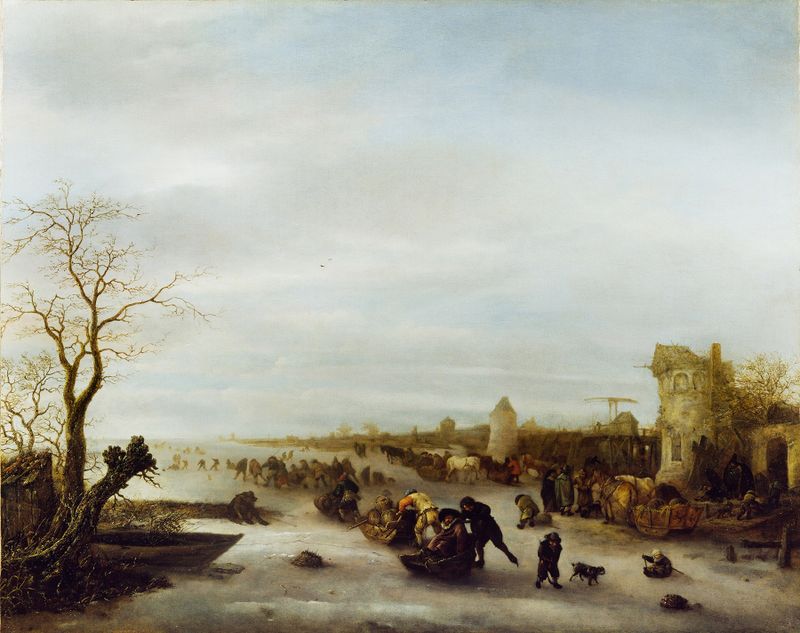
A Winter Scene
Isaac van Ostade
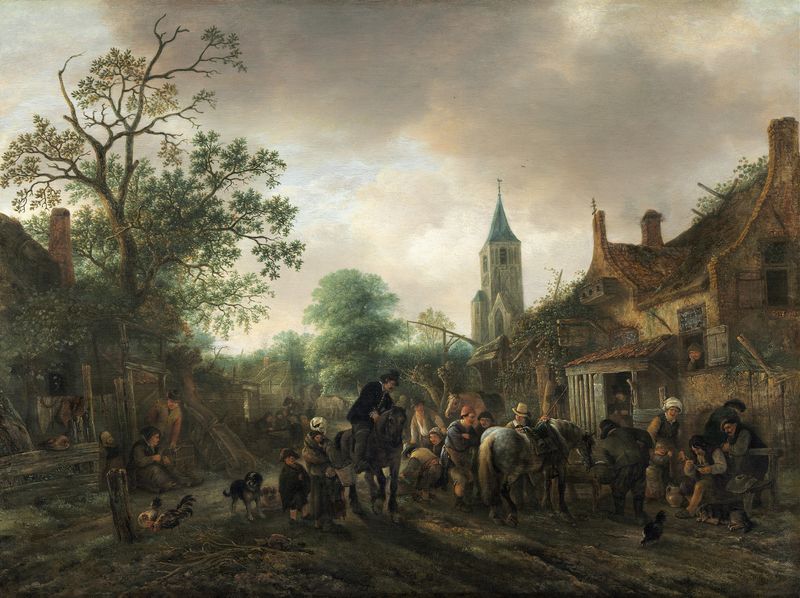
The Halt at the Inn
Isaac van Ostade
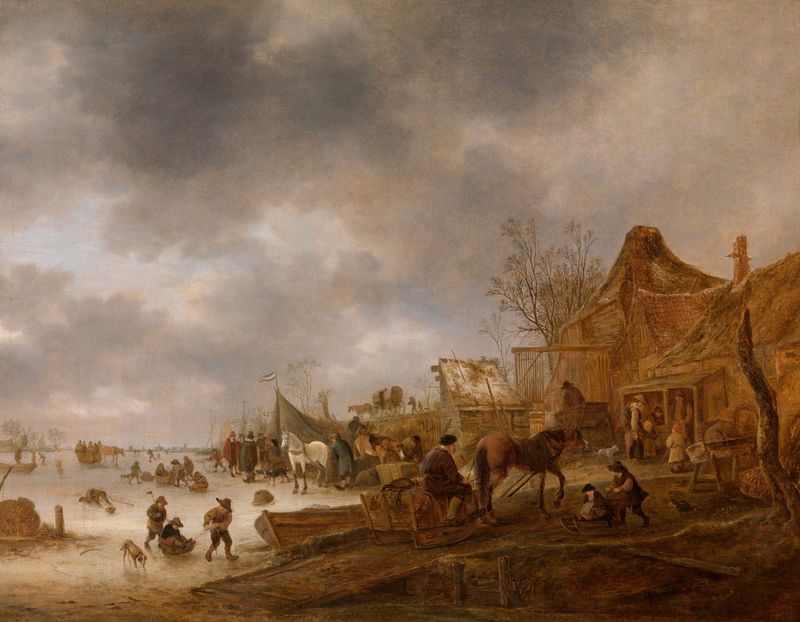
Winter Landscape
Isaac van Ostade
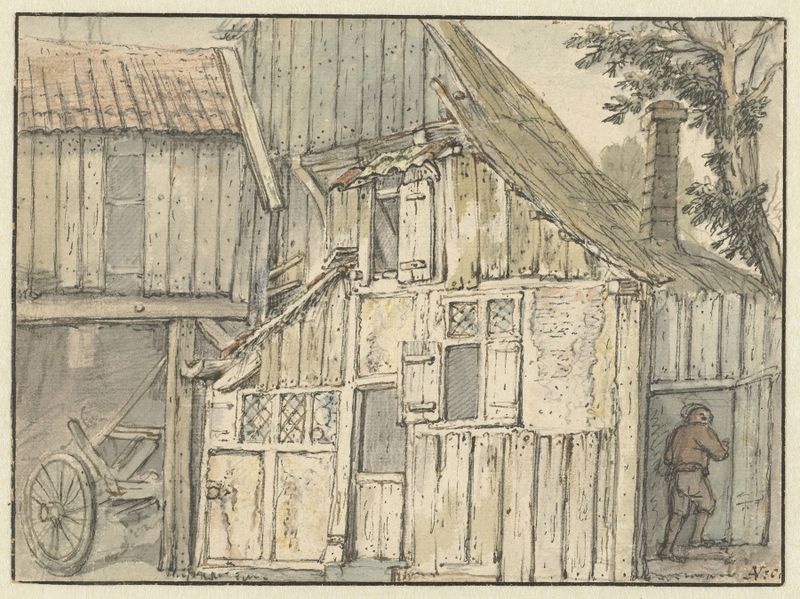
Gevel van een boerderij
Isaac van Ostade

A winter’s day outside Haarlem
Isaac van Ostade
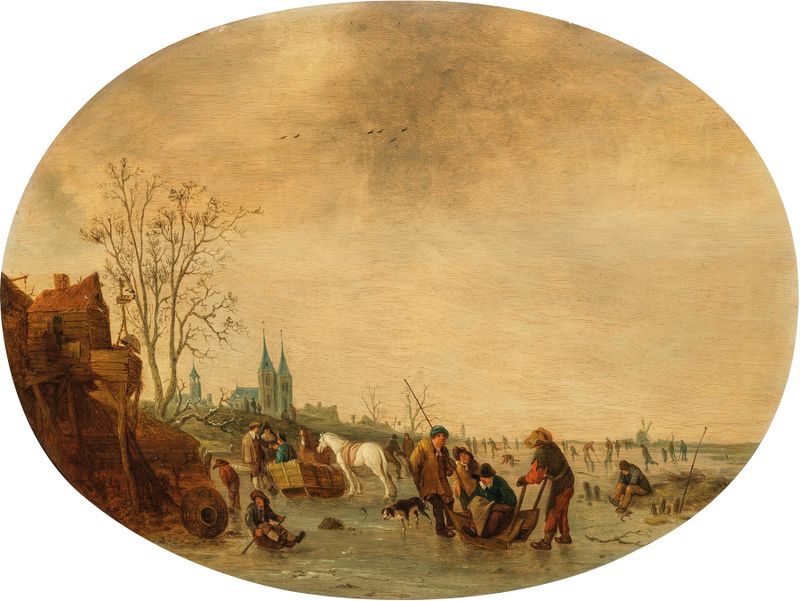
A winter landscape with skaters on the ice
Isaac van Ostade
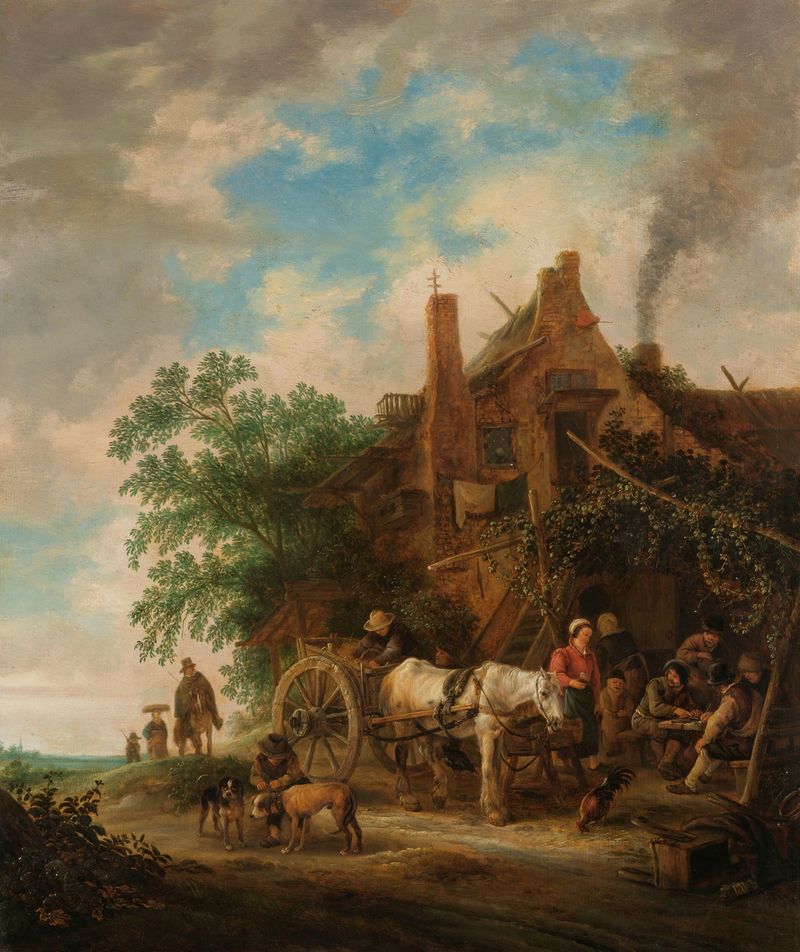
Country inn with horse and wagon
Isaac van Ostade





