
Country inn with horse and wagon — History & Facts
Can paint confess what words never could? In Country inn with horse and wagon, the silence of an idyllic moment speaks volumes, revealing layers of emptiness beneath the surface of pastoral life. Focus first on the inviting countryside inn, nestled under the warm embrace of late afternoon light. The structure, with its quaint thatched roof, beckons viewers. Notice how the sun casts gentle shadows, dancing across the wagon parked nearby, painted in subdued earthy tones that harmonize with the surrounding landscape.
The soft greens and muted browns evoke a sense of tranquility, yet they hint at an underlying isolation, as if the scene itself is suspended in a moment of stillness. This painting invites contemplation of the paradoxes of rural life. The horse tethered to the wagon stands as a symbol of labor and companionship, yet its stillness suggests an absence of purpose. The empty inn, devoid of patrons, carries a weight of abandonment, raising questions about the human connections once forged within its walls.
The juxtaposition of warmth in the sunlight and the chill of solitude creates a tension that resonates deeply, prompting reflections on the echoes of lives once lived. During the years between 1640 and 1649, Isaac van Ostade painted in the Netherlands, a time when Dutch art was flourishing amidst social change and prosperity. This was an era marked by the rise of genre painting, capturing everyday life with keen observation. The artist, known for his depictions of peasant life, painted this piece as part of his exploration of rural themes, subtly capturing the essence of human experience against the backdrop of a rapidly evolving society.
More Artworks by Isaac van Ostade
Browse all →
A Street in a Village or Town
Isaac van Ostade
Travellers Halting at an Inn
Isaac van Ostade

Workmen before an Inn
Isaac van Ostade
A Winter Scene
Isaac van Ostade
The Halt at the Inn
Isaac van Ostade

Country inn with a horse at the trough
Isaac van Ostade
Winter Landscape
Isaac van Ostade
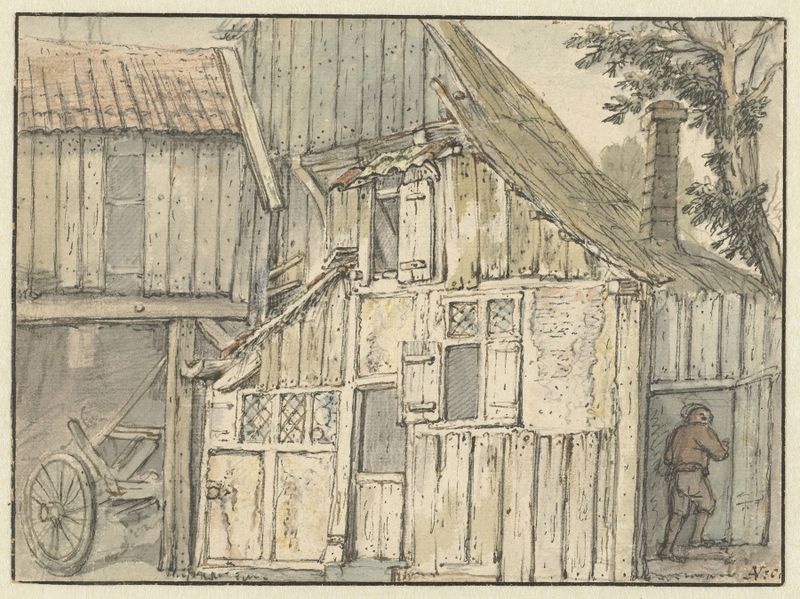
Gevel van een boerderij
Isaac van Ostade

A winter’s day outside Haarlem
Isaac van Ostade
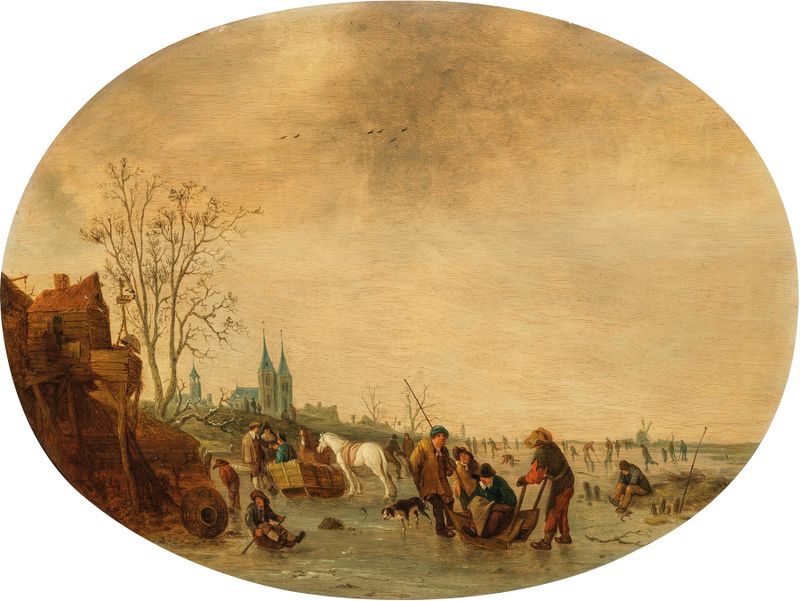
A winter landscape with skaters on the ice
Isaac van Ostade





