
Abendlandschaft — History & Facts
In the stillness of twilight, the horizon whispers secrets of destiny, cloaked in layers of serene hues. As day surrenders to the embrace of night, each brushstroke reveals a world suspended in an intricate dance between light and shadow, inviting reflection and introspection. Focus first on the gradient of the sky, where deep blues meld seamlessly into radiant oranges and soft pinks. The horizon serves as a vibrant canvas that draws the eye, while the tranquil landscape below remains shrouded in gentle shadows.
Notice how the clouds are rendered with a delicate touch, their forms ethereal yet substantial, enhancing the painting’s emotional depth. The subtle contrasts between warm and cool tones create a harmonious balance, evoking a sense of calm and contemplation. Amid the picturesque beauty lies an undercurrent of tension, as the impending night suggests both closure and new beginnings. The interplay of light and darkness can symbolize the duality of existence—the inevitable passage of time and the transient nature of life.
As one gazes deeper, the expansive sky carries a weight of destiny, hinting at the unseen narratives that unfold in moments of quietude, where observers become participants in the unfolding twilight. In 1849, the artist created this work while grappling with the tumultuous changes in European society, marked by shifting political landscapes and artistic movements. Raffalt was working in Vienna, a city thriving with cultural vitality. This period witnessed artists exploring the sublime in nature, melding Romantic ideals with emerging Realist themes, a reflection of both personal and collective destinies during a transformative era.
More Artworks by Ignaz Raffalt
Browse all →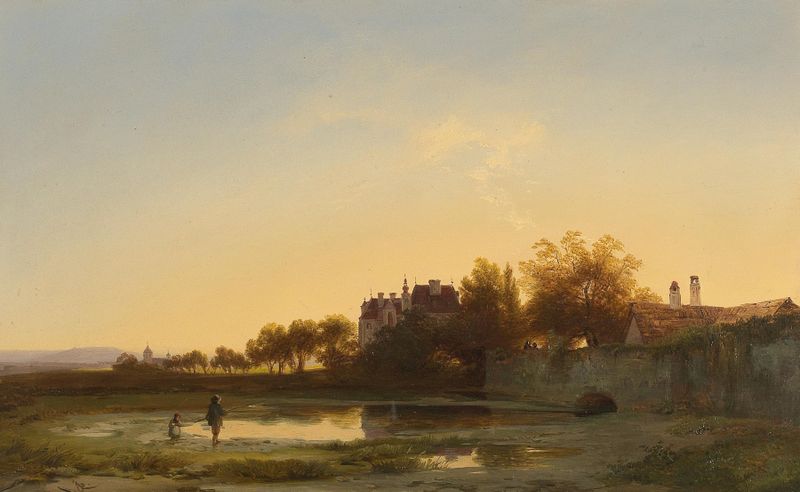
Angler in the evening light by the castle pond
Ignaz Raffalt
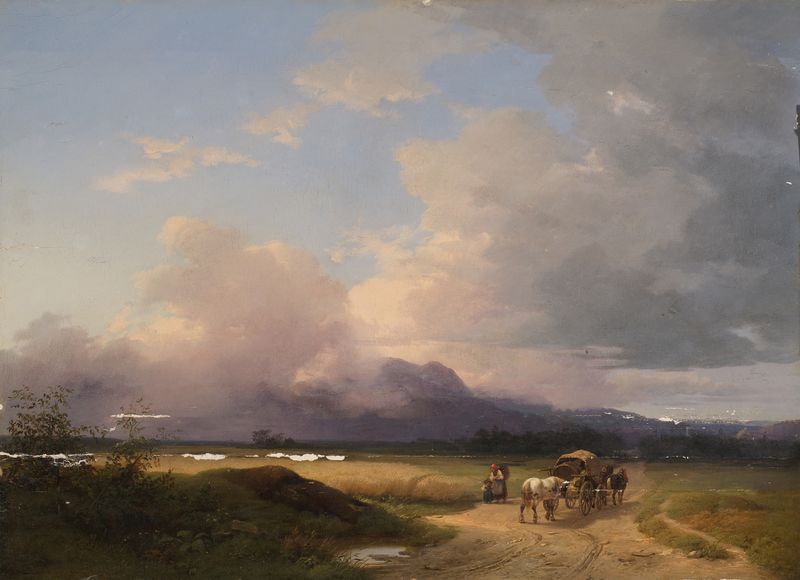
Voralpenlandschaft mit Fuhrwerk auf der Straße
Ignaz Raffalt

Hainbach near Vienna
Ignaz Raffalt

Resting in front of the Inn
Ignaz Raffalt

Stormy Landscape
Ignaz Raffalt
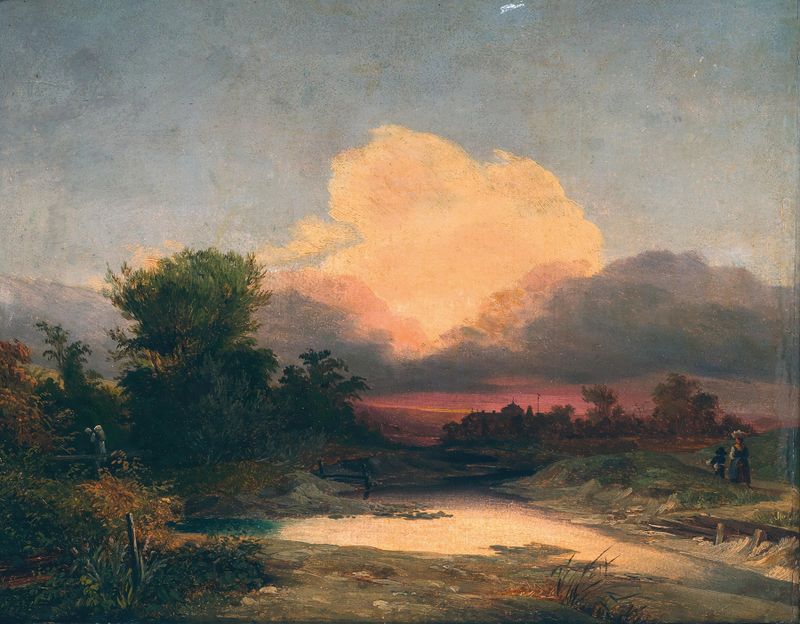
A Landscape at Sunset
Ignaz Raffalt
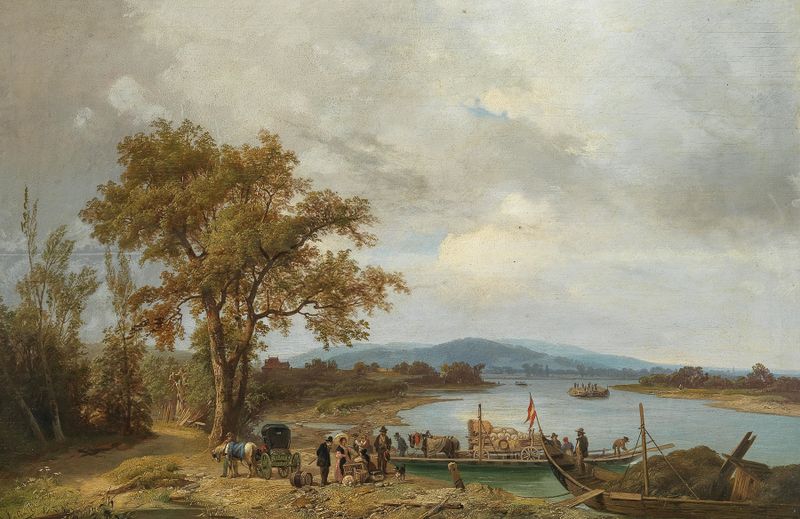
A Danube Landscape with Ferries
Ignaz Raffalt
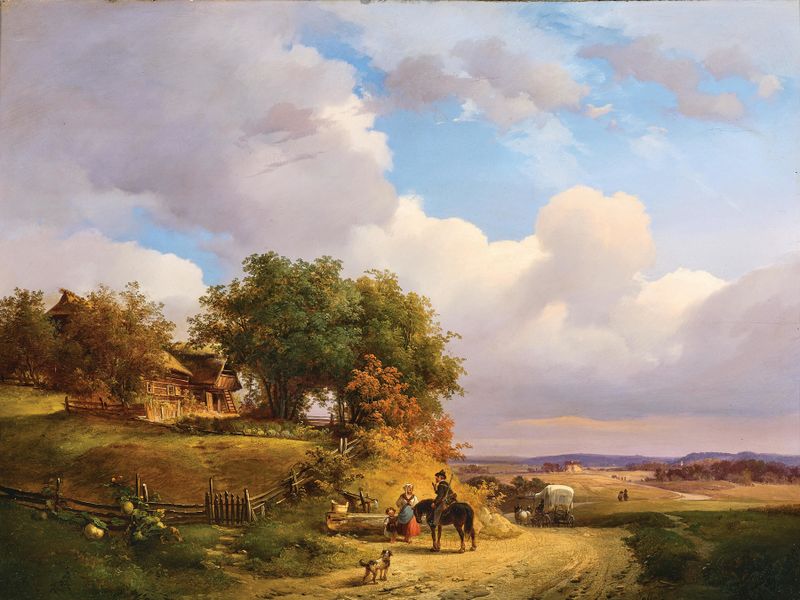
A Hunter Resting on a Country Road
Ignaz Raffalt
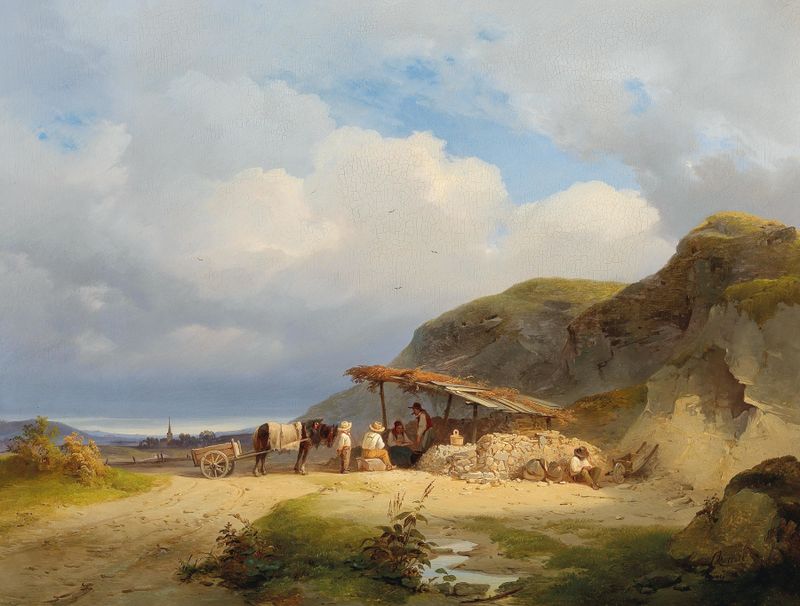
Resting at noon
Ignaz Raffalt
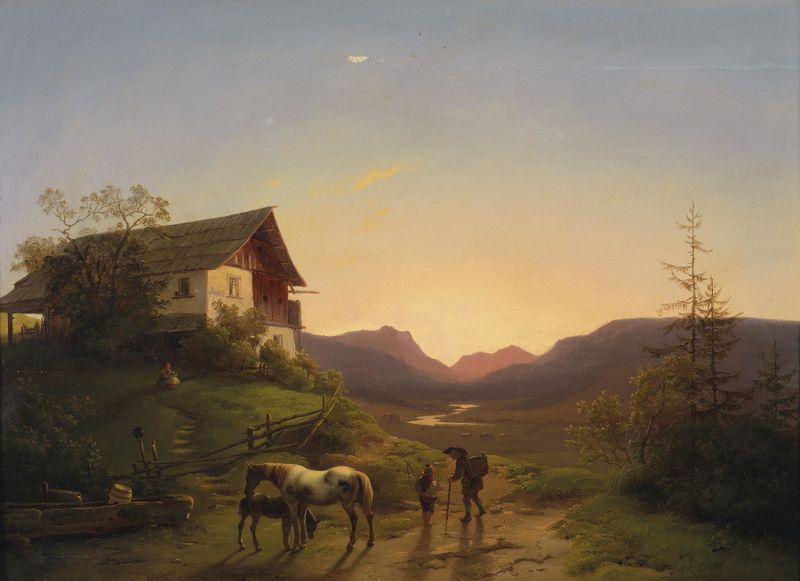
Abendstimmung
Ignaz Raffalt





