Abendsonne — History & Facts
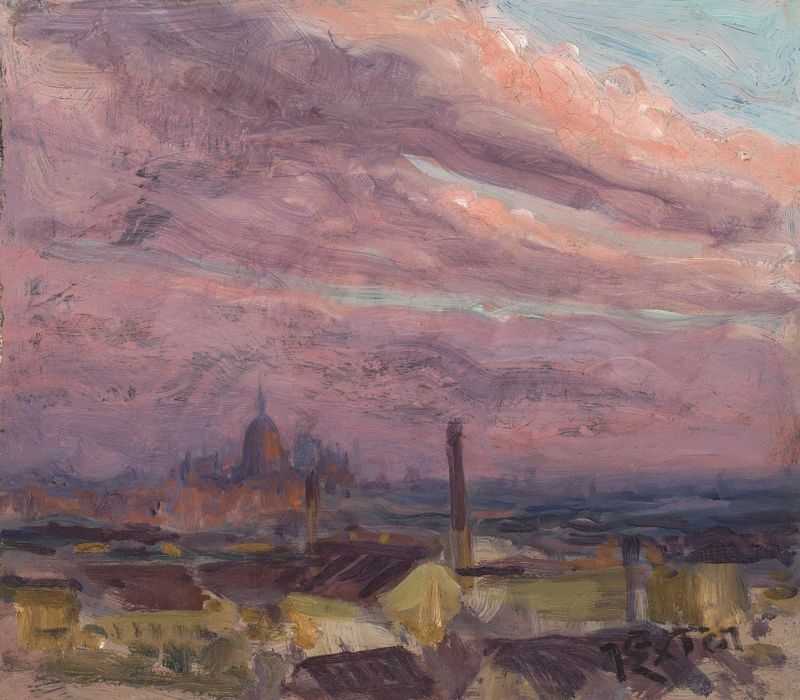
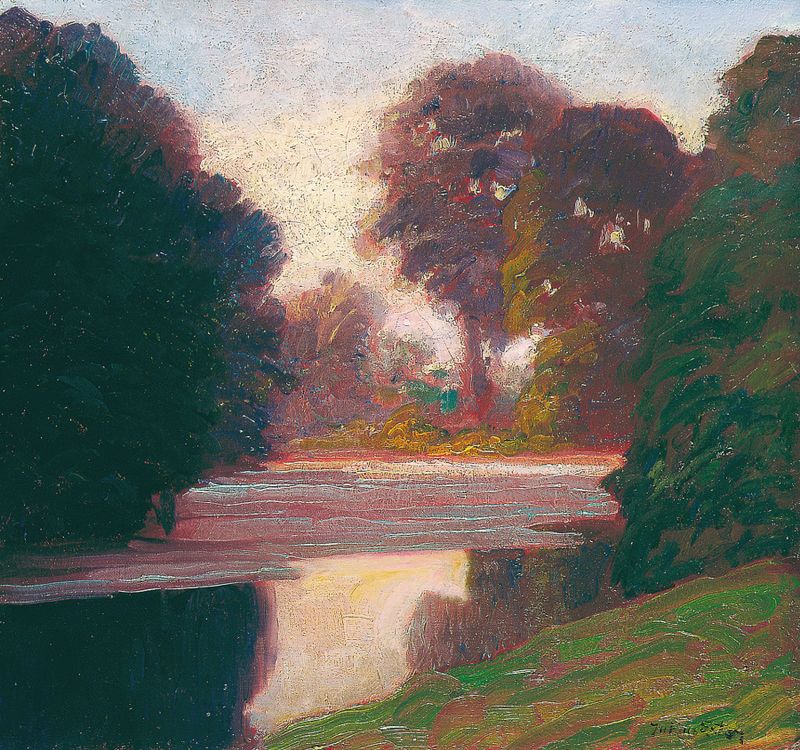
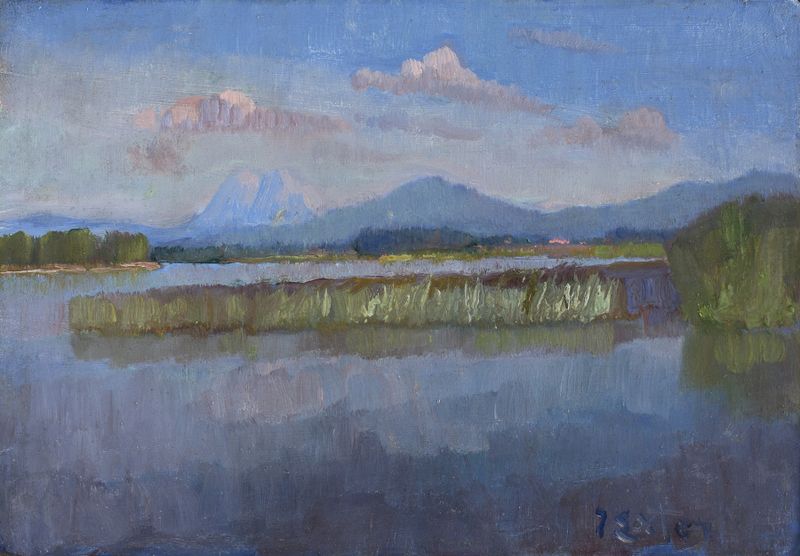
Did the painter know this moment would outlive them? In the delicate balance between chaos and serenity, Abendsonne emerges as a haunting reminder of time’s relentless passage. Focus on the vibrant hues that dominate the canvas. Look to the left, where the sun dips toward the horizon, casting an ethereal glow across a shimmering landscape. Notice how the warm oranges and golds blend seamlessly into the cooler purples and blues of twilight, creating a sense of harmony amidst the inevitable chaos of day transforming into night.
The brushwork is fluid, almost chaotic in its energy, yet it invites contemplation, guiding the eye through the tranquil yet tumultuous dance of color. The tension lies in the juxtaposition of light and shadow, where the brightness of the sunset hints at fleeting beauty, while the encroaching dusk suggests a deeper, darker chaos lurking just beyond the edges. Each stroke conveys not only the physical landscape but also an emotional landscape rife with nostalgia and longing. The viewer is drawn into this moment, feeling the weight of what is lost as the day fades away, as if the painting itself is both a celebration and a lament. Created in 1920, Abendsonne reflects a period when Julius Exter was deeply engaged with the art movements of his time.
Living in Munich, he was influenced by the expressionist movement, which sought to convey emotional experiences rather than physical reality. In the aftermath of the First World War, his work often encapsulated the tension between hope and despair, capturing the essence of a world on the brink of transformation.