Chiemseeufer — History & Facts
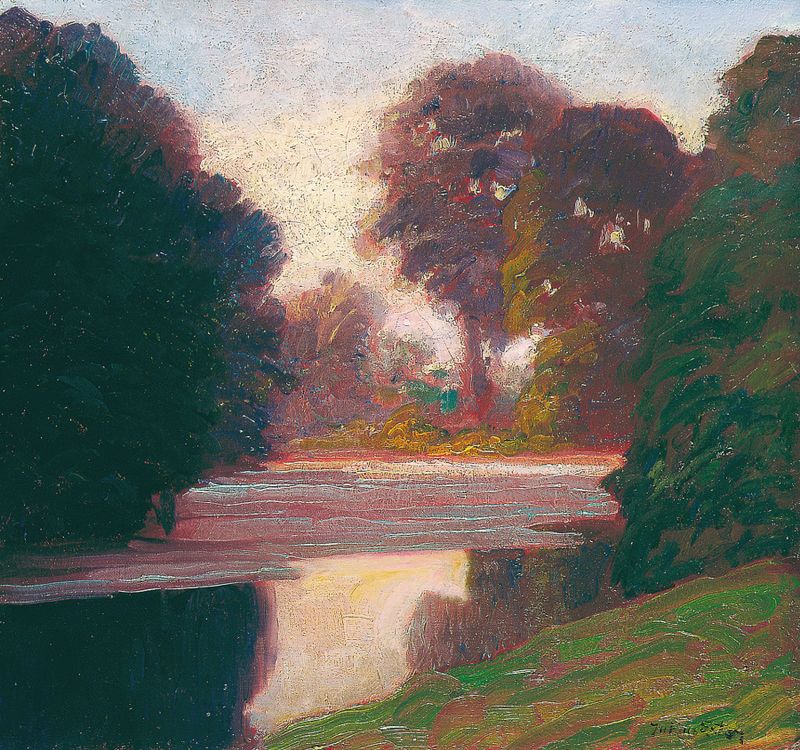
In stillness, movement is often found, whispering secrets that only the heart can grasp. Look to the foreground, where the rippling waters of Chiemsee shimmer with a delicate dance of light, inviting you to feel the warmth of the sun’s embrace. The vibrant greens of the landscape cradle the scene, while soft blues reflect the tranquil sky above, merging seamlessly with the lake. Notice how the brushstrokes create a sense of fluidity, suggesting a gentle breeze that stirs the surface, breathing life into the artwork.
The composition guides the viewer's gaze from the verdant banks to the horizon, where distant mountains provide a steadfast backdrop, grounding the ethereal beauty on display. As you explore further, consider the interplay of nature’s elements—a spectrum of colors that evoke both peace and yearning. The texture of the vegetation contrasts with the smoothness of the water, symbolizing the tension between permanence and transience. The absence of human figures allows the viewer to contemplate the natural world in solitude, inviting a reflective stillness amidst the vibrant movement of life.
This duality between motion and stillness captures the essence of a moment suspended in time, where every ripple holds the potential for stories untold. In 1915, amidst the turbulence of World War I, the artist found refuge in the serene landscapes of Bavaria. Chiemseeufer emerged during a period where the beauty of nature became a sanctuary from chaos. Exter, influenced by the Impressionist movement, sought to encapsulate the emotional resonance of the world around him, transforming his internal struggles into visual poetry within this tranquil lakeside scene.