Abendstimmung am Bach — History & Facts
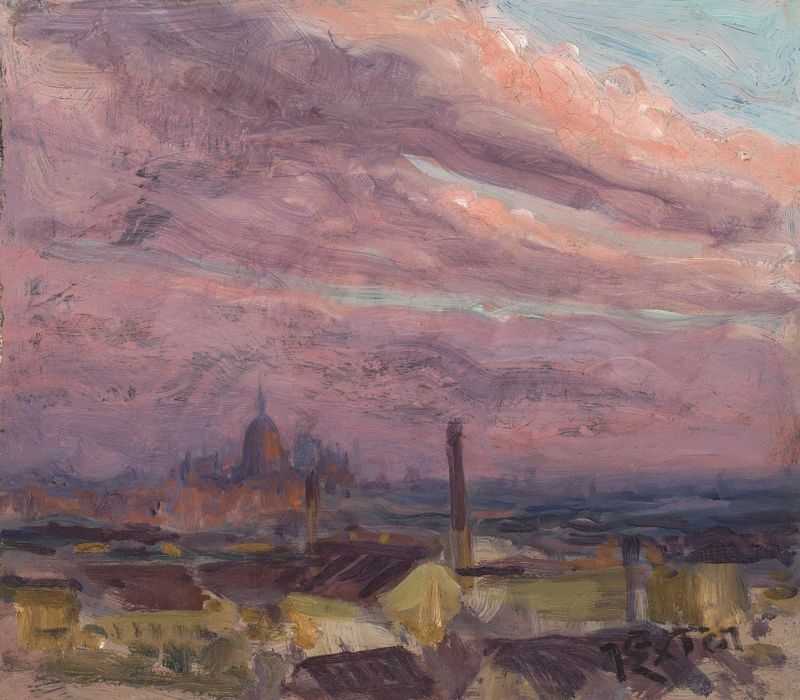
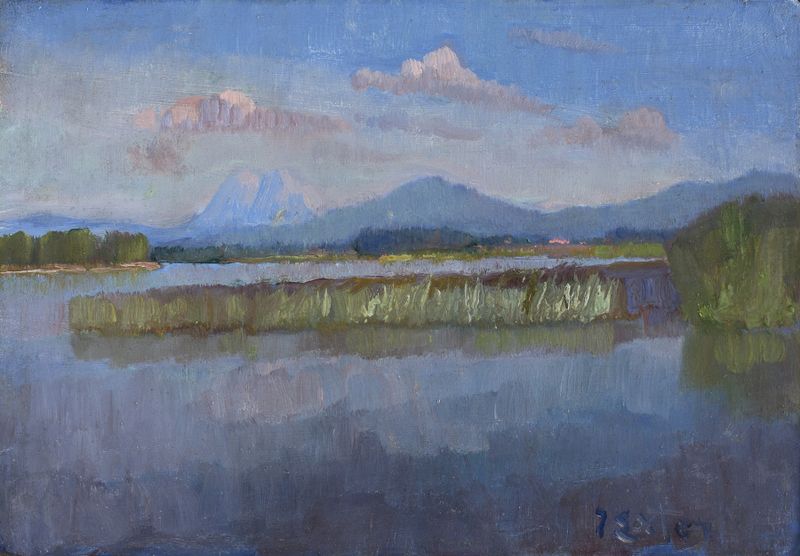
In this stillness of dusk, the harmonious dance of hues invites contemplation and whispers secrets of faith. Look to the soft, gradient sky where deep blues meet gentle oranges, a promise of twilight lingering on the horizon. Notice how the light plays delicately across the water's surface, illuminating both the vibrant greens of the banks and the dark shadows of encroaching trees. The gentle flow of the stream guides your eye, creating a pathway through the painting that feels both inviting and ethereal. Yet, amid this serene beauty, contrasts emerge.
The vibrant colors of nature evoke a sense of joy and hope, while the encroaching darkness hints at the ephemeral nature of existence. There’s a tension between the vibrancy of the sunset and the stillness of the water, a reminder that faith flourishes in the tension between light and shadow. The solitary figure in the foreground appears both rooted in the moment and reflective, embodying the quest for understanding within nature's quiet grandeur. In 1902, the artist was deeply immersed in the Bavarian landscape, capturing the intimacy of the scene during a time of personal exploration.
Exter's works reflected a shift in the art world towards Impressionism, as he sought to convey emotion through color and brushstroke. The serene yet profound atmosphere of Abendstimmung am Bach encapsulates his connection to nature and the search for truth within its tranquil complexities.