Kampenwand — History & Facts
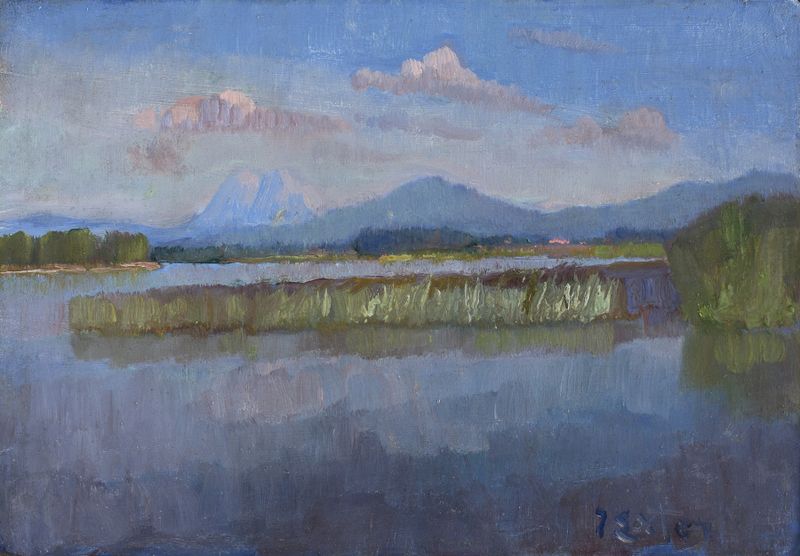
In the depths of silence, a void exists, waiting to be filled with color and emotion. Look to the upper right, where dark, swirling clouds loom over the serene mountain landscape. The jagged peaks of the Kampenwand rise dramatically, their contours softened by strokes of muted greens and grays, as if the artist was capturing the fleeting essence of nature’s majesty. Notice how the light kisses the edges of the mountains, creating a gentle contrast against the shadowed valleys below, drawing the eye into the contemplative depths of the canvas. At first glance, the painting evokes tranquility, yet a tension simmers beneath the surface.
The stark contrast between the looming darkness overhead and the vibrant earth below suggests a struggle between nature's beauty and its indifferent ferocity. The interplay of light and shadow mirrors internal conflicts, reflecting feelings of isolation and existential contemplation — a poignant reminder of the human condition faced with nature's vastness. Created in 1920, this work emerged during a tumultuous period for Julius Exter, who was deeply influenced by the changing artistic movements of his time. Living in Germany, he was transitioning from traditional landscapes to more experiential representations of nature, seeking to express profound emotional truths.
The post-war era demanded a response, and through this painting, he captured not only the physical landscape but also the emotional void felt by many amidst the shifting tides of social and artistic change.