See mit Wolken (Chiemsee) — History & Facts
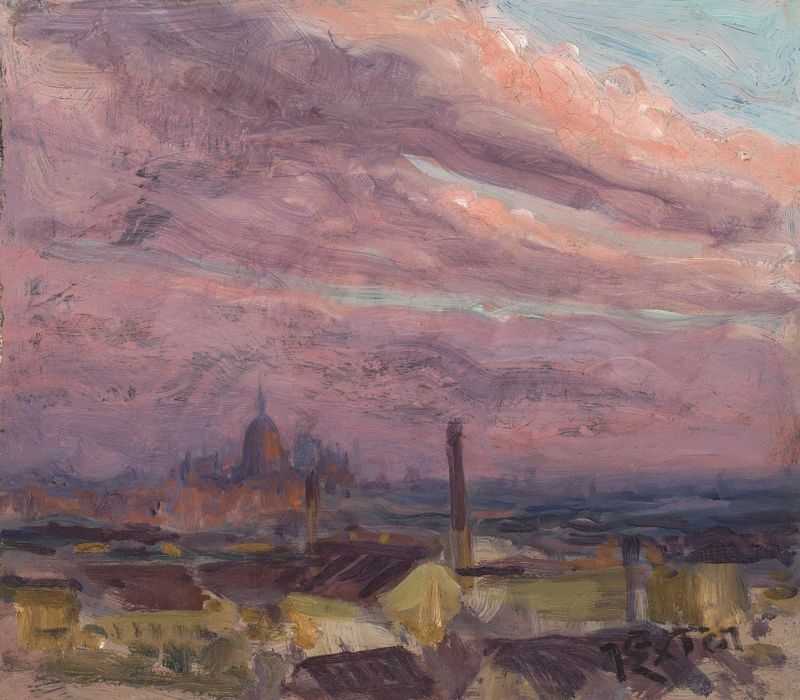
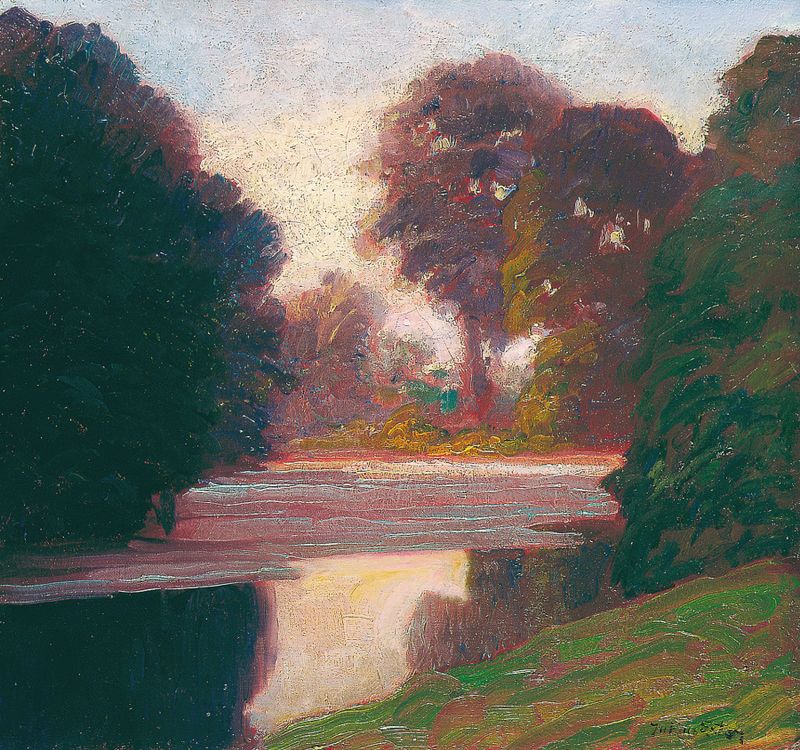
The essence of nostalgia dances through the canvas, inviting viewers to plunge into a world where time ebbs and flows like the gentle waves of Chiemsee. Here, the recollection of moments past transforms into a vivid tapestry, urging us to reflect on the beauty of what was, yet remains forever intangible. Look to the center of the composition, where the shimmering lake stretches out, mirroring the vast expanse of the sky. The artist employs rich blues and soft whites to create a dialogue between water and clouds, capturing a fleeting moment of tranquility.
Notice how the subtle gradations of color evoke a sense of depth, drawing the eye into the serene landscape while framing the interplay of light and shadow that dances across the surface. The delicate brushwork breathes life into every ripple, suggesting movement even in stillness. Delve deeper into the scene, and you'll uncover emotional contrasts embedded within the artwork. The interplay between the serene lake and the restless clouds suggests a yearning for peace amidst the chaos of existence.
Each wispy cloud carries whispers of lost memories, while the calm water reflects both hope and melancholy—a reminder that nostalgia can be a bittersweet companion. This duality invites contemplation, letting viewers confront their own pasts through the lens of the artist’s vision. In 1925, Julius Exter painted this work during a period of significant artistic exploration in Germany, where the influence of Expressionism and the emerging modernist movements began to shape new narratives in art. Living in the picturesque region near the lake, he found inspiration in the natural beauty surrounding him, channeling his responses to the changing cultural landscape into his creations.
This piece embodies not only Exter's personal reflections but also the collective sentiment of a society grappling with the passage of time.