
Abside de l’Eglise Saint-Gervais — History & Facts
In this act of creation lies an obsession that transcends the canvas, capturing fleeting moments in a world destined to change. Focus first on the intricate details of the church's facade, where every stone seems to breathe with history. Notice how the soft, muted tones of the building contrast with the vibrant greens of the surrounding foliage. The artist employs a careful interplay of light and shadow, illuminating the architectural features while enveloping the scene in a gentle twilight haze.
These techniques not only enhance the beauty of the structure but also evoke a sense of nostalgia, beckoning viewers to linger and reflect. As you delve deeper, consider the juxtaposition between the serene stillness of the church and the dynamic world outside its walls. The arched windows, seemingly closed, guard the secrets within, yet the lush vegetation around them hints at life and growth. This interplay between permanence and transience suggests an underlying tension, inviting contemplation of the passage of time and the stories that lie hidden beneath the surface of stone. In 1866, the artist worked on this piece amidst a rapidly changing Paris, where the echoes of the past were becoming increasingly overshadowed by modernity.
Delauney, a dedicated observer of his surroundings, sought to preserve the essence of historical architecture just as the city itself began to transform dramatically. This work reflects not only his artistic vision but also a longing for the stability offered by the past in a world that continuously evolves.
More Artworks by Alfred Alexandre Delauney
Browse all →
Eglise St-Etienne du Mont, côté nord
Alfred Alexandre Delauney
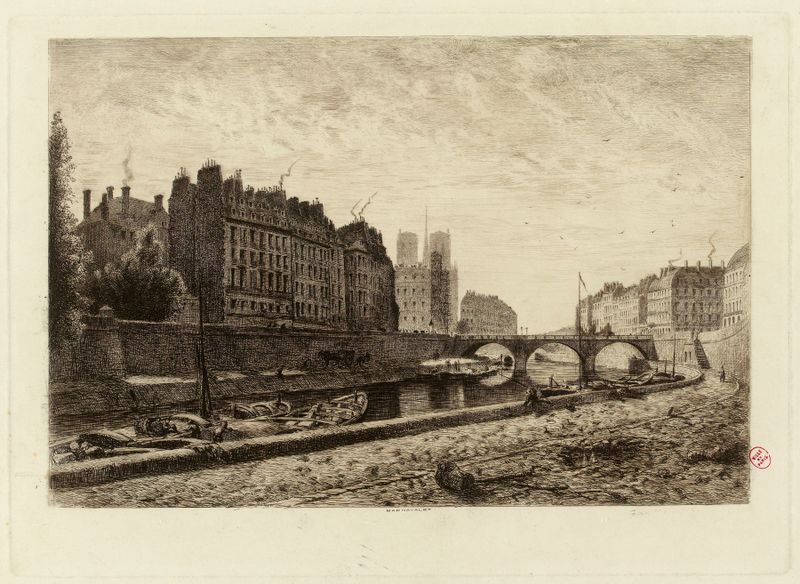
Pont St-Michel
Alfred Alexandre Delauney

Ancienne poterne du Palais de Justice, quai des Orfèvres
Alfred Alexandre Delauney
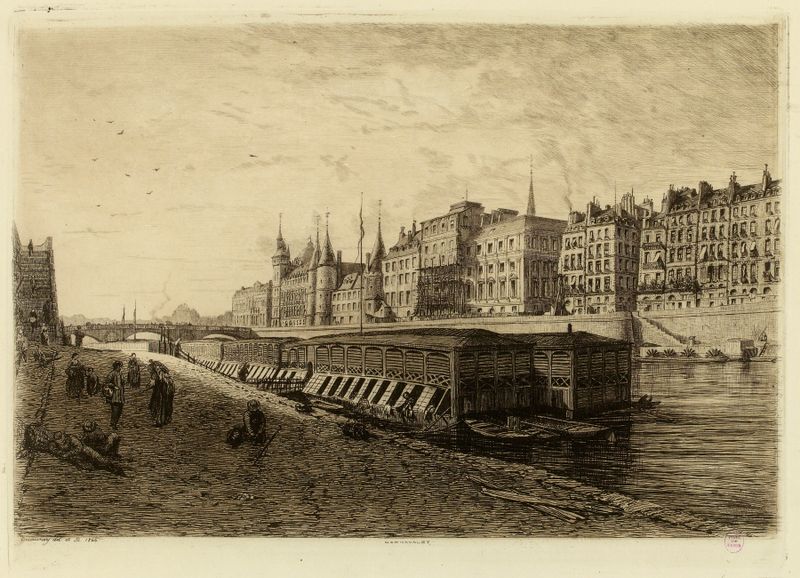
Quai de l’Horloge
Alfred Alexandre Delauney
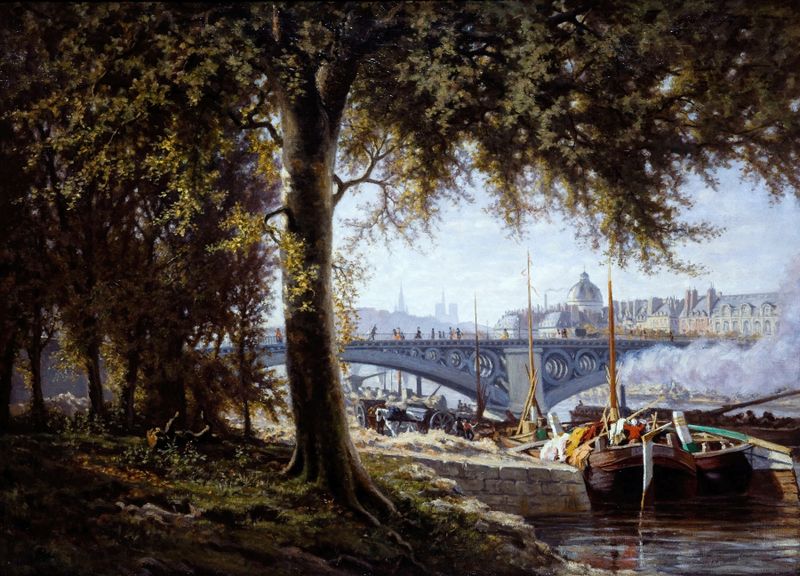
Le Pont des Saints-Pères
Alfred Alexandre Delauney

Pont-Neuf et quai Conti
Alfred Alexandre Delauney
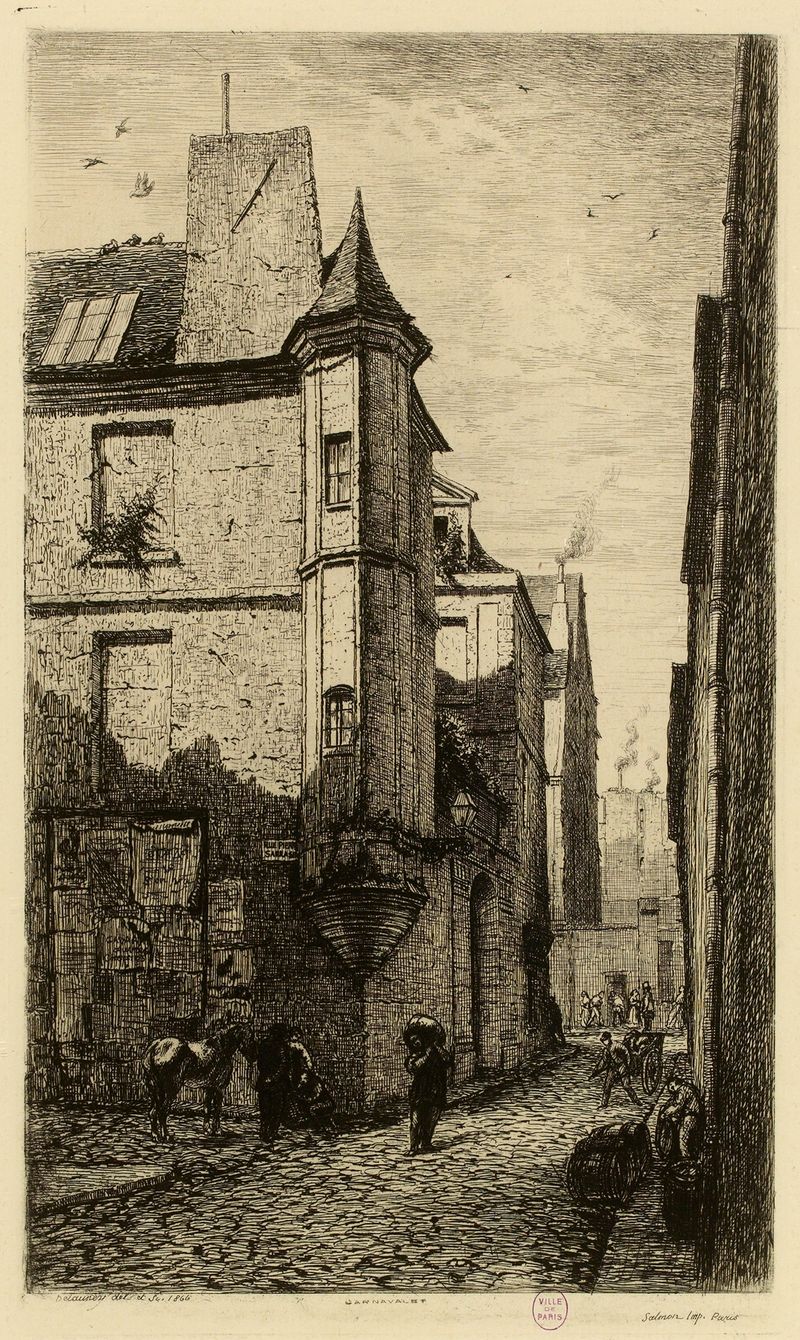
Tourelle rue Hautefeuille
Alfred Alexandre Delauney
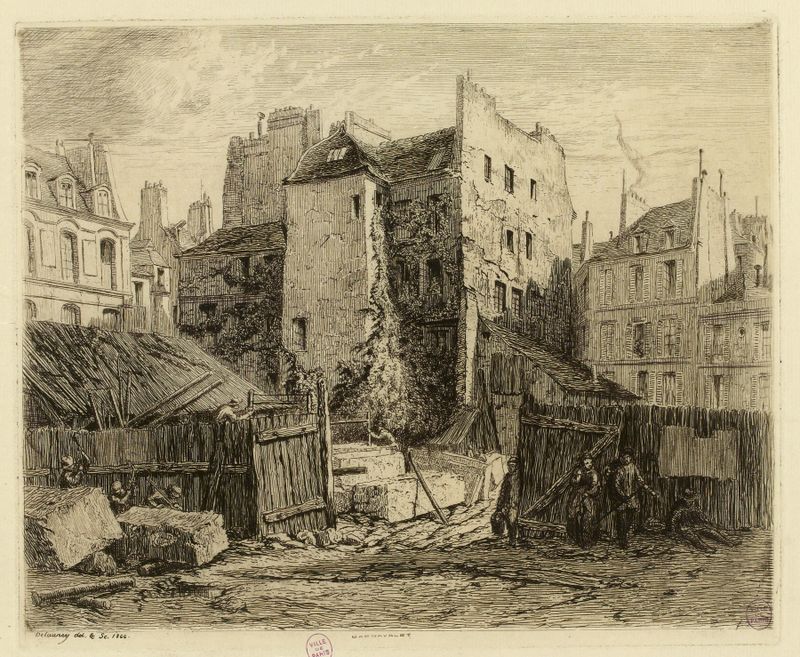
Maisons rue du Cloître Notre-Dame
Alfred Alexandre Delauney
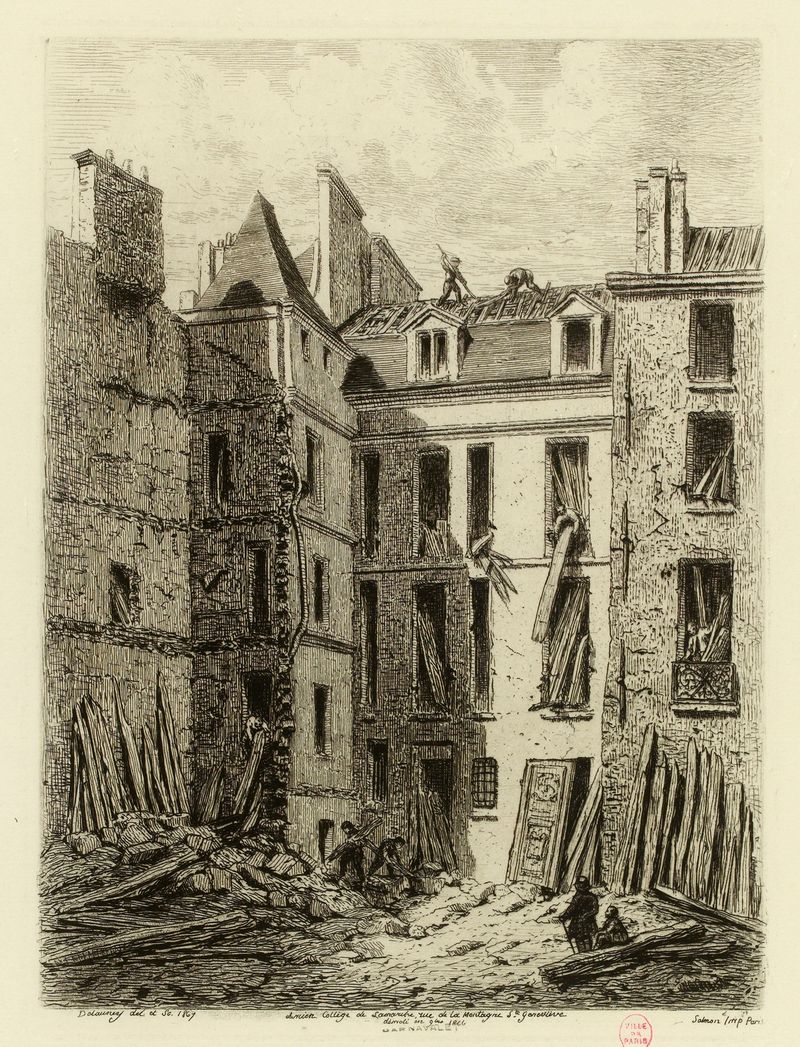
Ancien collège de Lamarche rue de la Montagne Ste-Geneviève, démoli en octobre 1866
Alfred Alexandre Delauney

Rue Grenier sur l’eau à Paris
Alfred Alexandre Delauney
More Architecture Art
Browse all →
The statue of Liberty
Frédéric Auguste Bartholdi

View of Houses in Delft, Known as ‘The Little Street’
Johannes Vermeer

View of Houses in Delft, Known as ‘The Little Street’
Johannes Vermeer

The Cathedral in Rouen. The portal, Grey Weather
Claude Monet

The yellow house
Vincent van Gogh

The Church in Auvers-sur-Oise, View from the Chevet
Vincent van Gogh