
Maisons rue du Cloître Notre-Dame — History & Facts
Can paint confess what words never could? In Maisons rue du Cloître Notre-Dame, the stillness of architecture captures whispers of history, revealing a void filled with silent stories. Look to the left at the weathered, ochre façades, their textures layered with the weight of time. Notice how the warm light of the late afternoon casts gentle shadows, softening the harsh lines of the buildings. Each brushstroke etches emotion into the stone, compelling the viewer to explore the intimate relationship between the structures and their surroundings.
The muted palette evokes both warmth and melancholy, inviting contemplation of the lives that once animated these streets. This composition reveals contrasting themes of permanence and transience; the houses stand resolute, yet the fleeting light suggests the inevitability of change. The absence of people amplifies the sense of isolation, as if the viewer is peering into a forgotten past. Delicate details, like the subtle variations in color and light, hint at the stories left unspoken—echoes of laughter, sorrow, and life’s daily rhythms now faded into memory. In 1866, Delauney painted this work during a time of transition in the art world, as realism began to challenge romantic ideals.
Living in Paris, he was immersed in a city teeming with artistic innovation and social upheaval. His portrayal of urban life, stripped of embellishment, reflects both a commitment to realism and a personal exploration of the stark beauty underlying the familiar.
More Artworks by Alfred Alexandre Delauney
Browse all →
Eglise St-Etienne du Mont, côté nord
Alfred Alexandre Delauney
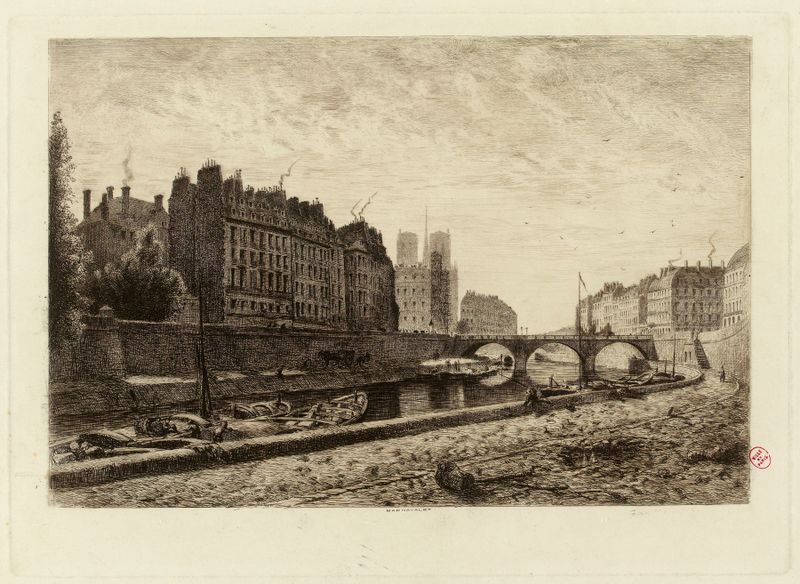
Pont St-Michel
Alfred Alexandre Delauney

Ancienne poterne du Palais de Justice, quai des Orfèvres
Alfred Alexandre Delauney
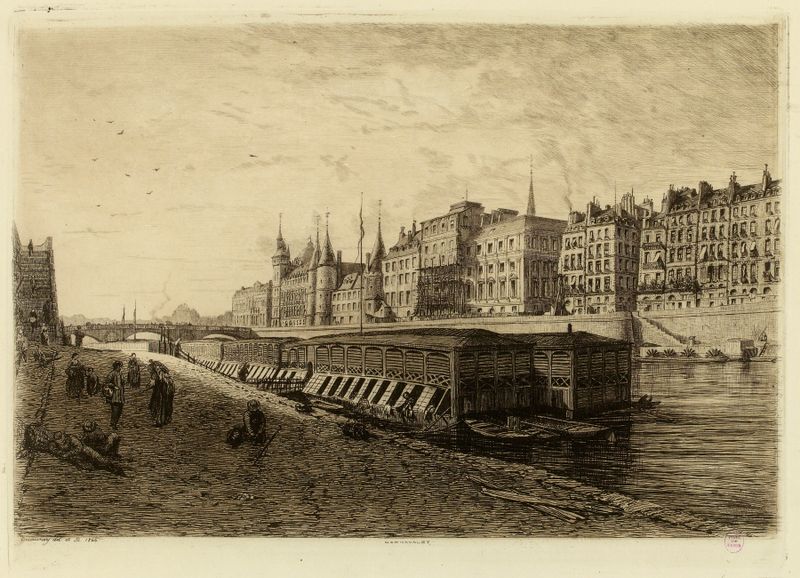
Quai de l’Horloge
Alfred Alexandre Delauney
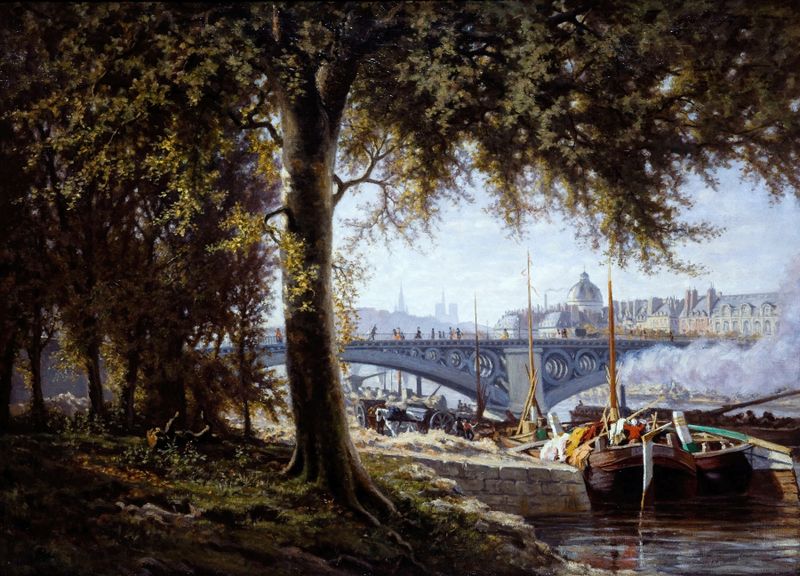
Le Pont des Saints-Pères
Alfred Alexandre Delauney

Pont-Neuf et quai Conti
Alfred Alexandre Delauney
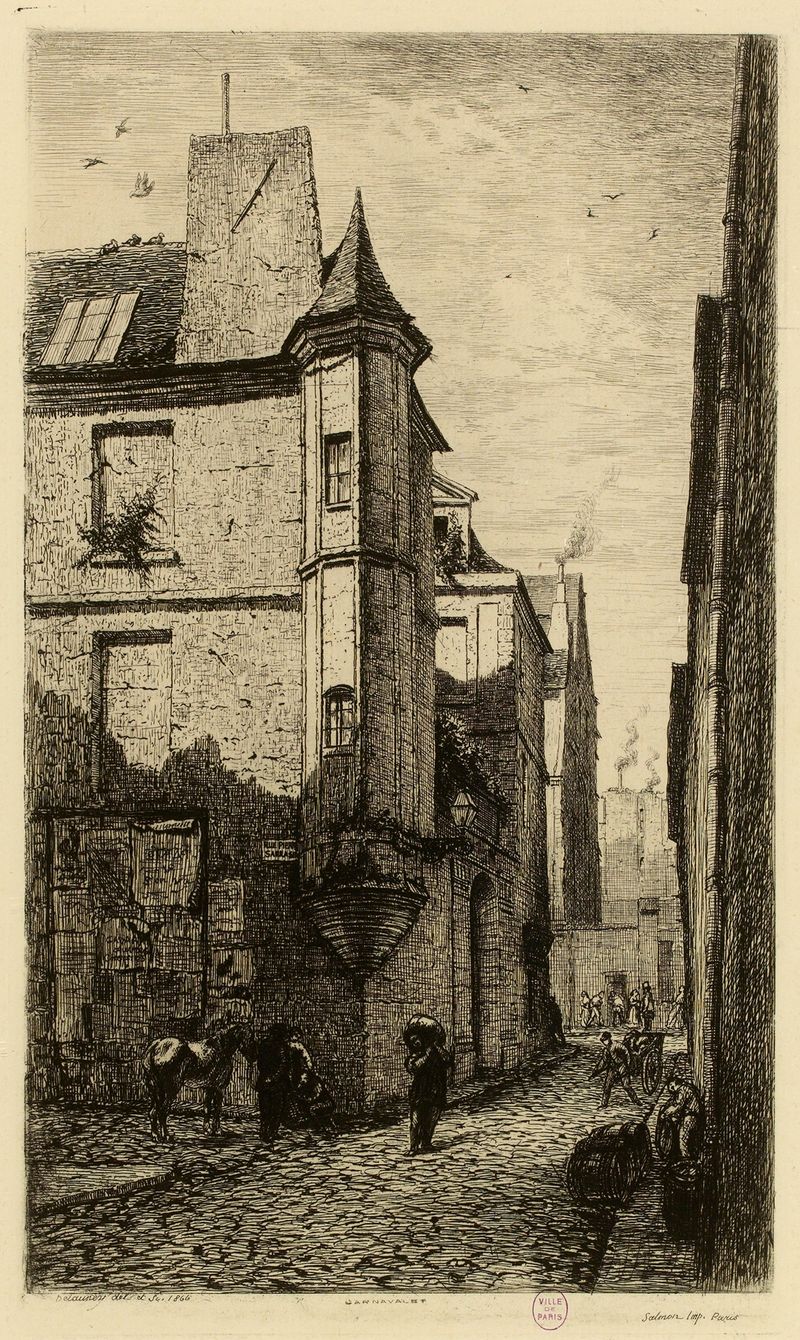
Tourelle rue Hautefeuille
Alfred Alexandre Delauney
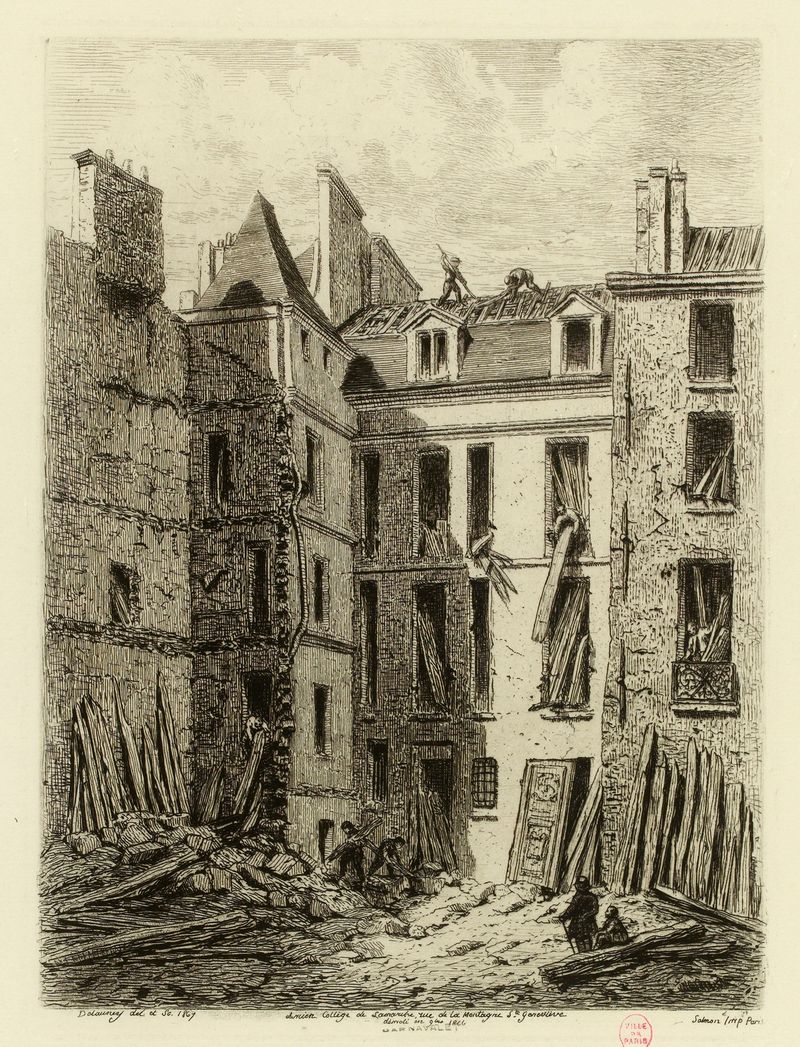
Ancien collège de Lamarche rue de la Montagne Ste-Geneviève, démoli en octobre 1866
Alfred Alexandre Delauney

Rue Grenier sur l’eau à Paris
Alfred Alexandre Delauney
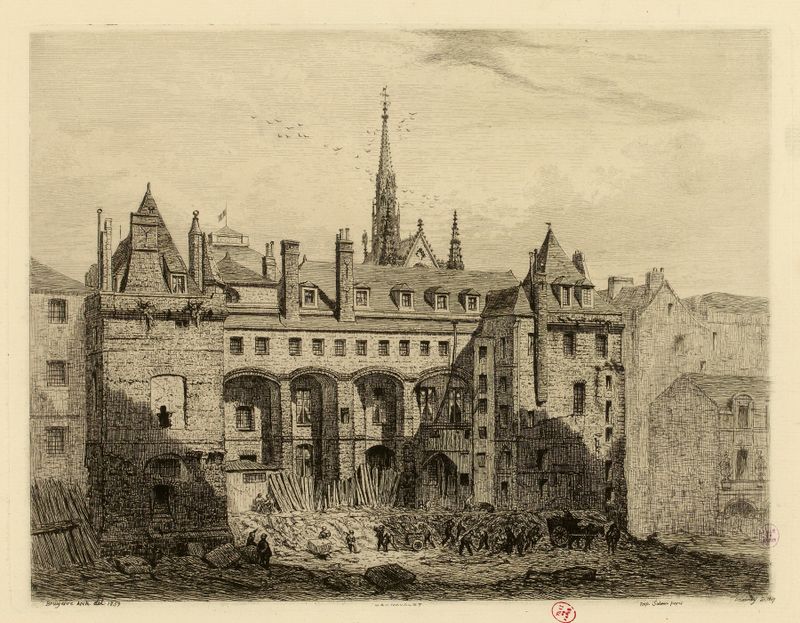
Cour Lamoignon ou St-Martin au Palais de Justice
Alfred Alexandre Delauney
More Architecture Art
Browse all →
The statue of Liberty
Frédéric Auguste Bartholdi

View of Houses in Delft, Known as ‘The Little Street’
Johannes Vermeer

View of Houses in Delft, Known as ‘The Little Street’
Johannes Vermeer

The Cathedral in Rouen. The portal, Grey Weather
Claude Monet

The yellow house
Vincent van Gogh

The Church in Auvers-sur-Oise, View from the Chevet
Vincent van Gogh