
Quai de l’Horloge — History & Facts
What if beauty was never meant to be finished? The delicate interplay between time and decay invites us to consider the fleeting moments of life, captured in a stunning tableau where elegance and deterioration collide. Focus on the soft hues of muted blues and grays that wash over the canvas, expertly guiding your gaze across the scene. Look to the left, where the weathered architecture looms, its crumbling edges hinting at stories of the past. Notice the gentle play of light, illuminating the cobblestones and casting shadows that dance like whispers of forgotten lives.
Each stroke reveals the artist's masterful technique, blending realism with the ethereal, evoking a palpable sense of nostalgia. In this work, the juxtaposition of the serene water against the decaying structures speaks to the duality of life—a moment of tranquility framed by the inexorable passage of time. The decaying elements become poignant symbols, reminding us that beauty often lies in imperfection and transience. The reflections in the water not only mirror the scene but also serve as a reminder of the ephemeral nature of existence, echoing the sentiments of loss and renewal. Delauney created this piece in 1866 while living in Paris, a city bursting with artistic innovation and social change.
During this period, the Impressionist movement was gaining momentum, challenging traditional approaches to art. As the artist sought to capture the essence of modern life amidst shifting tides, Quai de l’Horloge emerged as a reflection of both a vibrant city and the inevitability of decay.
More Artworks by Alfred Alexandre Delauney
Browse all →
Eglise St-Etienne du Mont, côté nord
Alfred Alexandre Delauney
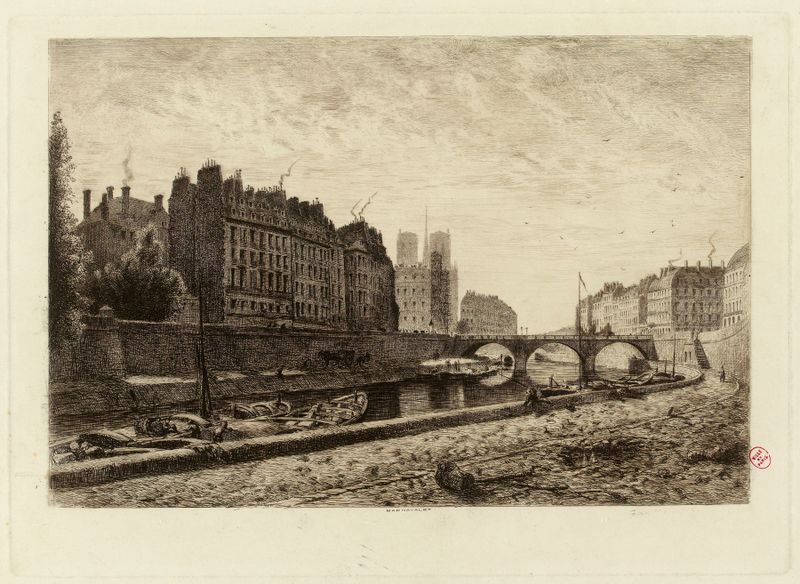
Pont St-Michel
Alfred Alexandre Delauney

Ancienne poterne du Palais de Justice, quai des Orfèvres
Alfred Alexandre Delauney
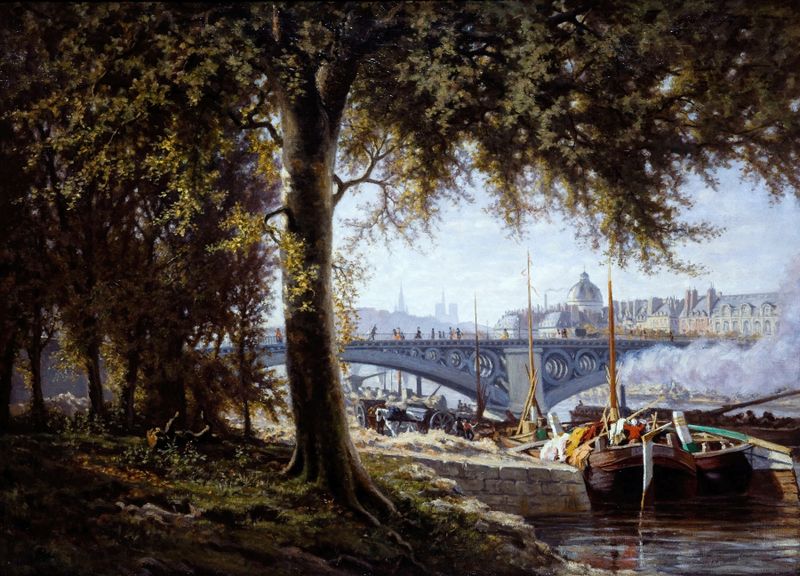
Le Pont des Saints-Pères
Alfred Alexandre Delauney

Pont-Neuf et quai Conti
Alfred Alexandre Delauney
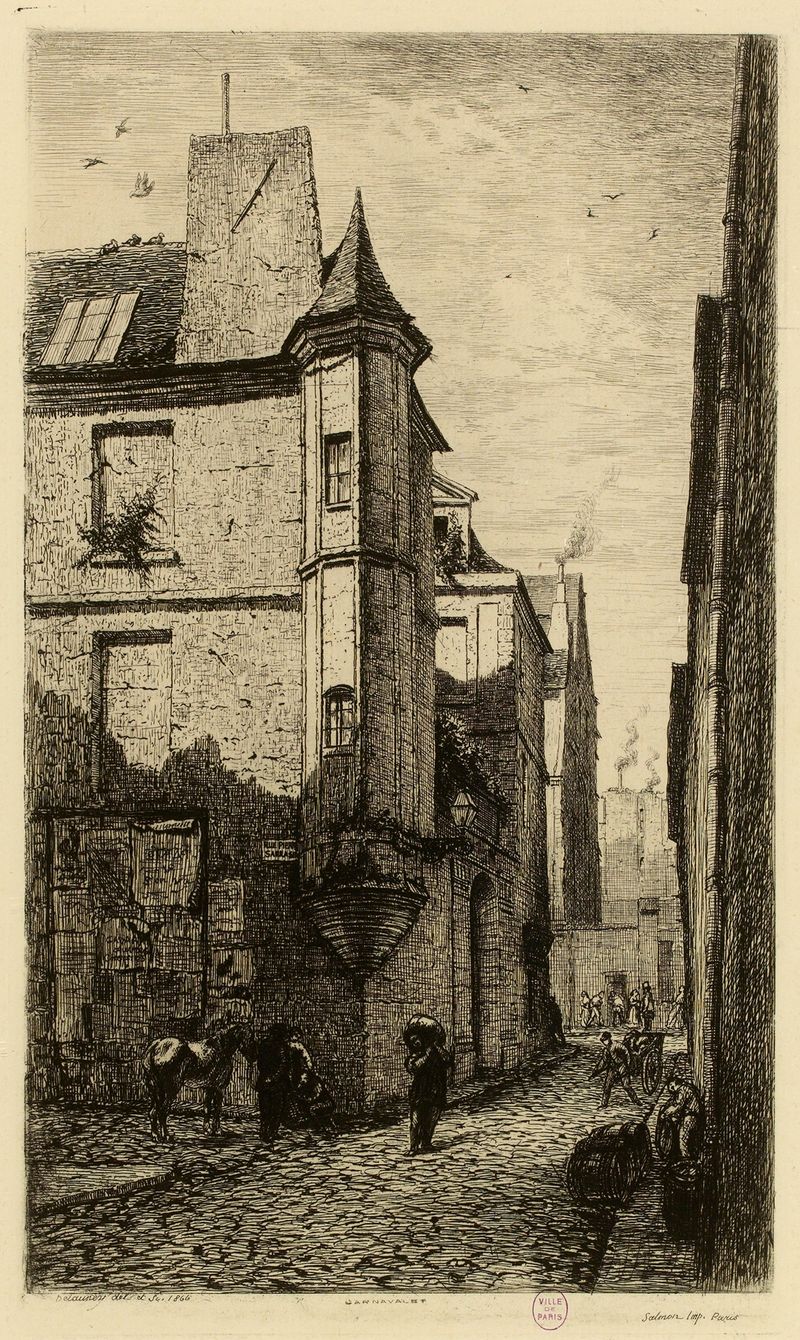
Tourelle rue Hautefeuille
Alfred Alexandre Delauney
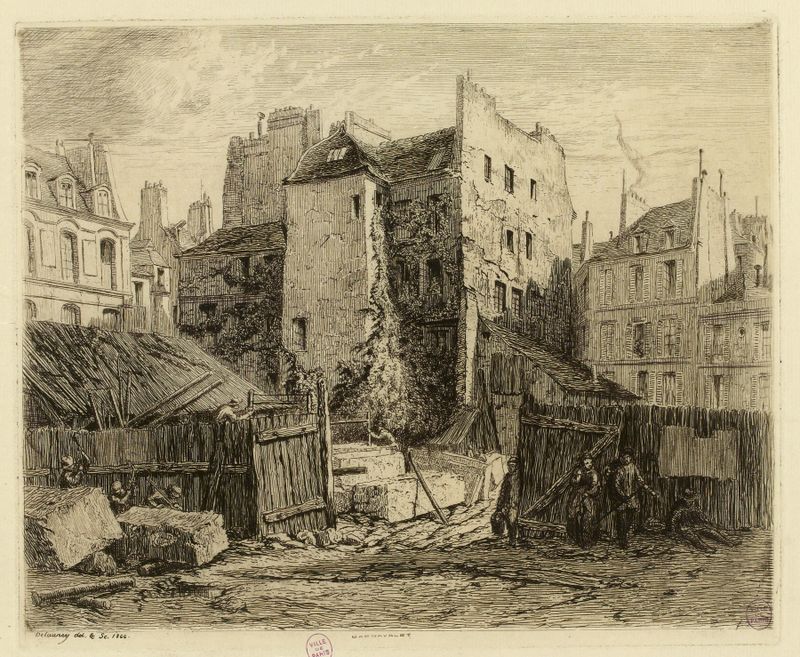
Maisons rue du Cloître Notre-Dame
Alfred Alexandre Delauney
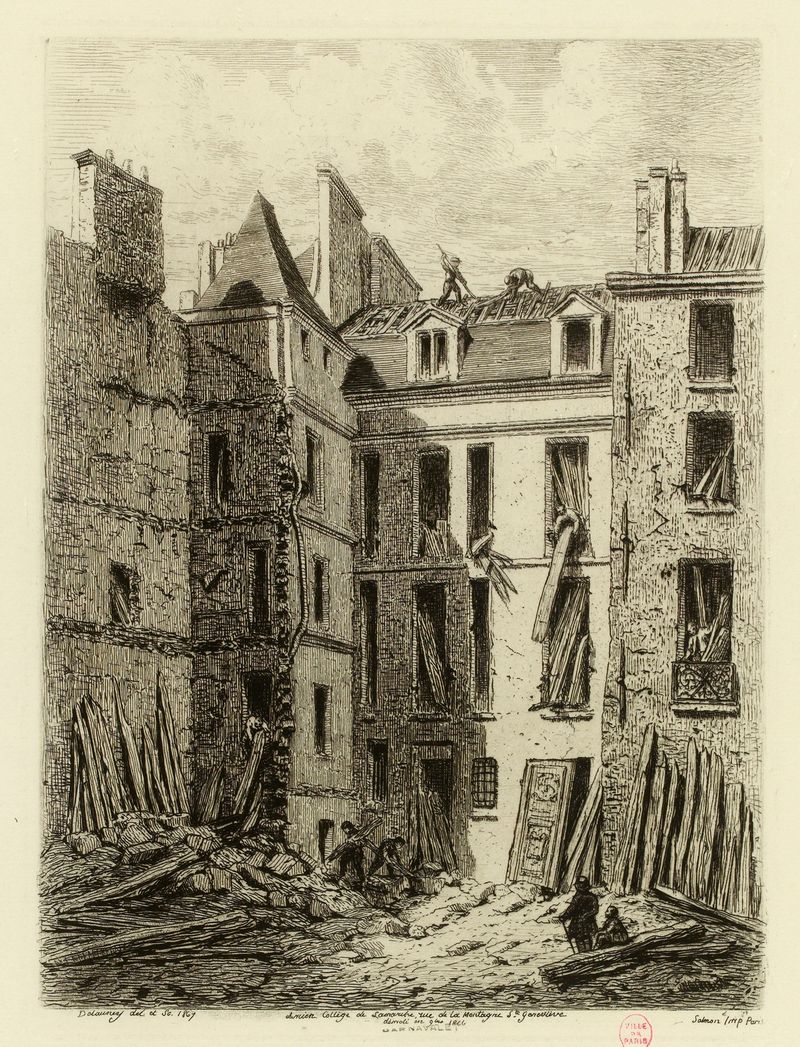
Ancien collège de Lamarche rue de la Montagne Ste-Geneviève, démoli en octobre 1866
Alfred Alexandre Delauney

Rue Grenier sur l’eau à Paris
Alfred Alexandre Delauney
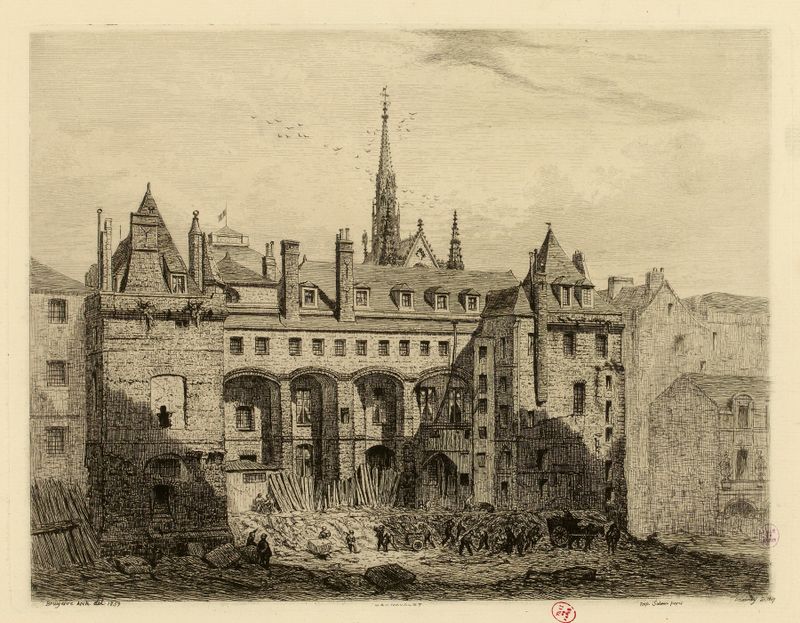
Cour Lamoignon ou St-Martin au Palais de Justice
Alfred Alexandre Delauney





