
Tourelle rue Hautefeuille — History & Facts
In the stillness of a moment caught between the past and present, a memory beckons. Emotions linger in the air; they hover like a whisper, reminding us that every stroke on the canvas holds a story, a fleeting glimpse of what once was. Look to the right at the towering buildings that rise against the sky, their shapes softened by the gentle brushstrokes. Notice how the light falls upon the textured surfaces of the architecture, casting playful shadows that dance along the cobblestones.
Delauney employs a palette of muted earth tones, enhancing the nostalgic feel of the scene, inviting us to wander through the narrow streets as if we were there. The meticulous attention to detail draws us into the fabric of the urban environment, making the architecture feel both monumental and intimately familiar. Pulsing beneath the surface of this urban landscape are themes of transience and permanence. The juxtaposition of the solid, enduring stones against the ephemeral nature of the daily lives that pass through the streets evokes a bittersweet longing for memories that can never be fully captured.
Each window reflects a different life, a hint of a story untold, while the gentle play of light suggests a fleeting moment suspended in time. Delauney captures not just a scene, but the essence of memory itself, inviting us to ponder what remains and what fades away. In 1866, the artist was residing in Paris, a city undergoing transformative changes. The burgeoning Impressionist movement was reshaping the art world, encouraging artists to explore light and color in new ways.
This period was marked by a blend of realism and poetic sentiment, as well as a growing desire to depict modern life. Delauney's work reflects this dynamic environment, showcasing his keen eye for the intersection of architecture and human experience amidst an evolving urban landscape.
More Artworks by Alfred Alexandre Delauney
Browse all →
Eglise St-Etienne du Mont, côté nord
Alfred Alexandre Delauney
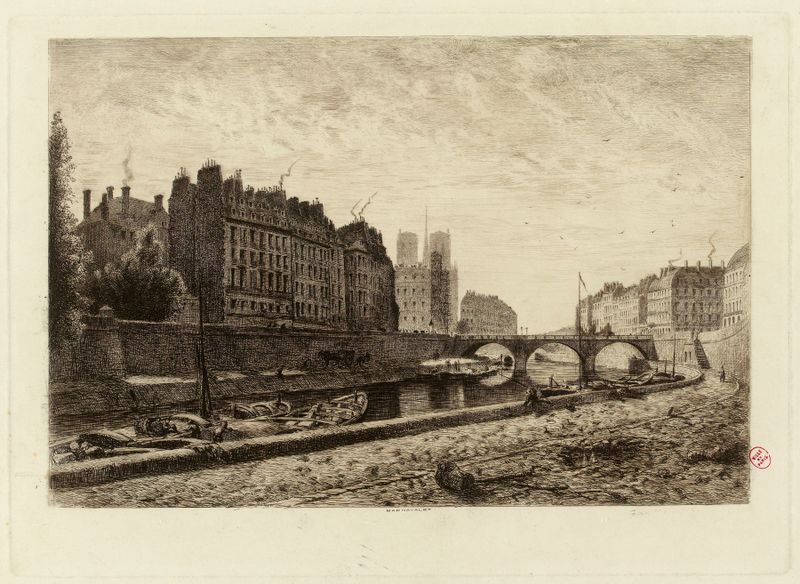
Pont St-Michel
Alfred Alexandre Delauney

Ancienne poterne du Palais de Justice, quai des Orfèvres
Alfred Alexandre Delauney
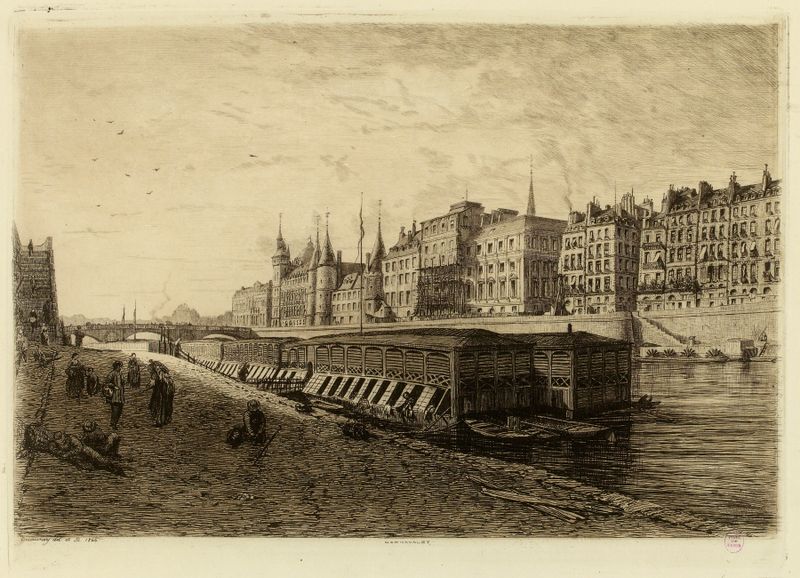
Quai de l’Horloge
Alfred Alexandre Delauney
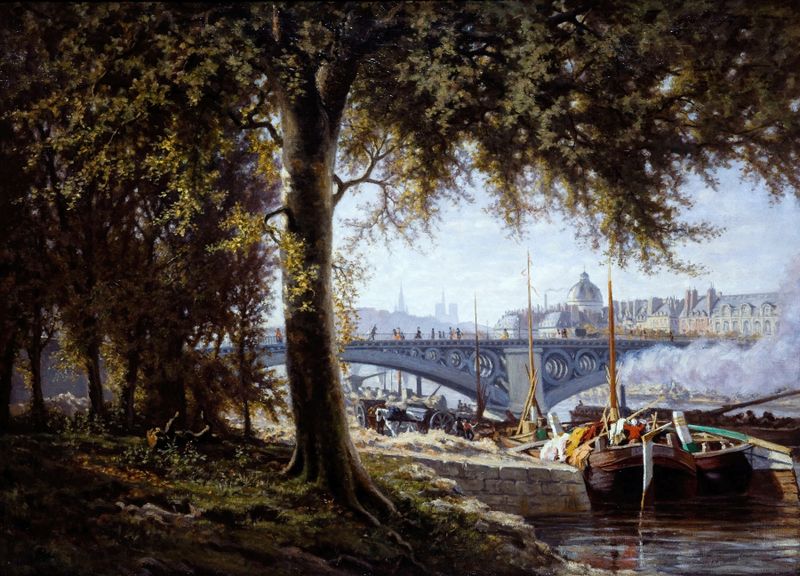
Le Pont des Saints-Pères
Alfred Alexandre Delauney

Pont-Neuf et quai Conti
Alfred Alexandre Delauney
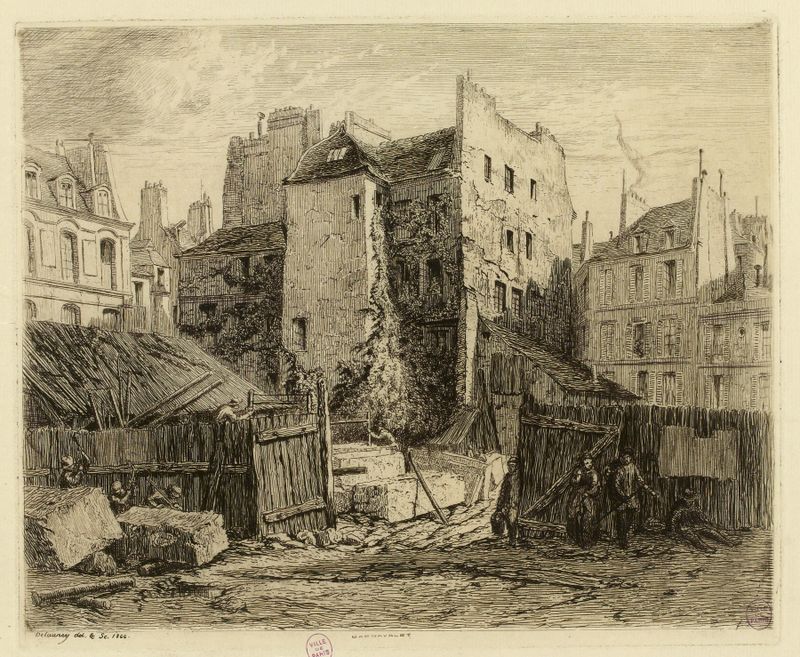
Maisons rue du Cloître Notre-Dame
Alfred Alexandre Delauney
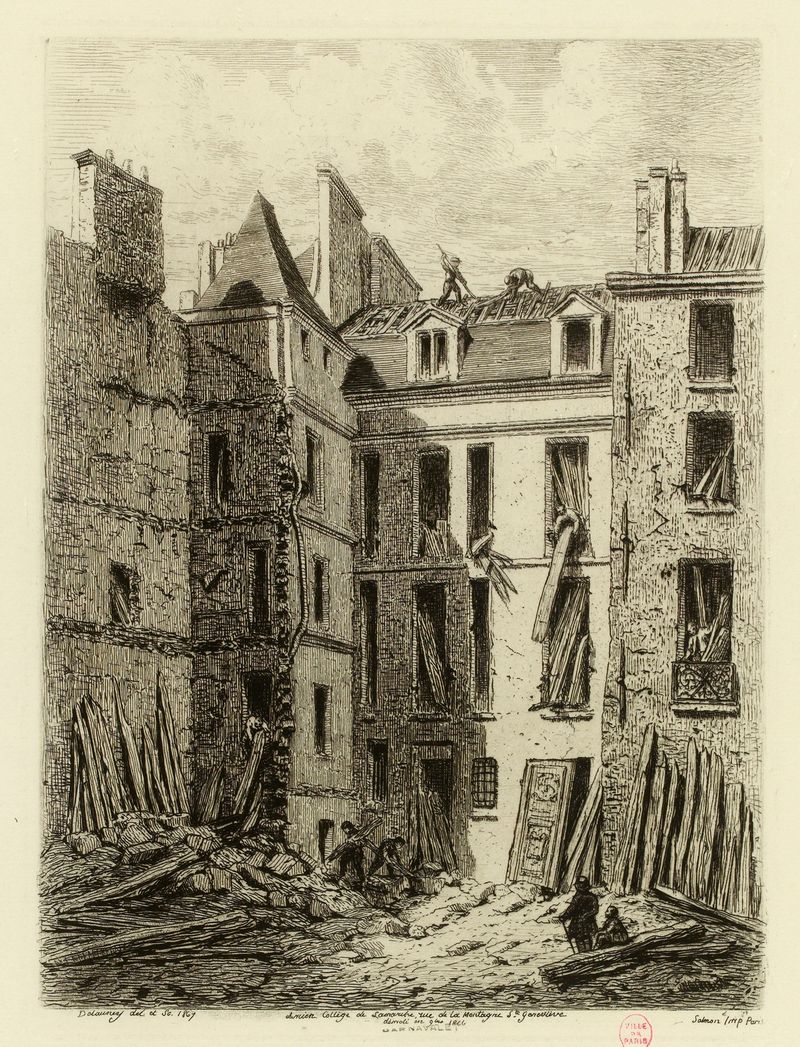
Ancien collège de Lamarche rue de la Montagne Ste-Geneviève, démoli en octobre 1866
Alfred Alexandre Delauney

Rue Grenier sur l’eau à Paris
Alfred Alexandre Delauney
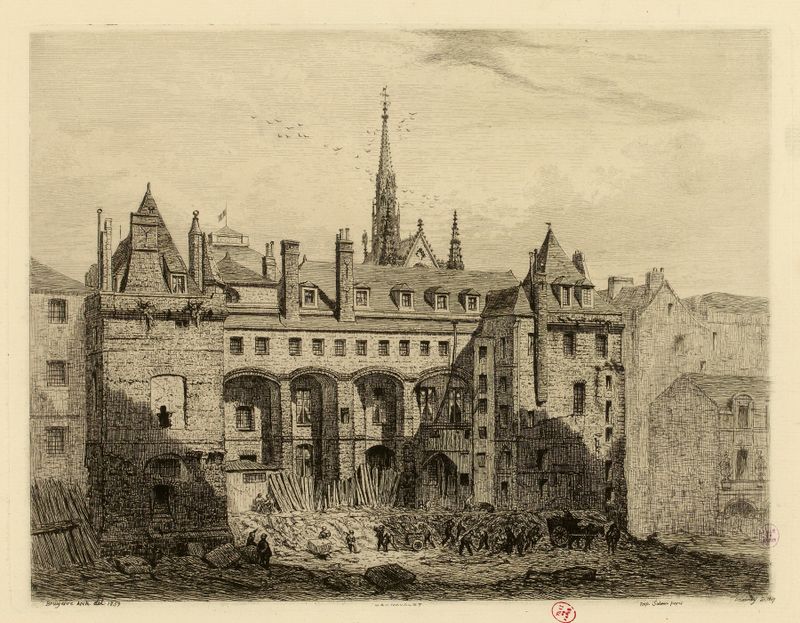
Cour Lamoignon ou St-Martin au Palais de Justice
Alfred Alexandre Delauney
More Architecture Art
Browse all →
The statue of Liberty
Frédéric Auguste Bartholdi

View of Houses in Delft, Known as ‘The Little Street’
Johannes Vermeer

View of Houses in Delft, Known as ‘The Little Street’
Johannes Vermeer

The Cathedral in Rouen. The portal, Grey Weather
Claude Monet

The yellow house
Vincent van Gogh

The Church in Auvers-sur-Oise, View from the Chevet
Vincent van Gogh