Admiral's Sailing Display — History & Facts
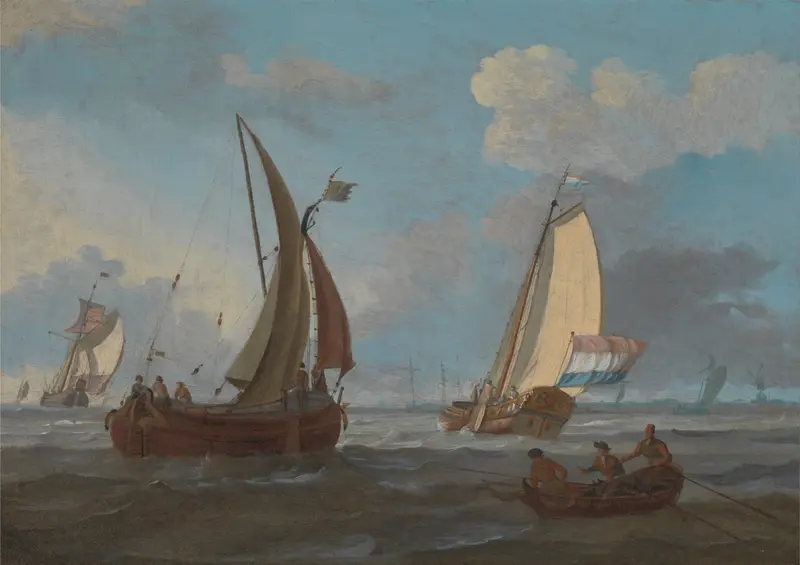
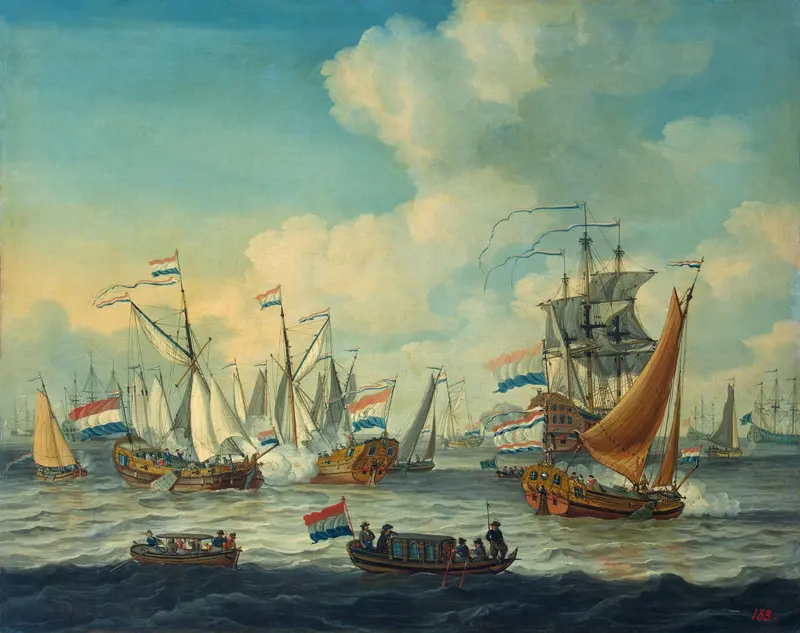
What first catches the eye is the sheer choreography of ships—dozens of sails billowing, flags snapping, each vessel angled with purpose across a restless sea. The artist, Adam Silo, orchestrates this maritime assembly with a sense of anticipation: every mast and pennant points to the central ship, a flagship bristling with detail and authority. The low horizon hands the sky a starring role, its broad expanse dwarfing even the grandest hull, while the play of light on the water’s surface draws the viewer from foreground skiffs to distant silhouettes.
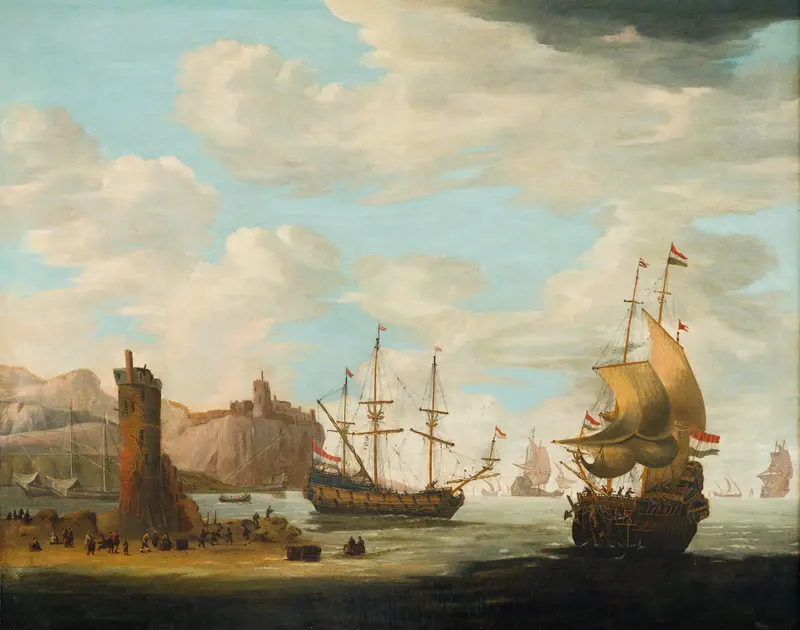
Every ripple and brushstroke signals movement and command, as if the entire fleet is poised for a ceremony or a show of strength. This painting belongs to the world of the late seventeenth and early eighteenth centuries, when the Dutch Republic’s naval power was both a source of national pride and a tool of international influence. Works like this were often commissioned to commemorate great events, display the might of a fleet, or honor an admiral’s command—visual trophies for city halls, admiralties, or private collectors. Painted between 1689 and 1760, and now part of the Amsterdam collection, this scene captures not just ships but the ambitions and anxieties of an age when control of the sea meant control of trade, security, and prestige.
History has kept few traces of some of these gatherings, but the painting’s energy invites us to imagine the noise, the salt, and the sense of occasion that once filled this wind-whipped air.