Fleet Manoeuvres Performed in the Usselmeer for Peter I During His Visit to Amsterdam — History & Facts
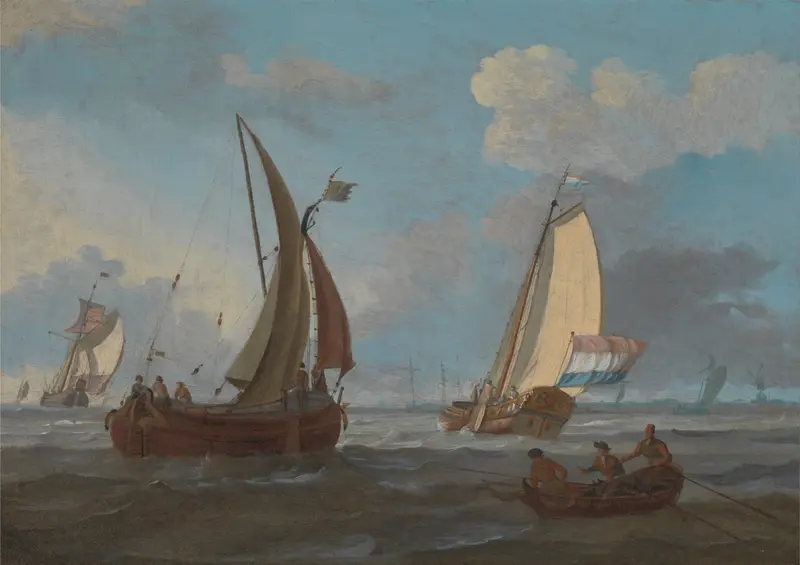
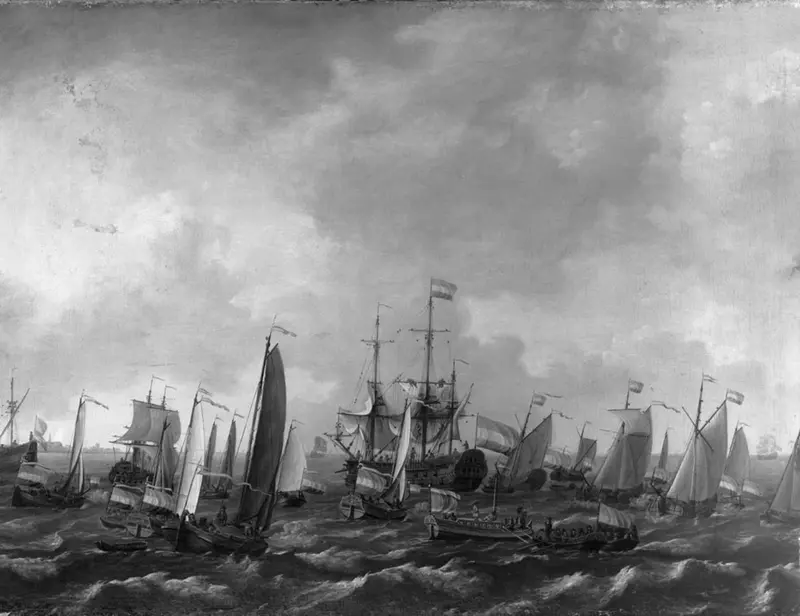
What first commands the eye is the sheer choreography of sails and flags, a spectacle of Dutch maritime pride set against a sky that seems to billow with the same energy as the canvas below. Every detail in Fleet Manoeuvres Performed in the Usselmeer for Peter I During His Visit to Amsterdam is a signal: the tricolor banners whip in the wind, boats cluster and pivot, and a haze of gun smoke drifts from a ceremonial salute. The painter, Adam Silo, draws your gaze not to a single ship but to the restless movement between them, where the water churns and the crews lean into their tasks.
Light pours from the left, catching the white sails and gilded sterns, giving the whole scene a sense of anticipation—this is a moment staged for an important guest, and every vessel plays its part. Painted between 1698 and 1699, this work belongs to a world where maritime display was both art and diplomacy. The late seventeenth century saw the Dutch Republic at the height of its naval power, and such fleet reviews were public theatre, staged for visiting dignitaries and potential allies. Paintings like this served as both commemoration and advertisement: proof of naval might, tokens of civic pride, and souvenirs for those who witnessed the spectacle.
Today, this painting is held in the Hermitage Museum, a reminder that history has kept few traces of the specific day it records, but the impression of ceremony and spectacle endures—inviting you to linger over each ship, each flag, and imagine the sound of cheers and cannon fire drifting across the water.