
After church — History & Facts
Who listens when art speaks of silence? In the stillness of After Church, a moment of rebirth unfolds, cloaked in the quietude that follows communal worship. Look to the left, where figures are emerging from the church's embrace, their postures a blend of reverence and relief. The soft, golden glow of the setting sun bathes the scene, accentuating the warm hues of their garments and the cobblestone path that leads away from the sanctuary. Notice how the light filters through the trees, casting delicate shadows that dance on the ground—a visual manifestation of the transition from the sacred to the everyday. As you take in the scene, consider the interplay of solitude and togetherness.
Some individuals linger, lost in thought, while others engage in animated conversation, reflecting the emotional spectrum that arises after spiritual gathering. The contrast between the church's solidity and the gentle movement of the figures captures the duality of faith: a haven of tradition juxtaposed with the fluidity of life beyond its walls, hinting at renewal along the path they tread. In 1855, Adrianus Eversen painted this work during a period of burgeoning interest in genre scenes in the Netherlands, often characterized by their intimate depictions of daily life. He was influenced by the Romantic movement, which sought to explore deeper emotional states through ordinary experiences.
This painting speaks to a pivotal moment in his career, as he navigated the interplay of faith, community, and the human experience, marking a significant step in his artistic evolution.
More Artworks by Adrianus Eversen
Browse all →
A Town In Holland
Adrianus Eversen
Figures On A Dutch Street, Winter
Adrianus Eversen
View of a sunlit Dutch street scene
Adrianus Eversen

A Dutch street scene
Adrianus Eversen
A busy street in summer
Adrianus Eversen
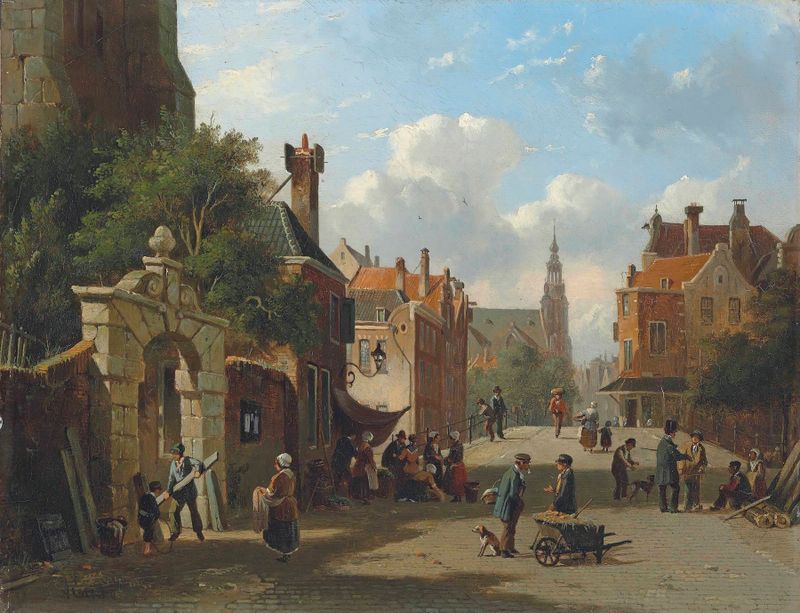
A busy street in Holland
Adrianus Eversen
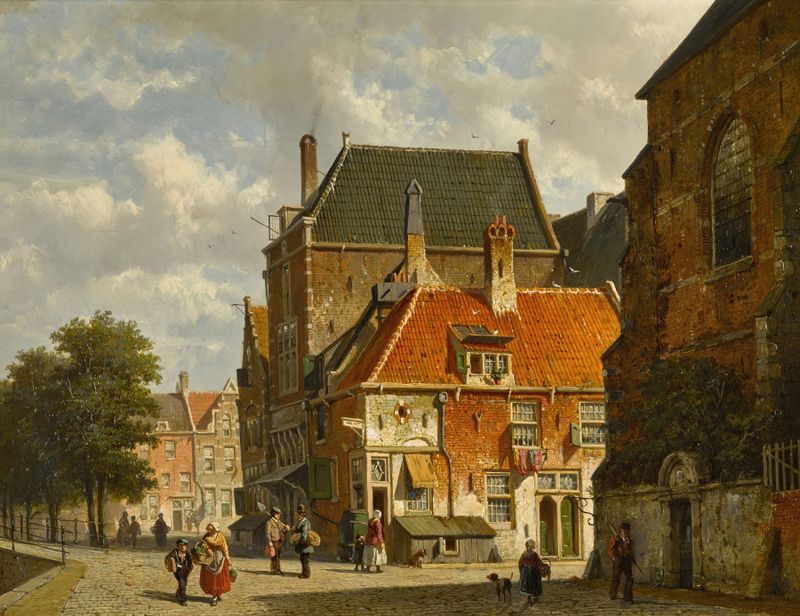
Figures on a Sunlit Street
Adrianus Eversen
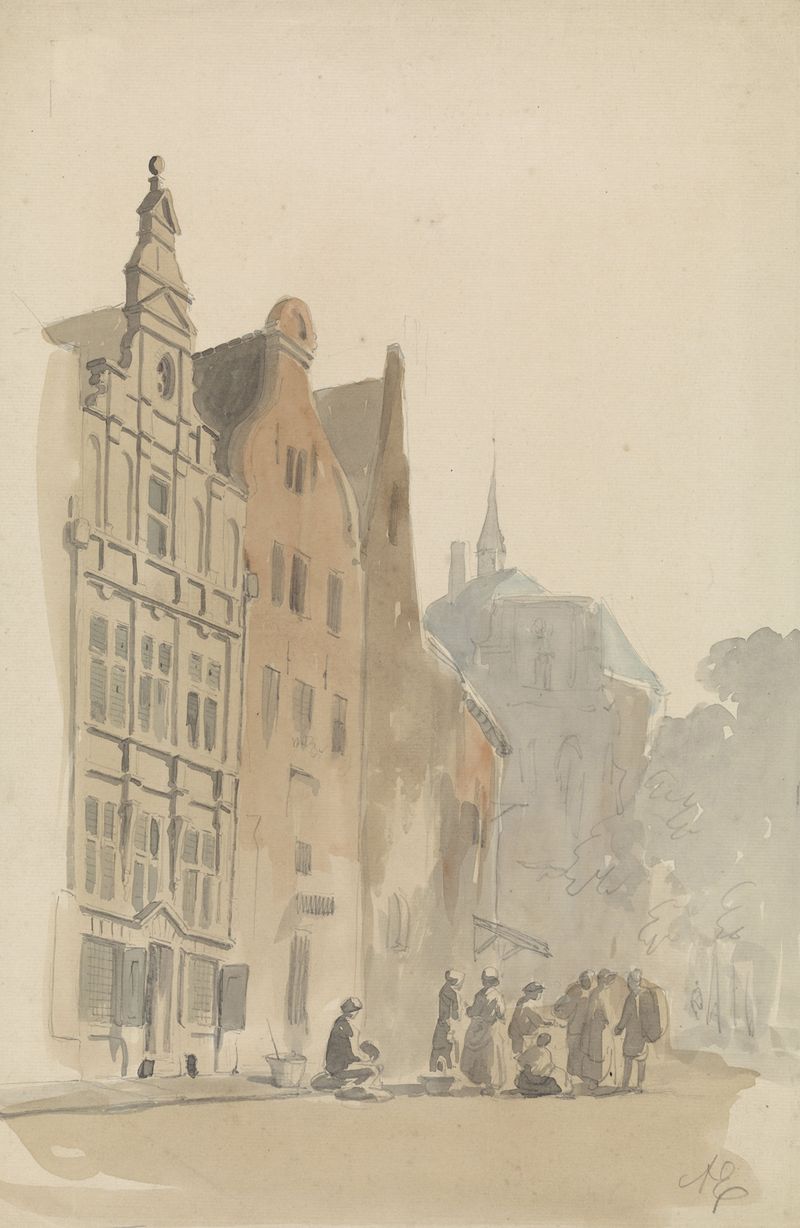
Ronde Lutherse kerk en enige huizen te Amsterdam
Adrianus Eversen
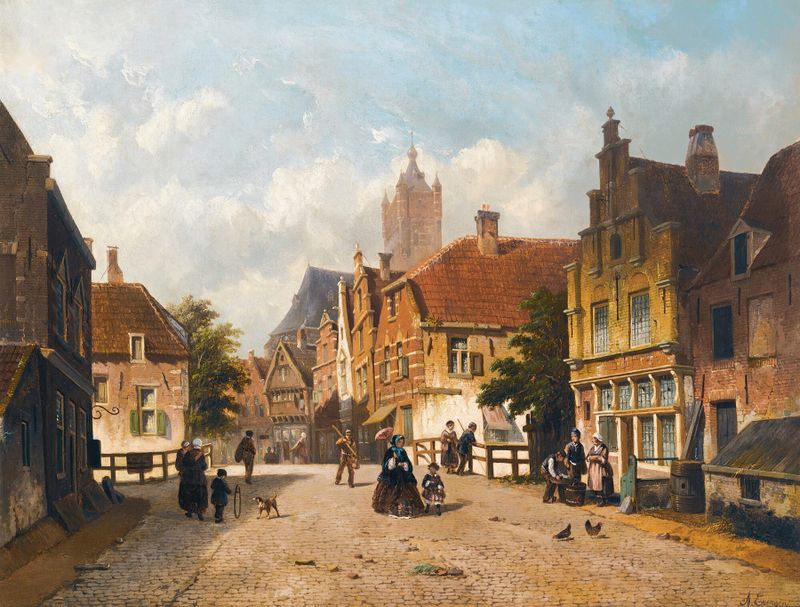
A dutch street
Adrianus Eversen

Achter de Westerkerk in Enkhuizen
Adrianus Eversen





