Allegorie op het Christendom — History & Facts
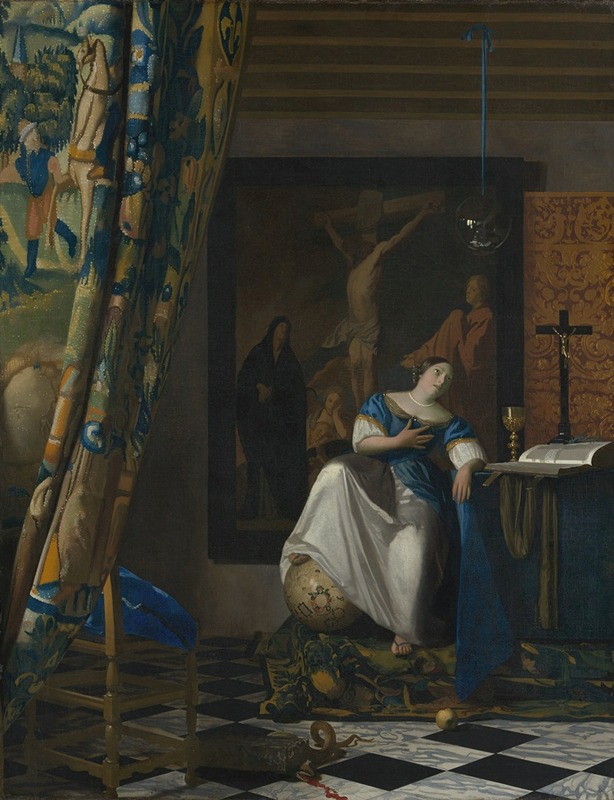
What if silence could speak through light? In the intricate depths of Allegorie op het Christendom, grief is both a whisper and a shout, encapsulated in the rich tapestry of symbols that resonate through time. Focus on the figures entwined in this profound allegory — notice how the light illuminates the central crucifix, its somber presence guiding your gaze amidst a sea of muted colors. The tonal shifts between deep shadows and soft highlights enhance the emotional weight, drawing attention to the expressions of sorrow and reflection on the faces of the witnesses surrounding the scene. The delicate interplay of reds and golds contrasts sharply with the dark background, creating a sense of urgency and the fragility of faith. Within this composition lies a profound tension, where joy and mourning coexist.
The juxtaposition of the eternal promise of salvation against the raw pain of loss compellingly illustrates the duality of human existence. Each character embodies a fragment of collective grief, their gestures and postures speaking volumes about the inner turmoil of faith amid despair. The minutiae of their expressions reveal unspoken stories — a silent query about hope amidst heartache, questioning the very nature of divine solace. Beham created this work during a rapidly changing period in Europe, likely between 1510 and 1550, when the Reformation was reshaping religious thought and artistic expression.
Working primarily in Nuremberg, he navigated a landscape marked by both innovation in printmaking and a resurgence of humanist themes. This backdrop informed his exploration of intricate allegories, marrying the spiritual and secular in a time of profound contemplation and unrest.
More Artworks by Hans Sebald Beham
Browse all →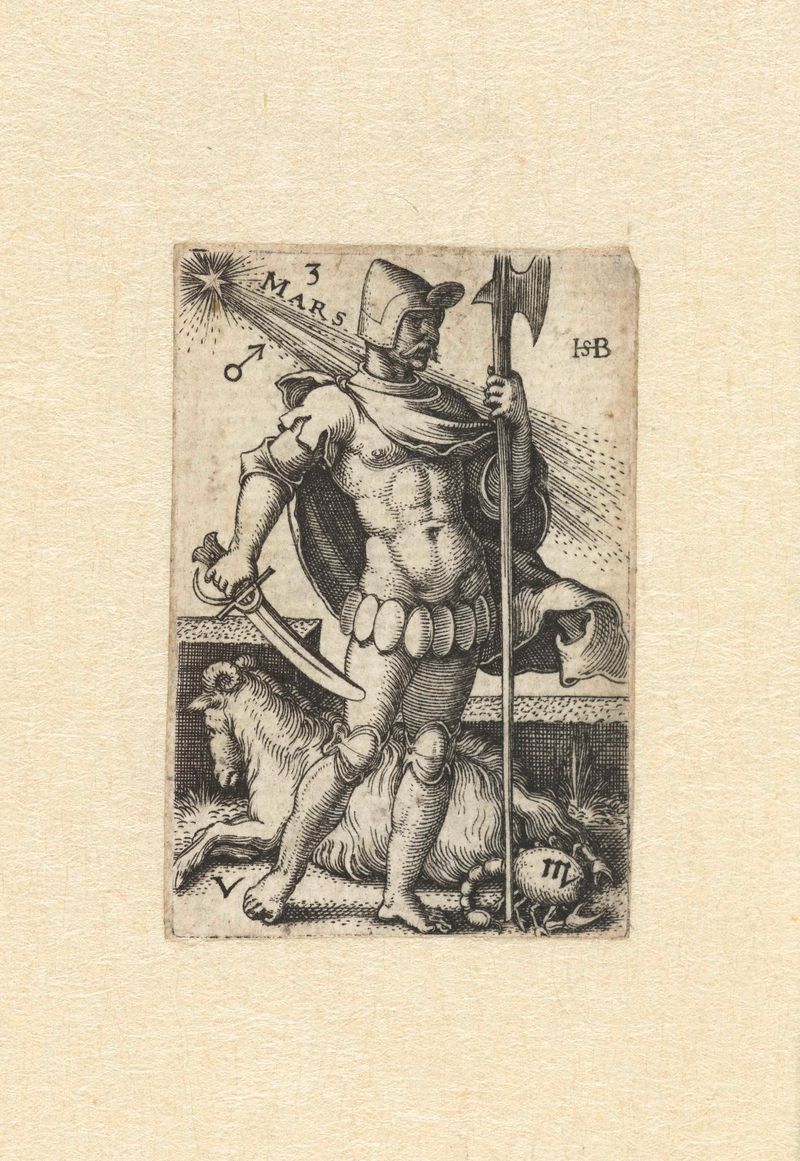
Mars met sterrenbeelden Ram en Schorpioen
Hans Sebald Beham

Achilles in gevecht met Hector
Hans Sebald Beham
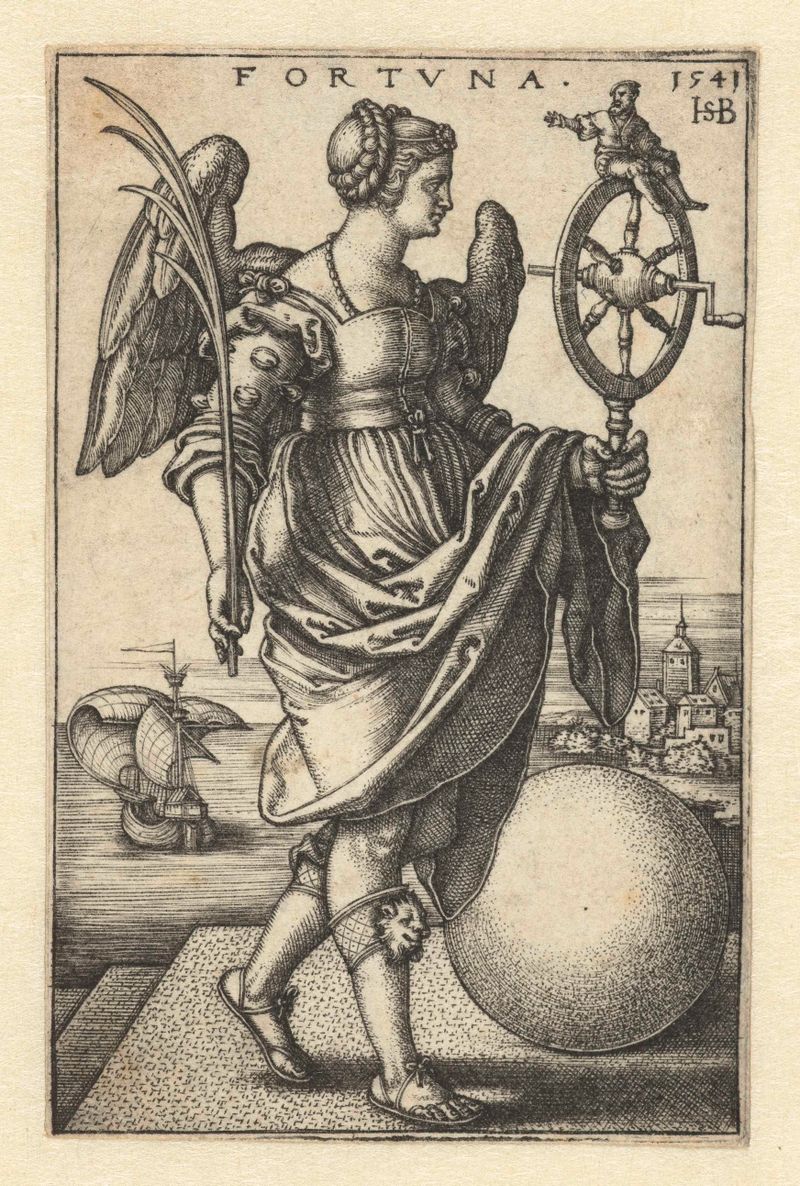
Fortuna
Hans Sebald Beham

Hercules worstelt met Antaeus
Hans Sebald Beham

Twee muzikanten met schalmey en doedelzak
Hans Sebald Beham

Voorzichtigheid (Prudentia)
Hans Sebald Beham

Hercules in gevecht met de Trojanen
Hans Sebald Beham
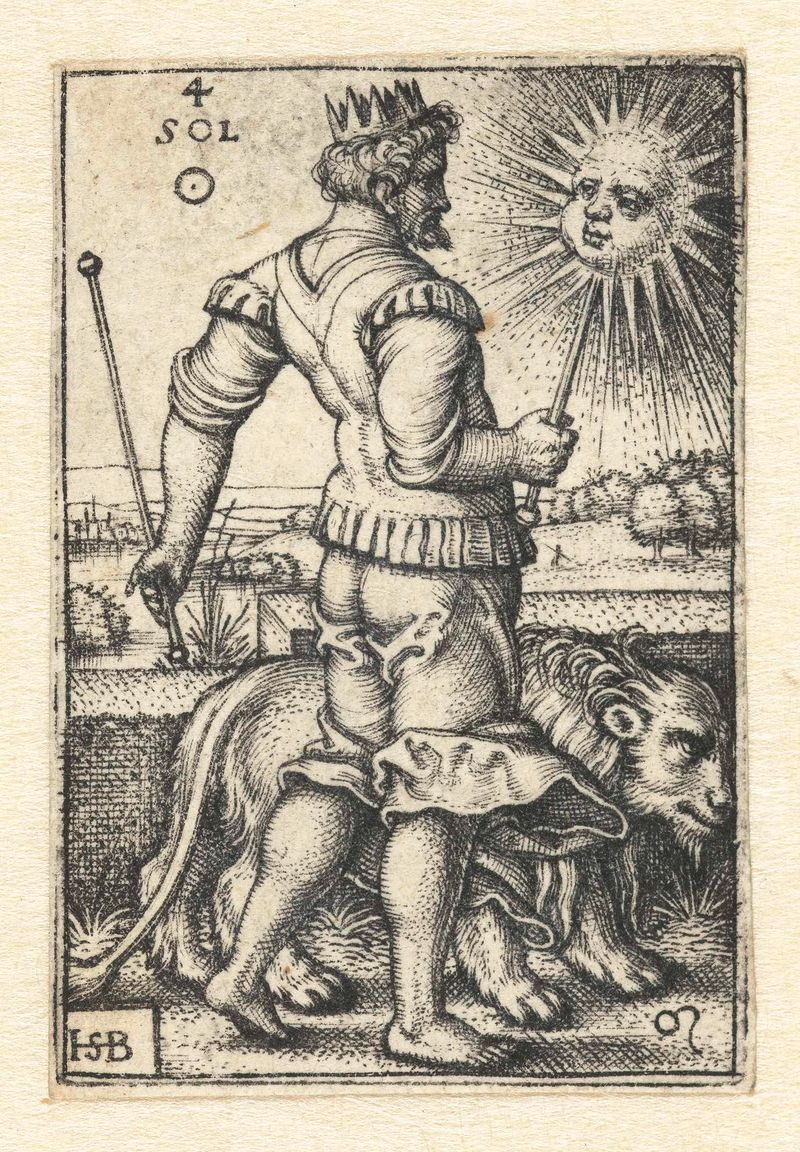
Apollo (Sol) met sterrenbeeld Leeuw
Hans Sebald Beham
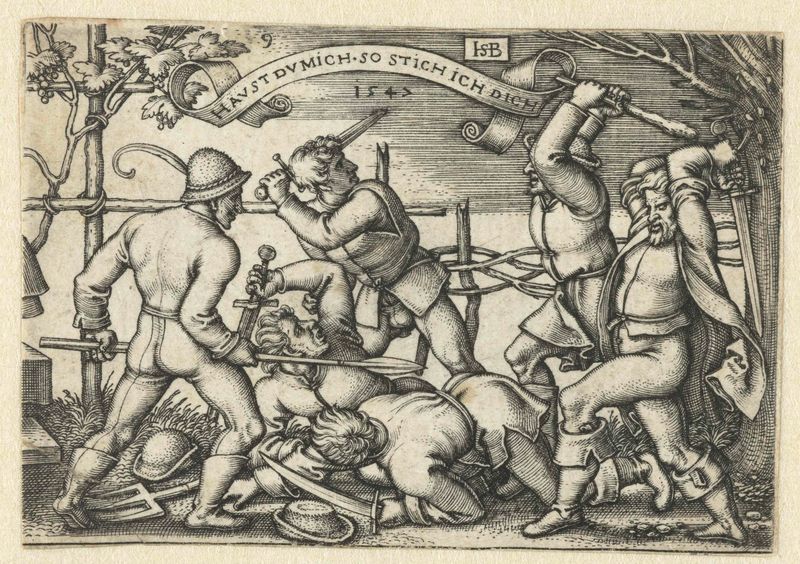
Vechtende boeren met zwaarden
Hans Sebald Beham
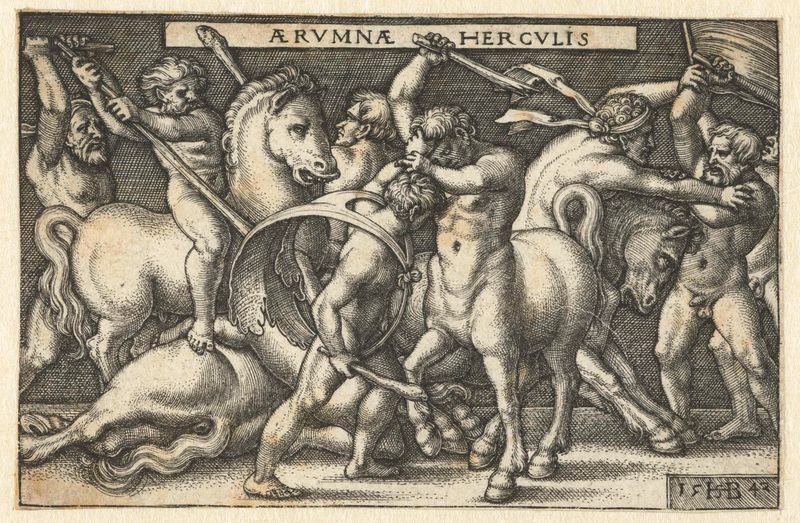
Hercules in gevecht met centaurs
Hans Sebald Beham