Altarscreen panels mounted in contemporary framework — History & Facts
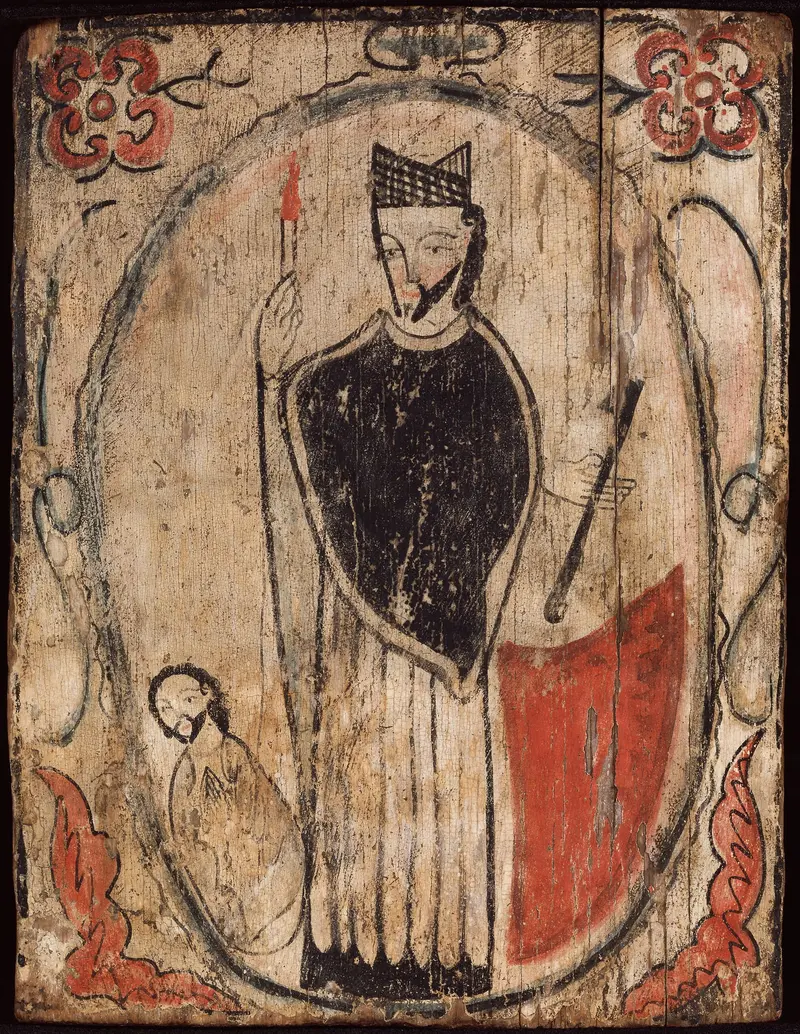
A parade of saints stands beneath painted arches, each figure isolated yet joined in a silent conversation across the centuries. The eye is drawn first to the rhythmic repetition of white columns and arches, framing each saint like an actor on a stage. The figures themselves are rendered with a directness that feels almost intimate: hands clutching lilies, crosses, or the Christ Child, faces caught in a moment of calm gravity.
The palette is warm and earthy, dominated by ochres and reds that lend the panels a sense of shelter and warmth, as if each niche were a sanctuary. Every gesture and object is a clue—the crowned Madonna and Child, the palm fronds of martyrdom, the black habits of monastic devotion—inviting the viewer to read these images as a visual litany of faith. Works like these altarscreen panels, created circa 1825 by Antonio Molleno, belong to a long tradition of devotional art in Catholic Europe and the Americas. Such panels were often commissioned for rural churches or chapels, intended to instruct and inspire a congregation with familiar holy figures.
The style here—simple, frontal, and almost naive in its outlines—reflects both the persistence of older iconographic models and the realities of local craftsmanship in the early nineteenth century. Little is recorded about Molleno or the precise origins of this set, now preserved in the collection DAGb67B95HuqjQ, but the panels themselves speak of a world where faith was woven into daily life and art was a bridge between the earthly and the divine. Stand before these saints and you stand where generations once knelt, searching each painted face for guidance and hope.