
Art tradition · 18th–20th century · Worldwide
Folk Art and Paintings
Folk art is an art tradition found across periods and countries: art made by painters and craftspeople without academic training, often within the customs of their own community. The paintings in our collection date from the 18th to the 20th century and include portraits, landscapes, religious and historical scenes and popular prints, often with bold color, simple outlines and flat, decorative design. Its artists include Edward Hicks, Ammi Phillips, Erastus Salisbury Field, Joseph Whiting Stock and José Guadalupe Posada.
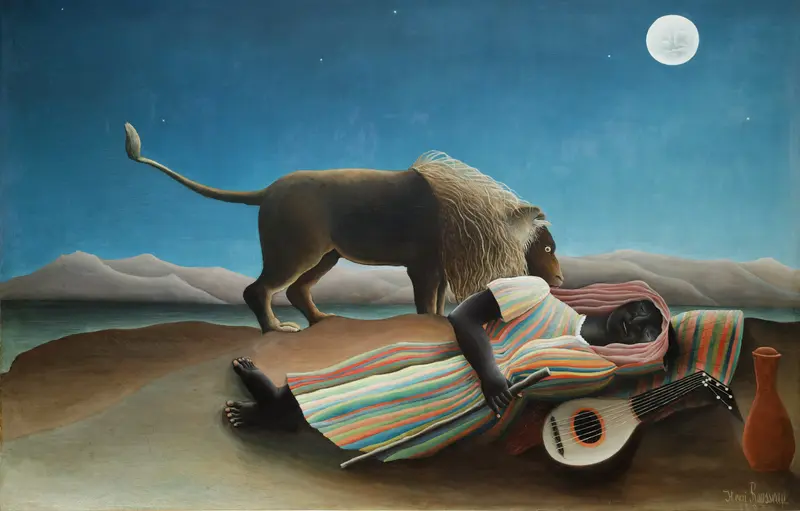
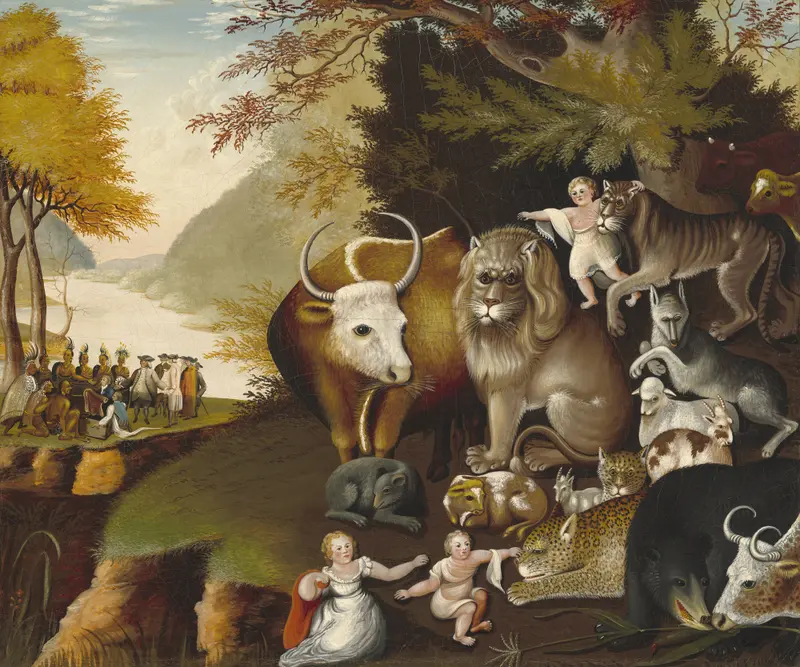
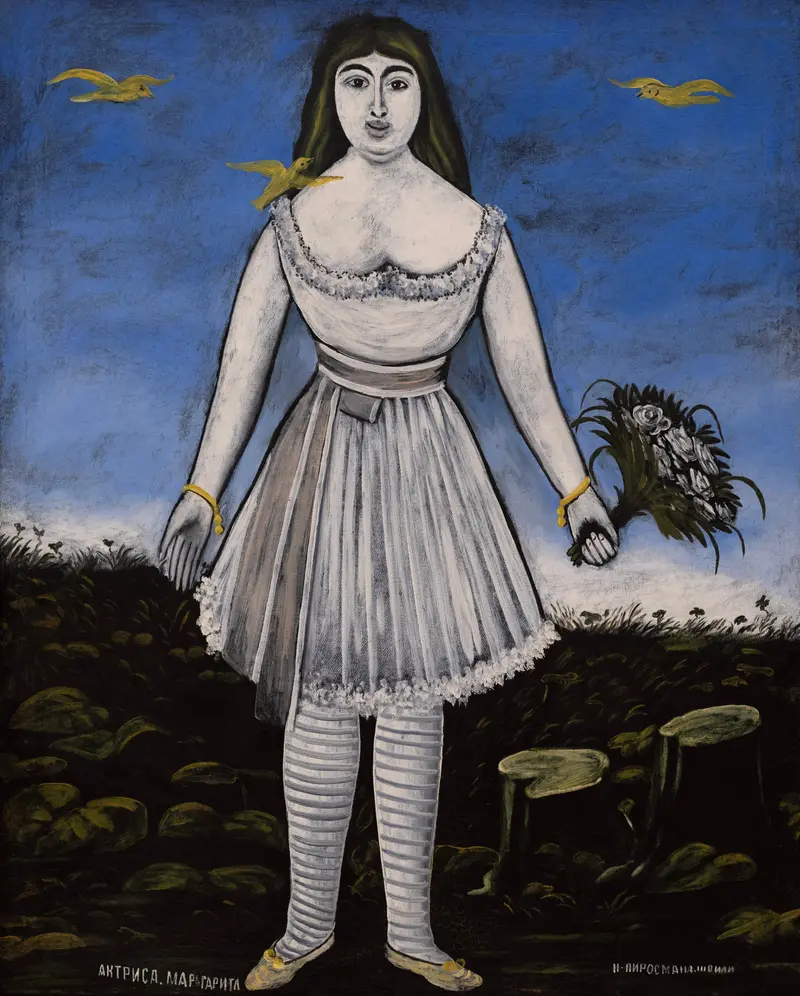
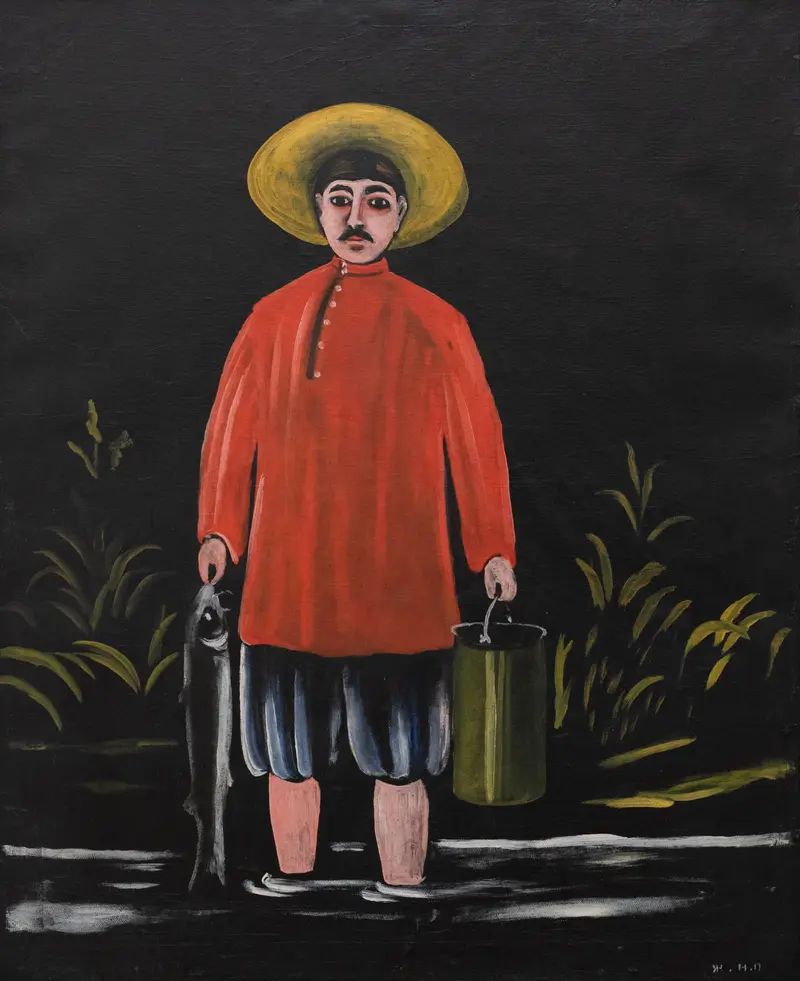
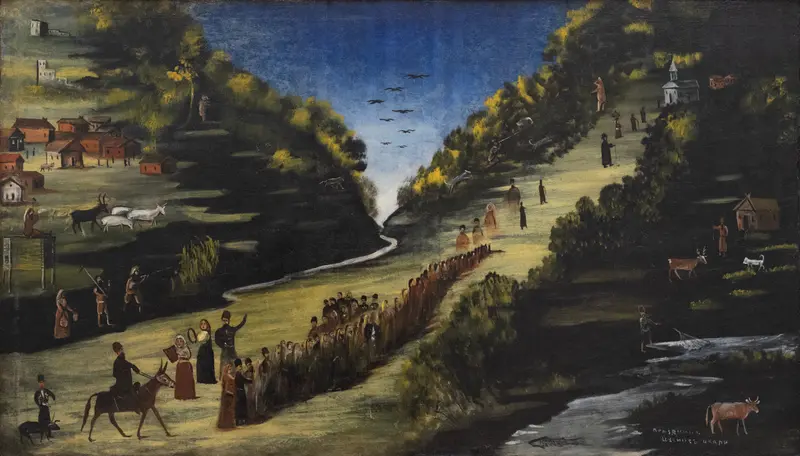
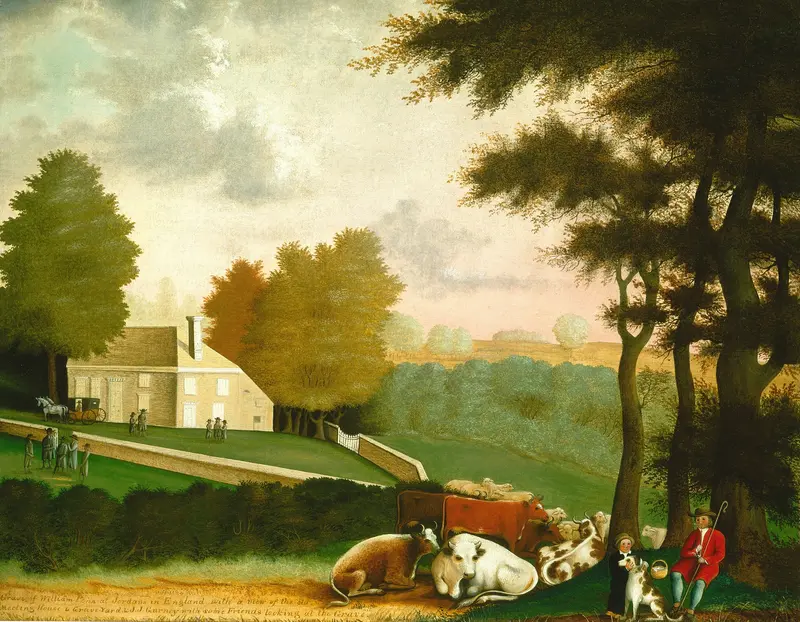
In America many were traveling portrait painters: Ammi Phillips taught himself to be a limner and worked from town to town in New England and New York, while Hicks, a Quaker sign painter, painted his Peaceable Kingdom more than 60 times. Self-taught painters in Europe are usually called naive, and the best known is Henri Rousseau, whose The Sleeping Gypsy shows a lion standing over a sleeping woman under a full moon; in Tbilisi, Niko Pirosmani painted people and animals in vivid colors on a black background.
Browse 298 folk art paintings and artworks below, all public domain and free to download.
Selected and written by Pavel MazuelasUpdated November 5, 2026
Part of Art Movements and Painting StylesRelated: Colonial American, Post-Impressionism, Famous Portrait Paintings
All folk art paintings and artworks
Posada's Mexican broadsides, American folk portraits and farm views, naive paintings by Rousseau and Pirosmani, Russian and Indian popular pictures, and ancient Andean objects. All public domain, free to download.









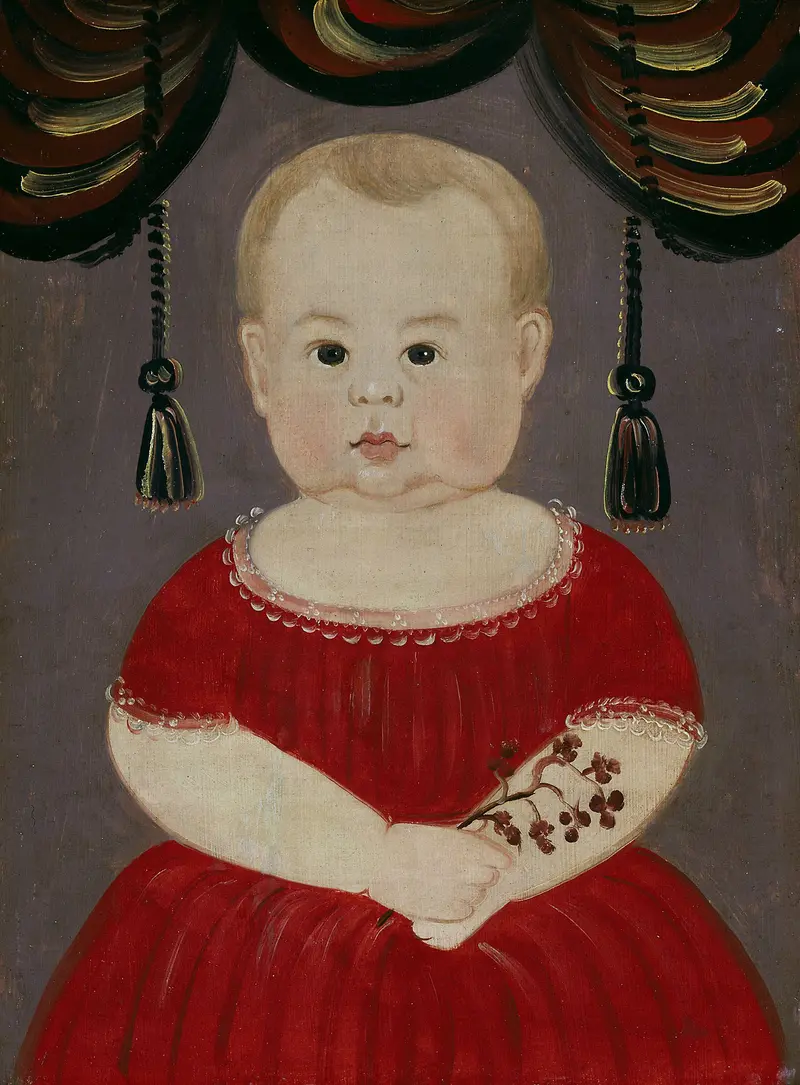

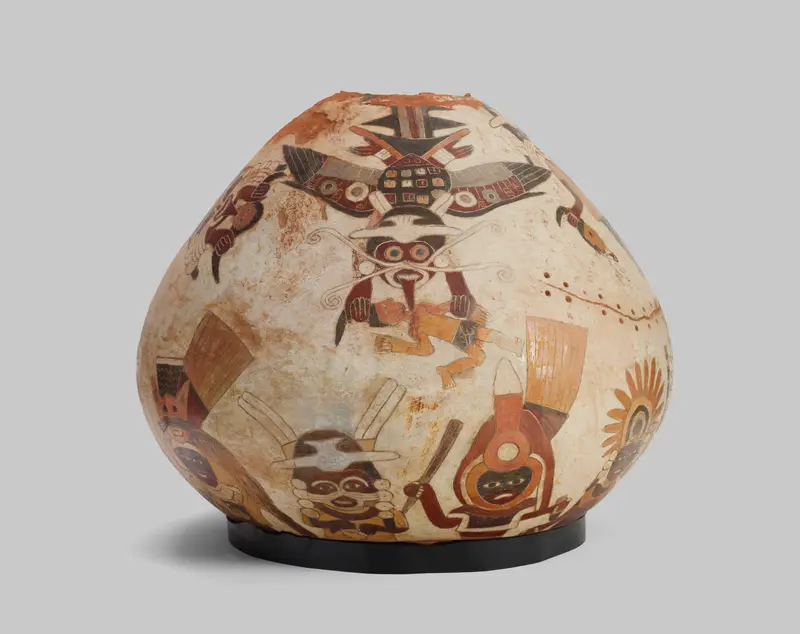
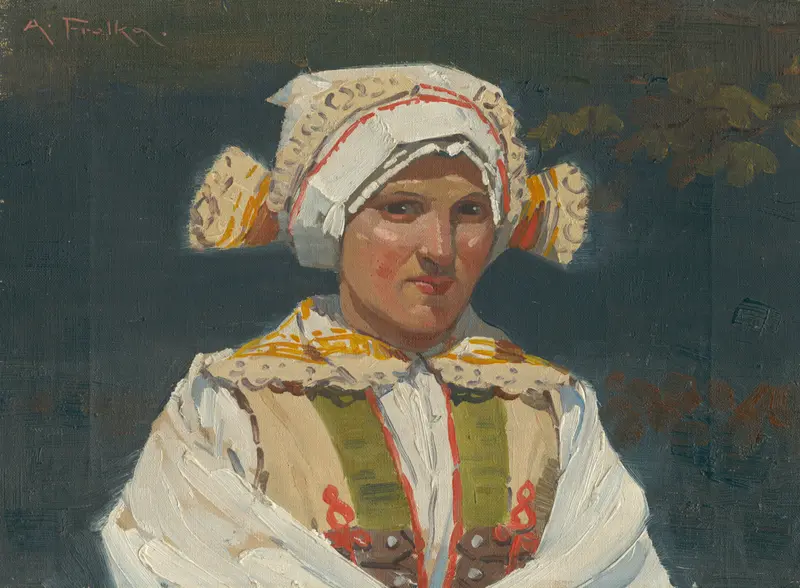
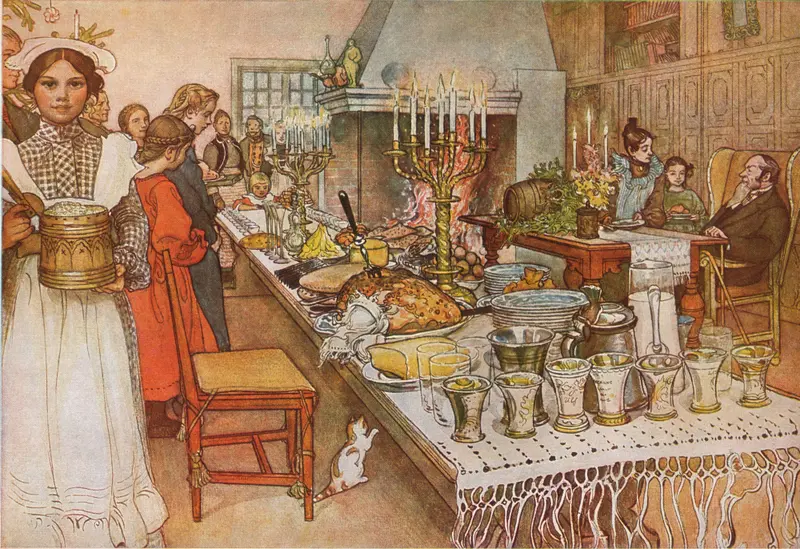
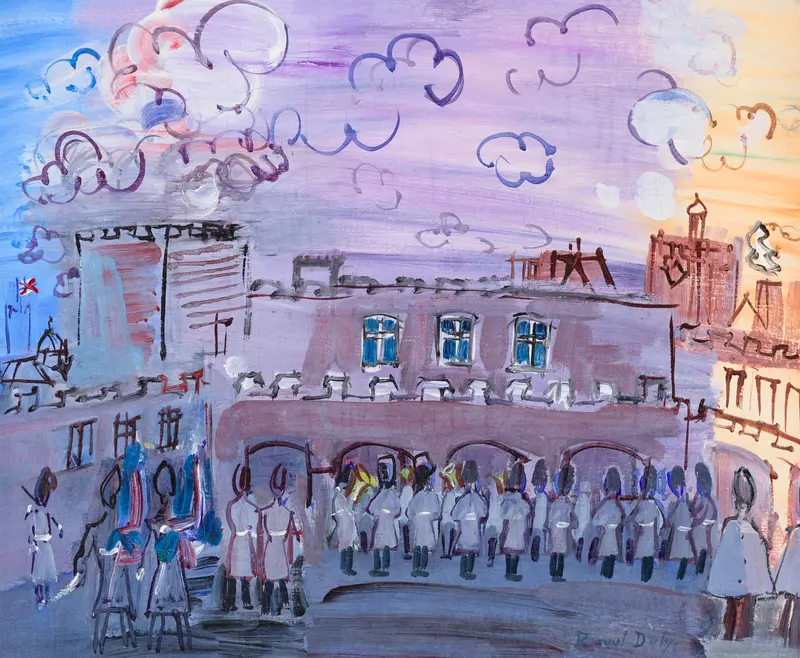
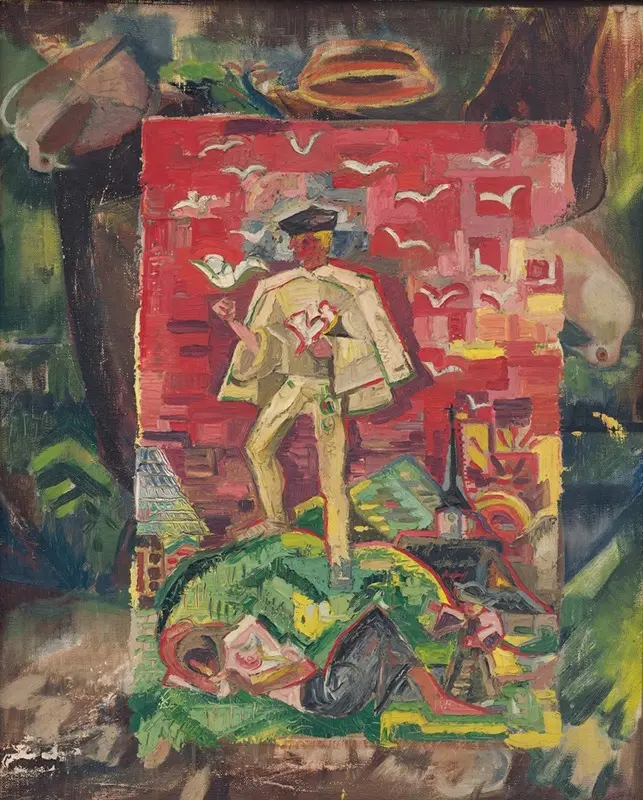
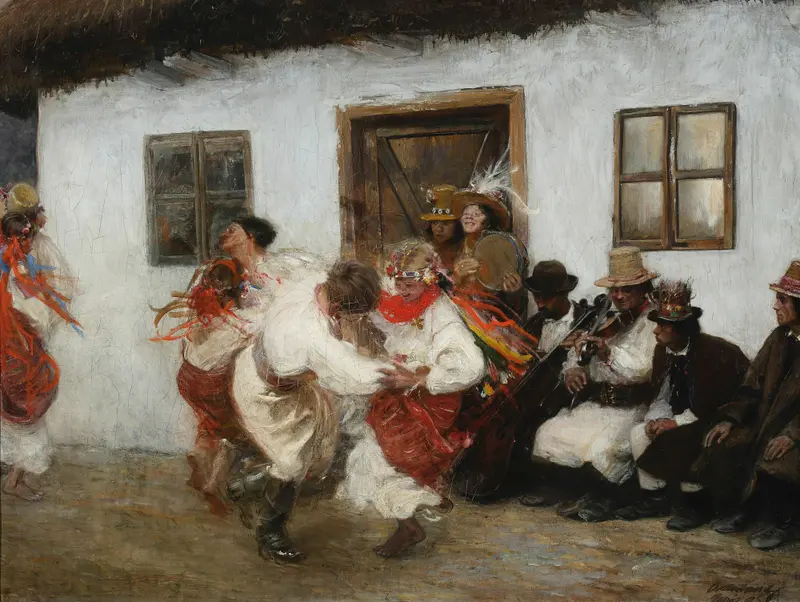








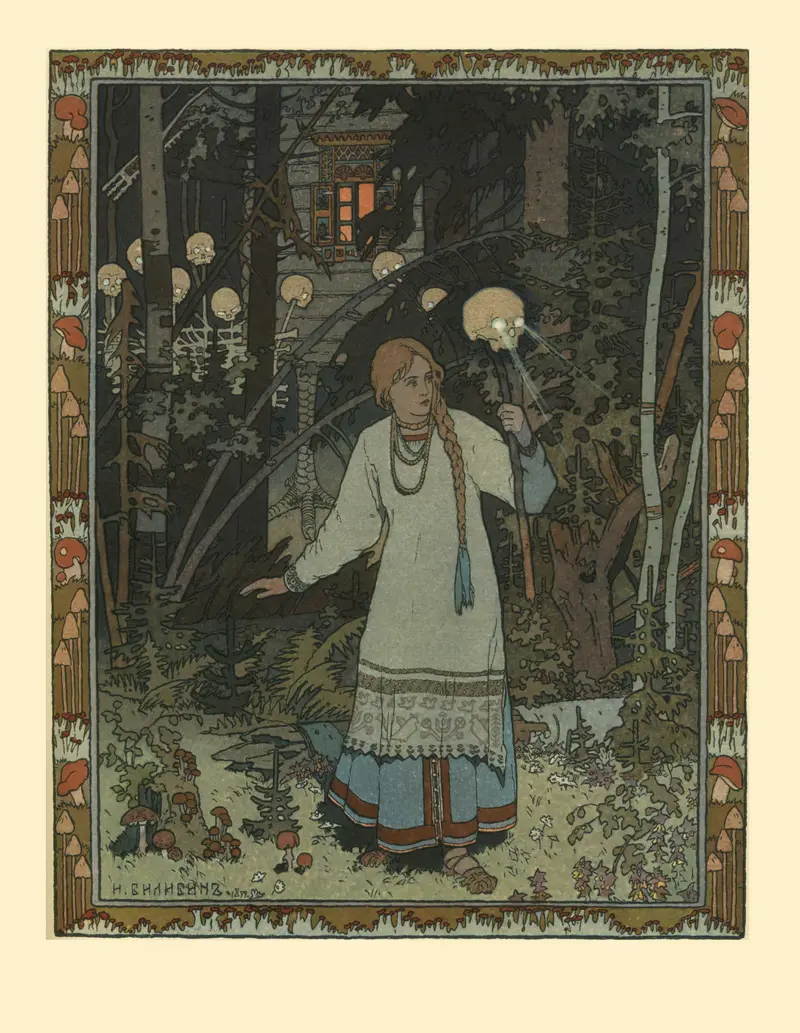
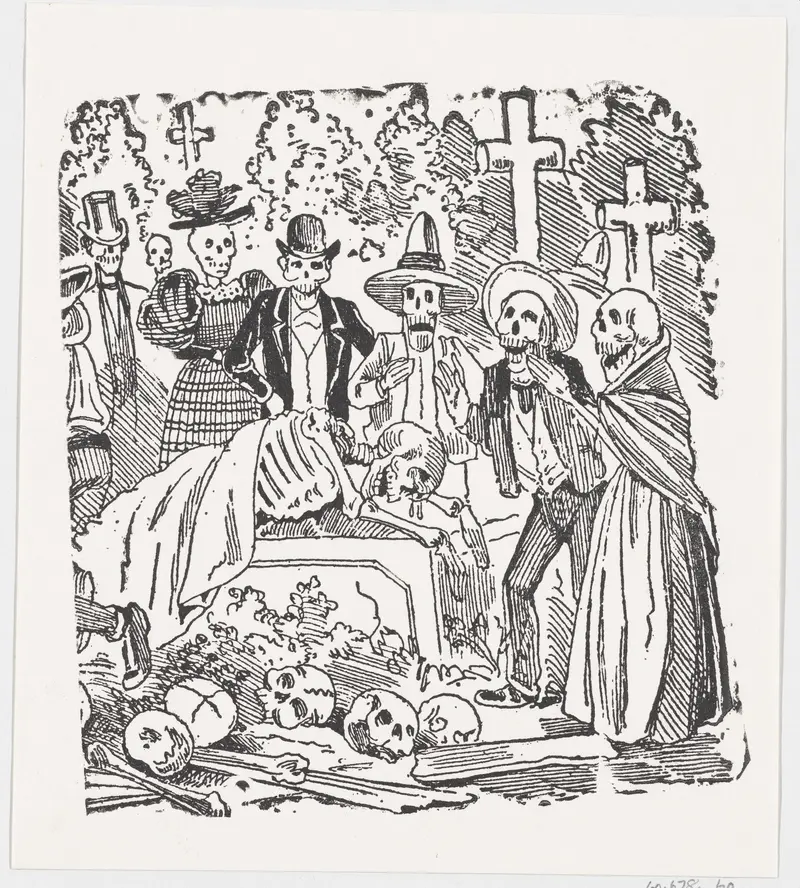
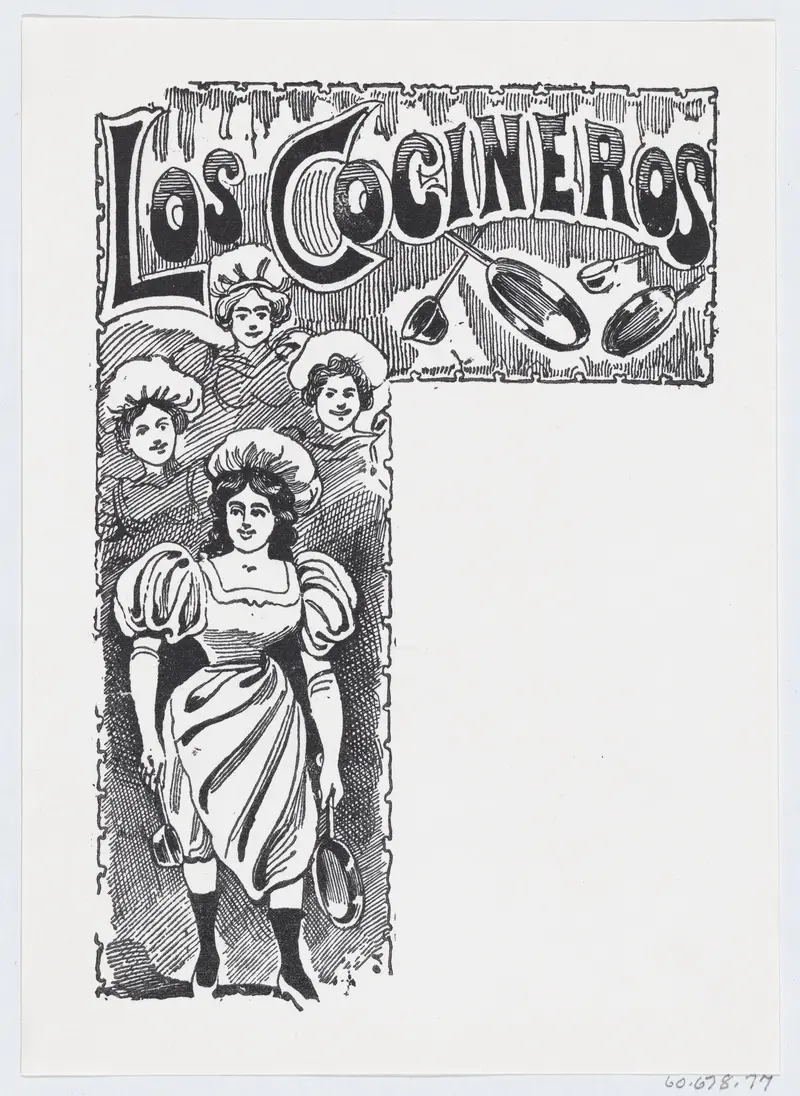
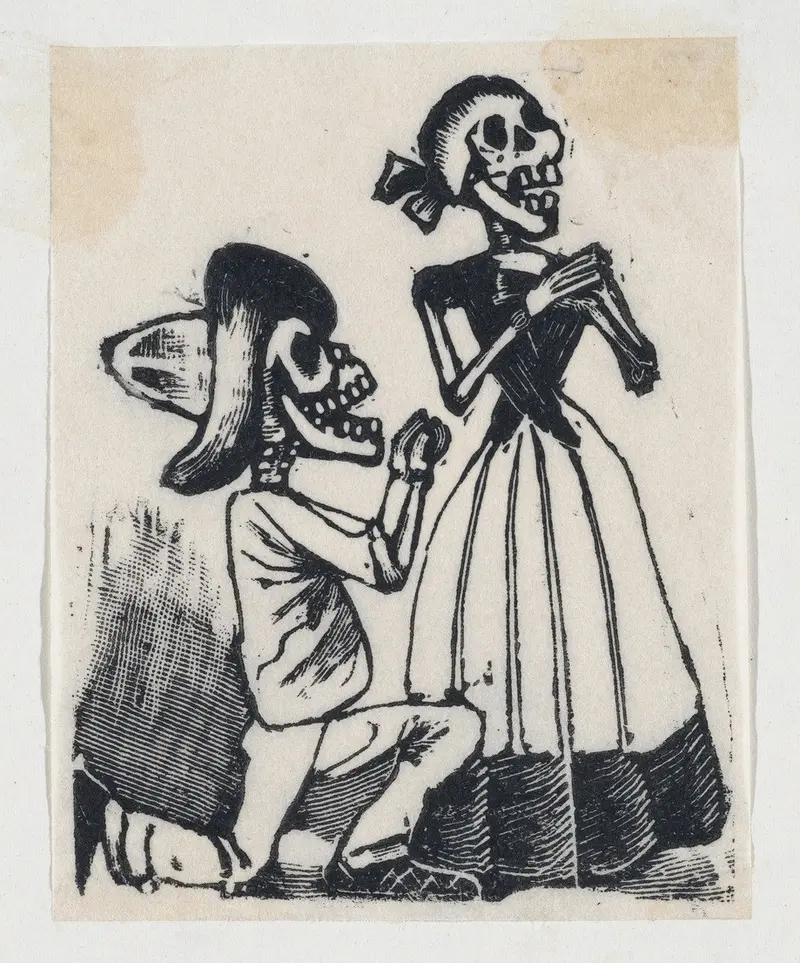

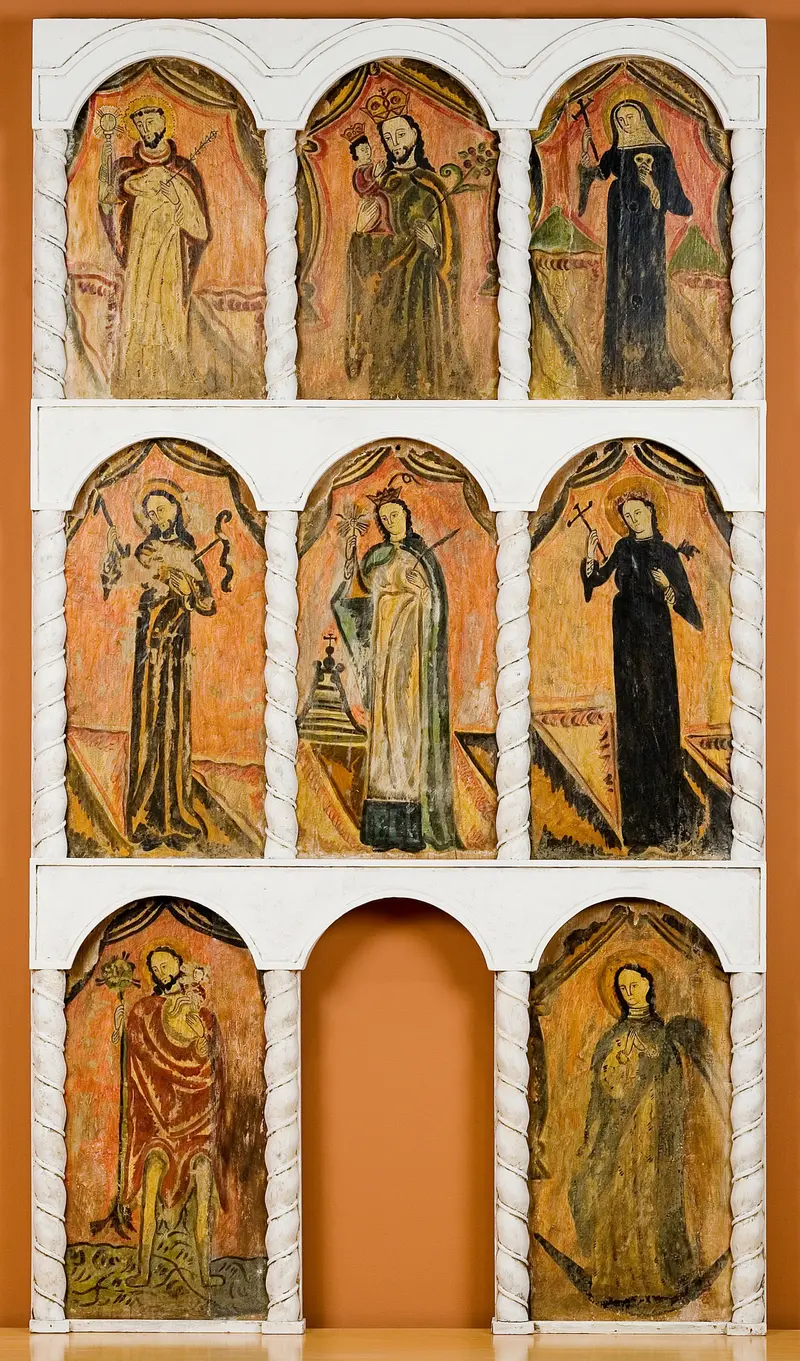
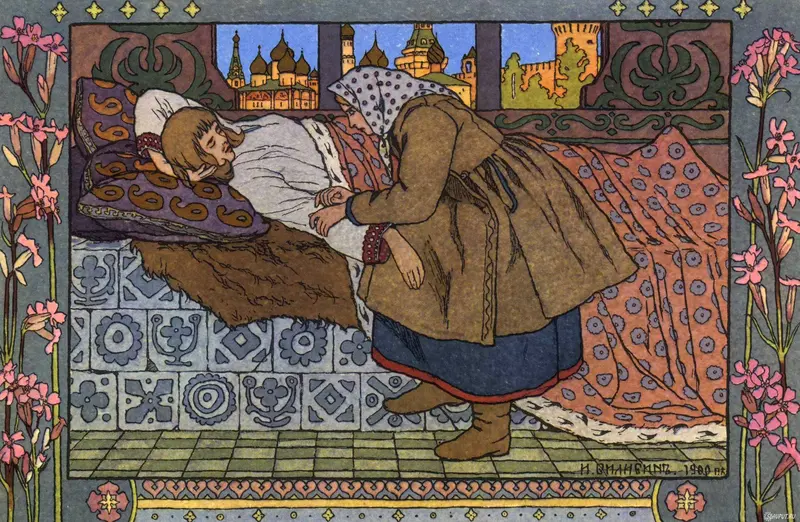
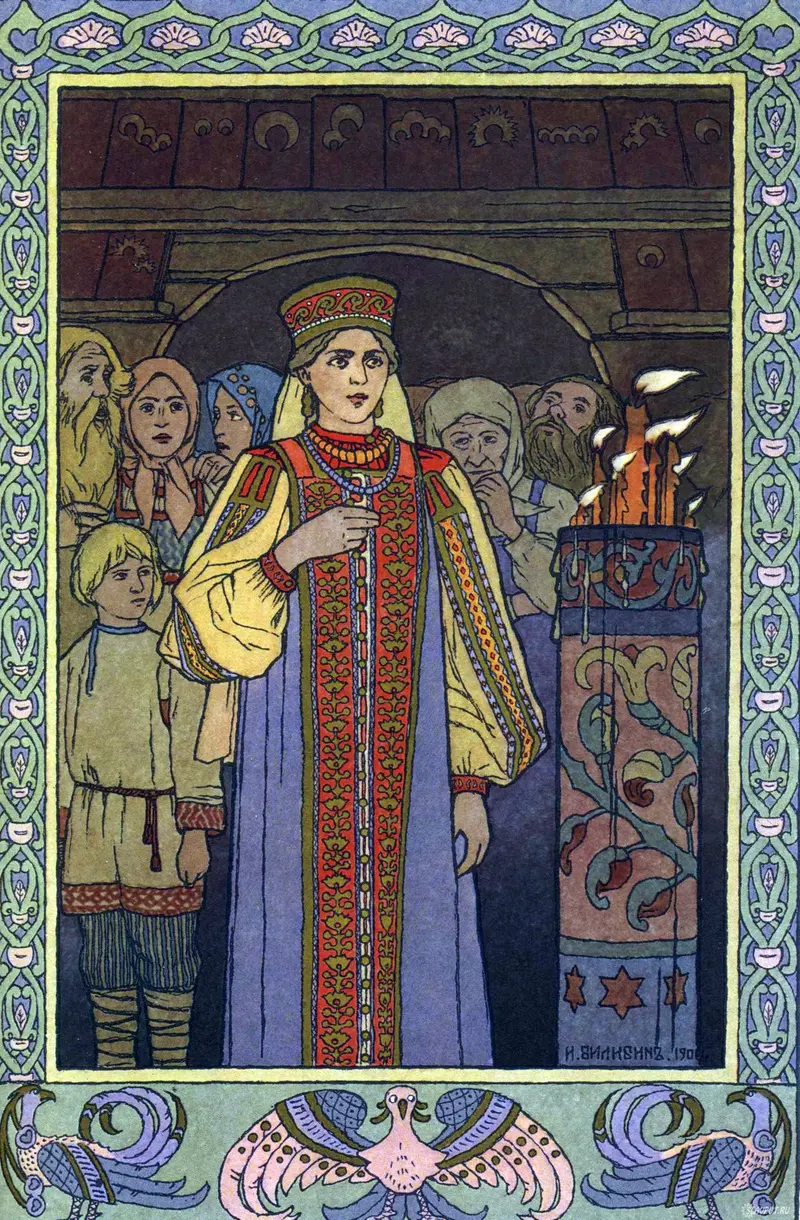
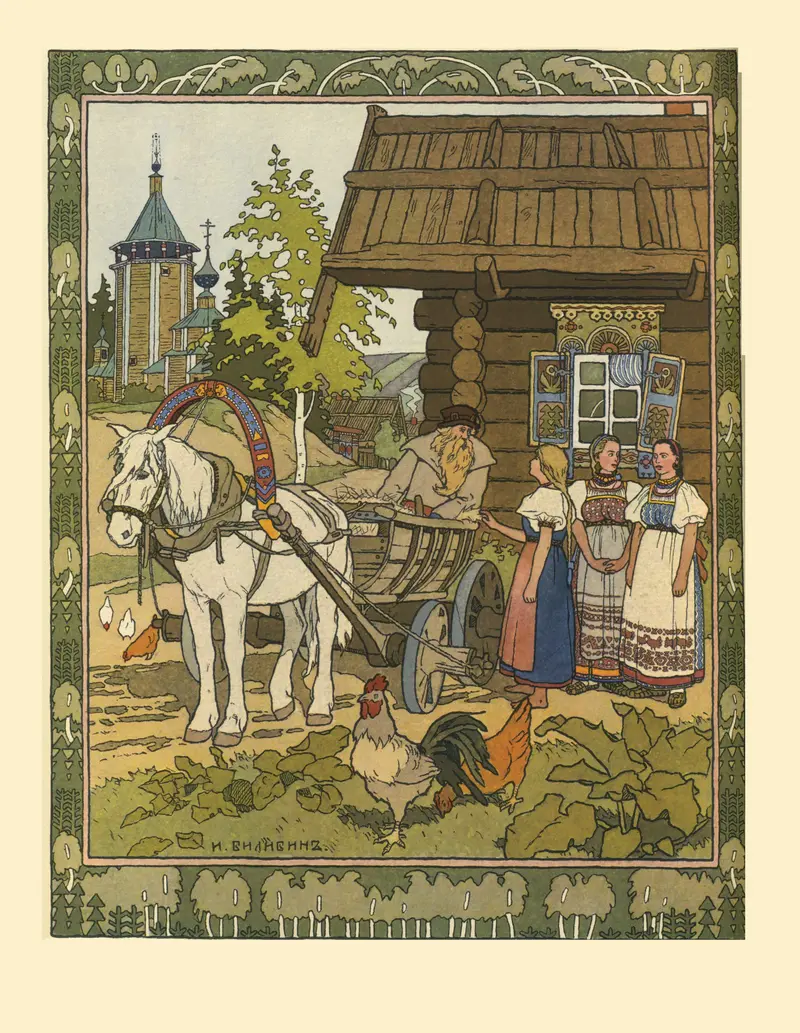
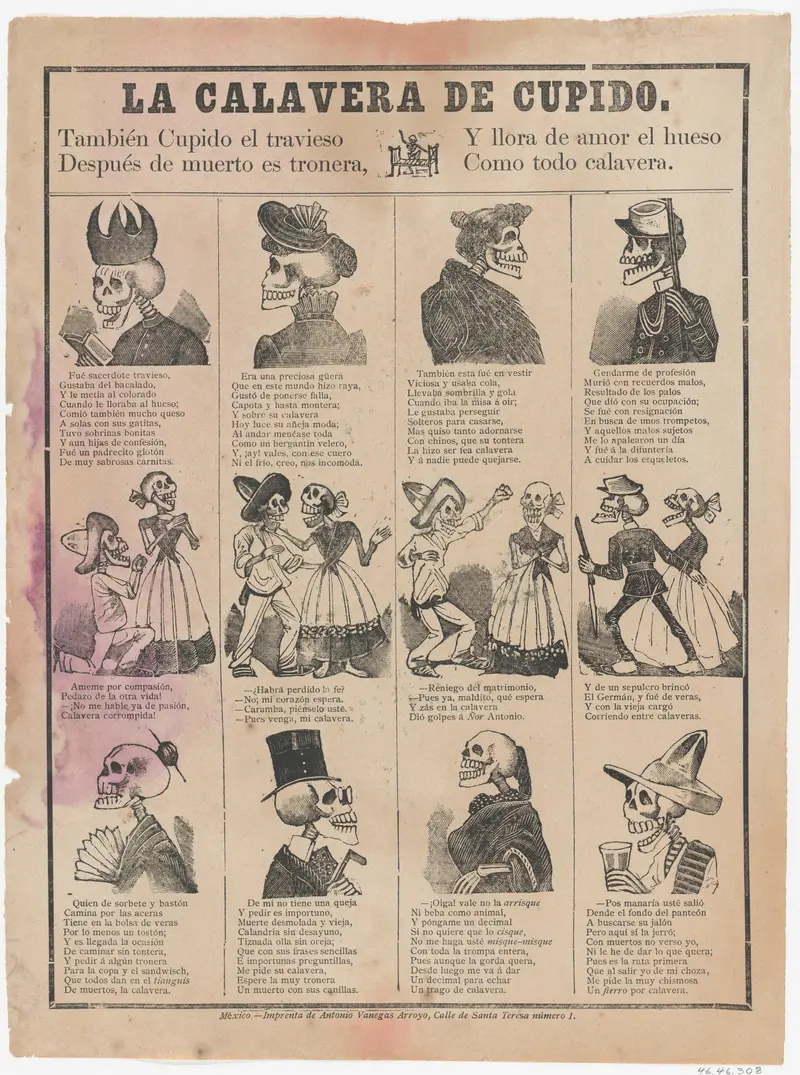
Famous folk art paintings
Folk and naive art known around the world. Click any work to see it up close and download it free.
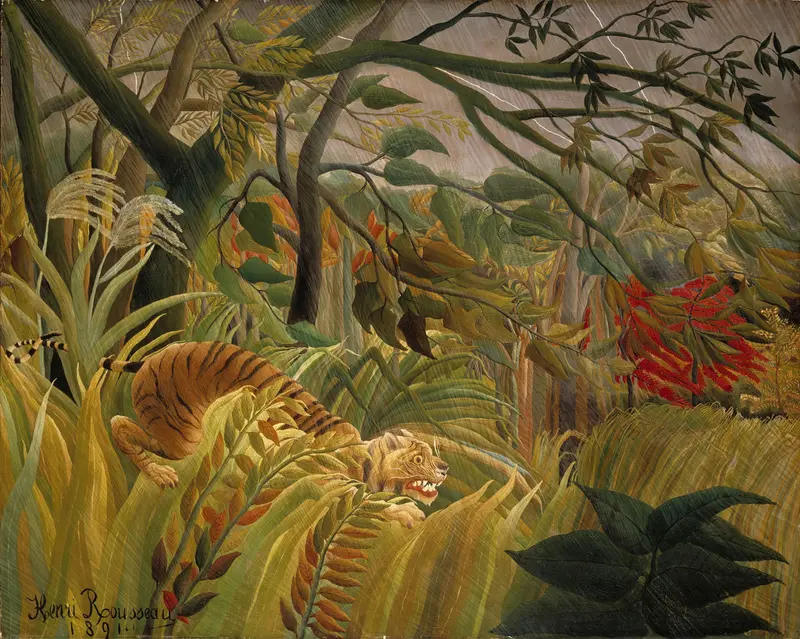

Famous folk artists
Painters and printmakers who worked outside the academies, from the American portrait painter Ammi Phillips to Henri Rousseau in Paris, Niko Pirosmani in Tbilisi and José Guadalupe Posada in Mexico City. Each link opens all their works.
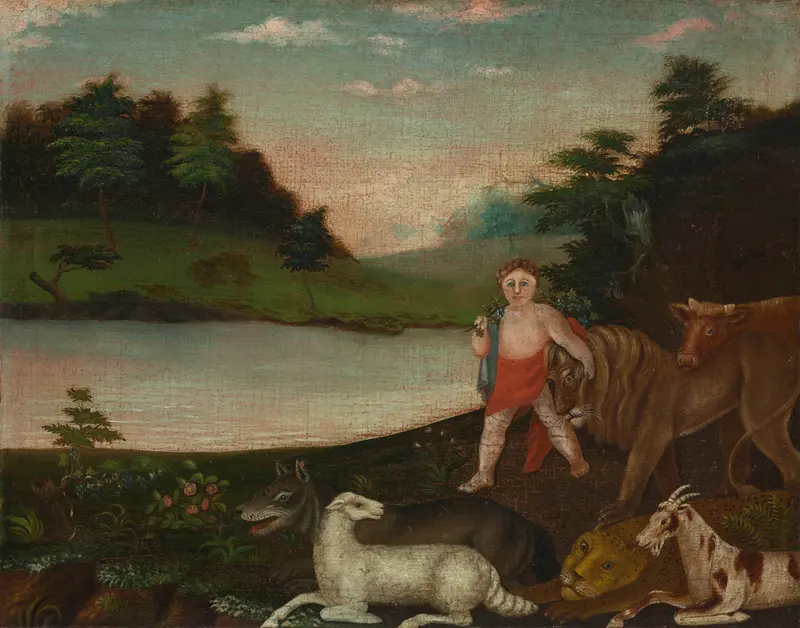 Edward Hicks1780–1849. A Quaker sign painter who turned to painting; he made more than 60 versions of the Peaceable Kingdom, and the Cleveland Museum of Art thinks its own, painted about 1816–18, is likely the first.
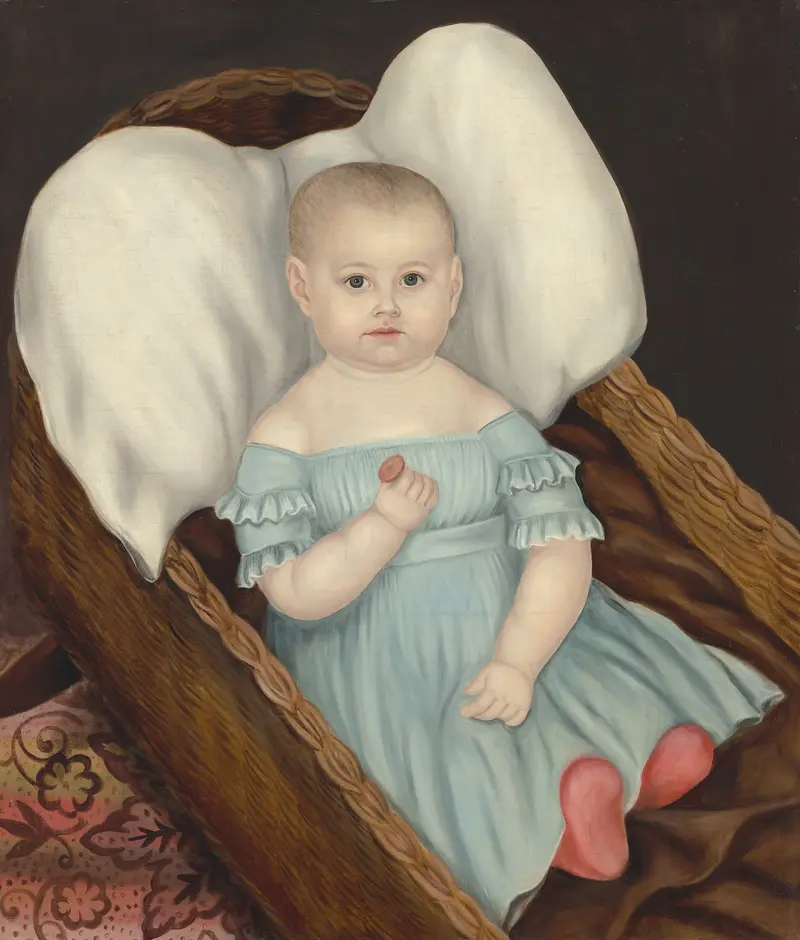
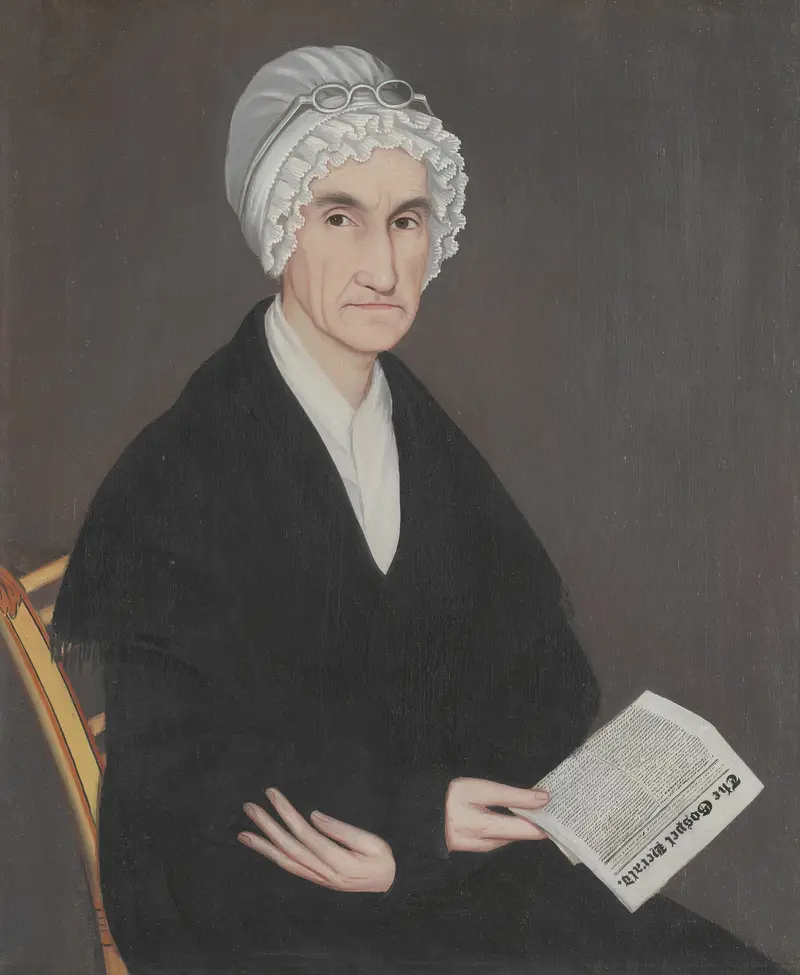 Ammi Phillips1788–1865. A self-taught traveling portrait painter in western Connecticut, western Massachusetts and New York, and one of the most successful portraitists of rural New England.
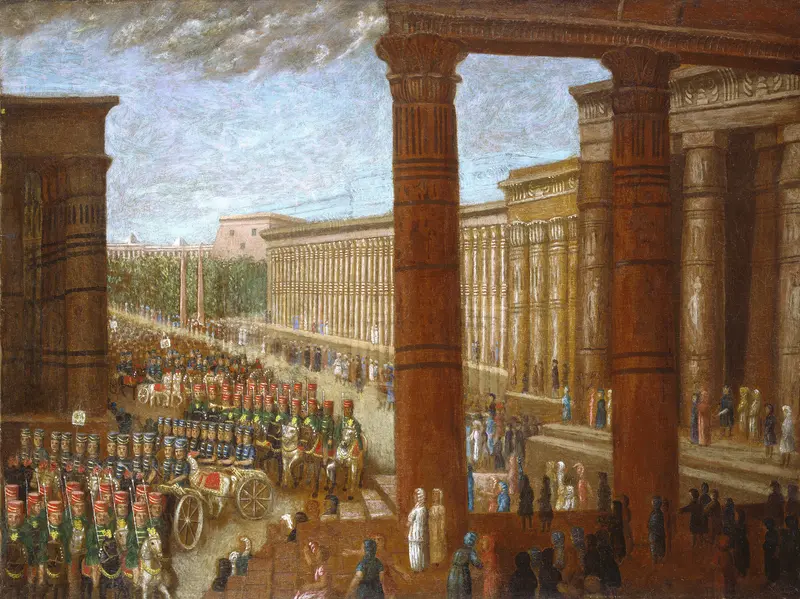 Erastus Salisbury Field1805–1900. Studied for three months with Samuel F. B. Morse, then traveled Massachusetts and Connecticut painting the flat, simplified portraits his clients preferred; later he turned to biblical and historical scenes.
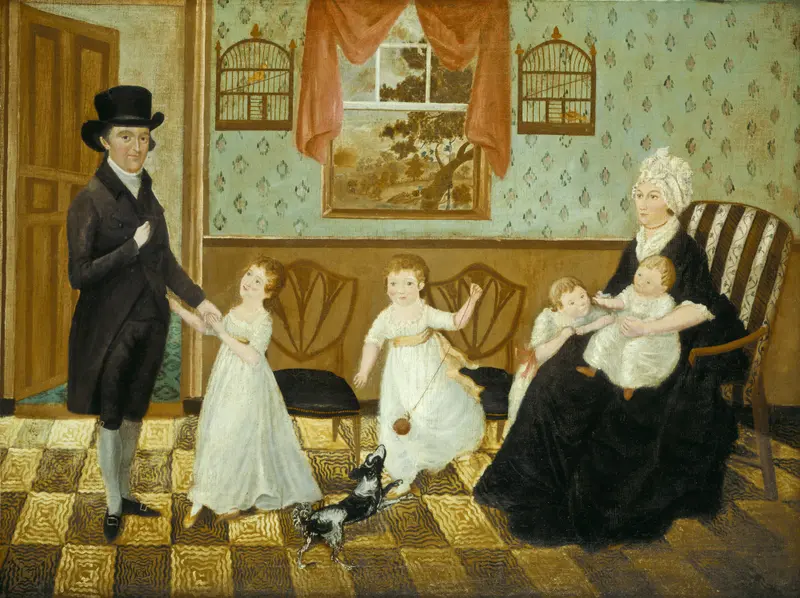
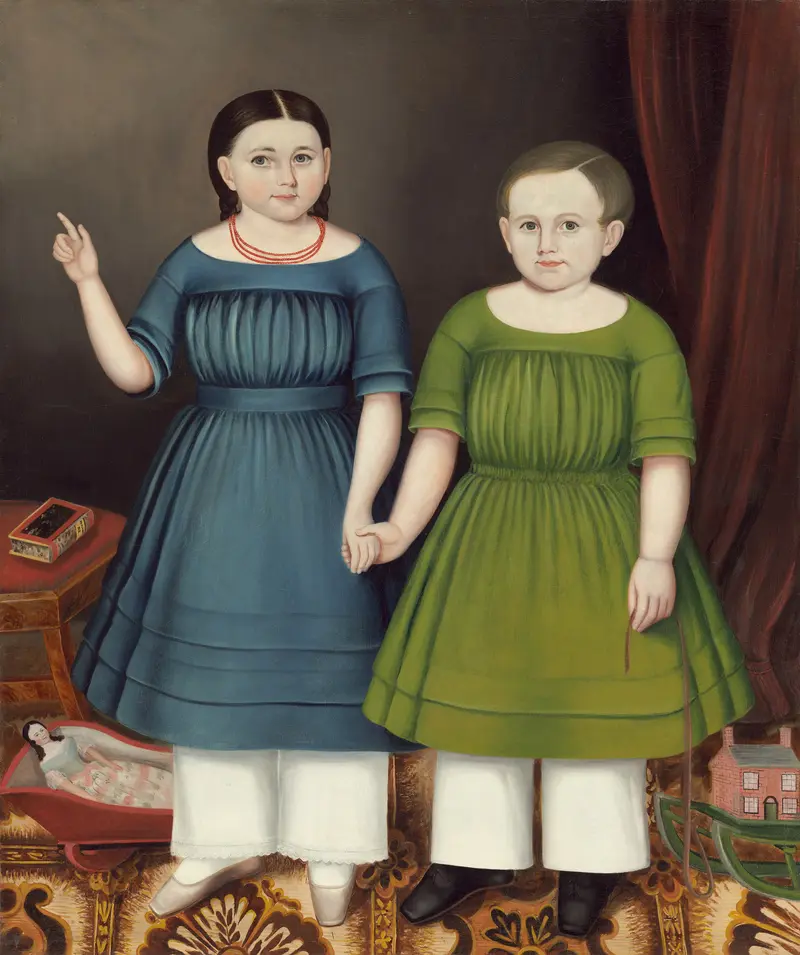 Joseph Whiting Stock1815–1855. A portrait painter who was born and died in Springfield, Massachusetts. His portraits of children include Mary and Francis Wilcox (1845), two children standing hand in hand among their toys; the Met holds his John and Louisa Stock of the same year.
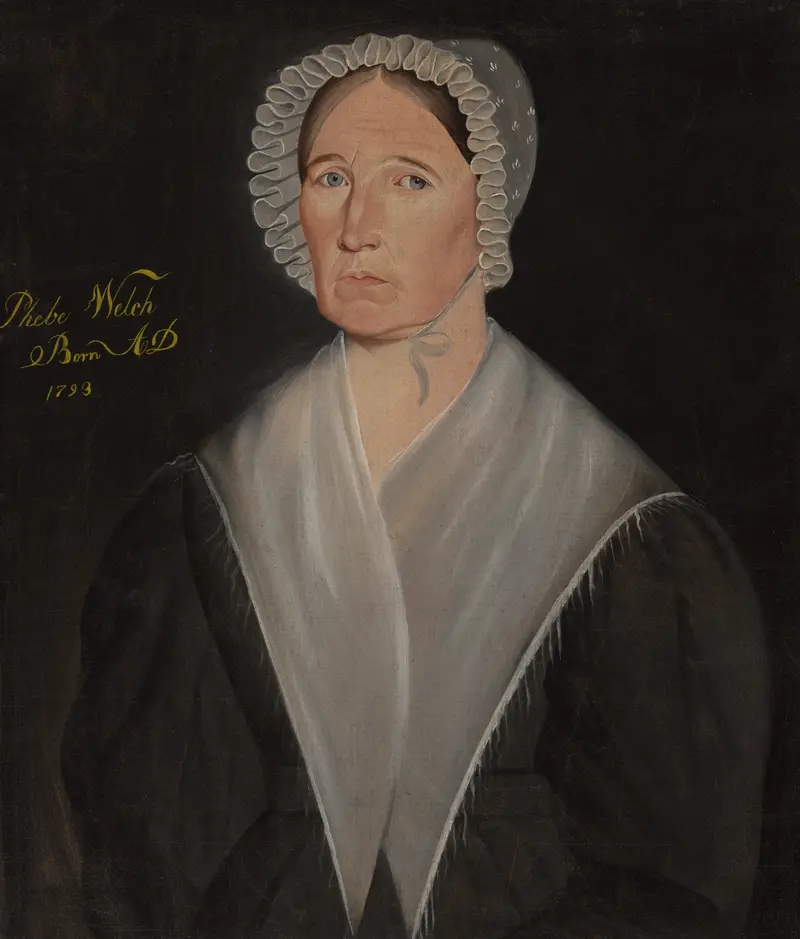 Sheldon Peck1797–1868. Born in Vermont, he lived in New York and then Illinois, where he worked as a farmer, portraitist and social reformer; his likenesses have hard edges and painted names.
 Thomas Chambers1808–after 1866. Painted Hudson River views and naval battles in a self-taught style of bold, colorful patterns, borrowing his compositions from professional landscape painters.
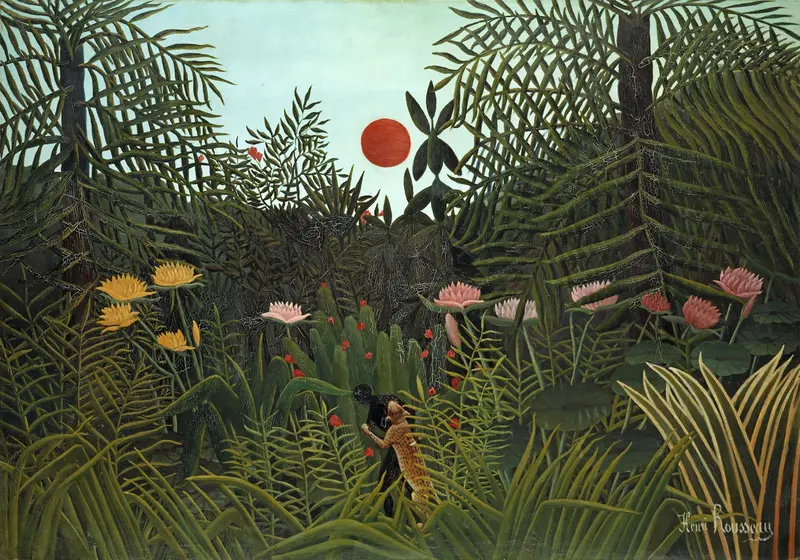
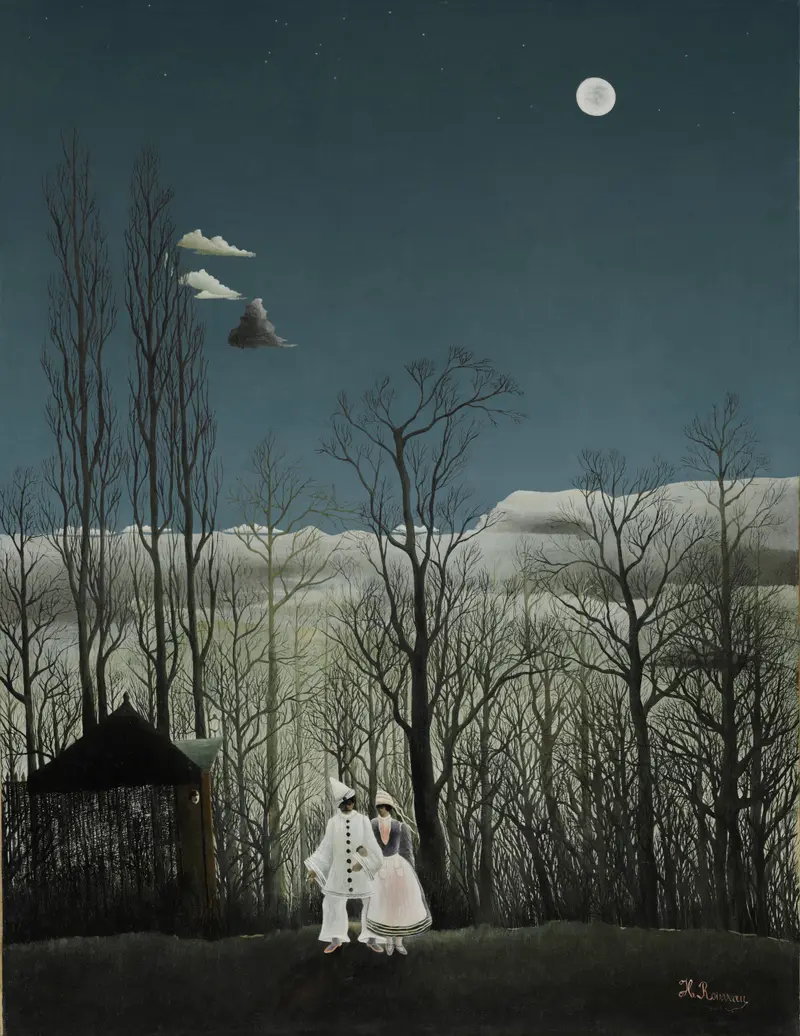
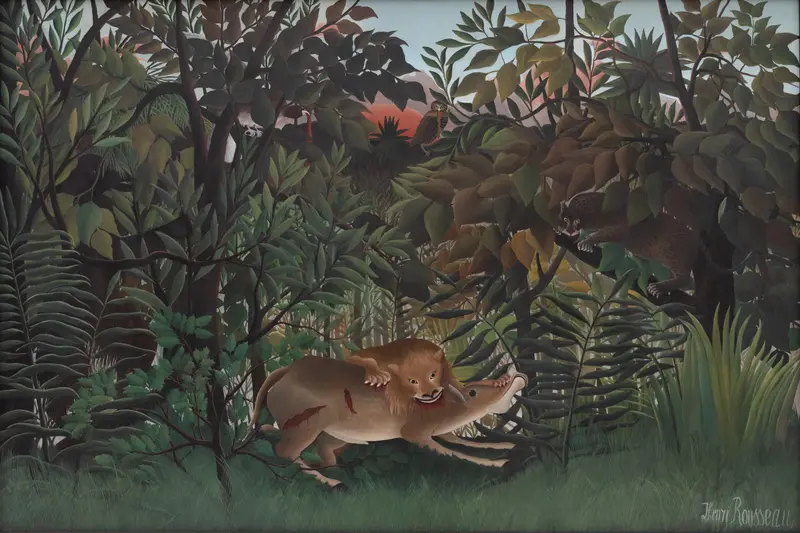
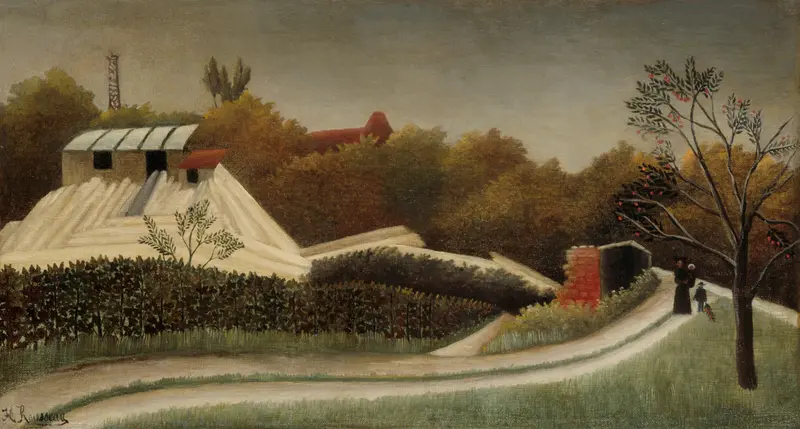
 Henri Rousseau1844–1910. A Paris customs clerk and self-taught “Sunday painter” whose imaginary jungles drew on the city's botanical garden; Tate calls him the most famous naive artist of modern times.
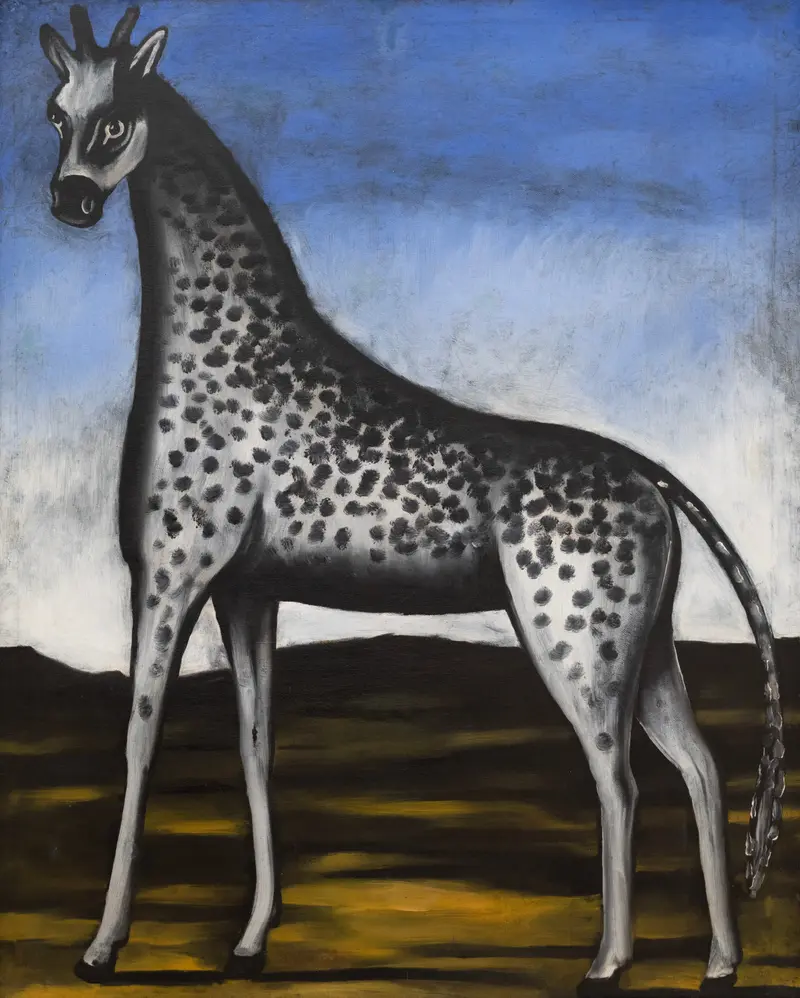 Niko Pirosmani1862–1918. A self-taught Georgian painter of people and animals in vibrant colors on a black background; the Fondation Beyeler places him with Rousseau among the painters revered by both ordinary people and avant-garde artists.
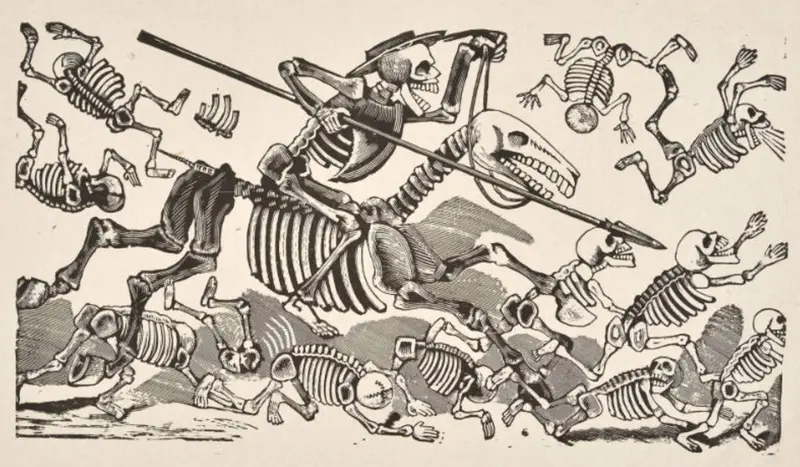 José Guadalupe Posada1852–1913. The most prolific and influential broadside illustrator in Mexico around 1900, the Art Institute of Chicago says; his later fame rests largely on his calaveras, satirical skeletons for the Day of the Dead.
American folk art paintings
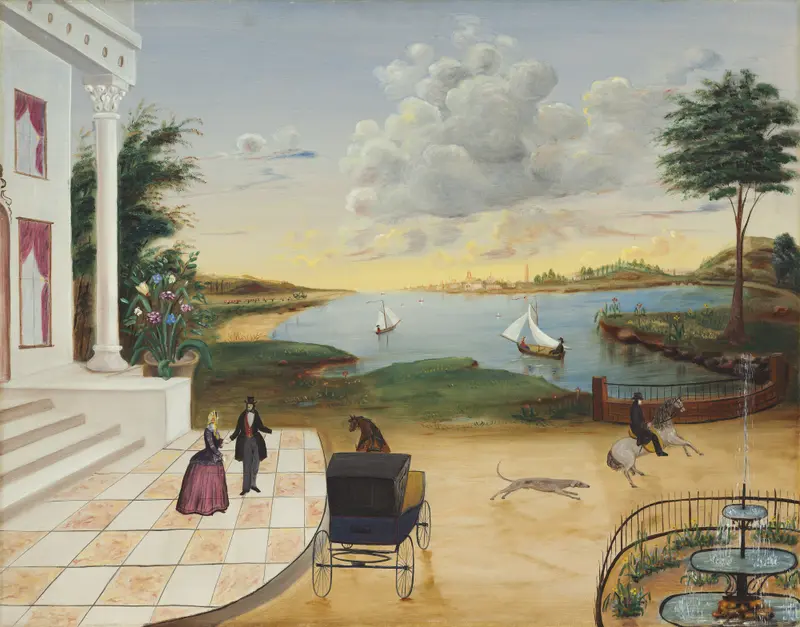
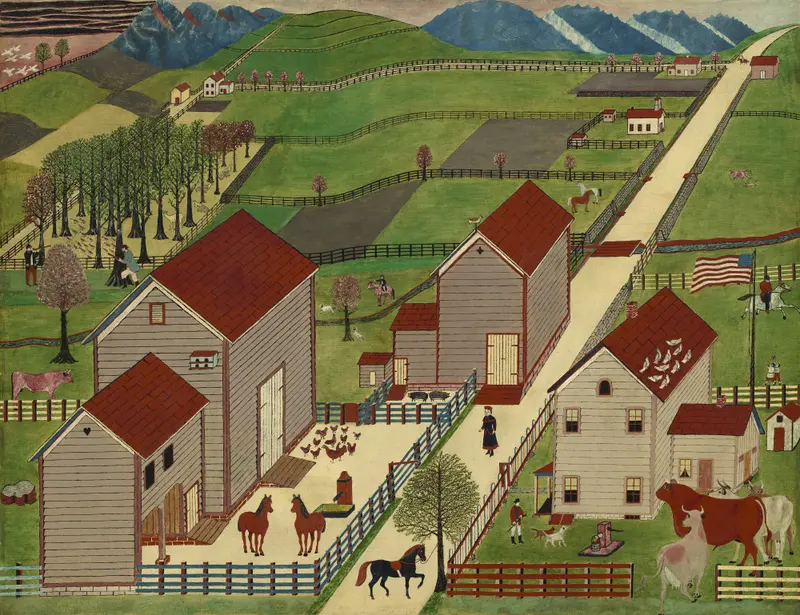
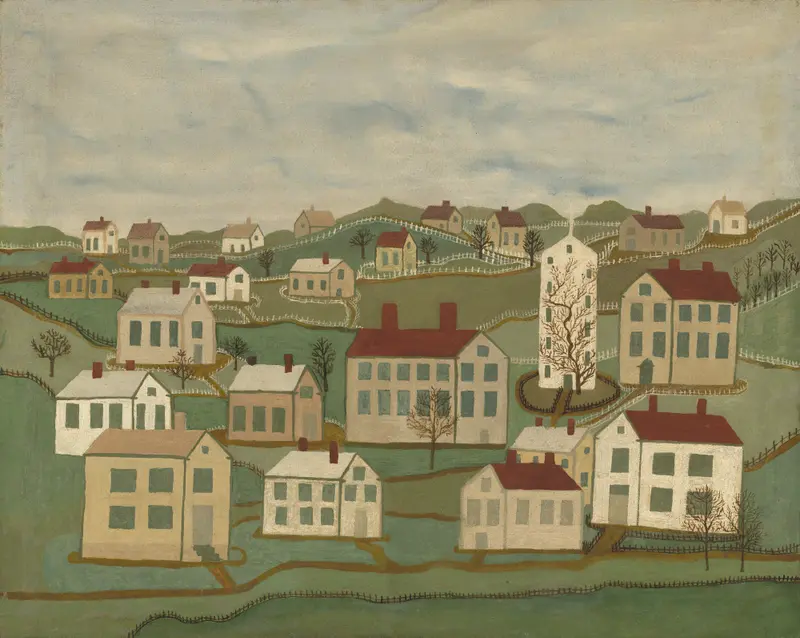
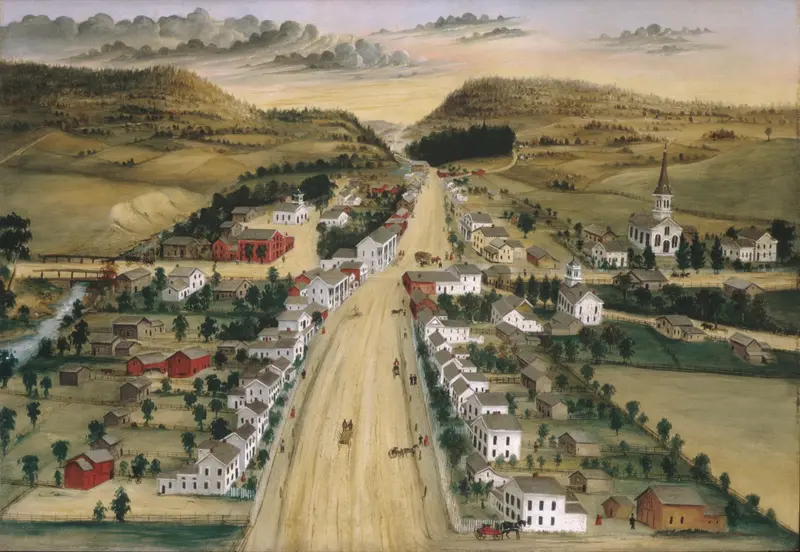
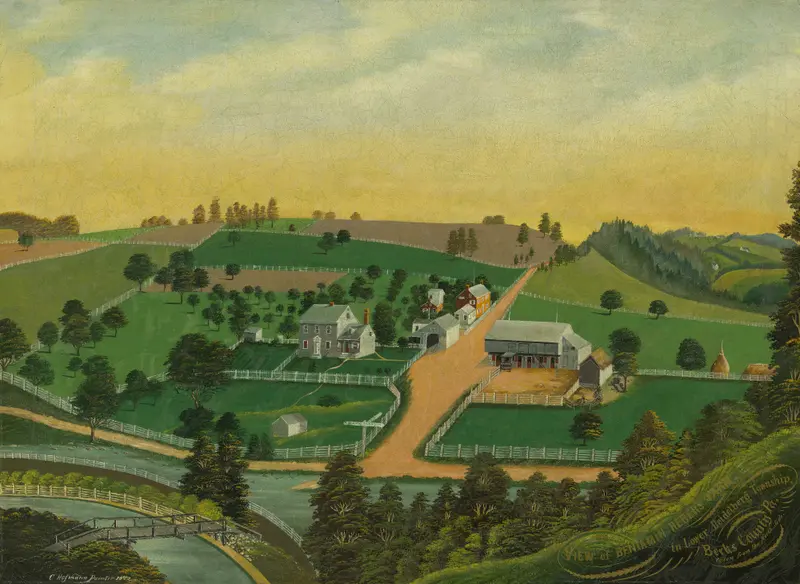
Portraits by traveling painters and views of farms and villages, painted in the United States in the 1800s by artists such as Edward Hicks, Ammi Phillips and Erastus Salisbury Field. The Smithsonian American Art Museum describes such work as the vision of America's untrained and vernacular artists.

Naive art: Henri Rousseau and Niko Pirosmani
Tate defines naive art as the work of artists with no training at an art school or academy and names Henri Rousseau as its most famous modern painter. The Fondation Beyeler counts the Georgian Niko Pirosmani, also self-taught, among the painters who, like Rousseau, were revered by both ordinary people and avant-garde artists.
Posada and Mexican popular prints
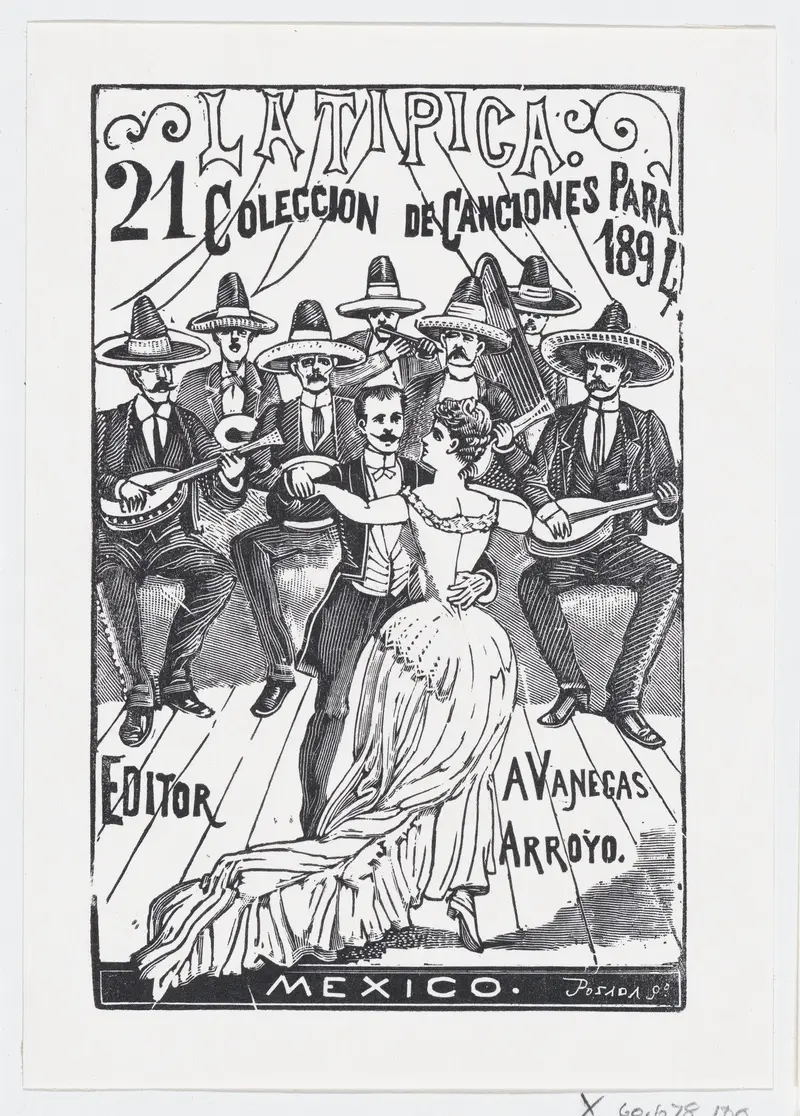
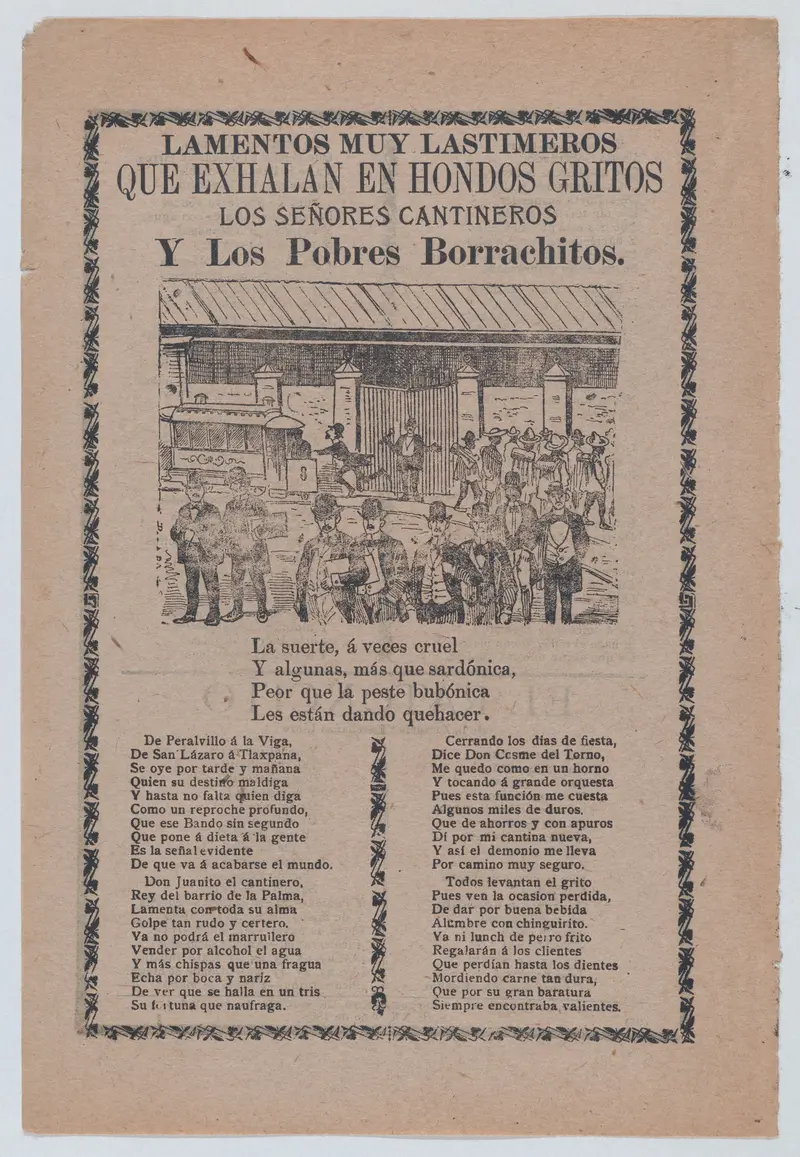
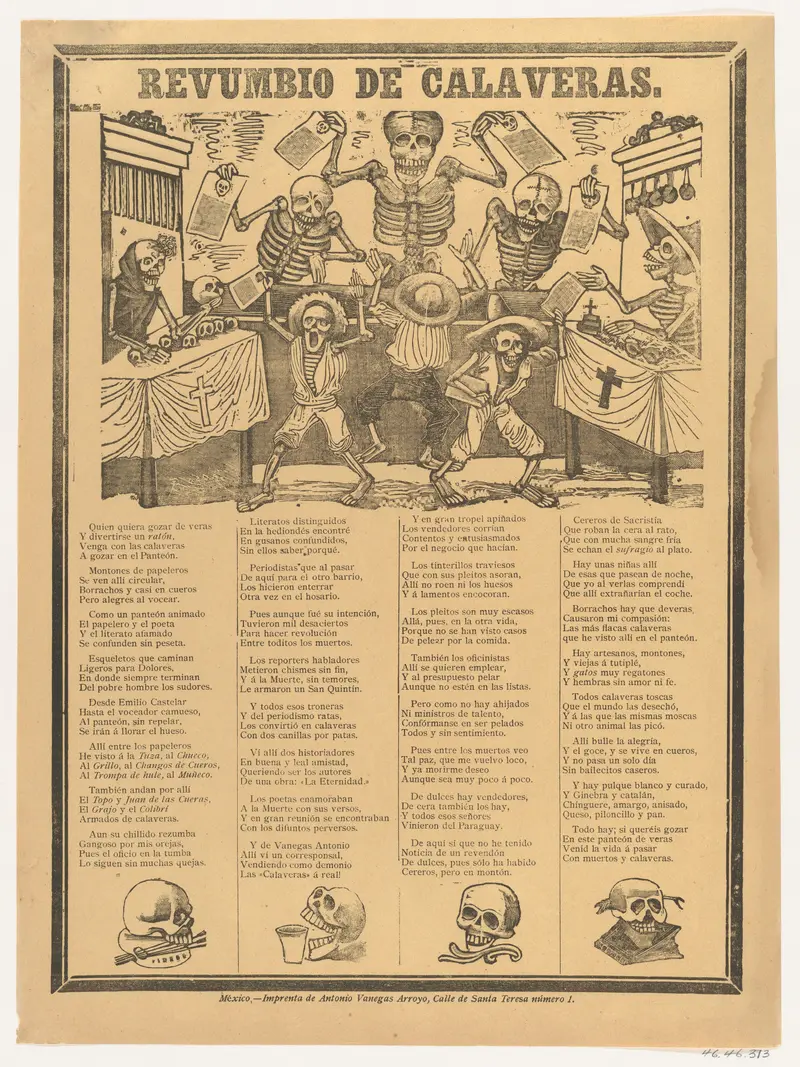
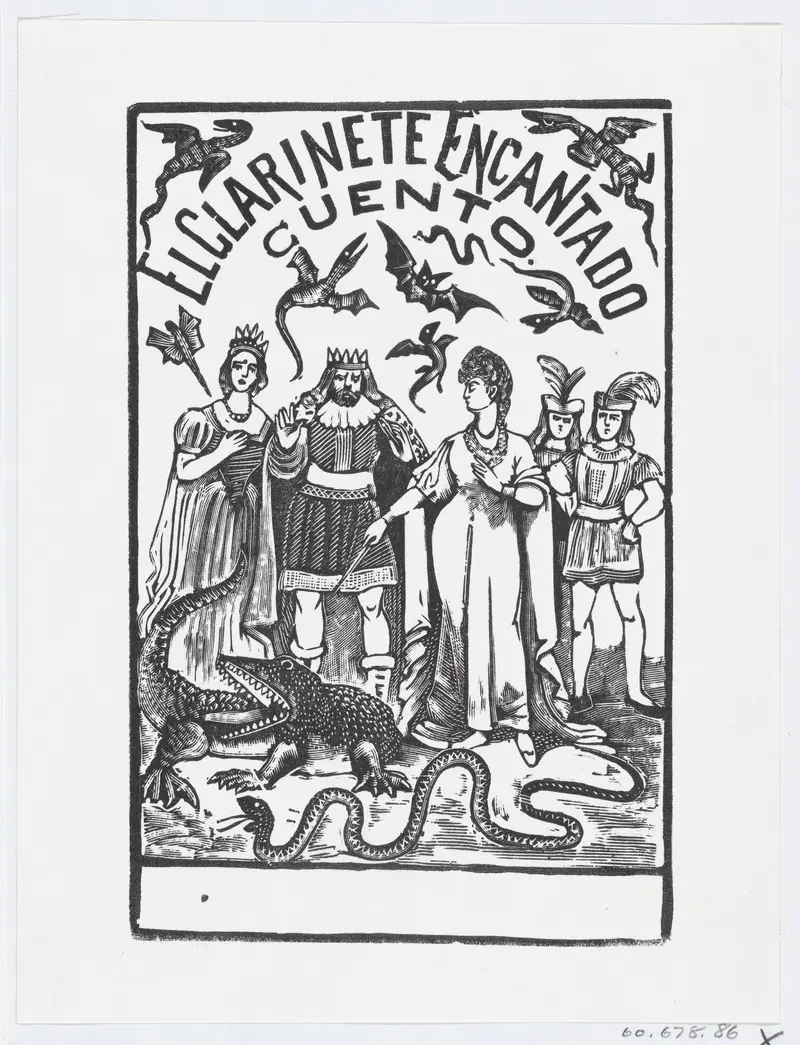
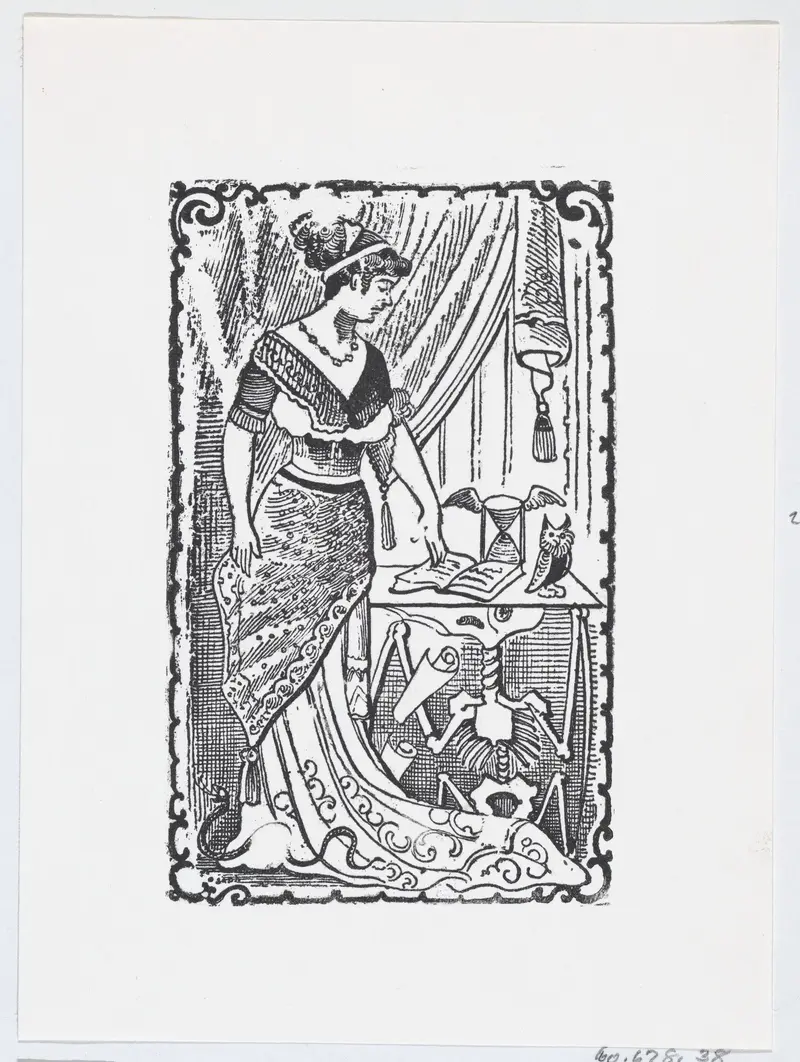
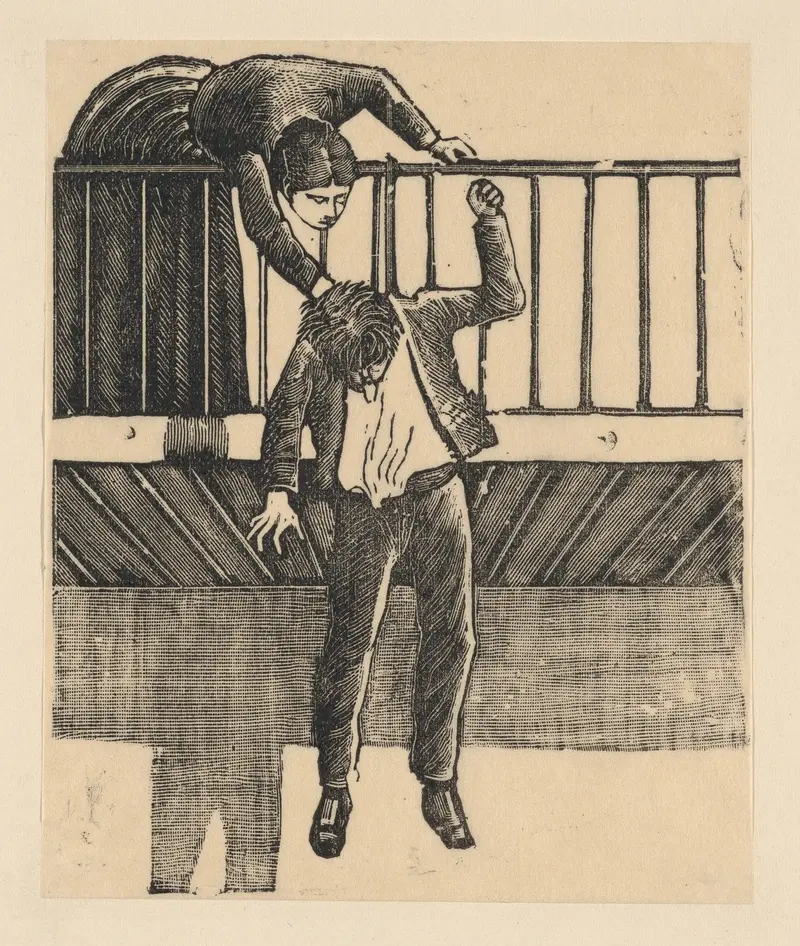
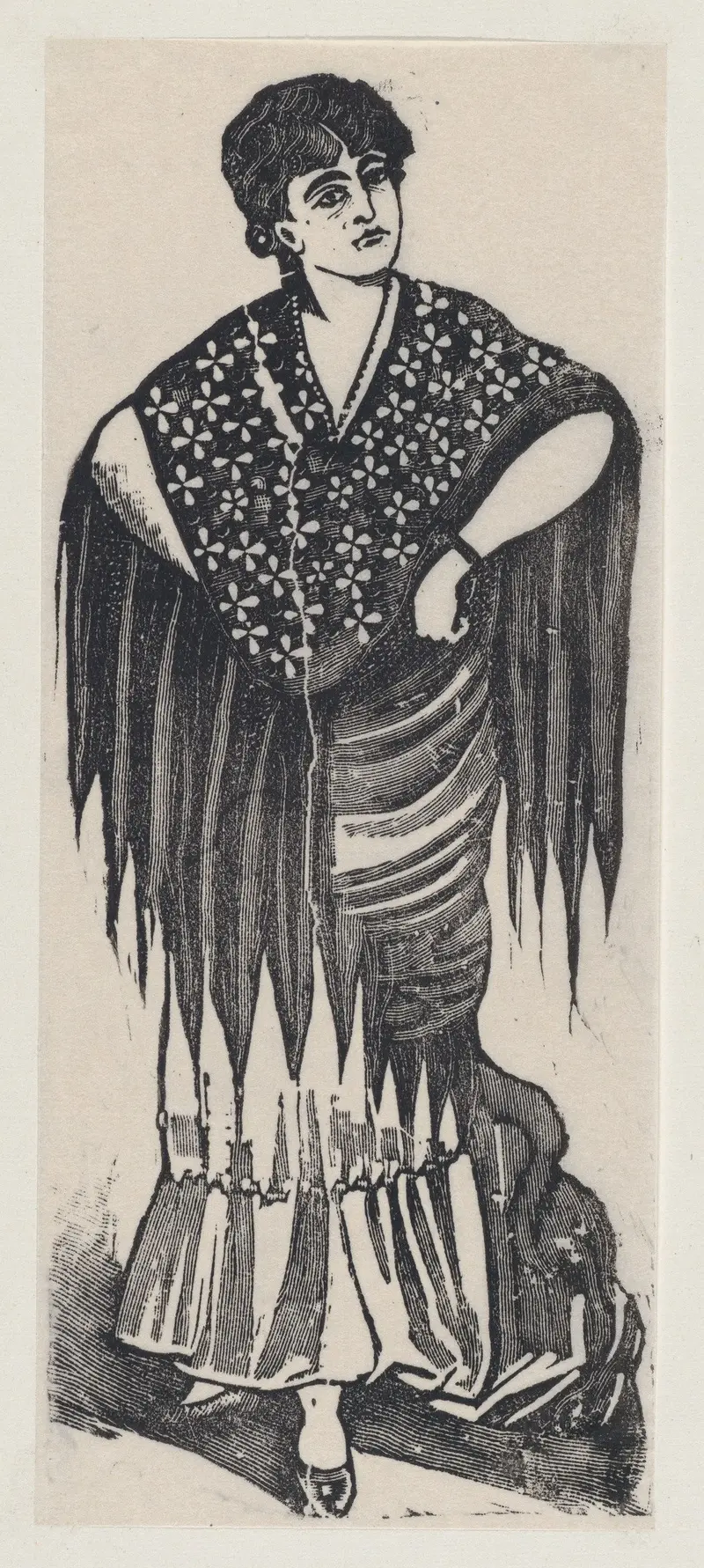
José Guadalupe Posada illustrated thousands of cheap broadsides for readers in Mexico City around 1900: news, political scandals and curiosities, and calaveras, the satirical skeletons of the Day of the Dead, the Art Institute of Chicago notes.
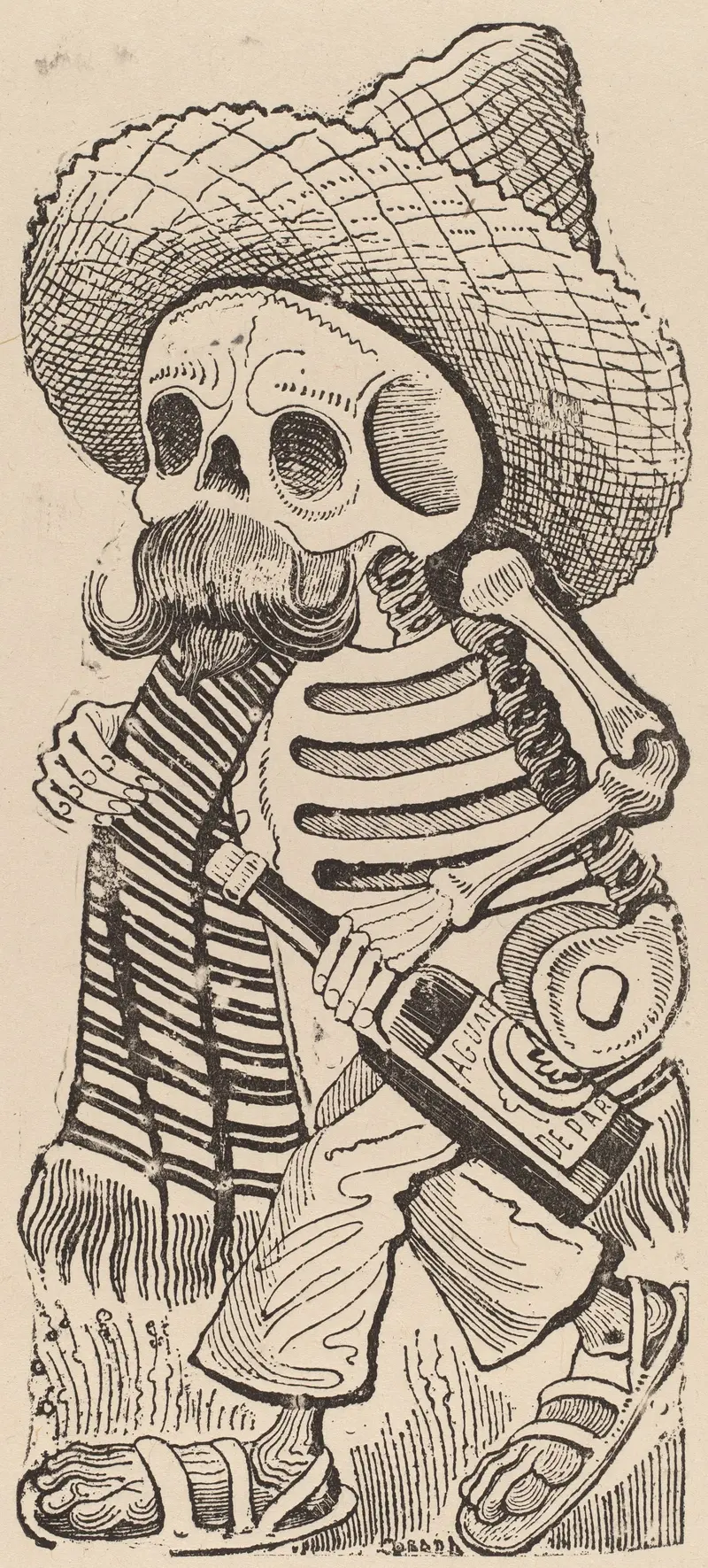 Calavera MaderistaJosé Guadalupe Posada
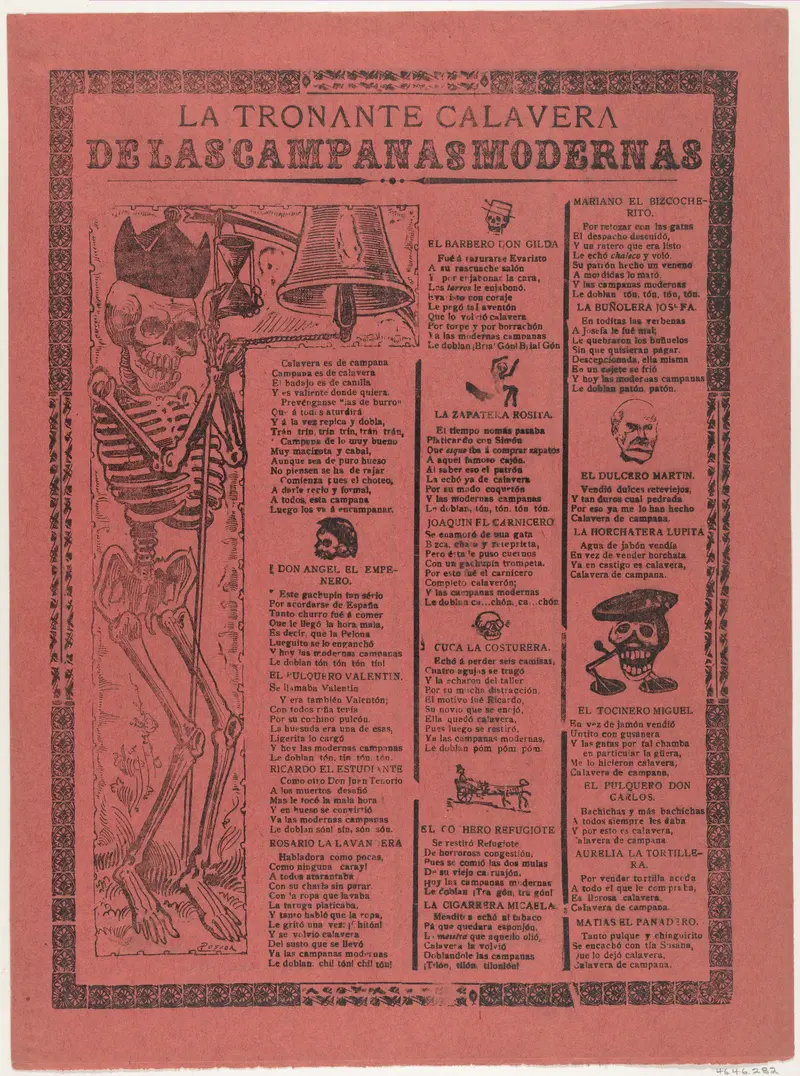 Calavera of the Modern BellsJosé Guadalupe Posada
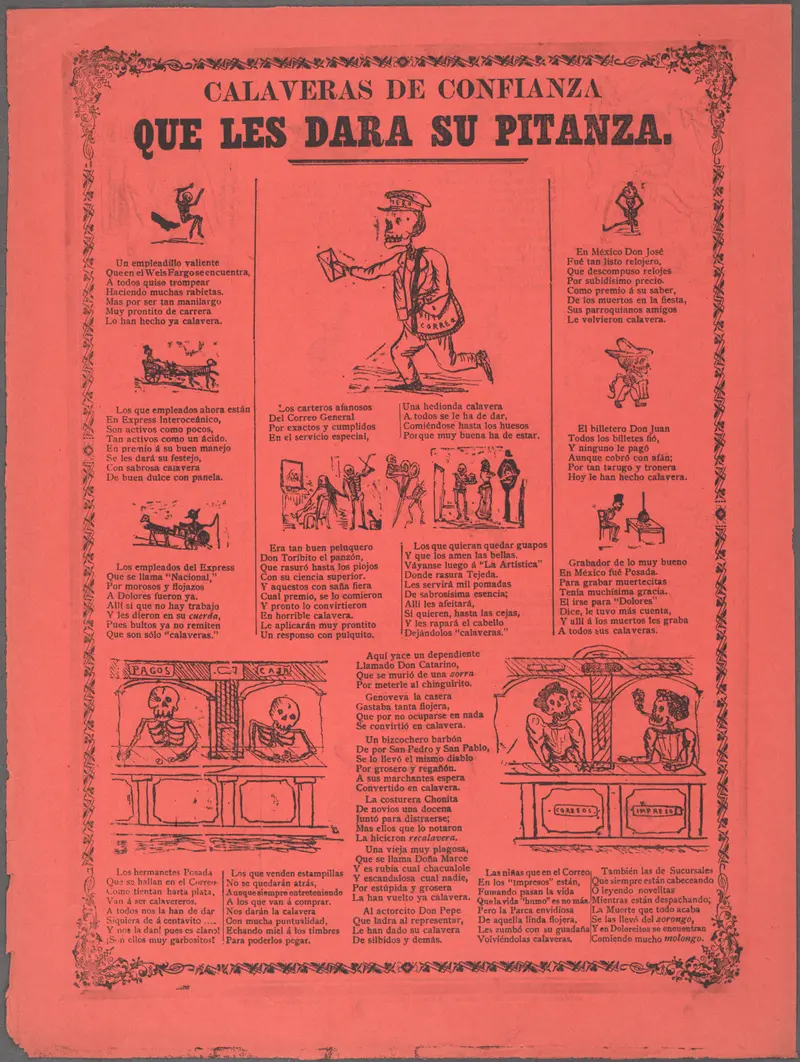 Calaveras de ConfianzaJosé Guadalupe Posada
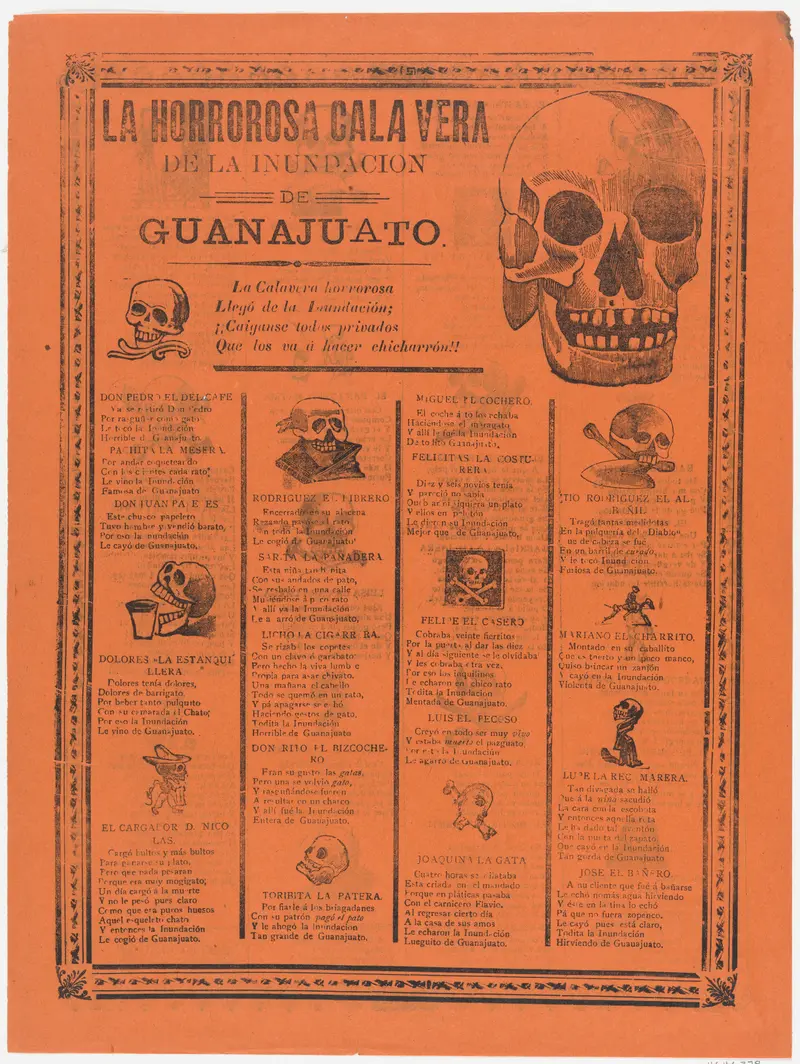 The Horrific Skeleton of the Flood of GuanajuatoJosé Guadalupe Posada
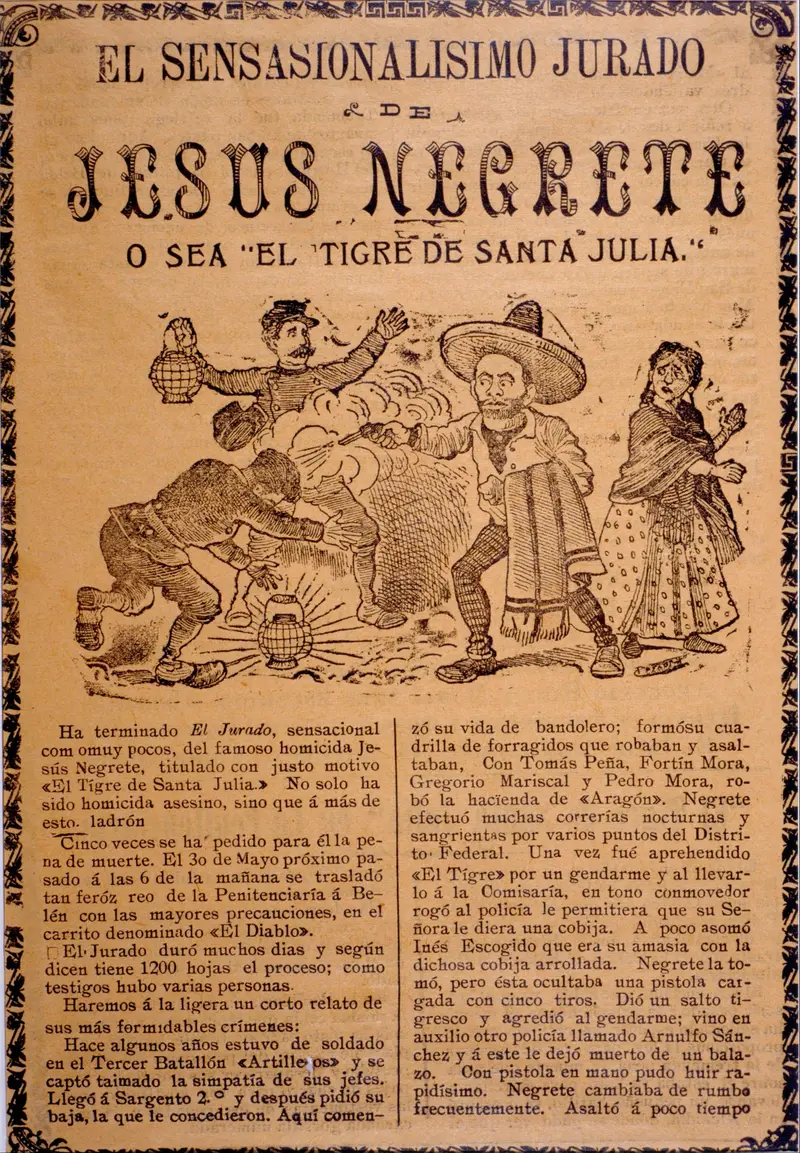 The Sensational Plot of Jesús Negrete, the Tiger of Santa JuliaJosé Guadalupe Posada
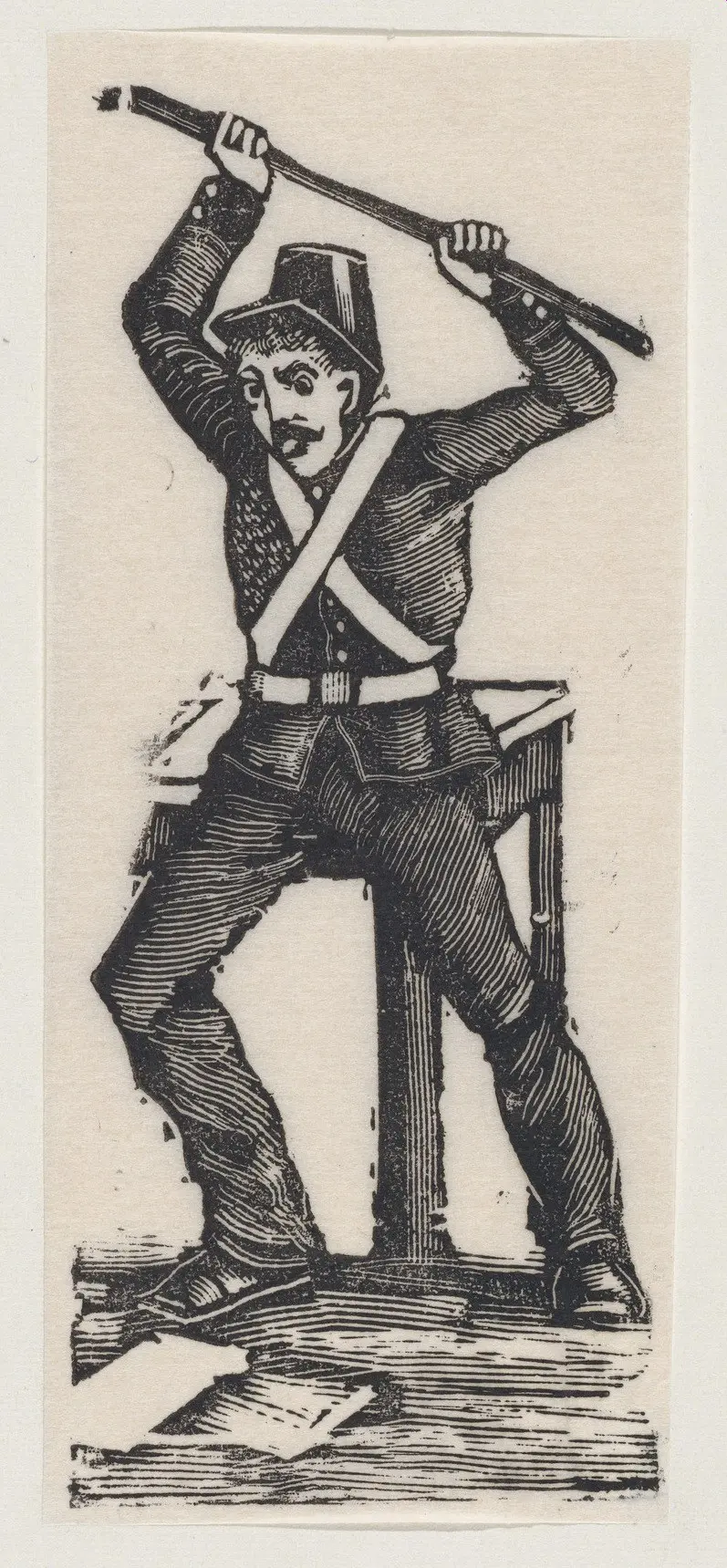
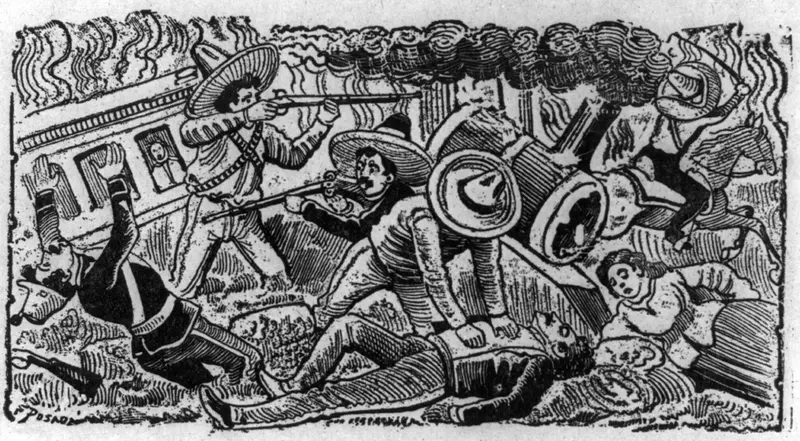 Asalto de ZapatistasJosé Guadalupe Posada
Characteristics of folk art: how to recognize it
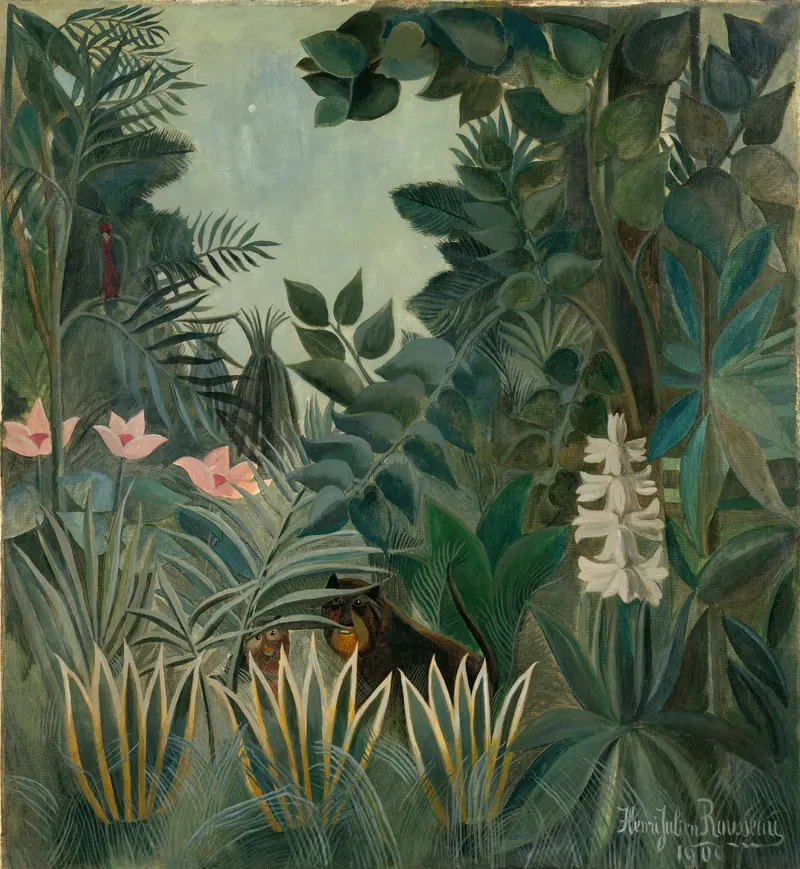
Flat space, precise detail
Leaves, flowers and grasses are stacked one in front of another like cut paper, each one outlined and painted leaf by leaf. The National Gallery in London traces the flatness of Rousseau's pictures, and their lack of three-dimensional modeling, to his lack of training in perspective.
The Equatorial Jungle, Henri Rousseau

Faces with little modeling
Dr. Allerton sits upright in a painted chair against a plain gray background, a medical dictionary in his hand. The Art Institute of Chicago notes that his face is barely modeled and that Ammi Phillips took his poses from European prints.
Cornelius Allerton, Ammi Phillips

Names and dates painted in
William Welch stares out of a dark background, with his name and date of birth lettered beside him. The Art Institute of Chicago points to Sheldon Peck's hard-edged lines and to the golden yellow inscriptions that stress who his sitters were.
William W. Welch, Sheldon Peck
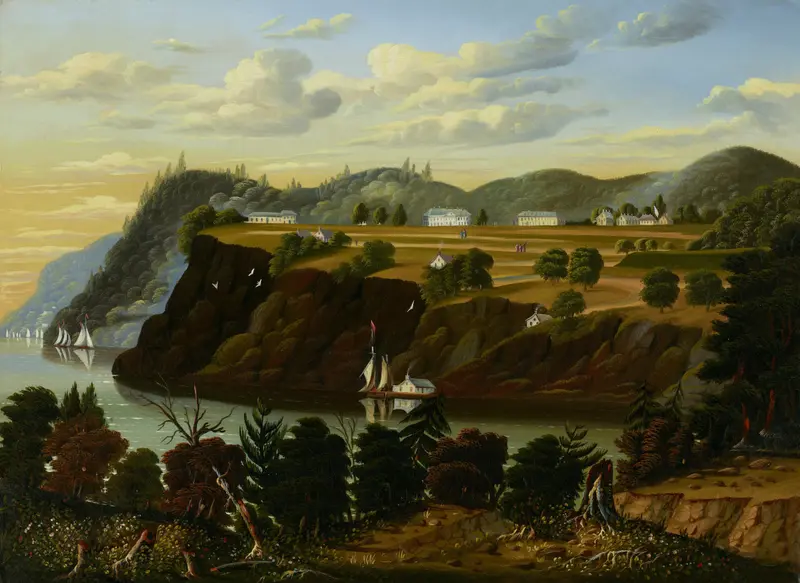
Bold patterns, odd scale
Trees, cliffs and flowers above the Hudson River turn into bright, repeating patterns. The Minneapolis Institute of Art sees those patterns, and the inconsistencies in scale, as signs of Thomas Chambers's self-taught style, while the view itself borrows devices from professional landscape painters.
View of West Point, Thomas Chambers
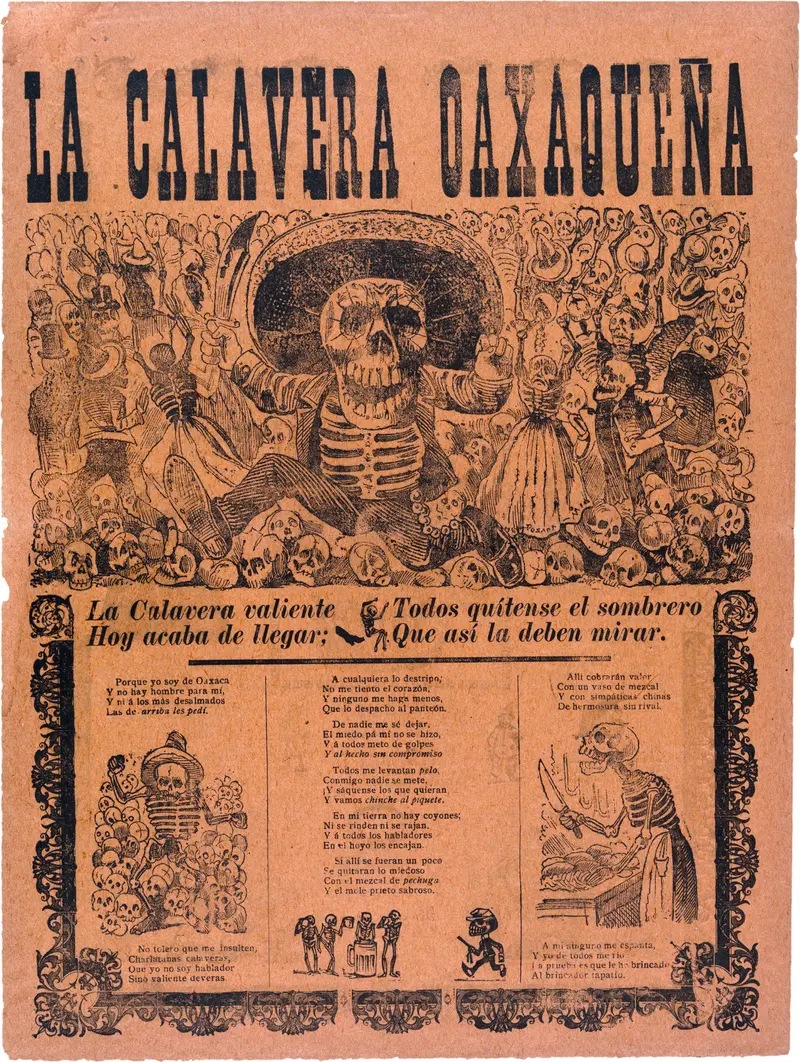
Cheap prints for everyone
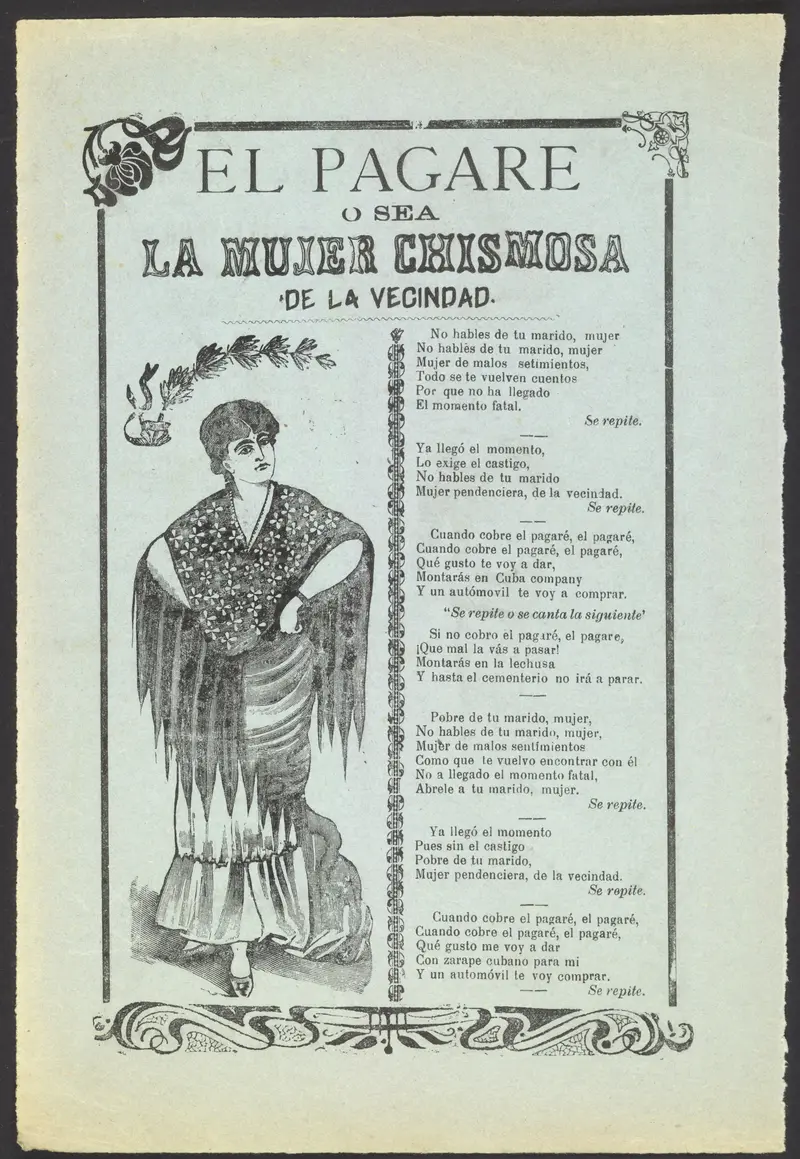
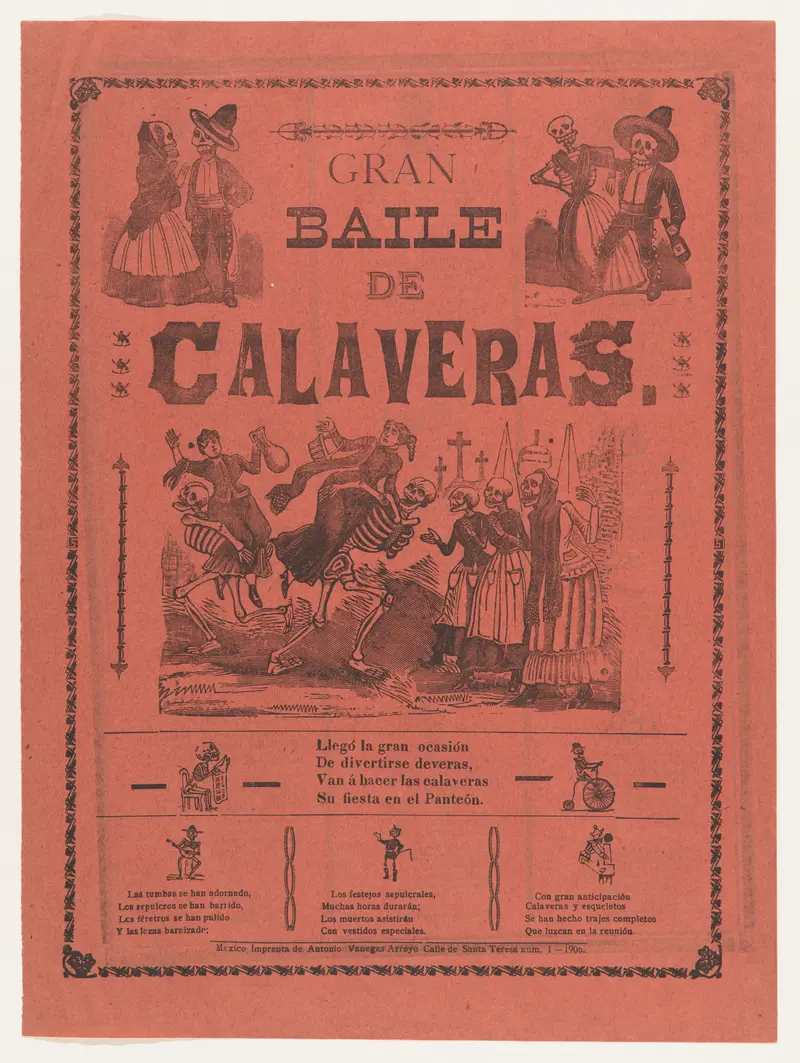
A skeleton in a huge sombrero, surrounded by a crowd of skulls, fills the upper half of this broadside, printed in black on orange paper above columns of verse. José Guadalupe Posada illustrated thousands of such colorful handbills for working- and middle-class buyers in Mexico City, the Art Institute of Chicago notes.
Calavera Oaxaqueña, José Guadalupe Posada
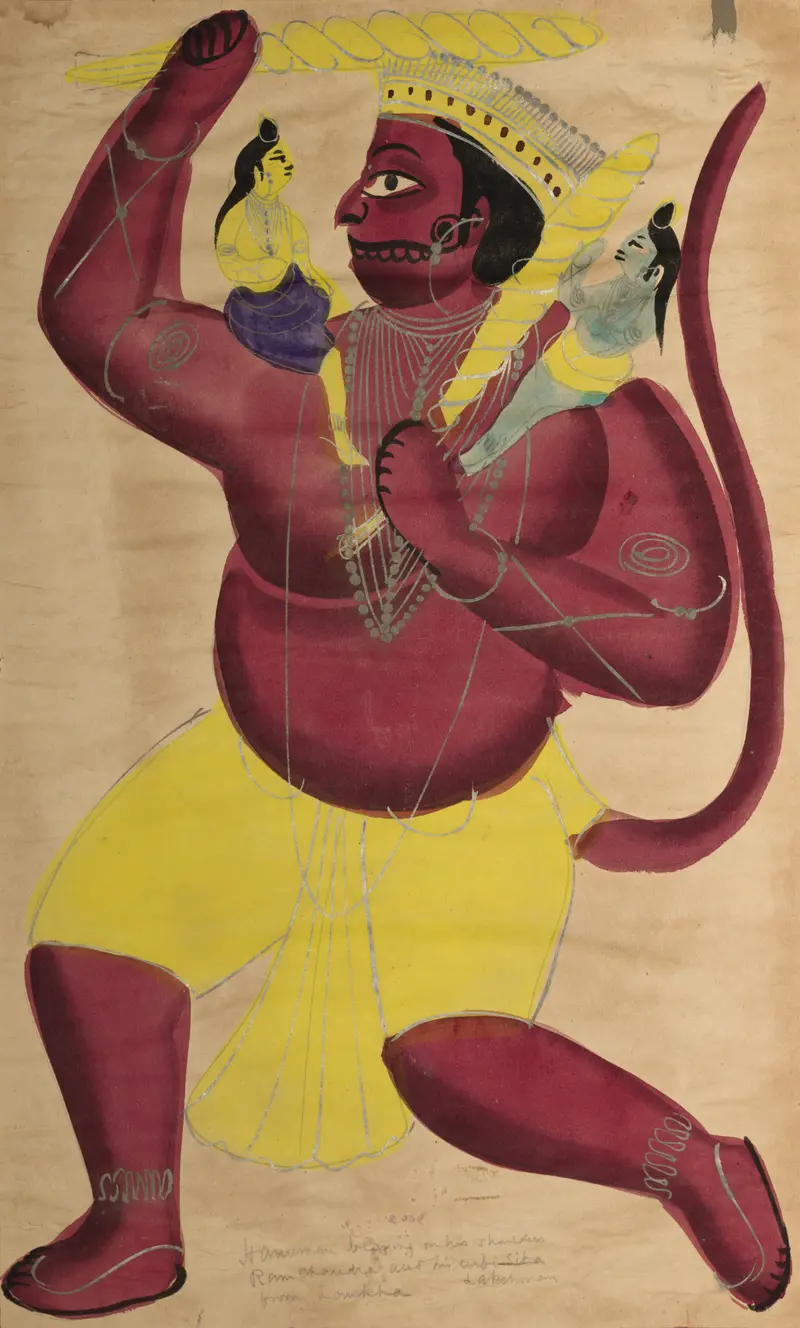
Bold lines, no background
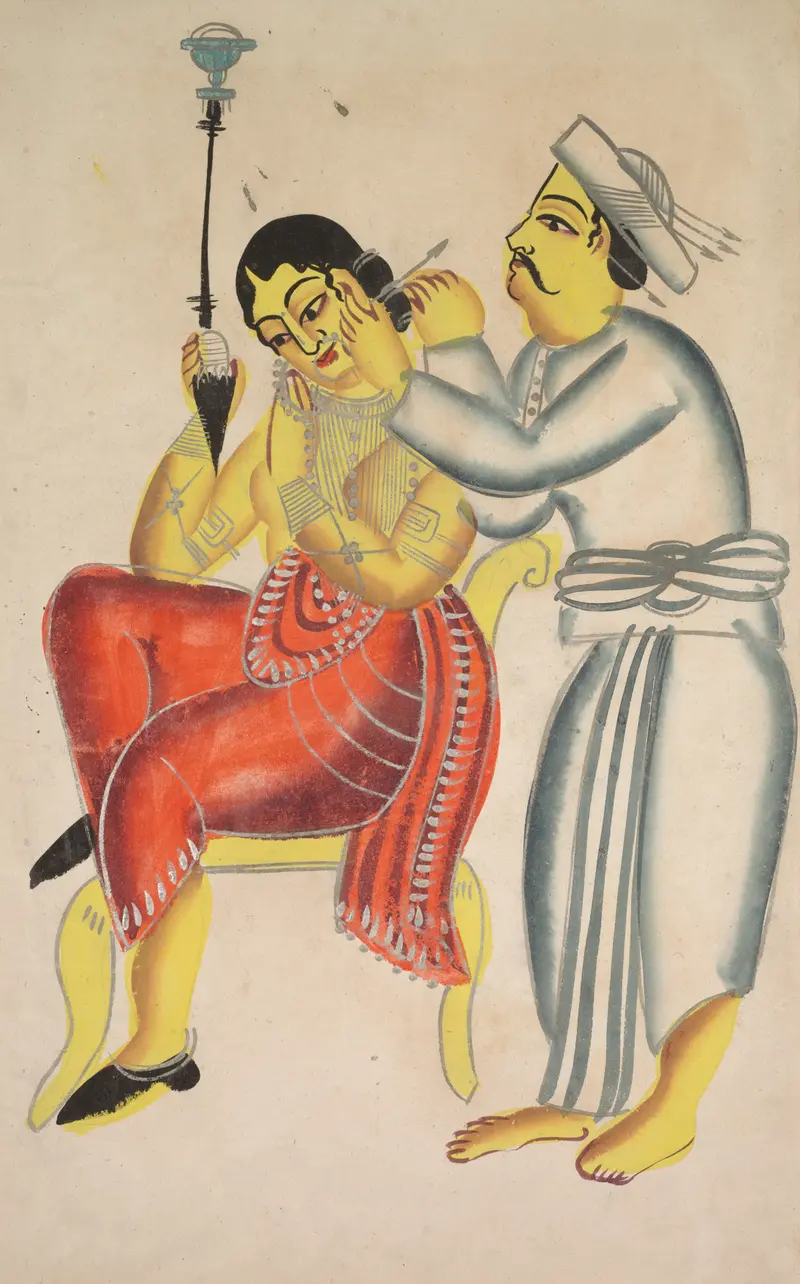
Red-skinned Hanuman, the monkey god, strides across the bare paper with two small figures on his shoulders, drawn in a few sweeping lines and filled with flat color. The Getty's thesaurus describes Kalighat paintings, sold cheaply to pilgrims in Calcutta, as quickly made, with bold colors, broad brush lines, simplified forms and little or no background.
Hanuman (Kalighat Painting), Unknown Artist
Before and after folk art
 Colonial American17th–18th century
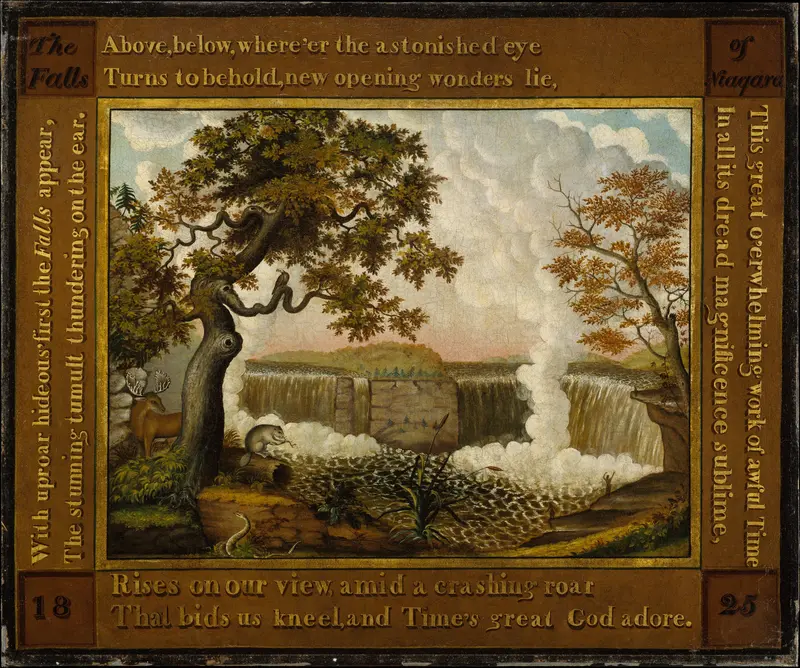 Folk art18th–20th century
 Post-Impressionismc. 1886–1905
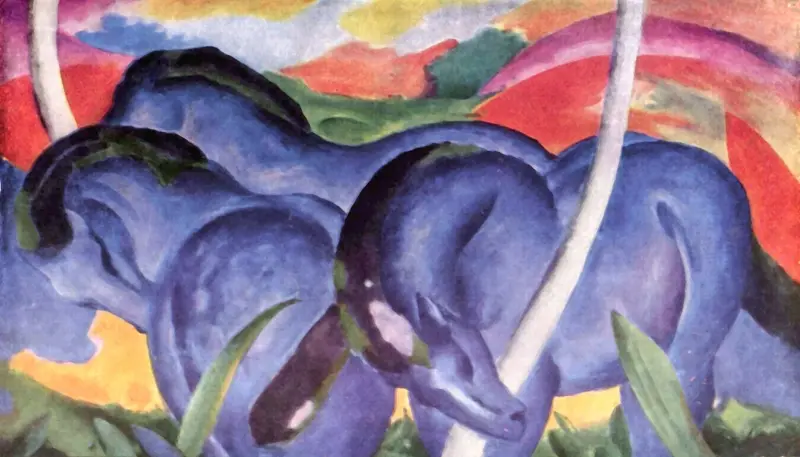 Expressionismc. 1905–1914
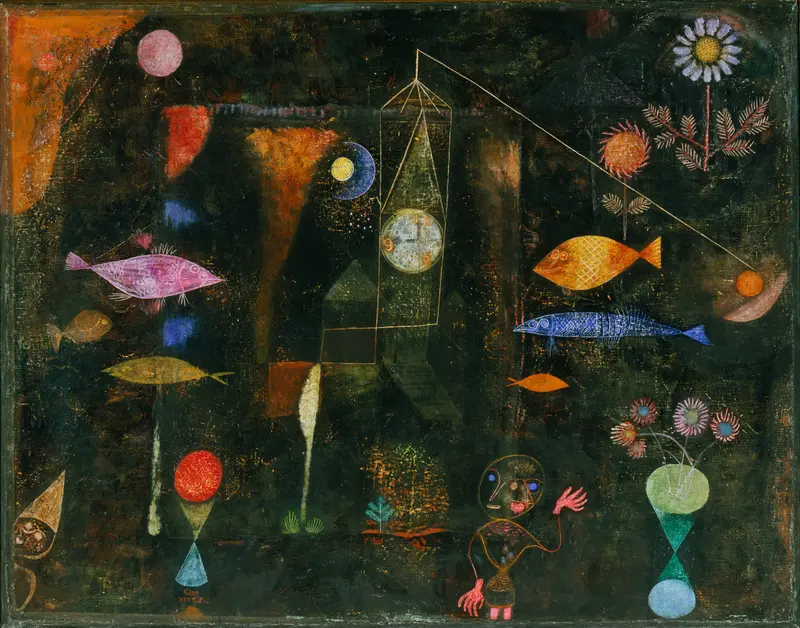 SurrealismFrom 1924
Folk art vs naive art and outsider art
| Compared | Naive art | Folk art | Outsider art |
|---|---|---|---|
| Who made it | Self-taught individuals, often amateurs | Painters and craftspeople working in a community's traditions | People outside the art world, such as psychiatric patients and prisoners |
| Training | Little or none | Learned within the tradition, not at an academy | Avoided on principle, not just lacking |
| When | Mostly the 19th and 20th centuries | 18th–20th century in our collection | From about 1900; called art brut from the 1940s |
| Famous example | Rousseau, The Sleeping Gypsy | Hicks, The Peaceable Kingdom | Wölfli, From the Cradle to the Grave |
| Key artists | Henri Rousseau, Niko Pirosmani, Alfred Wallis | Edward Hicks, Ammi Phillips, Erastus Salisbury Field | Adolf Wölfli, Aloïse Corbaz, Augustin Lesage |
List of famous folk art paintings and their artists
The famous folk and naive works: who made them, when, and where each one is today.
Show the listHide the list
| Painting | Painted by | Year | Medium | Size | Located in | City |
|---|---|---|---|---|---|---|
| The Sleeping Gypsy | Henri Rousseau | 1897 | Oil on canvas | 129.5 × 200.7 cm (51 × 79 in) | MoMA | New York |
| La Calavera Catrina | José Guadalupe Posada | c. 1910–13 | Zinc etching and letterpress on paper | |||
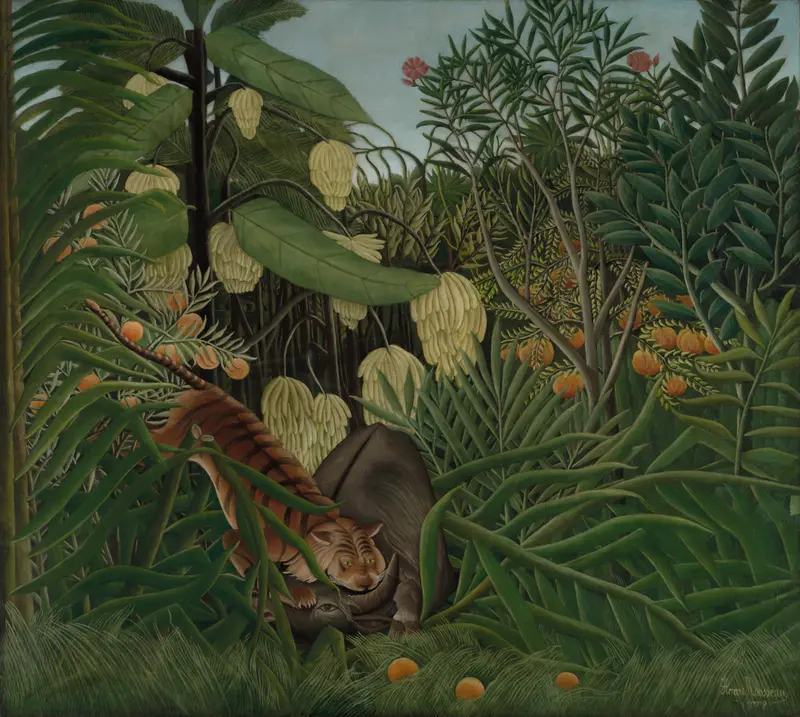
| Tiger in a Tropical Storm (Surprised!) | Henri Rousseau | 1891 | Oil on canvas | 128.9 × 161.9 cm (50.7 × 63.7 in) | National Gallery London | London |
| The Snake Charmer | Henri Rousseau | 1907 | Oil on canvas | 167 × 189 cm (65.7 × 74.4 in) | Musee d'Orsay | Paris |
Folk art: questions and answers
What is folk art, and what does it mean?
In art, folk art means art made outside the academies, by painters and craftspeople without formal art training. The Getty's Art & Architecture Thesaurus defines it as art and crafts that stand outside the canons of academic taste, made in close-knit communities and guided by local traditions, from paintings to ceramics, textiles and sculpture. Our folk paintings, from the 18th to the 20th century, include portraits and farm views by traveling American painters, religious and historical scenes, Mexican and Russian popular prints and Indian Kalighat pictures.
Sources: Getty AAT: folk art · Getty AAT: lubki · Getty AAT: Kalighat
What is the difference between folk art and naive art?
The two overlap, and the words are often used for the same pictures. The Getty's thesaurus separates them: folk art follows the traditions of a community, while naive art is made by individuals without formal training, often self-taught, and typically shows a childlike rendering of anatomy and perspective. Tate describes naive art as simple and unsophisticated, made by artists who had no training at an art school or academy, and names Henri Rousseau as its most famous modern painter.
Sources: Getty AAT: folk art · Getty AAT: naive art · Tate: Naïve art
What are the characteristics of folk art paintings?
Folk paintings usually have flat space, firm outlines and strong color, with every detail spelled out. The Getty's thesaurus notes the childlike rendering of anatomy and perspective in naive art. The Art Institute of Chicago points out that the face in Ammi Phillips's portrait of Cornelius Allerton is barely modeled and that Phillips borrowed his poses from European prints, and that Sheldon Peck lettered his sitters' names into the picture; the Minneapolis Institute of Art sees bold patterns and odd changes of scale in Thomas Chambers's landscapes.
Sources: Getty AAT: naive art · Art Institute of Chicago: Ammi Phillips, Cornelius Allerton · Art Institute of Chicago: Sheldon Peck, William W. Welch · Minneapolis Institute of Art: Thomas Chambers, View of West Point
Who are some famous folk artists?
Among those whose work is now in the public domain: Edward Hicks, the Quaker sign painter who painted the Peaceable Kingdom more than 60 times; the traveling portrait painters Ammi Phillips and Erastus Salisbury Field, and Joseph Whiting Stock of Springfield, Massachusetts; José Guadalupe Posada, Mexico's most prolific broadside illustrator around 1900; and two self-taught painters, Henri Rousseau in Paris and Niko Pirosmani in Tbilisi. Grandma Moses, who began painting in her late seventies, died in 1961, so her paintings are still under copyright.
Sources: Cleveland Museum of Art: Edward Hicks, The Peaceable Kingdom · Art Institute of Chicago: Ammi Phillips, Cornelius Allerton · Smithsonian American Art Museum: Erastus Salisbury Field · Getty ULAN: Joseph Whiting Stock · Art Institute of Chicago: José Guadalupe Posada, Revolutionary Calavera · Tate: Naïve art · Fondation Beyeler: Niko Pirosmani (exhibition, 2023–24) · Smithsonian American Art Museum: Grandma Moses
What is American folk art?
American folk art is the work of self-taught and artisan painters in the United States, above all in the 1800s: portraits by traveling limners, views of farms and villages, and religious and historical scenes. Ammi Phillips began as a sign painter and taught himself portraiture, and Erastus Salisbury Field chose the flat, simplified portraits his clients preferred. The Smithsonian American Art Museum calls such work the vision of America's untrained and vernacular artists. Many American folk paintings in the Met and the Art Institute of Chicago were given by the collectors Edgar William and Bernice Chrysler Garbisch.
Sources: Art Institute of Chicago: Ammi Phillips, Cornelius Allerton · Smithsonian American Art Museum: Erastus Salisbury Field · Smithsonian American Art Museum: Folk and Self-Taught Art · Metropolitan Museum of Art: Edward Hicks, The Falls of Niagara · Art Institute of Chicago: Erastus Salisbury Field, Woman with a Green Book
Who was Edward Hicks, and what is The Peaceable Kingdom?
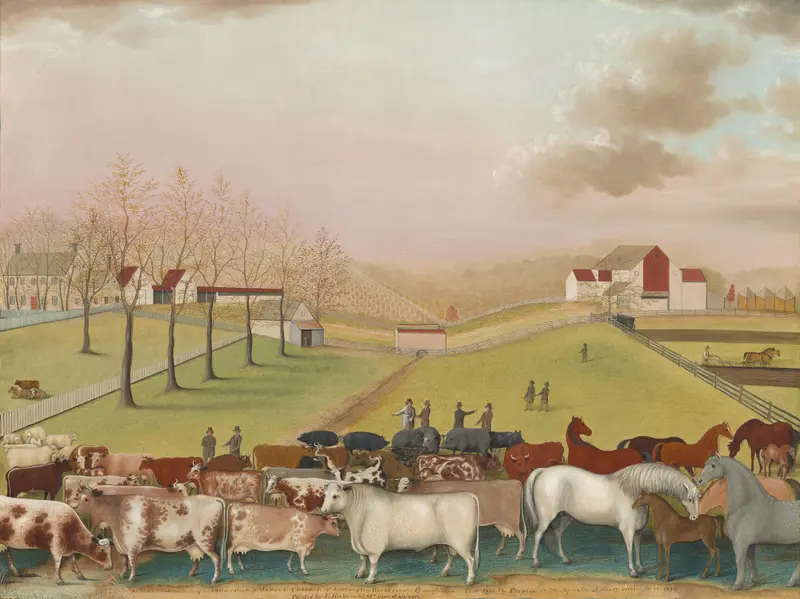
Edward Hicks (1780–1849) was a Quaker sign painter who turned to painting. In the last thirty years of his life he painted the Peaceable Kingdom again and again: an allegory based on Isaiah 11:6–9, in which “the wolf also shall dwell with the lamb”, to which he added Quaker belief and Pennsylvania history. Of more than 60 versions, the Cleveland Museum of Art thinks its own, from about 1816–18, is likely the first. Our collection holds that one, a later version of about 1834 from the National Gallery of Art, and his Falls of Niagara and The Cornell Farm.
Sources: Cleveland Museum of Art: Edward Hicks, The Peaceable Kingdom · Cleveland Museum of Art: Edward Hicks, The Peaceable Kingdom (Google Arts & Culture) · Metropolitan Museum of Art: Edward Hicks, The Falls of Niagara
Was Henri Rousseau a folk artist?
Strictly, no: Henri Rousseau (1844–1910) is called a naive painter. The Getty's thesaurus keeps the two apart: naive art is made by self-taught individuals, folk art within a community's traditions. In everyday use the words overlap, which is why we include him. A retired Paris customs inspector, he showed at the Salon des Indépendants and was admired by Picasso and other avant-garde artists, the Cleveland Museum of Art notes. His jungles are imaginary, since he never left France. Tate calls him the most famous naive artist of modern times.
Sources: Cleveland Museum of Art: Henri Rousseau, Fight Between a Tiger and a Buffalo · National Gallery, London: Henri Rousseau, Surprised! · Tate: Naïve art · Getty AAT: naive art · Getty AAT: folk art
What is Mexican folk art?
Mexican folk art includes crafts as well as pictures; in our collection it means mostly the popular prints of José Guadalupe Posada. Posada illustrated thousands of broadsides, cheap handbills for working- and middle-class readers in Mexico City around 1900, full of news, scandals and curiosities, the Art Institute of Chicago notes. His calaveras, satirical skeletons made for the Day of the Dead, are the best-remembered part of his work; in 1943 the Palacio de Bellas Artes in Mexico City put his skeleton lady, La Calavera Catrina, on the poster for its Posada exhibition.
Sources: Art Institute of Chicago: José Guadalupe Posada, Revolutionary Calavera · Metropolitan Museum of Art: poster for the 1943 Posada exhibition, Palacio de Bellas Artes
What is Korean folk painting (minhwa)?
Minhwa is the Korean name for folk painting. Its best-known subject is the tiger and magpie: the Victoria and Albert Museum explains that such paintings were popular in Korea in the 19th century and were often put up on the front gate of a home at New Year, because the tiger was thought to drive away evil and magpies to bring good news, and that their humor is typical of the genre. Our collection does not yet hold Korean folk paintings; for other Korean works see Korean painting.
Sources: Victoria and Albert Museum: Tiger and Magpie (FE.68-1997)
What does folk art look like in Russia, India and other countries?
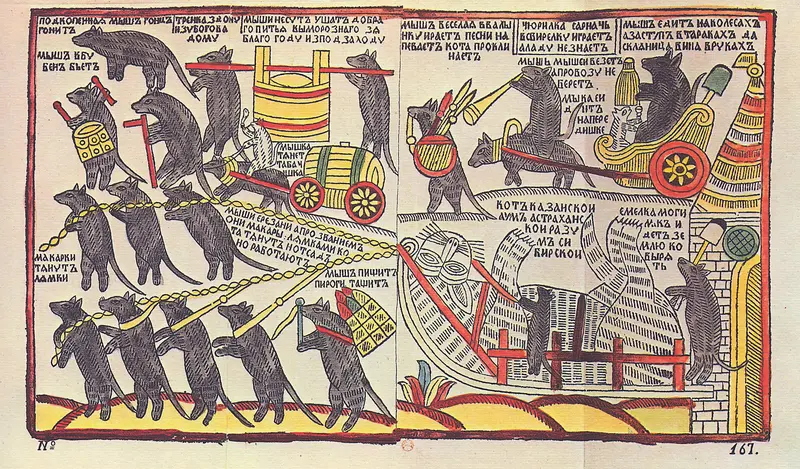
Every region has its own folk pictures. The Getty's thesaurus lists Russian lubki, popular prints of the 18th and 19th centuries, such as The Mice Are Burying the Cat; Ōtsu-e, Japanese folk paintings popular with pilgrims and travelers from the 1620s; and Kalighat paintings, quick, boldly colored pictures of Hindu gods and daily life sold cheaply to pilgrims at the Kalighat temple in Calcutta, such as Hanuman. In Christian countries painted ex-votos, given to a church in thanks for deliverance from illness or distress, are another folk form.
Sources: Getty AAT: lubki · Getty AAT: Otsu-e · Getty AAT: Kalighat · Getty AAT: ex-votos · Cleveland Museum of Art: Hanuman, Kalighat painting
What is outsider art (art brut)?
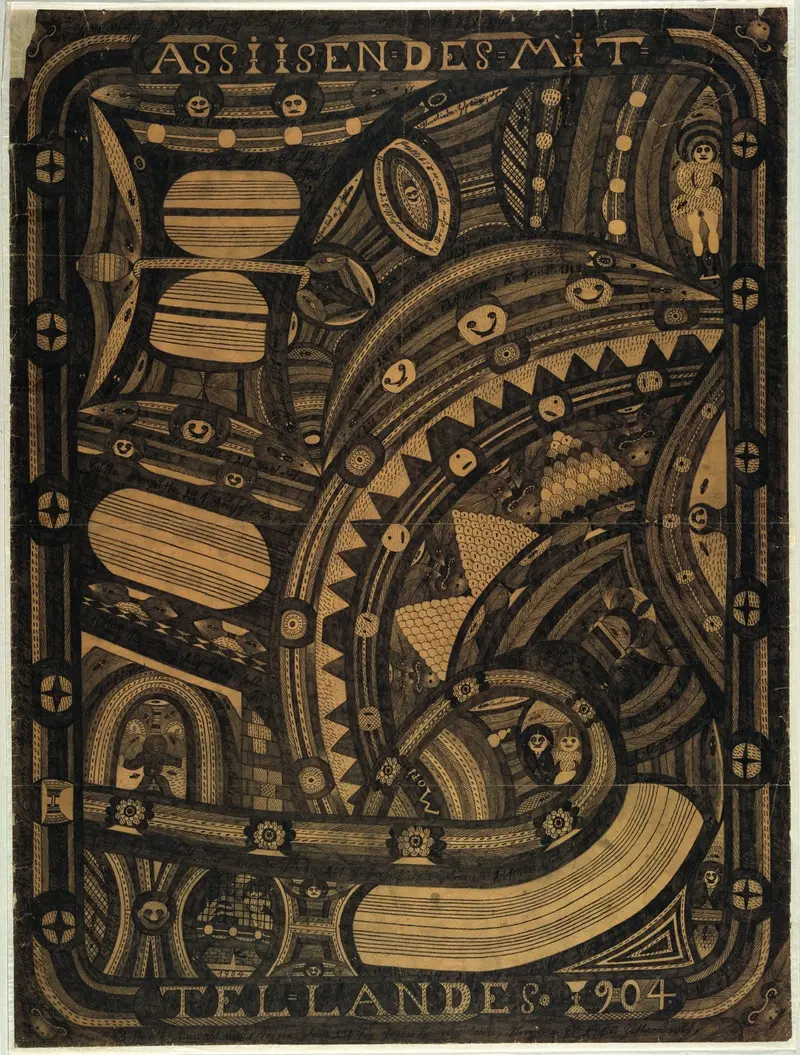
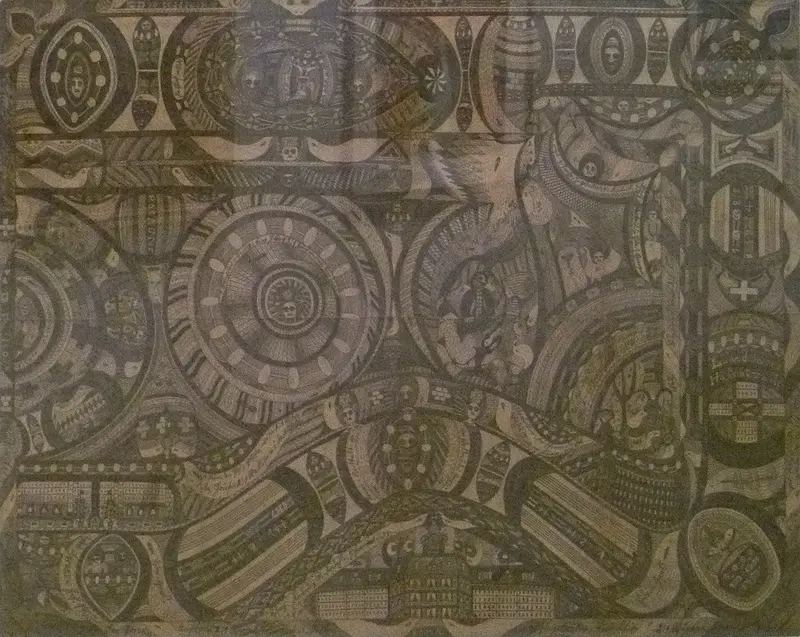
Outsider art is art made outside the usual training and structures of the art world, for example by psychiatric patients and prisoners. Tate notes that the French artist Jean Dubuffet called it art brut, “raw art”, and founded the Compagnie de l'Art Brut with André Breton in 1948. The Getty's thesaurus separates it from naive art: outsider artists avoid training on principle rather than simply lacking it. The Swiss Adolf Wölfli, who began drawing in 1899 as a patient at the Waldau psychiatric hospital near Bern and filled some 25,000 pages, is a leading example.
Sources: Tate: Outsider art · Getty AAT: naive art · Adolf Wölfli Foundation: Life
What is a limner?
A limner is a painter of portraits; in early America the word was used for the mostly self-taught painters who traveled from town to town painting likenesses. The Art Institute of Chicago says Ammi Phillips taught himself to be a limner, learned techniques from other Connecticut limners and became one of the most successful portraitists of rural New England. He first advertised in 1809, offering to paint likenesses in his room at a tavern in Pittsfield, Massachusetts.
Sources: Art Institute of Chicago: Ammi Phillips, Cornelius Allerton · Art Institute of Chicago: Ammi Phillips, Mrs. Reuben Allerton
Why are there no Grandma Moses or Maud Lewis paintings here?
Because they are still under copyright. Anna Mary Robertson Moses, known as Grandma Moses, began painting at 77 and died in 1961 at 101, the Smithsonian American Art Museum notes, so her paintings stay protected until the end of 2031 where copyright lasts 70 years after the artist's death. The Canadian painter Maud Lewis (1901–1970), whom the Art Canada Institute calls arguably the best-known artist from Nova Scotia today, is protected in those countries until the end of 2040. The folk and naive painters we feature all died by 1918.
Sources: Smithsonian American Art Museum: Grandma Moses · Art Canada Institute: Maud Lewis (1901–1970) · Cornell University Library: Copyright Term and the Public Domain
Is folk art in the public domain, and can I download it free?
Yes, for the folk and naive works we feature: their painters and printmakers died by 1918 and the works date from before 1930, so they are in the public domain in the United States and in countries where copyright ends 70 years after the artist's death. Many of our images come from museums such as the Art Institute of Chicago and the Cleveland Museum of Art, which release their public-domain images for free, unrestricted use. A few countries have their own rules on photographs of artworks, so check them if you publish outside the U.S.
Sources: Cornell University Library: Copyright Term and the Public Domain · Art Institute of Chicago: Open access images · Cleveland Museum of Art: Open access
How we chose the famous paintings
The famous paintings on this page are the folk and naive works known most widely around the world, measured by the number of languages that have an encyclopedia entry about each one, checked in November 2026. Only works with entries in at least two languages count. Most folk painters were anonymous or known only in their own region, so few folk works reach that bar and the list is short; Edward Hicks, Ammi Phillips and Joseph Whiting Stock appear instead in the painter cards and the themed rows.
We include self-taught painters whom Tate, the holding museum or Wikidata calls naive, such as Henri Rousseau and Niko Pirosmani, and José Guadalupe Posada's prints, cheap broadsides made for a wide public in Mexico City. No painter has more than three works on the list, which is why Rousseau's other jungle pictures appear in their own row.
Dates, sizes and locations come from the museums' own records and from Wikidata.
Spotted a mistake? Tell us and we will correct it.