
Am Adamello — History & Facts
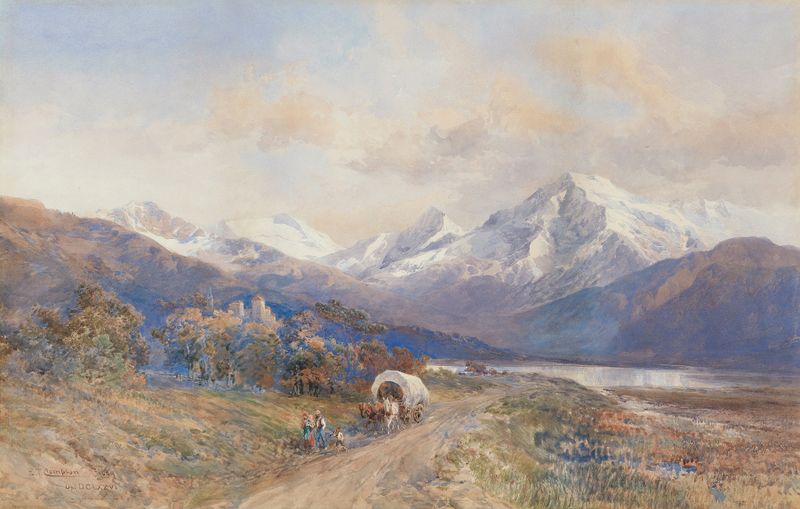
In the reflective silence of a mountain landscape, Am Adamello captures more than mere beauty; it unveils the profound connection between nature and introspection. Look to the left at the jagged peaks, their silhouettes stark against a pastel sky that transitions from twilight to dusk. The interplay of soft purples and muted oranges envelops the scene, creating a visual dialogue between day and night. Notice how the artist's brushwork brings the rugged terrain to life, with delicate strokes mimicking the texture of rock and foliage, inviting the viewer to traverse the landscape with their eyes. Beneath the surface lies a deeper narrative of solitude and resilience.
The soaring mountains, steeped in grandeur, juxtapose the stillness of the lake at their base, hinting at the duality of human experience — strength intertwined with vulnerability. Each reflected ripple in the water suggests the hidden emotions beneath our calm exteriors, inviting contemplation of both nature's majesty and our smallness within it. In 1920, Edward Theodore Compton painted this work during a time of personal reflection, having spent years traveling through the captivating landscapes of the Alps. The aftermath of World War I lingered in Europe, intensifying a collective yearning for peace and connection with the natural world, themes that resonate powerfully within this idyllic scene.
Compton’s dedication to capturing the sublime beauty of his surroundings reflects both his artistic evolution and the broader sentiment of his time.
More Artworks by Edward Theodore Compton
Browse all →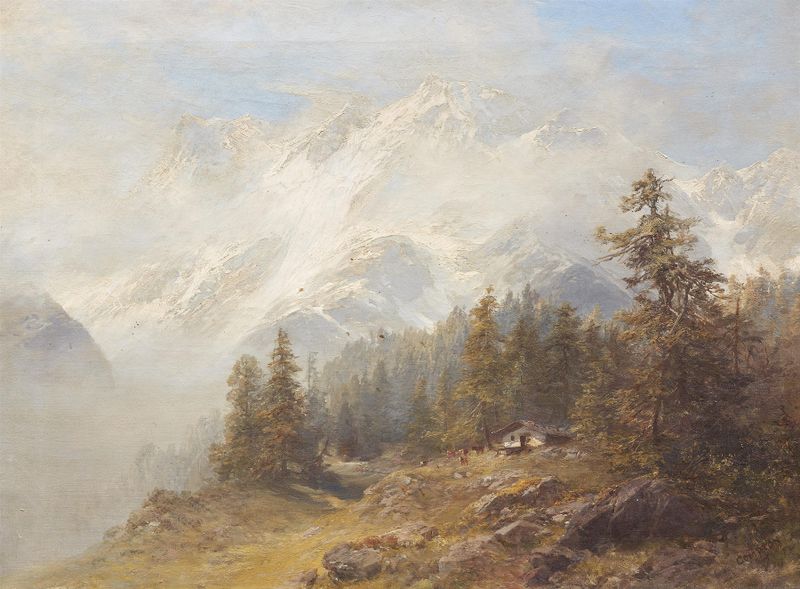
Alpenlandschaft vor schneebedecktem Massiv
Edward Theodore Compton
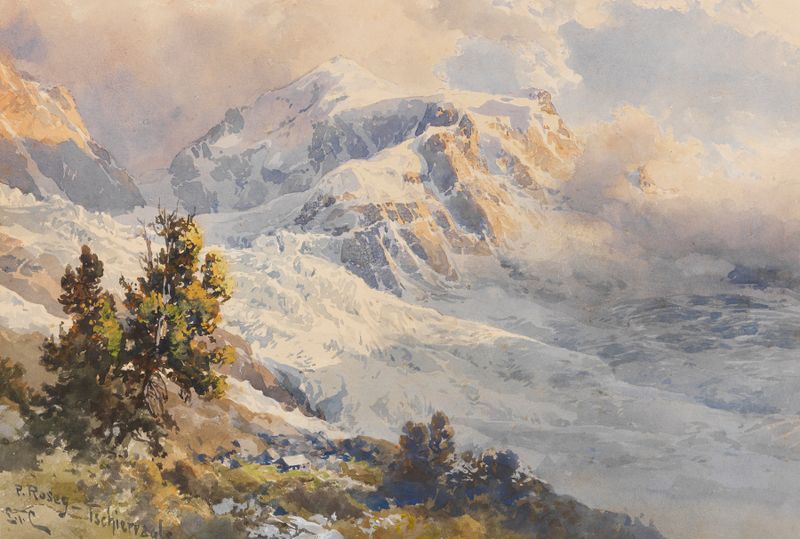
Piz Roseg – Tschiervagletscher
Edward Theodore Compton
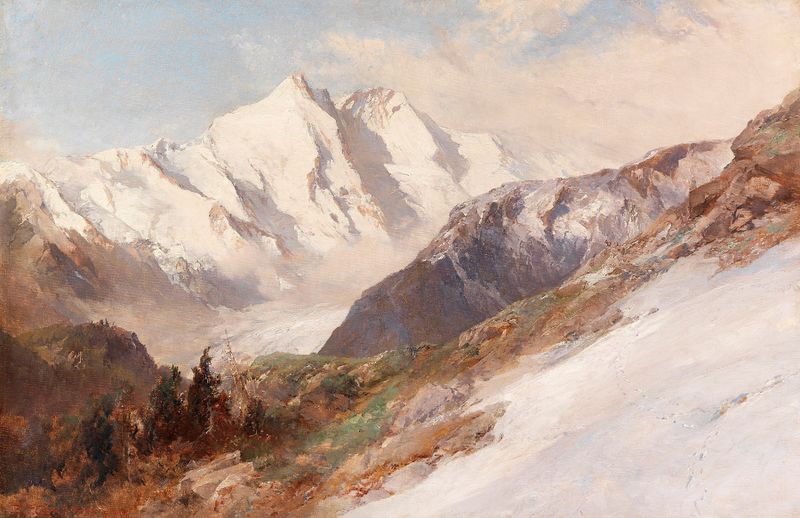
Blick auf die Nordseite des Großglockners
Edward Theodore Compton
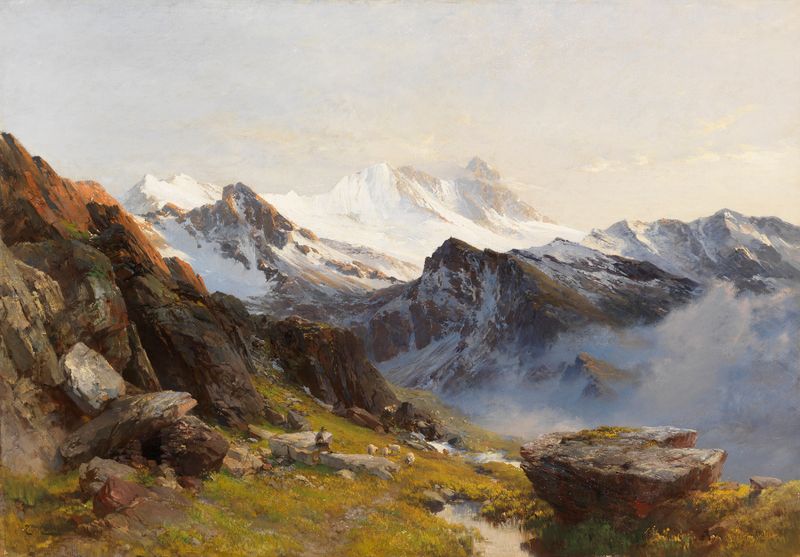
Großglockner von der Prager Hütte aus, früh
Edward Theodore Compton
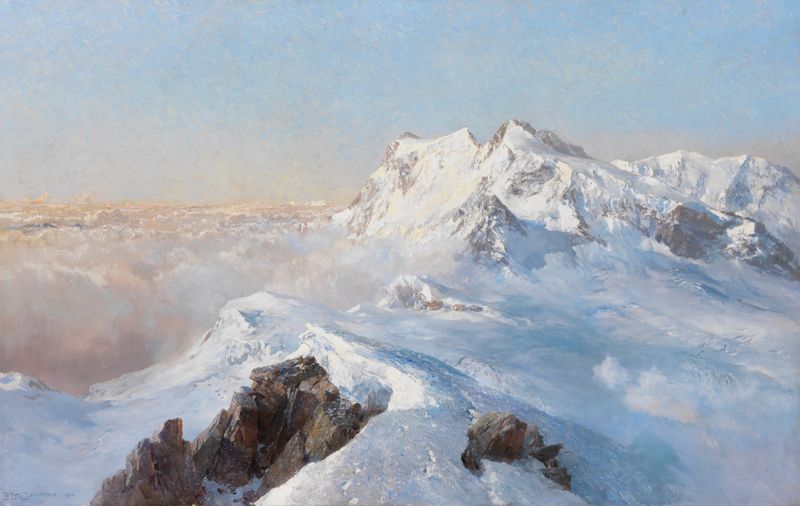
Über dem Nebelmeer (Monte Rosa vom Rimpfischhorn)
Edward Theodore Compton
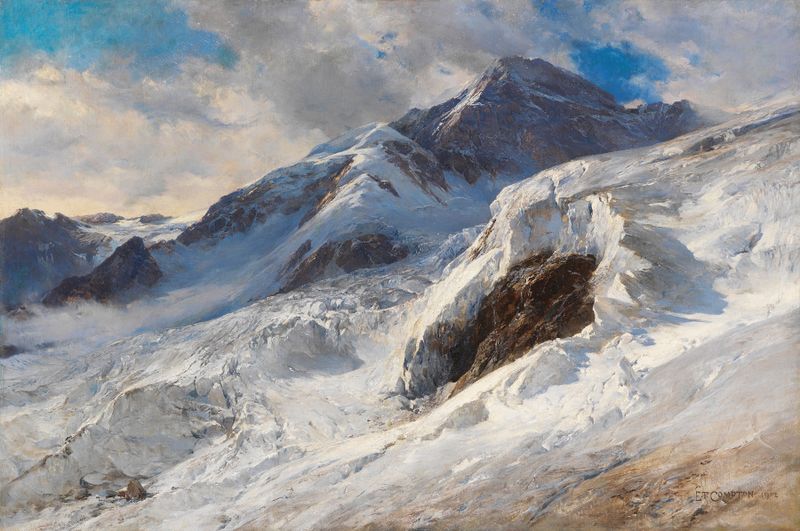
Lyskamm (Monte-Rosa)
Edward Theodore Compton
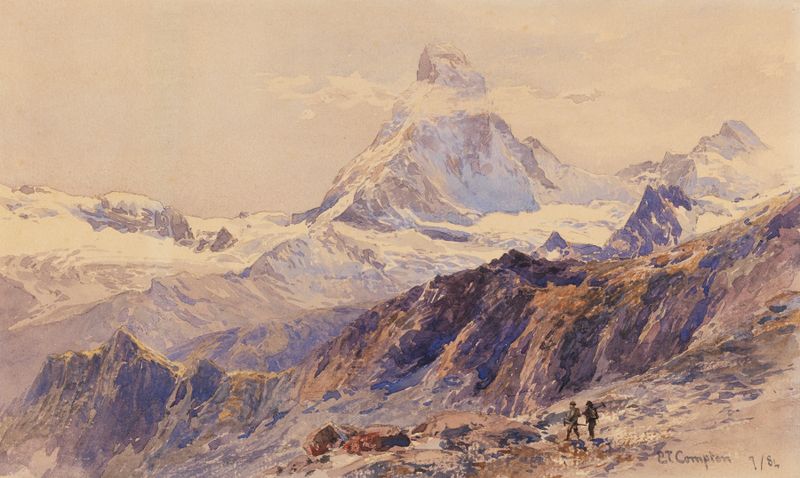
Das Matterhorn von der Triftkumme
Edward Theodore Compton
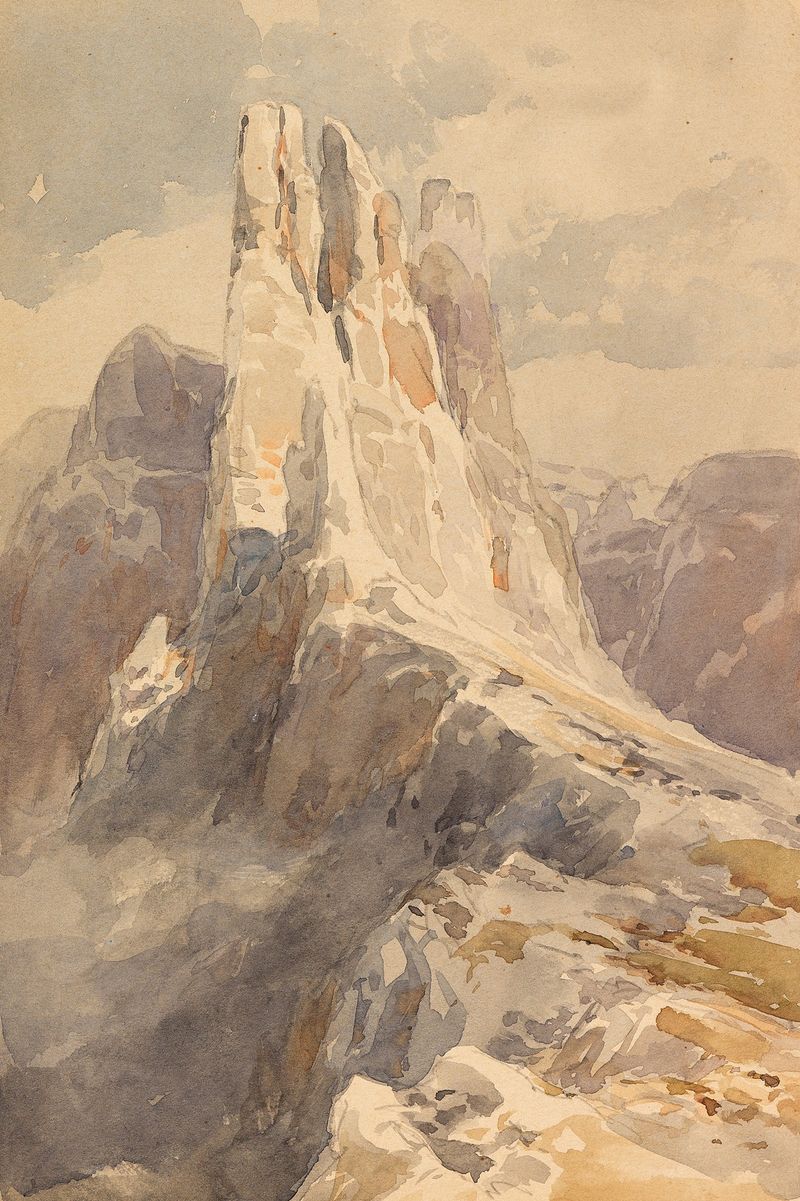
Blick auf die Vajolet-Türme in den Dolomiten
Edward Theodore Compton
Blick auf den Ortler von St. Valentin
Edward Theodore Compton
View of the Matterhorn
Edward Theodore Compton





