Amsterdam View Of A Roman Market — History & Facts
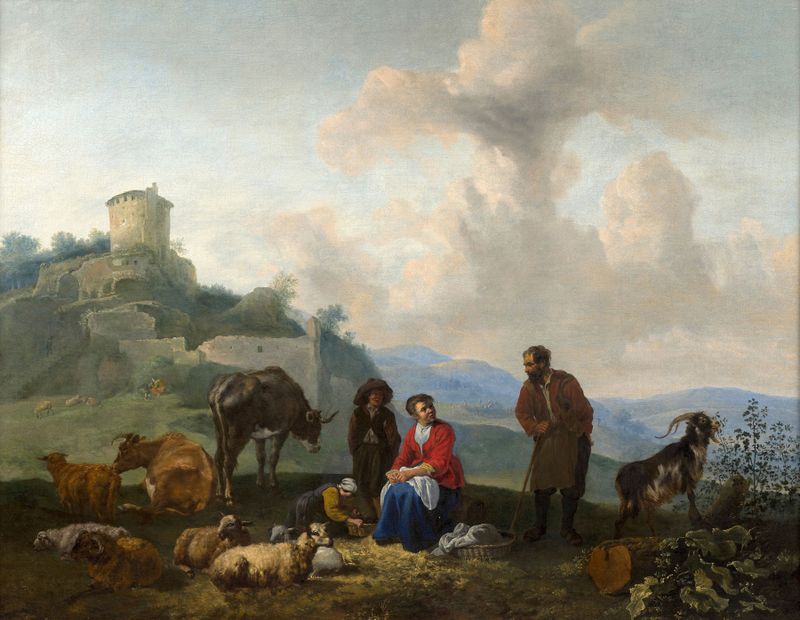
Is this a mirror — or a memory? A captured moment that whispers of beauty, where the past collides with the present in a rich tapestry of life and commerce. Focus on the center of the composition, where the bustling figures come alive. The artist’s brushwork draws you into the animated throng, their gesturing arms and vibrant garb infused with a sense of purpose and urgency. Notice how the light cascades down from an unseen sun, illuminating the intricate details of the marketplace, casting warm, golden hues that dance off the cobblestones beneath.
The layered architecture in the background frames the scene, enhancing the depth and drawing our gaze deeper into this dynamic setting. Yet, within this lively tableau, there lies a poignant contrast. The joyous exchanges of merchants invoke a sense of community and vitality, while the distant architecture looms, a reminder of time’s relentless passage. Each figure bears its own narrative—some lost in trade, others lost in thought—hinting at the myriad human experiences that unfold within such shared spaces.
The juxtaposition of movement and stillness captures the beauty of everyday life, urging us to reflect on our own connections to the world around us. Hendrick Mommers created this evocative work in the 17th century, a time when market scenes flourished in Dutch painting. Living in or around Amsterdam, the artist was influenced by the vibrant urban life of his era, an age marked by economic growth and cultural flourishing. It was a period when artists sought to capture the essence of their world, and Mommers adeptly painted not just a market but a reflection of the human spirit embedded within it.