Landscape with a milkmaid — History & Facts
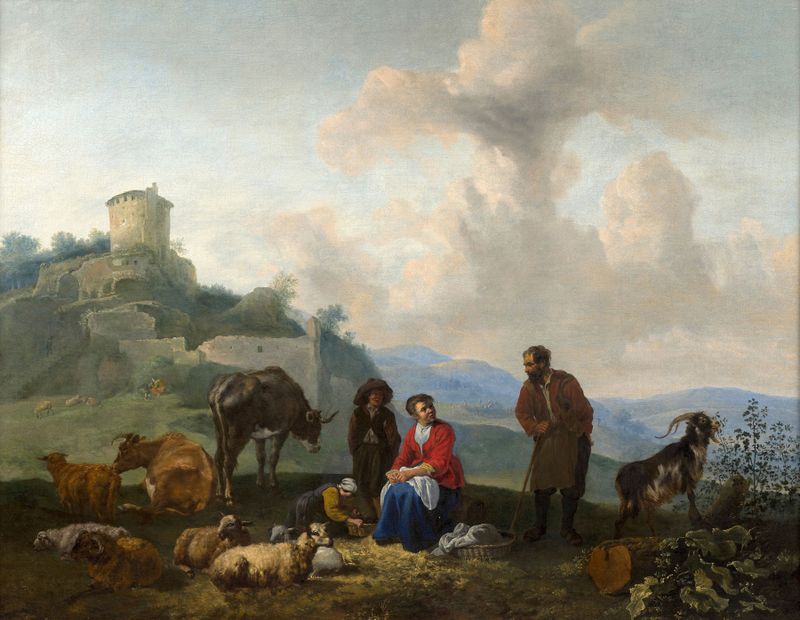
What secret hides in the quiet of the canvas? In a world woven from the threads of illusion and reality, the stillness of an idyllic landscape invites contemplation. Look to the left at the quaint figure of the milkmaid, her posture poised yet relaxed, cradling a large milk churn that suggests a rhythm of life. Notice how the gentle hues of green and gold reflect the early morning light, wrapping the scene in a warm embrace that enhances the tranquility. The meticulous brushwork creates a soft texture that mimics the lush grass beneath her feet, leading the eye towards the horizon where the sky blushes with pastel colors. Hidden within this serene tableau are contrasts that speak volumes.
The labor of the milkmaid juxtaposes the serene beauty of nature, hinting at the delicate balance between toil and peace. The stillness suggests a moment frozen in time, yet the vibrancy of the landscape pulses with life, evoking a sense of nostalgia for simpler times. Each element, from the distant trees to the tranquil water, coalesces into a harmonious vision that belies the complexities of existence. Created during a period of artistic experimentation in the Dutch Golden Age, this work emerged from the studio of its artist in the late 17th century.
Though the exact date remains unknown, it reflects a time when painters strived for realism amidst a burgeoning appreciation for nature. Mommers, influenced by his contemporaries, captures the essence of rural life, embodying the simplicity that defined the era while inviting viewers to ponder the stories etched within the stillness.