Famille de bergers au pied de ruines antiques et Famille de bergers au bord d’une rivière — History & Facts
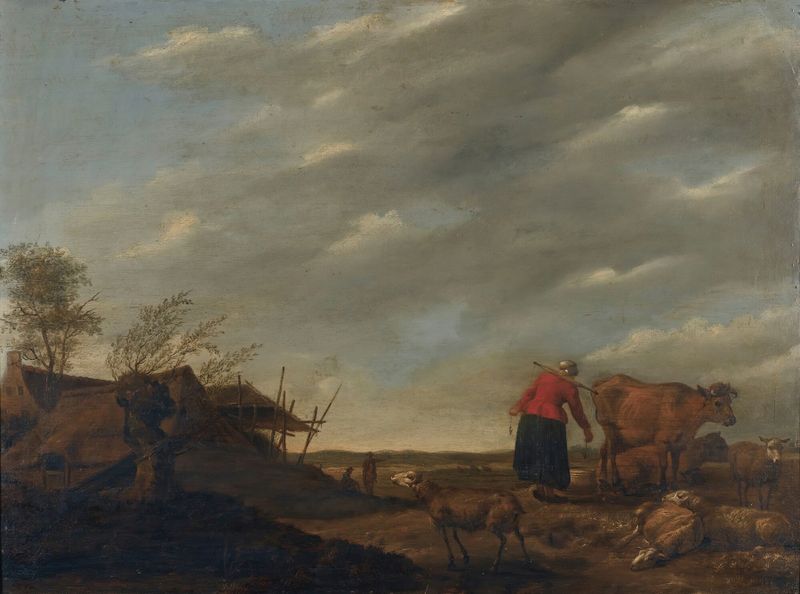
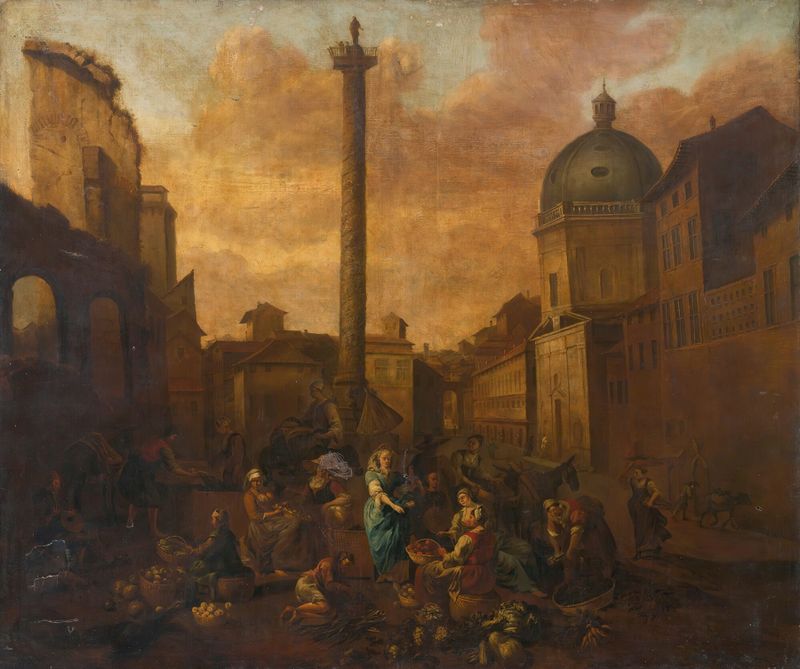
Where does light end, and longing begin? In the brushstrokes of a bygone era, the whispers of destiny weave through the canvas, inviting contemplation on the fleeting nature of existence. Look closely at the left side of the composition, where the warm glow of sunlight bathes the shepherd family, casting gentle shadows that dance on the ground. Notice how Mommers masterfully uses soft earth tones to create a harmonious balance between the figures and the relics of antiquity looming behind them. The juxtaposition of the rustic life with the remnants of grand architecture evokes a poignant sense of history, suggesting that these lives are but echoes of a greater narrative. The emotional tension in this scene lies in the contrast between the present and the past.
The shepherds, immersed in their daily tasks, symbolize perseverance and simplicity amid remarkable ruins that hint at lost grandeur. Each figure’s posture and expression tell a story of resilience and connection to their environment, while the distant, crumbling structures remind us of the inevitable passage of time. It is as if destiny is etched into the very stones that surround them, whispering tales of what once was and what might yet be. Hendrick Mommers created this piece during a time when the art world was increasingly exploring themes of nature and human existence within the context of history.
Working in the mid-17th century in the Netherlands, Mommers was influenced by both the Baroque and Dutch Golden Age styles, merging rich landscapes with intimate human experiences. His focus on rural life reflected a wider appreciation for the beauty in simplicity, aligning with the sentiments of the period and resonating through the ages in works such as this.