An Australian mangrove, ebb tide — History & Facts
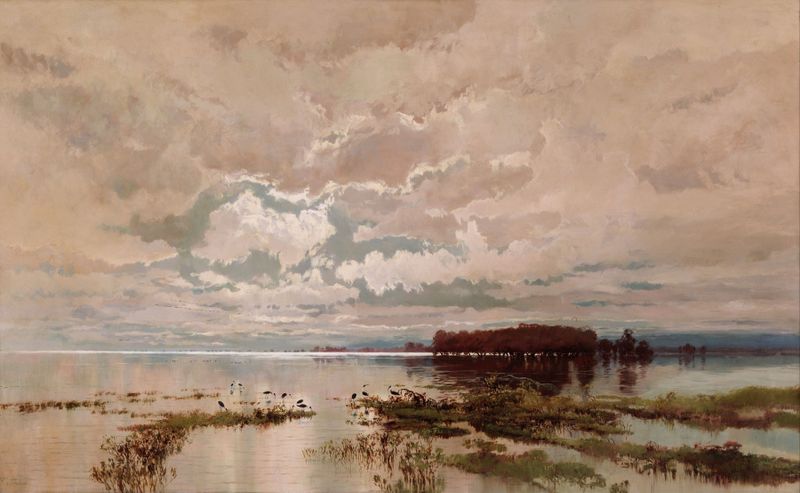
Can beauty exist without sorrow? In the delicate interplay between land and sea, where life teeters on the edge of existence, this question echoes through the canvas. Look to the left at the fragile mangrove roots, entwined like fingers reaching for salvation. The subdued palette of greens and browns evokes a sense of stillness, while the shimmering water reflects the gentle touch of twilight. Notice how the light dances on the surface, casting a soft glow that reveals the intricate textures of bark and leaf, drawing you deeper into this serene yet precarious ecosystem. The tension between stability and vulnerability permeates the scene; the resilient mangroves stand firm against the encroaching tide, yet their survival hangs by a thread.
Observe the subtle hints of decay in the lower branches, suggesting that even beauty comes with a price. Here, nature's calm façade masks an underlying fragility, inviting contemplation on the balance of life and the impermanence of beauty. In 1885, while living in Tasmania, Piguenit painted this evocative landscape amidst a burgeoning interest in Australian subjects and the natural world. The late 19th century was a time of exploration and discovery, as artists sought to capture the essence of their homeland against the backdrop of a rapidly modernizing world.
Piguenit's work exemplifies this movement, blending realism with a deep connection to the environment, capturing a moment that holds both beauty and melancholy in its grasp.