The flood in the Darling 1890 — History & Facts
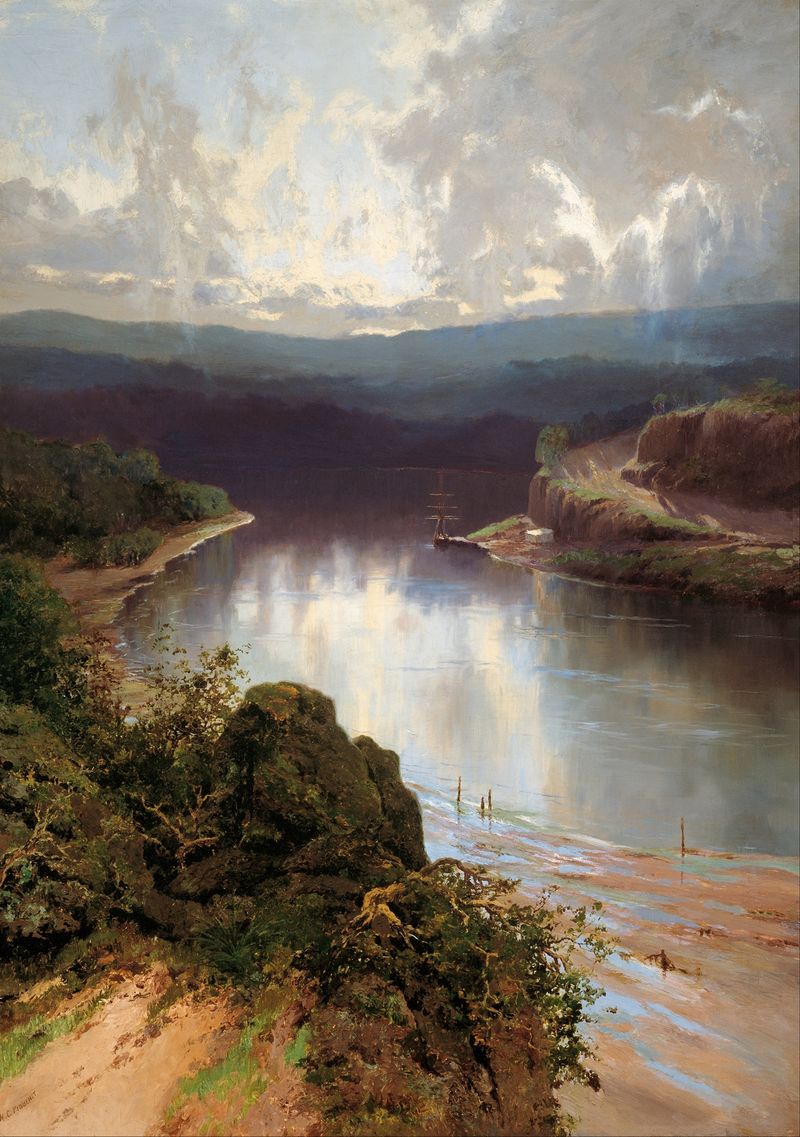
In the chaotic pulse of nature’s fury, art not only captures the moment but also embodies the ecstasy of creation amidst destruction. Look to the center of the canvas, where a swirling torrent commands attention, the floodwaters rising in a wild embrace of blues and browns. The artist expertly layers oil paints, creating a textured surface that seems to move; the waves appear to churn, reflecting both light and menace. Notice how the trees, stoic yet overwhelmed, reach skyward, their dark trunks contrasting with the frothy chaos below, as if clinging to life in the face of nature’s indifference. The interplay of light and shadow reveals deeper truths — the ecstasy of nature's power juxtaposed against the vulnerability of human existence.
As the flood engulfs the land, it symbolizes both destruction and renewal, a cycle that echoes the very essence of life. The distant mountains, kissed by the last light of day, hint at a world beyond the chaos, where hope persists, inviting viewers to contemplate the dichotomy of despair and beauty. William Charles Piguenit painted this evocative piece in 1895, during a time when Australia was grappling with its identity within the burgeoning art movement. He was inspired by the 1890 flood in New South Wales, an event that resonated deeply with the struggles of the land and its people.
The painting reflects his commitment to capturing the Australian landscape's emotional depths, solidifying his place in the national narrative of art's evolution in that era.