Mount Olympus, Lake St Clair, Tasmania, the source of the Derwent — History & Facts
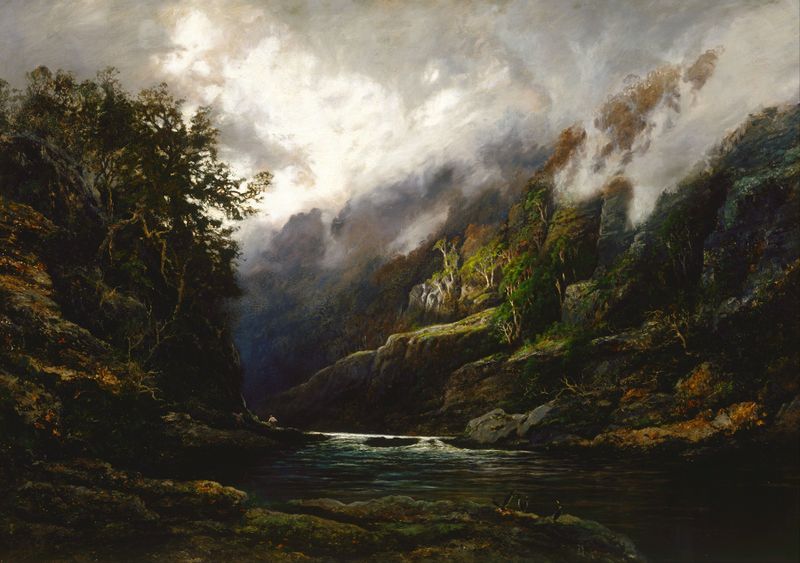
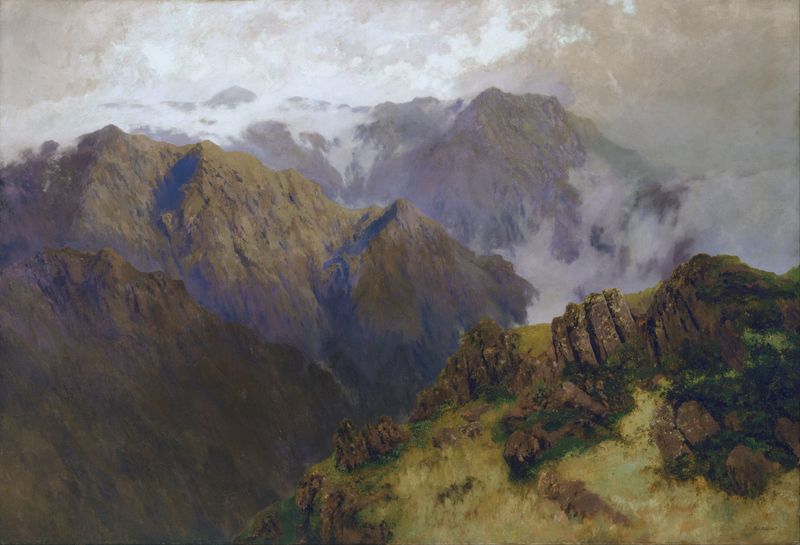
Can paint confess what words never could? In the depths of color and form, Mount Olympus, Lake St Clair, Tasmania, the source of the Derwent resonates with an unspoken yearning that transcends the canvas. Focus on the majestic mountain dominating the horizon, its summit cloaked in a veil of ethereal mist. To the right, the shimmering lake reflects the sky’s pastel hues, inviting the eye to trace its delicate curve. Notice how the artist employs a rich palette, blending deep greens and blues to elicit a sense of tranquility, while the soft brushstrokes create an almost reverent atmosphere, as if nature itself is holding its breath in awe of this sacred place. At first glance, the composition feels harmonious, yet beneath its serene exterior lies a poignant contrast between the stillness of the lake and the formidable presence of the mountain.
This duality evokes a deep emotional tension — a desire to connect with nature’s majesty while acknowledging its overwhelming grandeur. The interplay of light and shadow adds depth, hinting at the mysteries that lie beyond the visible, as if each ripple in the water is a whisper of the landscape's untold stories. In 1875, during a period of exploration and romanticism in Australian art, Piguenit painted this work amid a growing appreciation for the Australian landscape. Residing in Tasmania, he captured the raw beauty of his surroundings at a time when artists were beginning to embrace their identity away from European influences, seeking to define a uniquely Australian aesthetic.
This painting marks not just a celebration of nature, but also a significant moment in the evolution of national identity in art.