The Upper Nepean — History & Facts
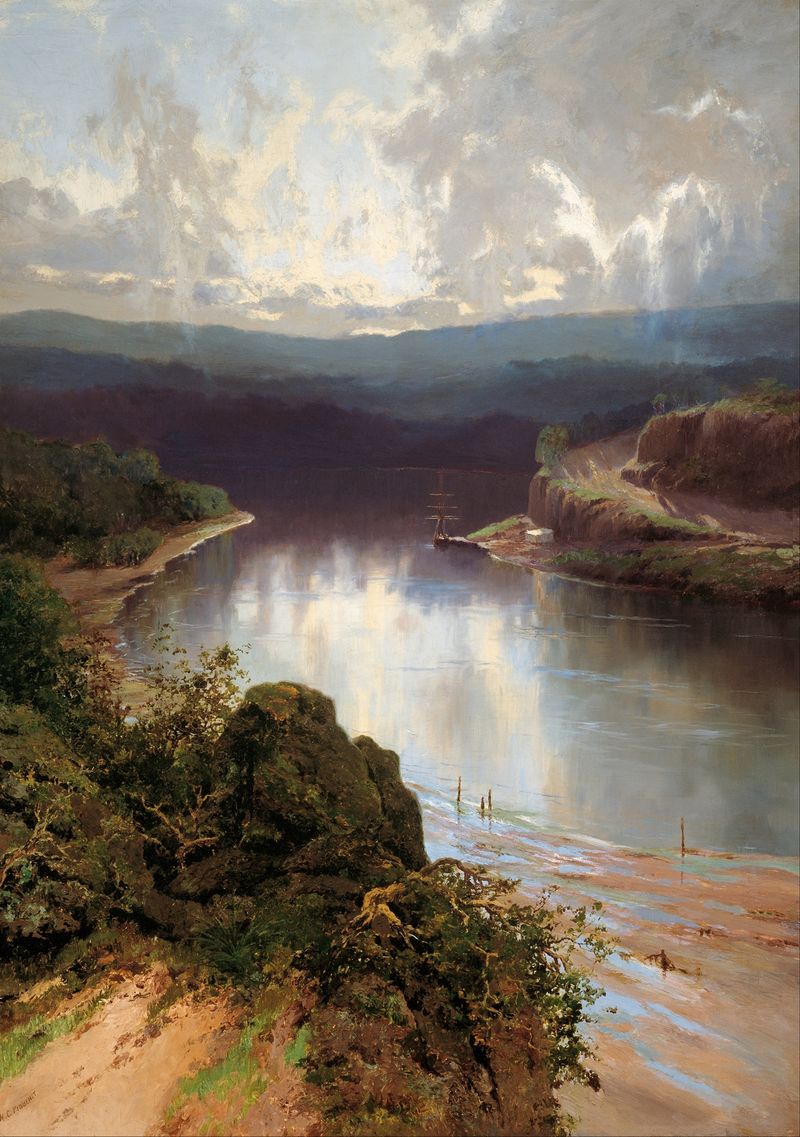
Is this a mirror — or a memory? The Upper Nepean beckons with its tranquil reflection, inviting contemplation of nature’s duality and humanity's transient presence within it. Look to the left at the deep, emerald greens of the lush foliage, where the trees stand sentinel over the shimmering surface of the water. Notice how the sky unfurls in muted hues of lavender and gold, its light dancing across the gentle ripples. The artist’s deft brushwork creates a vivid tapestry, blending the natural landscape with the mirrored image below, blurring lines between reality and imagination.
This interplay of light and shadow draws the viewer deeper into the scene, evoking a sense of serenity and introspection. Amidst the calm, there lies a tension between permanence and ephemerality. The trees, in all their steadfastness, seem to guard the memories that the water reflects. Yet the fleeting nature of light and the rippling surface remind us that moments are constantly slipping away.
The painting encapsulates a dialogue between stillness and movement, urging one to consider the weight of what is remembered versus what is lived. In 1889, the artist created this piece during a time of personal upheaval, seeking solace in the Australian landscapes he so cherished. Living in Tasmania at the time, he was influenced by the burgeoning Australian art scene, aspiring to capture the essence of the natural world through a distinctly local lens. The Upper Nepean reflects not just Piguenit’s artistic evolution but also the broader narrative of a nation grappling with its identity in a rapidly changing world.