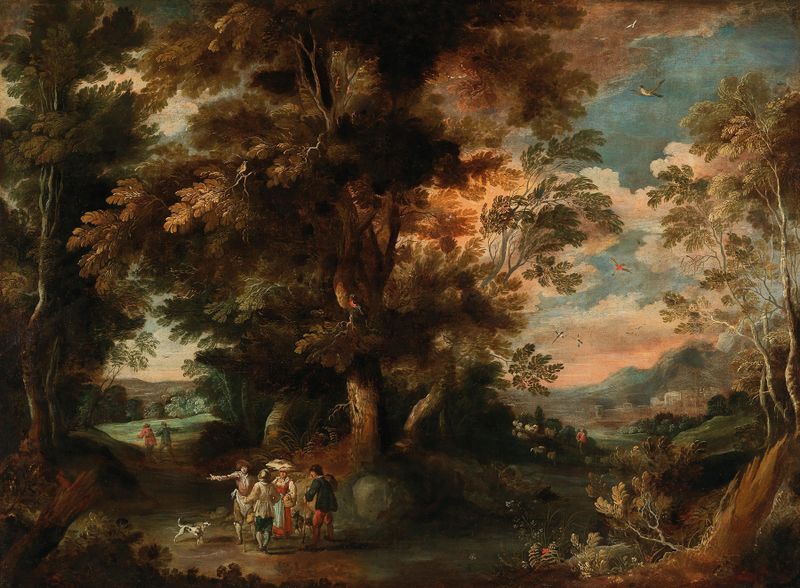
An extensive wooded landscape with biblical staffage — History & Facts
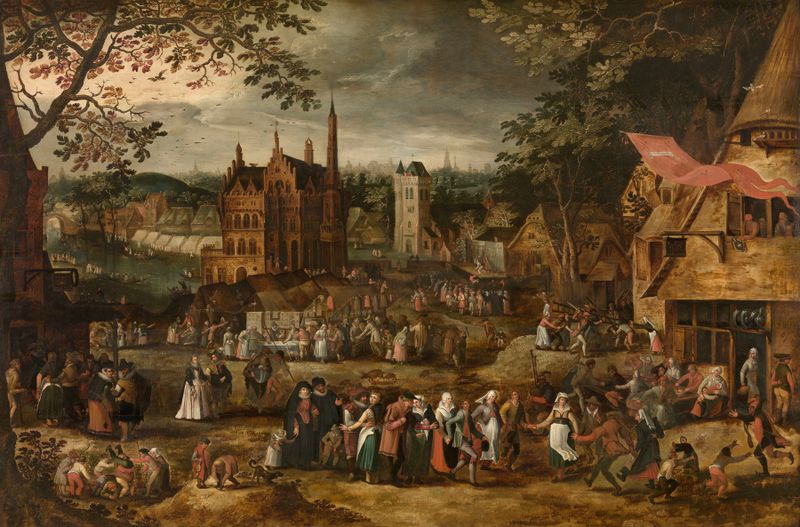
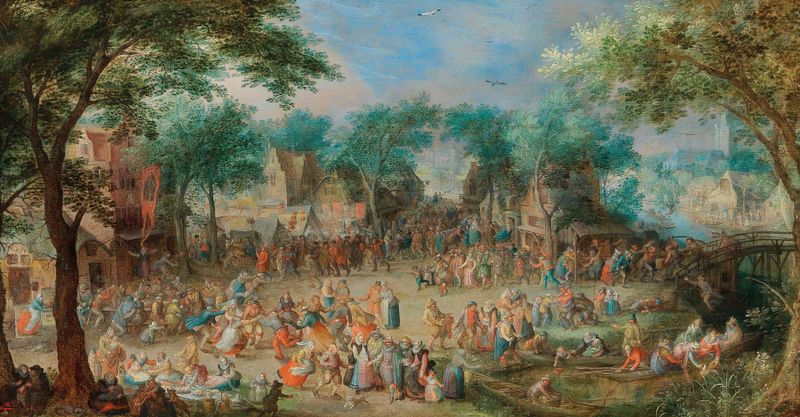
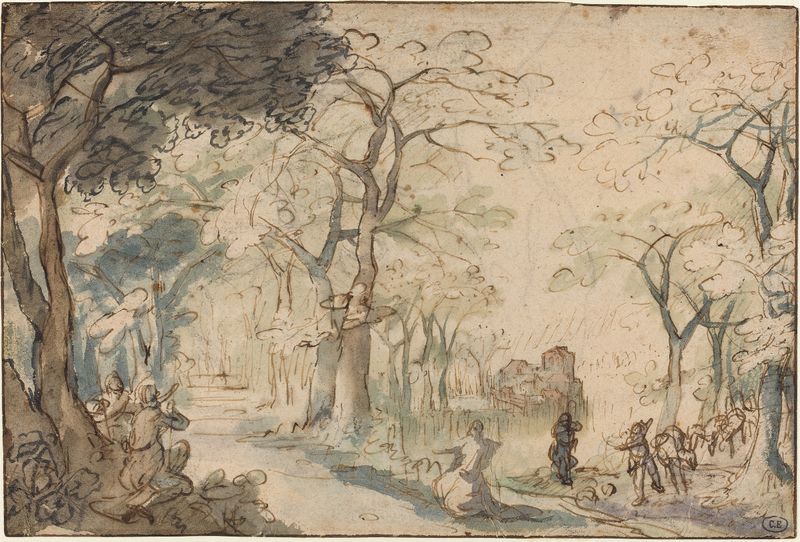
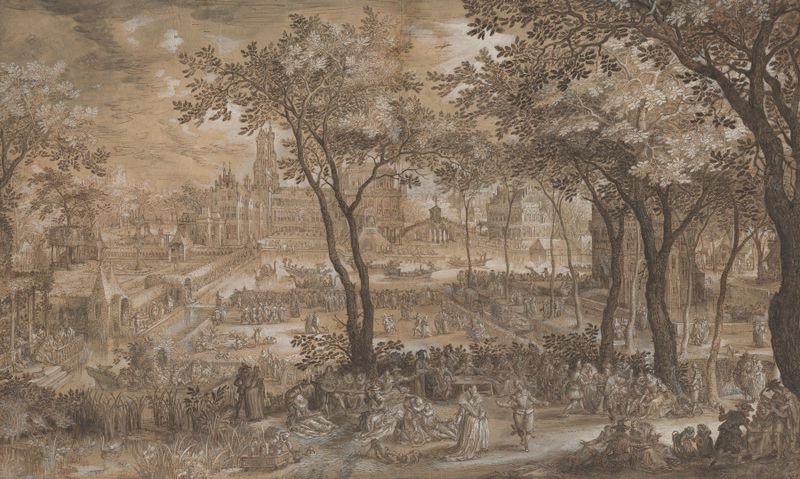
What secret hides in the quiet of the canvas? In a world that often feels rushed, this extensive wooded landscape invites reflection and contemplation, exposing the delicate balance between nature and the human experience. Look to the left at the towering trees, their lush greens and warm browns forming a natural cathedral above. The light filters through the canopy, casting dappled shadows on the forest floor where figures engage in a subtle, almost serene dance of life. Notice the intricate brushwork that breathes life into the foliage, while the soft, muted palette evokes a sense of tranquility and timelessness, grounding the viewer in a moment that feels both vast and intimate. Amidst the natural beauty, biblical figures appear as quiet staffage, their presence hinting at deeper narratives and moral lessons woven into the landscape.
The juxtaposition of the divine with the earthly creates a tension that softens yet complicates the peace of the scene. Each figure, absorbed in their own pursuits, prompts questions of faith, duty, and the connection between human existence and the divine order that blankets the woods. David Vinckboons painted this work during the early 17th century, a time when the Northern Renaissance was flourishing, enriching the dialogue between nature and spirituality in art. Living in Antwerp, he was influenced by the emerging Baroque style and the growing interest in landscapes that conveyed both beauty and allegory amidst a changing European cultural landscape.