Village Fair — History & Facts
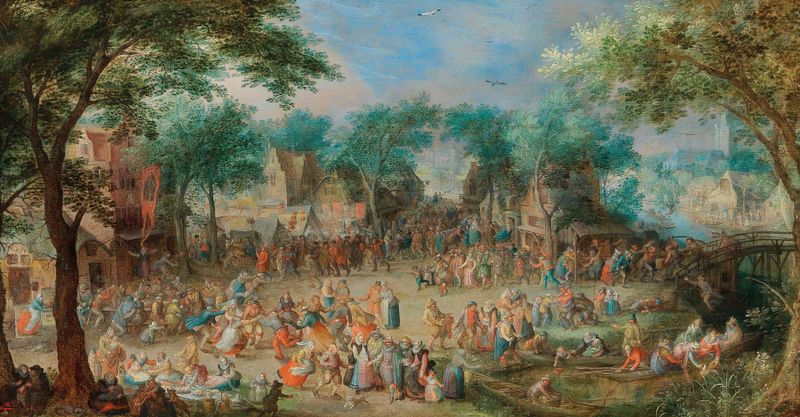
This thought lingers as one contemplates the layers of joy and sorrow woven into the fabric of life, a reflection manifest in the vibrant tapestry of a fair. Focus on the jubilant scene sprawled before you, where figures of all ages gather, laughter echoing amid the vivid hues of tents and wares. Notice how the play of light dances across the canvas, illuminating the faces filled with delight. The richness of reds and yellows draws your eye to the center, where the merriment unfolds, each brushstroke suggesting movement and vitality.
The surrounding greenery frames this celebration, creating a stark contrast that heightens the sense of joy against a more muted background. Yet, within the exuberant life of the fair, subtle hints of introspection emerge. Amidst the laughter, some faces seem to wear masks of societal expectation, a fleeting glimpse into the tension between public joy and private despair. The way the artist juxtaposes the festive atmosphere with isolated moments of reflection invites viewers to ponder the true nature of happiness—be it genuine or simply a curated performance for onlookers.
The enchanting colors may captivate the eye, yet they also disguise the bittersweet reality of human experience. David Vinckboons painted this work in 1610, during a period when the Northern Renaissance was evolving, and genres like genre painting were gaining prominence. Working in the Netherlands, he sought to capture the everyday moments of life, reflecting societal themes within a vibrant context. His approach not only documents the era's cultural landscape but also hints at deeper truths about human nature, making his work resonate through the centuries.