Saint George’s Kermesse — History & Facts
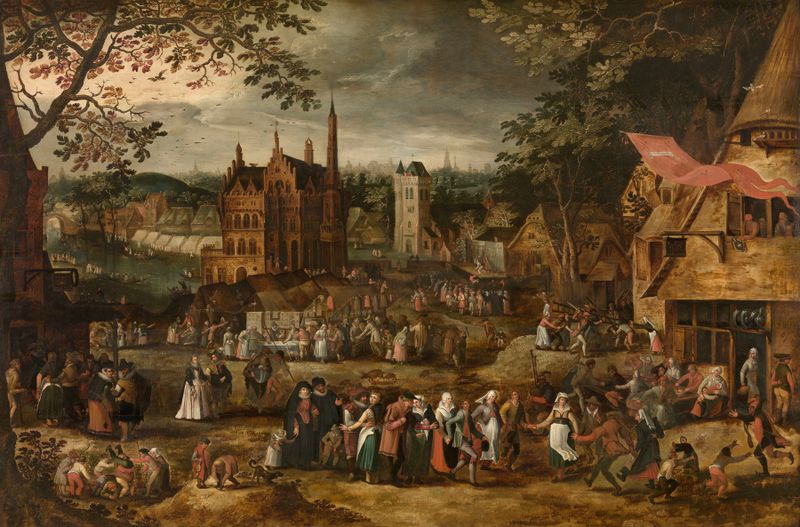
Could a single brushstroke hold eternity? In Saint George's Kermesse, desire spills forth, alive with the joyous clamor of a village festival, where every figure seems to dance with the promise of life. Look to the left where revelers gather, their vibrant garments splashed in deep reds and sunny yellows, echoing the exuberance of their shared celebration. The composition skillfully intertwines figures with the landscape, guiding your gaze toward Saint George, heroically poised against the backdrop of the scene, with a glint of divine light illuminating his armor. The soft, fluid brushstrokes create an atmosphere of movement, while the warm palette evokes a sense of earthly delight and camaraderie. Yet beneath this festive surface lies a tension between the sacred and the profane.
The depiction of merriment contrasts sharply with the solemnity of Saint George's mission, hinting at the complexities of human desire — the yearning for both celebration and redemption. Each character embodies a fragment of longing, from the ecstatic dancers to the reverent onlookers, intertwining personal aspirations with a collective spirit. Crafted during a time of spiritual and artistic upheaval in the late Renaissance, the artist found himself in a flourishing creative environment. As Van Dyck and Rubens dominated the Flemish scene, Vinckboons contributed to the genre of peasant festivities, capturing the essence of happiness amid societal change.
This painting, though undated, stands as a testament to the vibrant local culture and the artist's keen observation of human emotions, skillfully immortalizing a moment of pure desire.