Venetian Party in a Chateau Garden — History & Facts
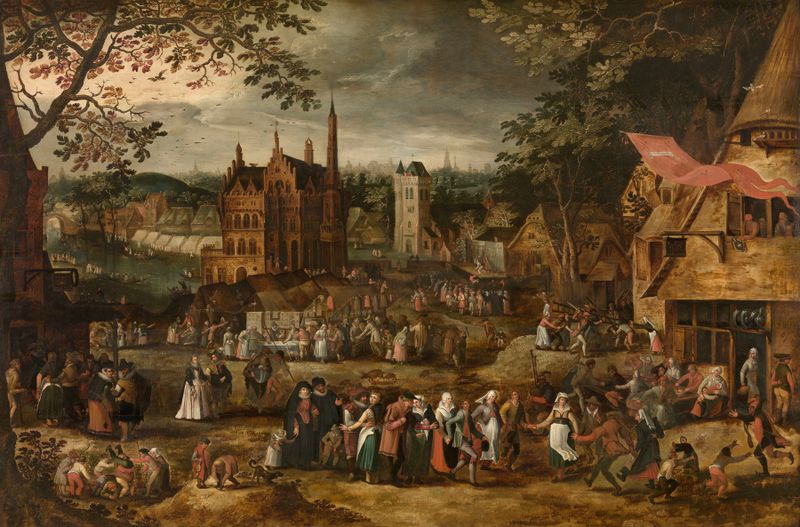
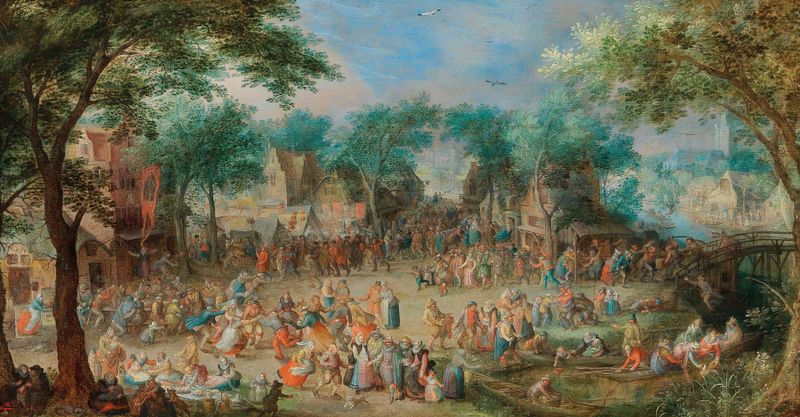
A gentle breeze stirs the lush foliage as laughter echoes through the garden. Splashes of sunlight dance on the shimmering surface of a nearby fountain, casting fleeting reflections on the revelers' faces. Amidst vibrant blooms and opulent attire, a group of elegantly dressed figures indulge in the pleasures of life, oblivious to the inevitable passage of time that looms beyond the garden walls. Look to the center of the composition, where a joyous gathering unfolds.
The figures, adorned in rich fabrics of deep reds and golds, are animated in conversation and laughter, their gestures animatedly frozen in this moment of celebration. Notice how the artist expertly captures the brilliant play of light, illuminating the highlights on their clothing while casting shadows that hint at the encroaching dusk. The warm palette imbues the scene with a sense of vitality, yet the subtle use of darker tones in the background imparts a quiet tension, suggesting that this moment, however radiant, is transient. Beyond the surface of revelry lies the theme of mortality, a stark reminder that festivity exists in the shadow of life's impermanence.
The garden, with its ephemeral blossoms, serves as a metaphor for life’s fleeting moments. The harmony of laughter and music contrasts sharply with the underlying stillness of nature, where the passage of time and the inevitability of decay reside. Each figure, caught in blissful oblivion, embodies the paradox of enjoying life while being unaware of its fragility. David Vinckboons created Venetian Party in a Chateau Garden around 1602, during a period when the Northern Renaissance was flourishing.
Living in a time marked by both cultural richness and shifting societal norms, Vinckboons was influenced by the growing interest in humanist ideals and the celebration of daily life. This work reflects not only his command of scene and character but also speaks to the zeitgeist of an era where art began to capture the coexistence of joy and the passage of time.