
An oak tree in Richmond Park with a herd of fallow deer beside it — History & Facts
In the quiet elegance of nature, the fleeting moments of life whisper their truths amid the stillness of an oak tree and a herd of fallow deer. Look closely at the left side of the canvas where the majestic oak stands tall, its rich, textured bark inviting you to trace the gnarled lines with your eyes. The soft hues of green and brown envelop the deer, their delicate forms contrasting against the sturdy strength of the tree. Notice how the dappling light filters through the leaves, illuminating the gentle curves of their bodies, creating a harmonious balance between vulnerability and resilience. Yet, beneath this serene surface lies a profound tension—each deer, while seemingly tranquil, symbolizes the fragility of life, their presence a reminder of mortality.
The oak, though steadfast, also signifies the passage of time; its leaves will eventually fall, just as seasons of life come and go. This juxtaposition of permanence and transience invites contemplation on the cyclical nature of existence. James Ward painted this piece during a time when Romanticism was flourishing in the early 19th century, primarily in England. His focus on the natural world reflects both a personal escape into the past and a broader fascination with the sublime beauty of landscapes.
As he captured this scene, the world around him was evolving, yet nature remained a constant source of inspiration, inviting viewers to pause and reflect on their own journeys through life.
More Artworks by James Ward
Browse all →
View near Swansea, South Wales
James Ward
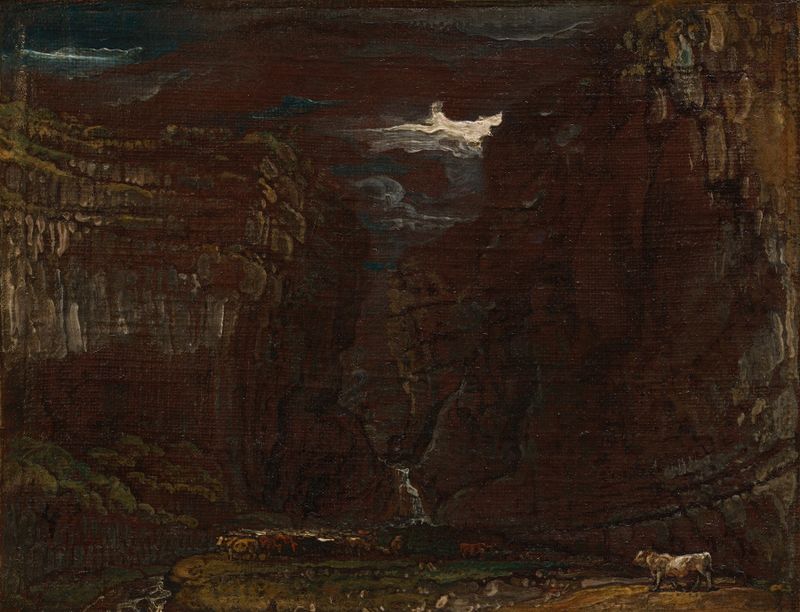
Sketch for ‘Gordale Scar’
James Ward
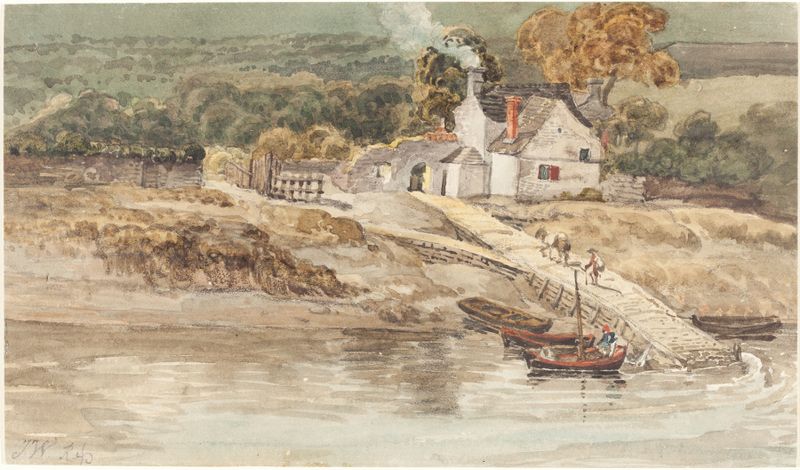
Landing Place near Tintern Abbey
James Ward

Landscape with Cottages
James Ward
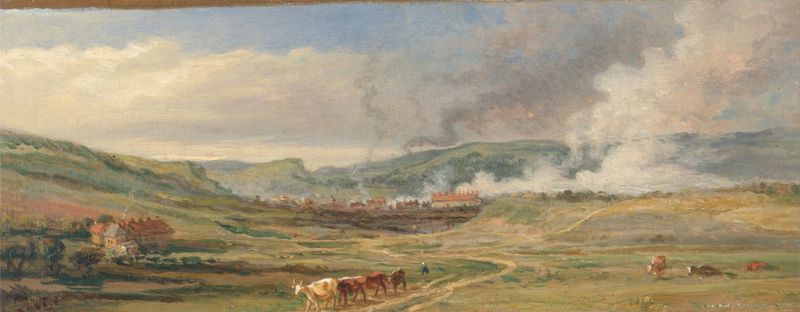
Landscape near Swansea, South Wales
James Ward

Fitzhead in Somerset, with an ox-cart near a lime kiln, and Glastonbury Tor in the distance
James Ward
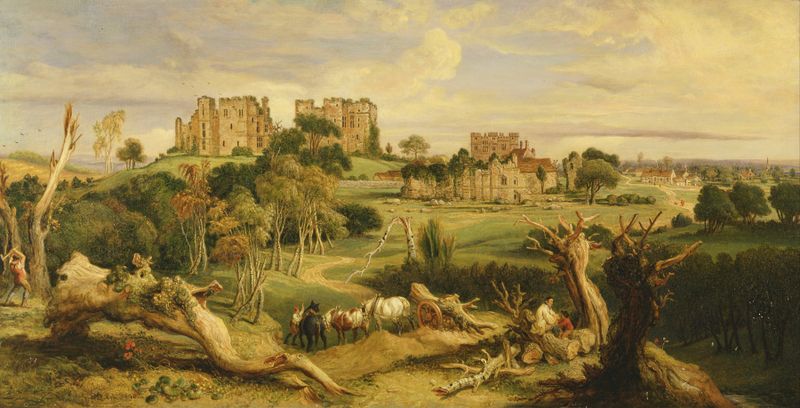
Kenilworth Castle, Warwickshire
James Ward

An Overshot Mill
James Ward
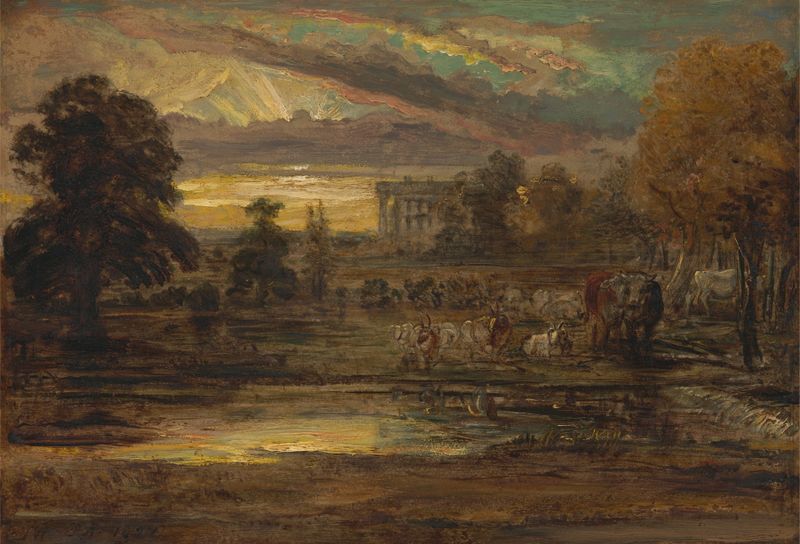
Cattle at a Pool at Sunrise
James Ward
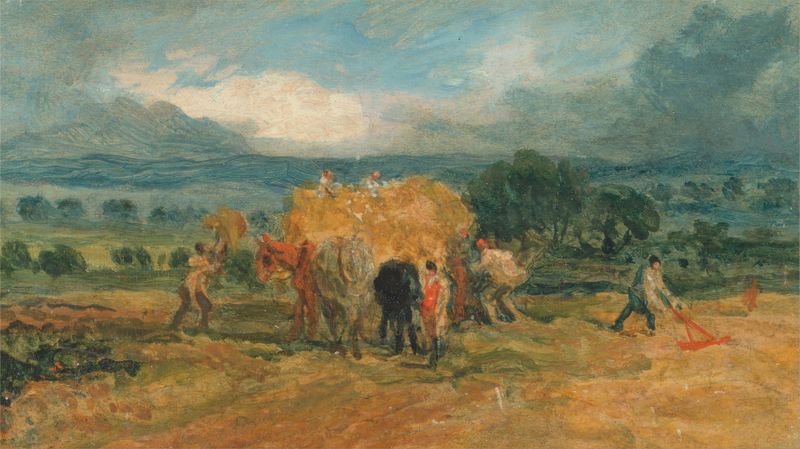
A Harvest Scene with Workers Loading Hay on to a Farm Wagon
James Ward





