
Landscape near Swansea, South Wales — History & Facts
Could beauty survive in a century of chaos? In the heart of the tempestuous 19th century, the fragility of nature stands resilient against the looming shadows of industrial transformation. Look to the horizon where rolling hills meet a soft, fading sky, the brushwork tenderly capturing the delicate interplay of light and shadow. Notice how the verdant greens of the landscape blend seamlessly with the warm golden tones of the setting sun. The detail in the foreground plant life draws your eye, inviting you to wander through the lush textures that contrast with the ethereal atmosphere above.
Each stroke reveals not just the topography, but also a sense of peace amidst the complexities of the world beyond. Delve deeper into the subtle nuances within this serene vista, where the tranquility of the countryside speaks to a momentary escape from the chaos of urban life. The placid water reflects the sky, hinting at a fleeting harmony that could easily be disrupted. The choice to depict a seemingly untouched landscape evokes a bittersweet awareness of mortality, reminding the viewer that beauty, though ephemeral, exists as a poignant response to the inevitable changes surrounding it. In 1805, James Ward painted this piece during a time when Britain was grappling with the repercussions of the Napoleonic Wars and the dawn of the Industrial Revolution.
Living in London while often retreating to the English countryside for inspiration, his work reflects both admiration for the natural world and a premonition of the transformation it would soon endure. This painting encapsulates a moment in time, preserving a fragile beauty that resonates through the ages.
More Artworks by James Ward
Browse all →
View near Swansea, South Wales
James Ward
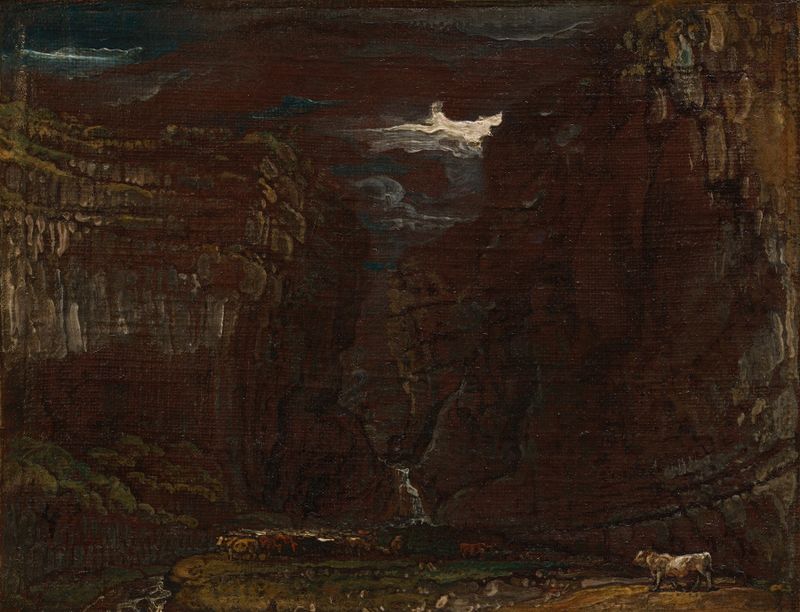
Sketch for ‘Gordale Scar’
James Ward
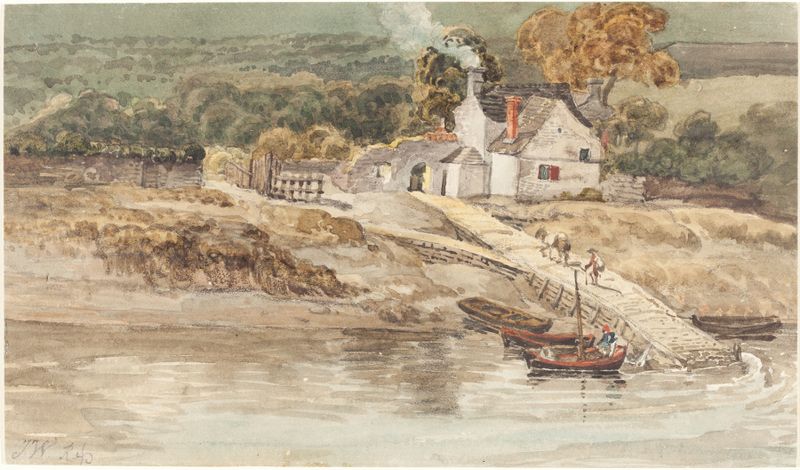
Landing Place near Tintern Abbey
James Ward

Landscape with Cottages
James Ward

Fitzhead in Somerset, with an ox-cart near a lime kiln, and Glastonbury Tor in the distance
James Ward
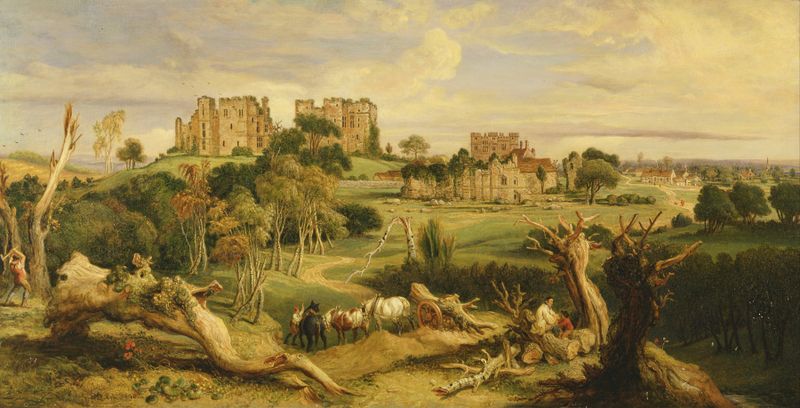
Kenilworth Castle, Warwickshire
James Ward

An Overshot Mill
James Ward
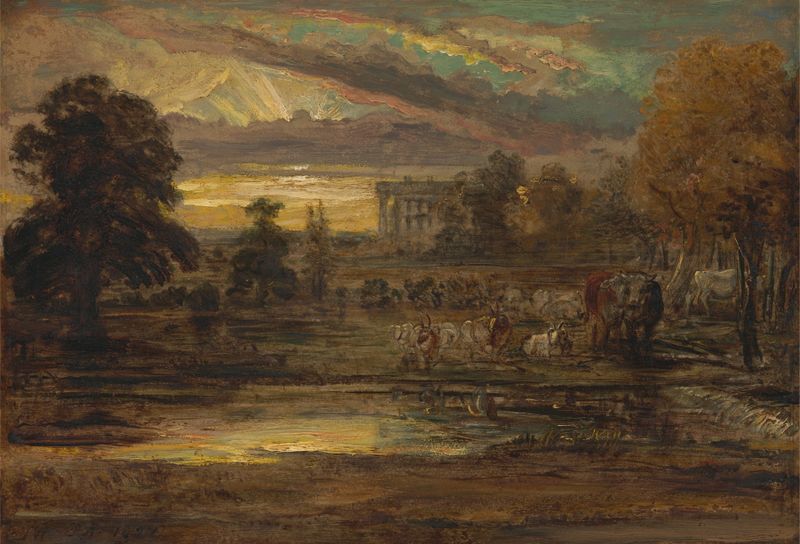
Cattle at a Pool at Sunrise
James Ward

An oak tree in Richmond Park with a herd of fallow deer beside it
James Ward
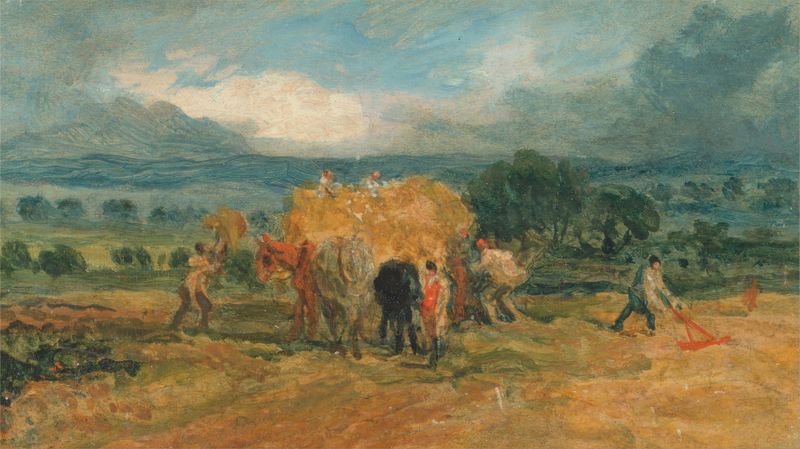
A Harvest Scene with Workers Loading Hay on to a Farm Wagon
James Ward





