
Fitzhead in Somerset, with an ox-cart near a lime kiln, and Glastonbury Tor in the distance — History & Facts
What if beauty was never meant to be finished? In Fitzhead in Somerset, with an ox-cart near a lime kiln, and Glastonbury Tor in the distance, light plays its own intricate game, inviting us to ponder the landscape's transient splendor. Look to the center where the ox-cart rests, a humble silhouette against the vastness of the rolling hills. Notice how the soft, golden light of the late afternoon bathes the scene, casting gentle shadows that animate the earth and sky. The brushstrokes are both deliberate and loose, allowing the textured greens of the fields to blend seamlessly into the soft blues and grays of the sky.
The distant Glastonbury Tor rises elegantly, a silent sentinel watching over the landscape, while the lime kiln stands as a relic of human industry, starkly contrasting with the organic forms surrounding it. Delve deeper into the interplay of light and shadow; the warm glow suggests the passage of time, evoking a sense of nostalgia and connection to nature’s cycles. The ox-cart, though stationary, conveys a narrative of labor and rural life, presenting a juxtaposition between the serenity of the landscape and the industriousness of the human touch. The gentle undulations of the hills speak to the land’s own story, where beauty and function coexist in quiet harmony. James Ward created this piece in 1805 while residing in Somerset, a period marked by his evolving style towards pastoral realism.
At the time, the Romantic movement was gaining momentum, with artists seeking to capture the sublime beauty of nature. This artwork reflects not only Ward’s personal journey but also a broader cultural shift towards appreciating the emotional depth found within the English countryside.
More Artworks by James Ward
Browse all →
View near Swansea, South Wales
James Ward
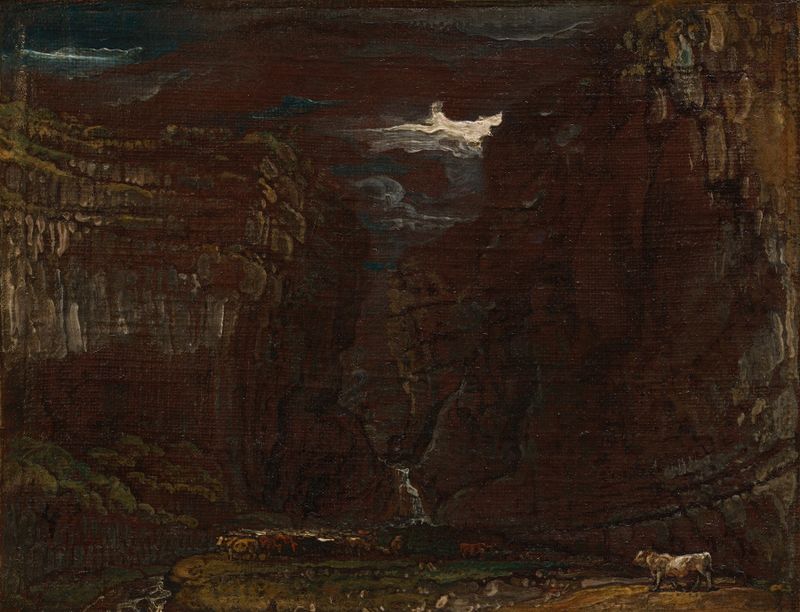
Sketch for ‘Gordale Scar’
James Ward
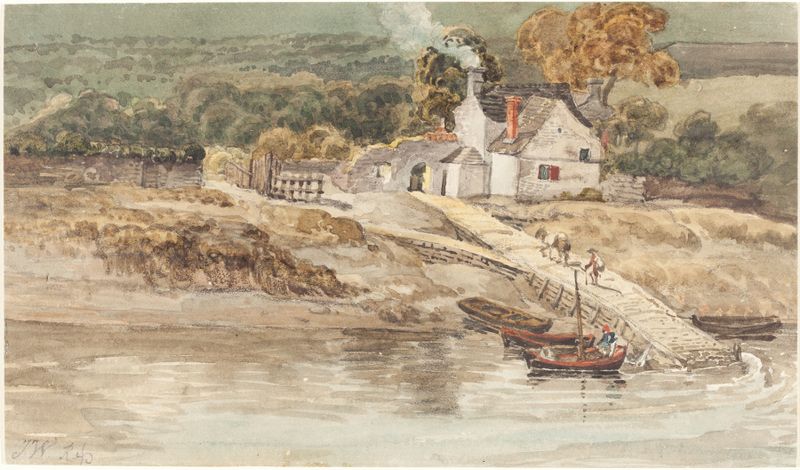
Landing Place near Tintern Abbey
James Ward

Landscape with Cottages
James Ward
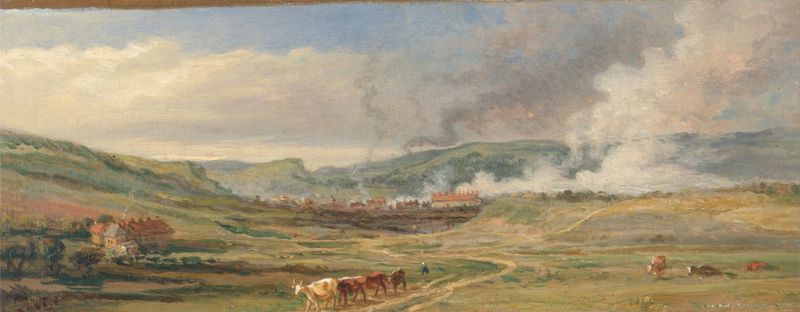
Landscape near Swansea, South Wales
James Ward
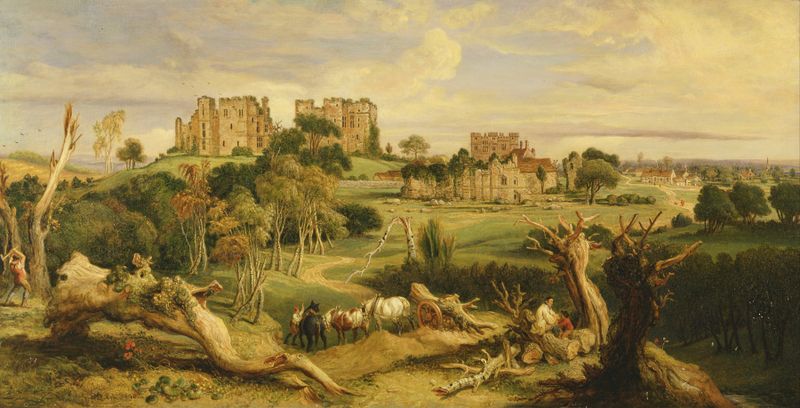
Kenilworth Castle, Warwickshire
James Ward

An Overshot Mill
James Ward
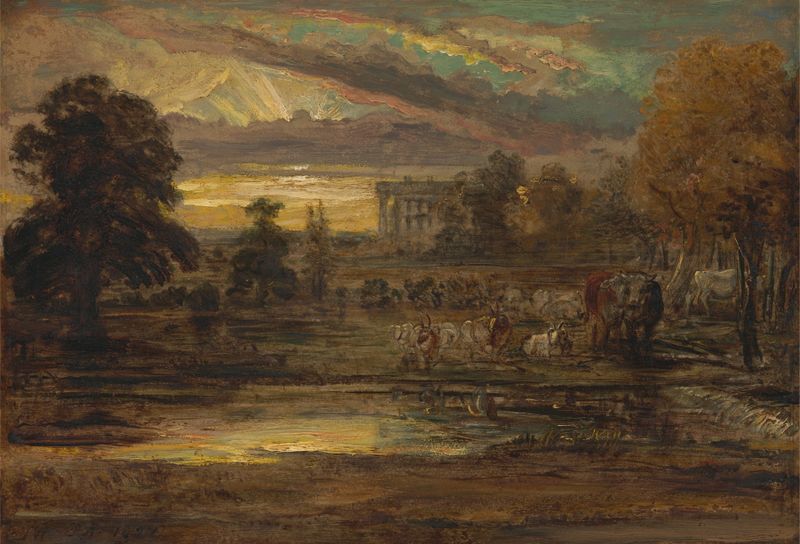
Cattle at a Pool at Sunrise
James Ward

An oak tree in Richmond Park with a herd of fallow deer beside it
James Ward
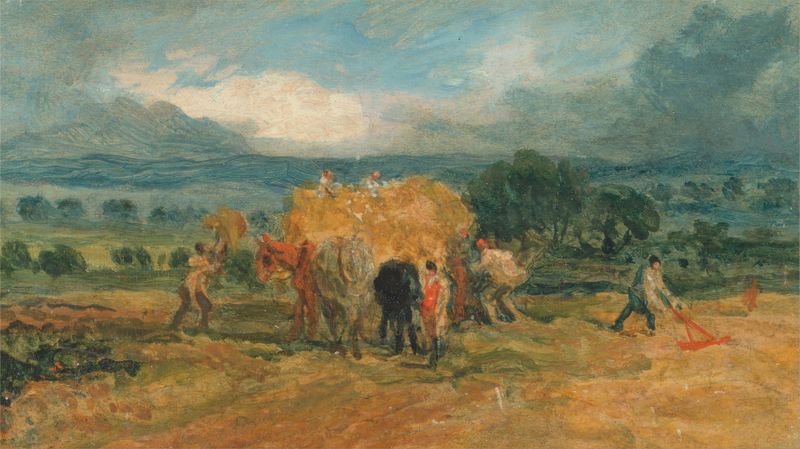
A Harvest Scene with Workers Loading Hay on to a Farm Wagon
James Ward





