
Anker Bourbakis — History & Facts
What draws the eye first in Anker Bourbakis is the quiet exchange at the heart of the barn: a young woman kneeling to offer a bowl and bread to a weary soldier sprawled on straw. The light falls gently on her face and hands, picking out the warmth of her gesture amid the gloom of the makeshift shelter. Around her, the scene unfolds in layers—a motherly figure pours from a metal pot, a child clutches a crust, and other soldiers in red trousers rest or sleep, their exhaustion palpable.
The barn’s rough timbers and scattered hay set a humble stage, while the soldiers’ uniforms and the presence of a rooster in the shadows hint at the intrusion of war into rural life. Every detail is there to draw the viewer into the moment of giving, the fragile pause in hardship. Painted in 1871 by Albert Anker, this work belongs to a world still reeling from the upheavals of mid-19th-century Europe, when armies and civilians were often thrust together by conflict and displacement. Genre scenes like this—rich in everyday humanity—were prized in Switzerland and beyond for their ability to dignify ordinary lives and quiet acts of charity.
The Kunsthaus Zürich preserves this painting as part of its collection dedicated to Swiss art from the young federal state, a period when artists like Anker chronicled the resilience and compassion found in rural communities. History has kept few traces of the individual stories behind such images, but the painting invites us to linger, to read the faces and gestures, and to imagine the lives briefly joined in this barn.
More Artworks by Albert Anker

Portrait Of A Girl
Albert Anker
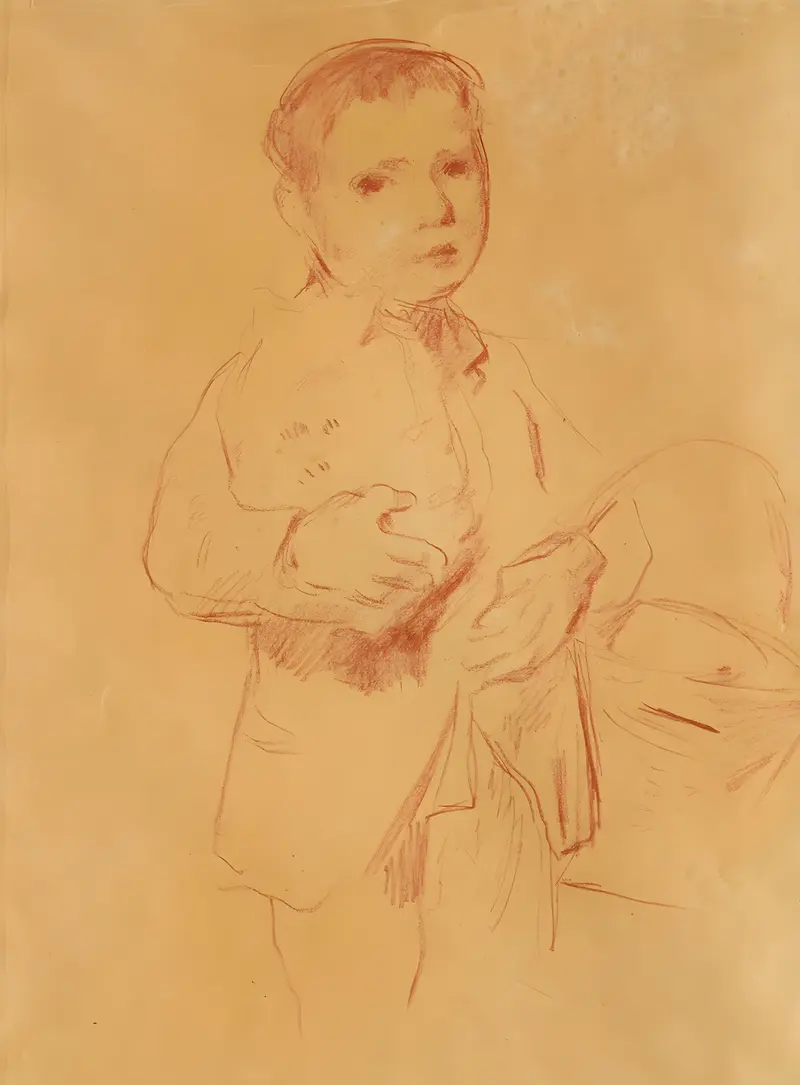
Boy with a basket
Albert Anker
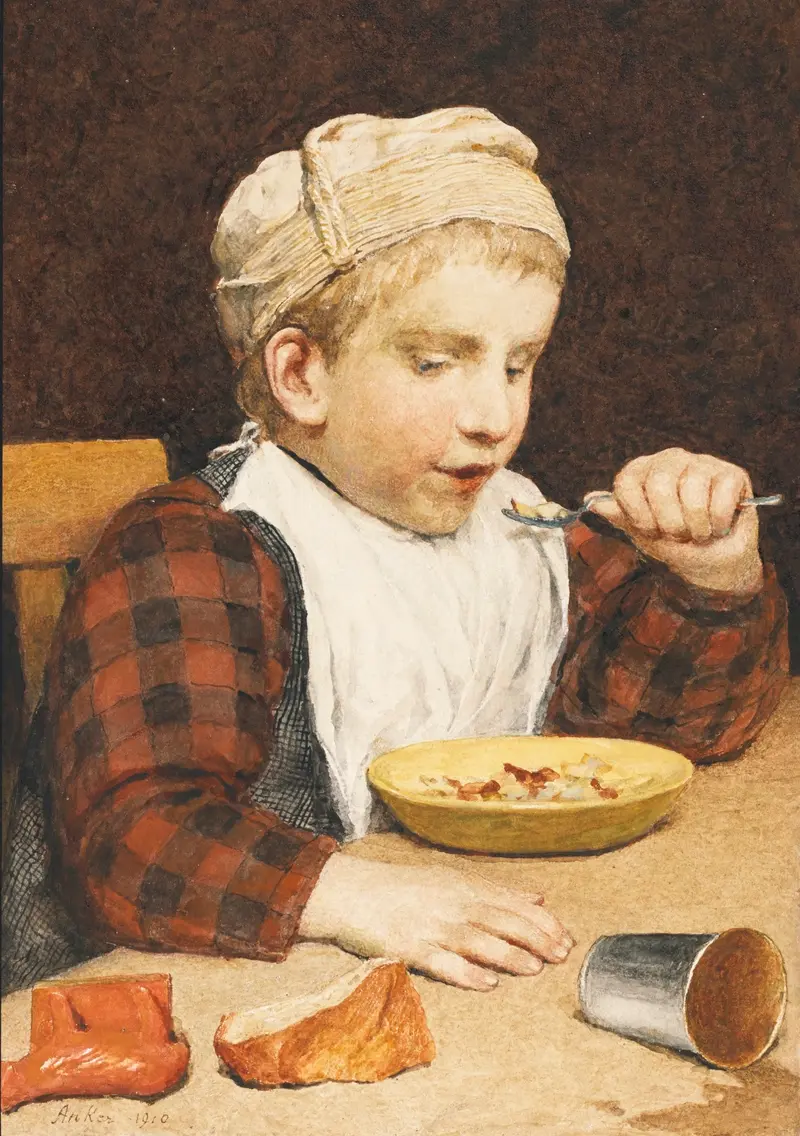
Knabe Mit Mütze Beim Essen
Albert Anker
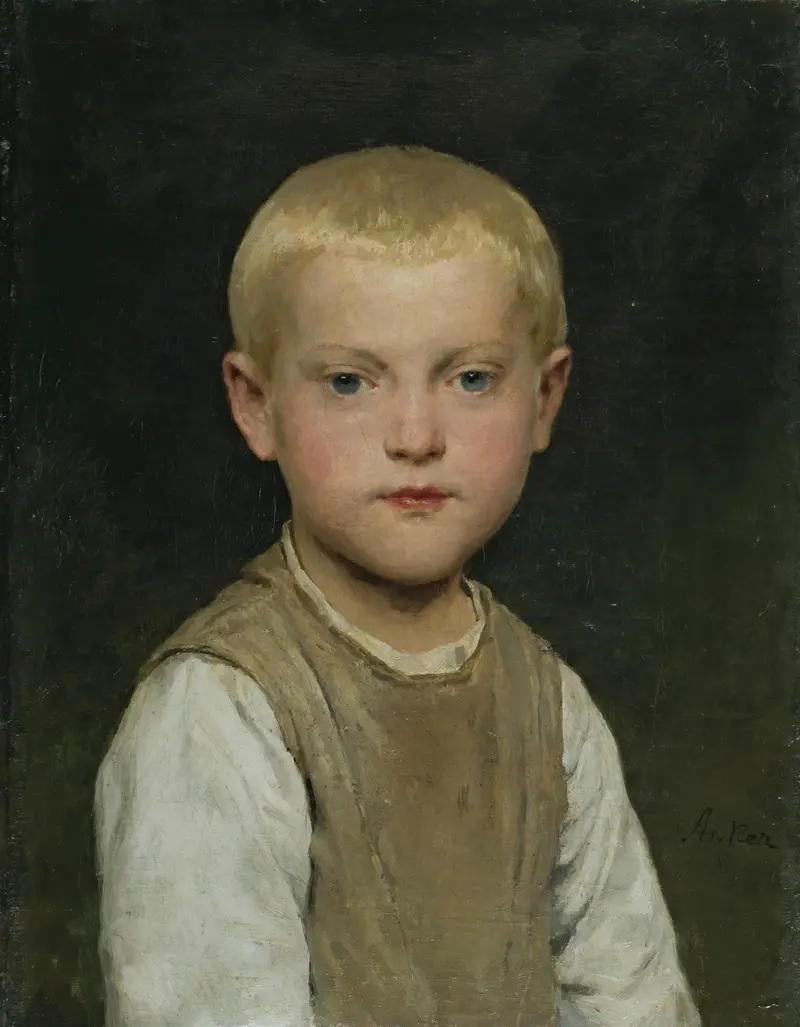
Knabenbildnis (Dr Heiri)
Albert Anker
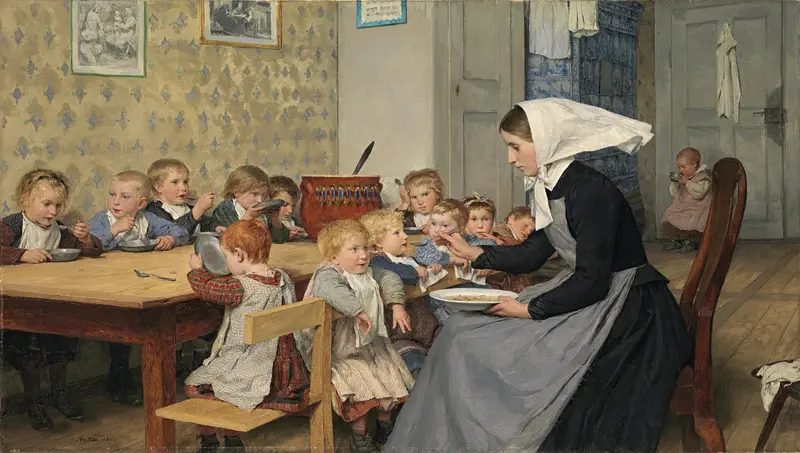
Die Kinderkrippe I
Albert Anker

L’instituteur et le pasteur
Albert Anker
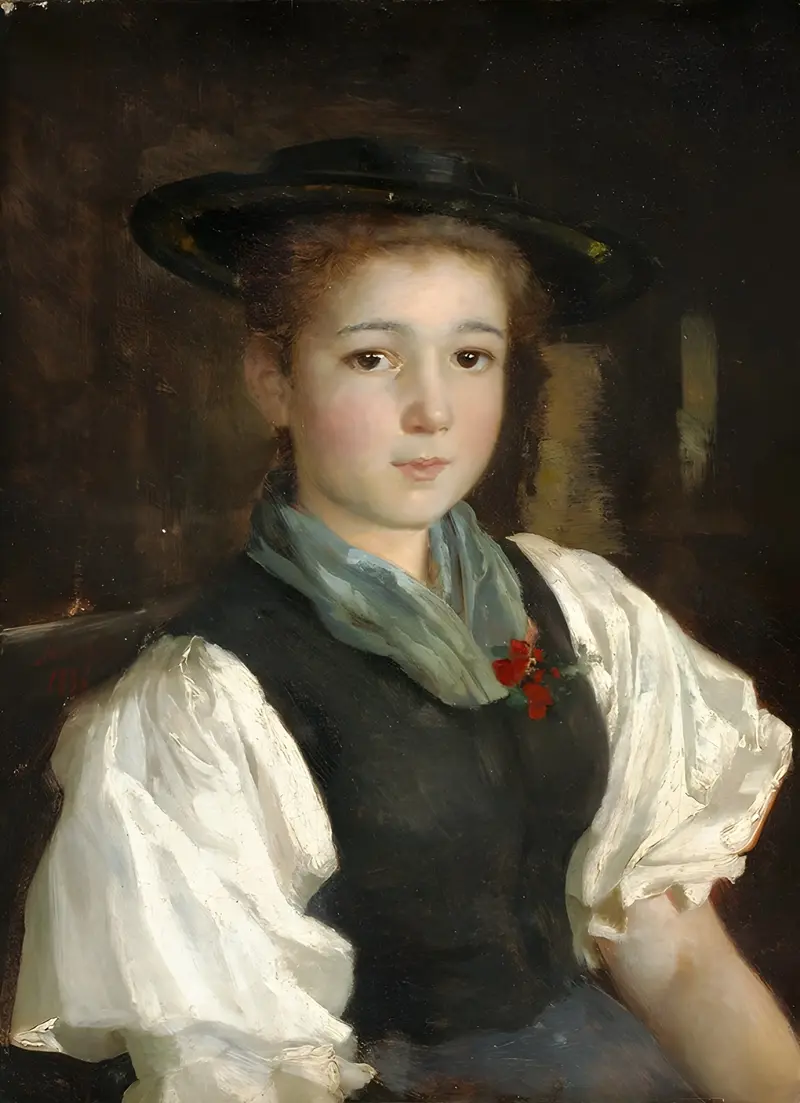
Bauernmädchen (Farm Girl)
Albert Anker
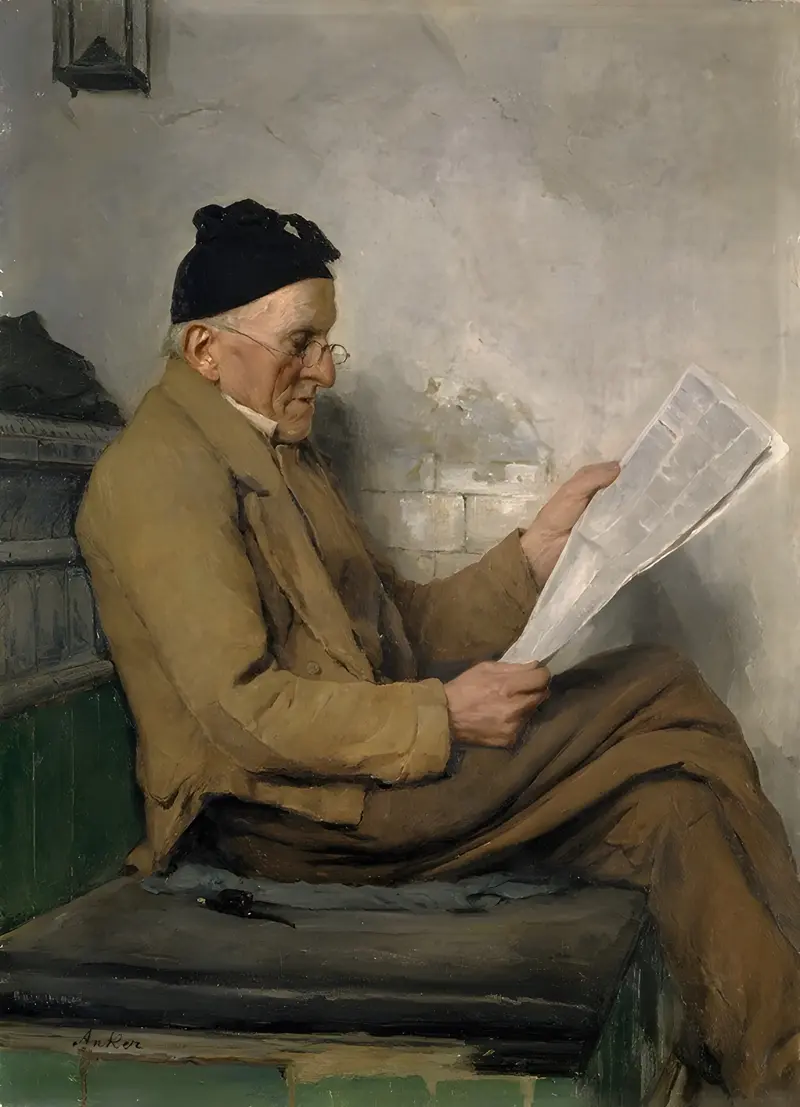
Farmer Reading on the Stove Bench
Albert Anker
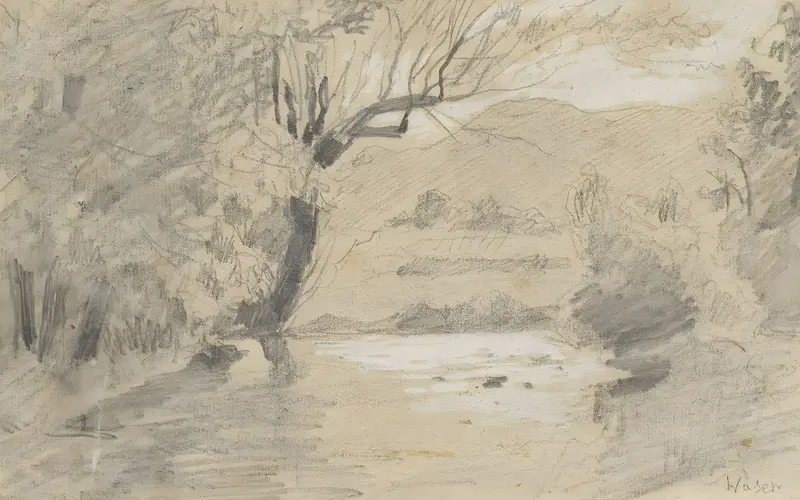
Flusslandschaft in Wasen (Emmental)
Albert Anker
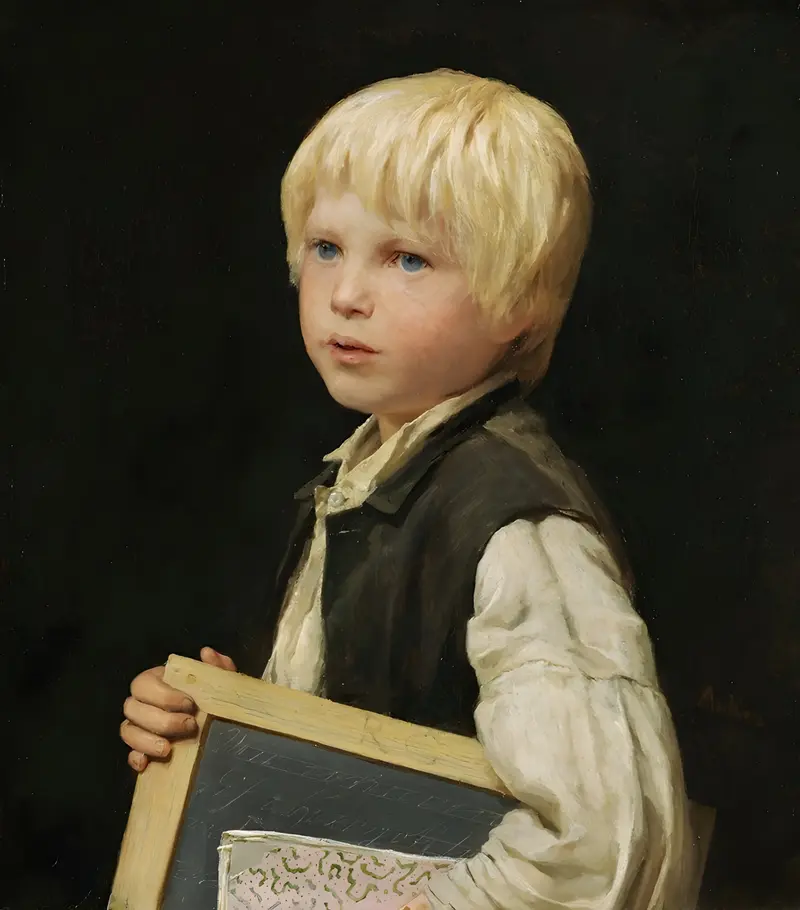
School Boy
Albert Anker
More Genre Scene Art

Banquet of the Officers of the St George Civic Guard
Frans Hals

Rembrandt and Saskia in the Scene of the Prodigal Son
Rembrandt van Rijn

Bal du moulin de la Galette
Pierre-Auguste Renoir

Quadrille at the Moulin Rouge
Henri de Toulouse-Lautrec

A Burial at Ornans
Gustave Courbet

When Will You Marry?
Paul Gauguin