
Anker Die Bauern und die Zeitung — History & Facts
What draws the eye first in Die Bauern und die Zeitung is the hush that seems to settle over the room, a quiet so complete you can almost hear the ticking of the wall clock. Four figures—three men and a dozing boy—are gathered in a humble, wood-paneled interior, each absorbed in his own world. The central figure, spectacles perched on his nose, leans forward with a newspaper spread wide, his concentration mirrored in the set of his jaw.
To his right, a pipe-smoker sits back, lost in thought, while above them, a third man perches on a green chest, his posture relaxed but his gaze distant. The boy, curled up and fast asleep, signals the passage of time and the rhythms of rural life. Light falls gently from the left, picking out the crisp white of the newspaper and the sleep-ruffled hair of the child, while the muted browns and greens of the room draw the viewer into its warmth and intimacy. Painted in 1867, this work by Albert Anker belongs to a moment when genre painting in Switzerland found new purpose in the wake of the young federal state’s founding.
Artists like Anker turned their attention to the everyday, documenting the quiet revolutions of rural life—here, the arrival of news, the spread of literacy, and the subtle shifts in communal routine. Such paintings were often commissioned or collected by civic-minded patrons eager to celebrate the dignity of ordinary people and the slow but steady progress of the countryside. Today, Die Bauern und die Zeitung survives in private hands, a reminder of an era when the simple act of reading the news was both a communal ritual and a symbol of modernity.
The longer you look, the more the painting reveals: not just a scene, but a world in transition.
More Artworks by Albert Anker

Portrait Of A Girl
Albert Anker
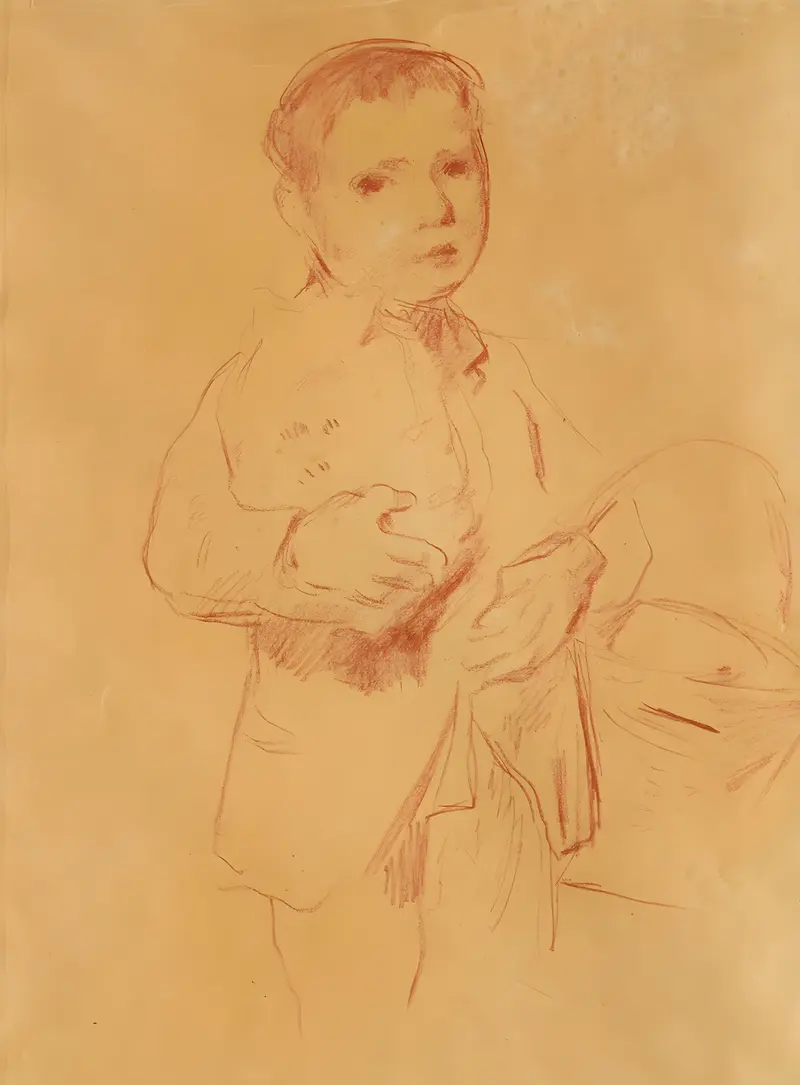
Boy with a basket
Albert Anker
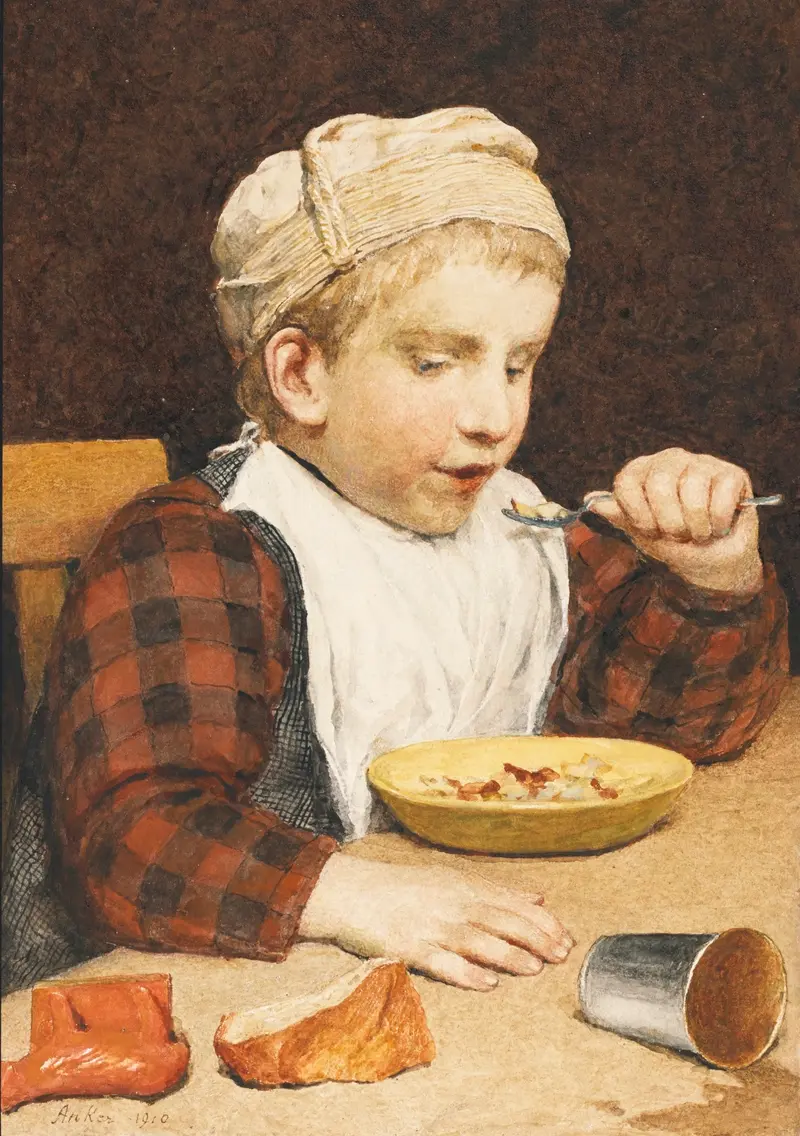
Knabe Mit Mütze Beim Essen
Albert Anker
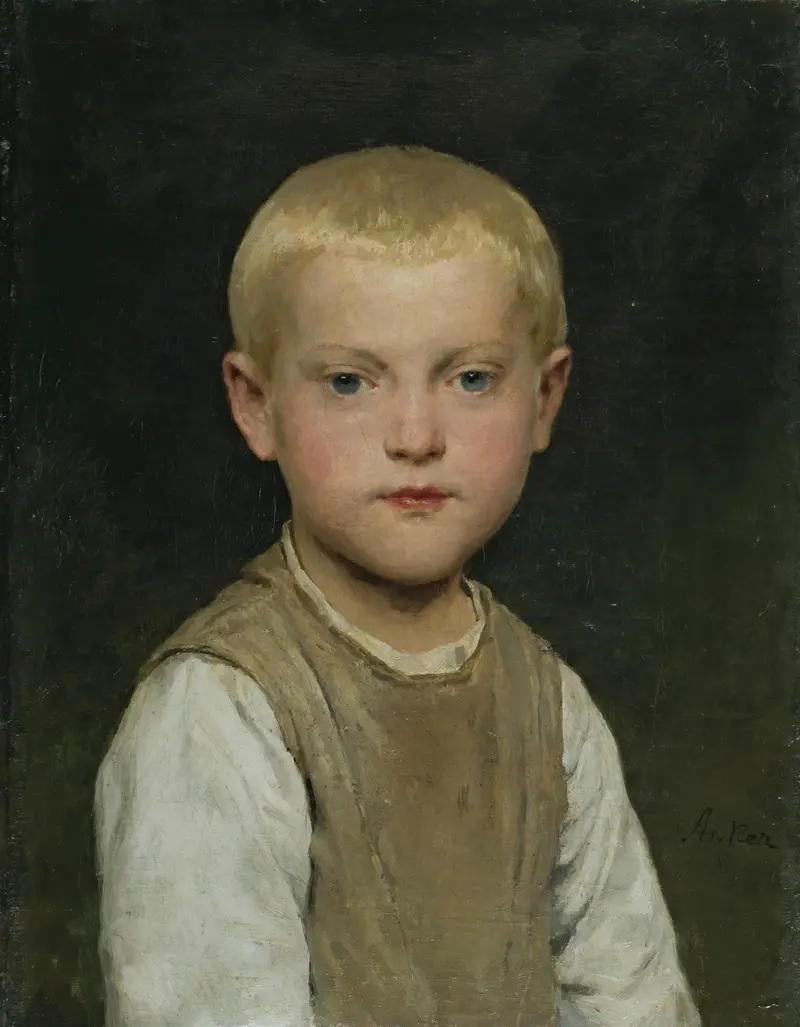
Knabenbildnis (Dr Heiri)
Albert Anker
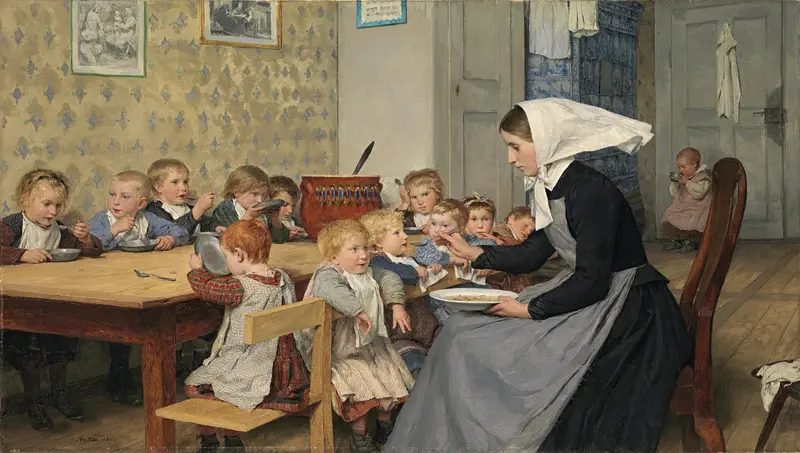
Die Kinderkrippe I
Albert Anker

L’instituteur et le pasteur
Albert Anker
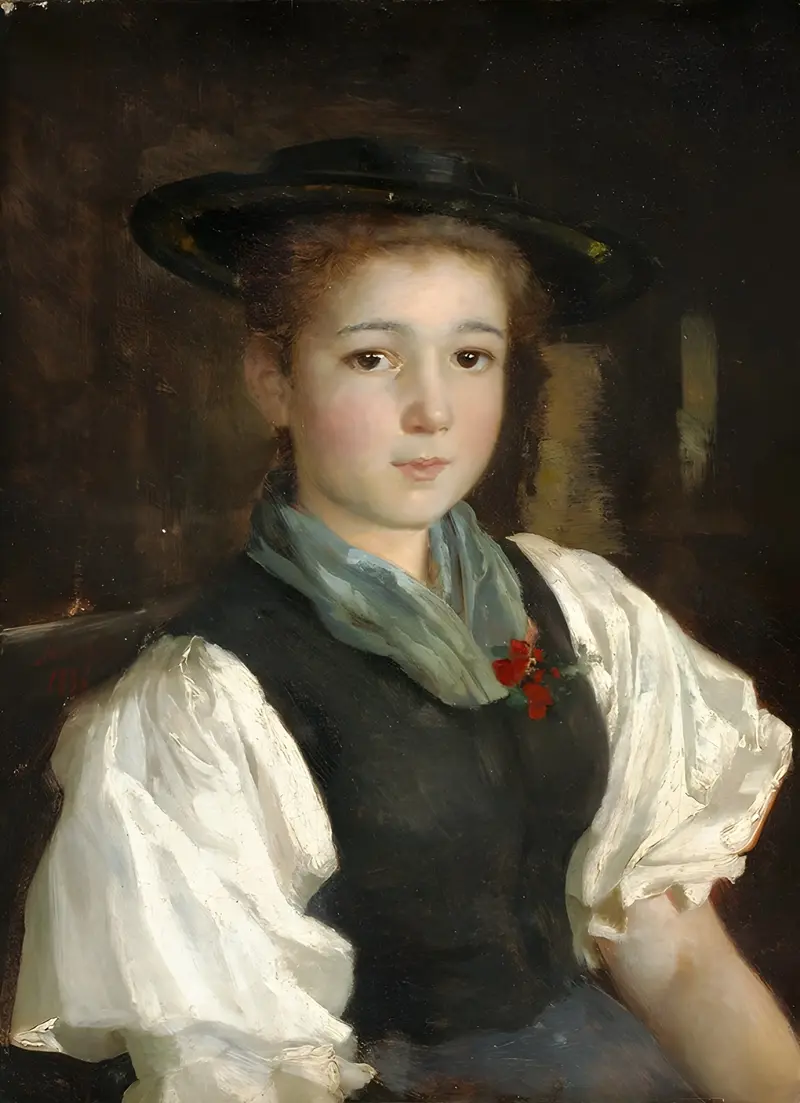
Bauernmädchen (Farm Girl)
Albert Anker
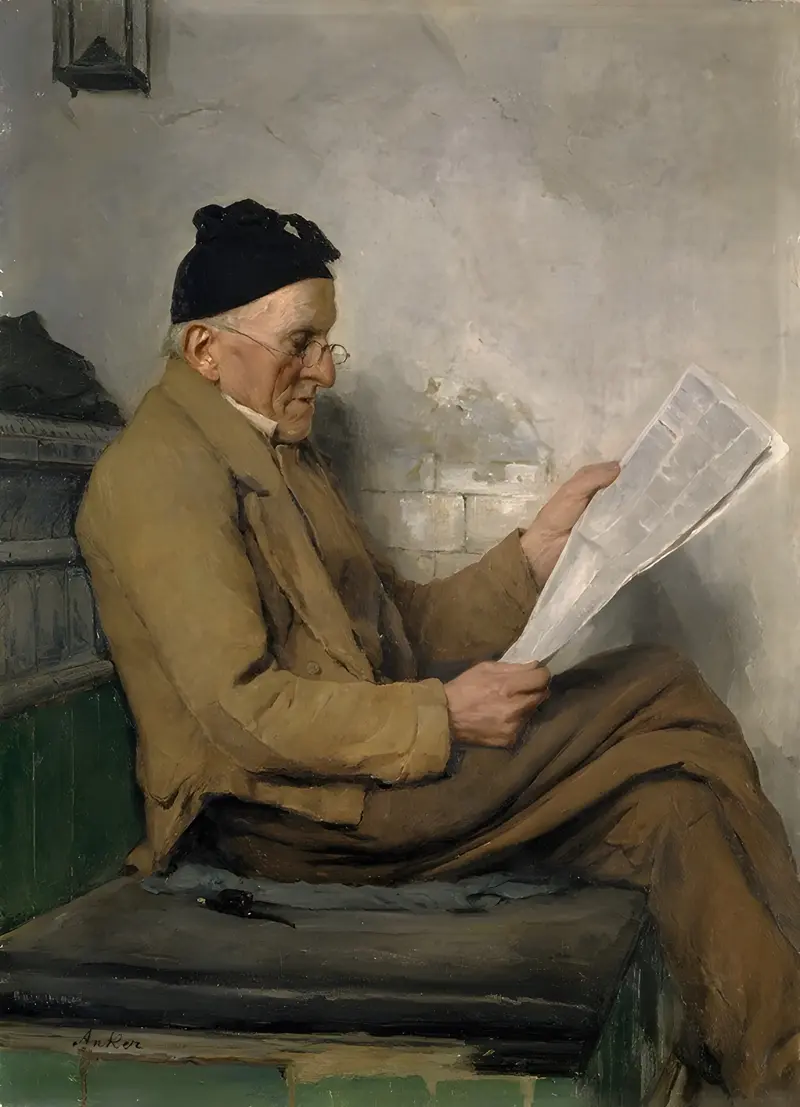
Farmer Reading on the Stove Bench
Albert Anker
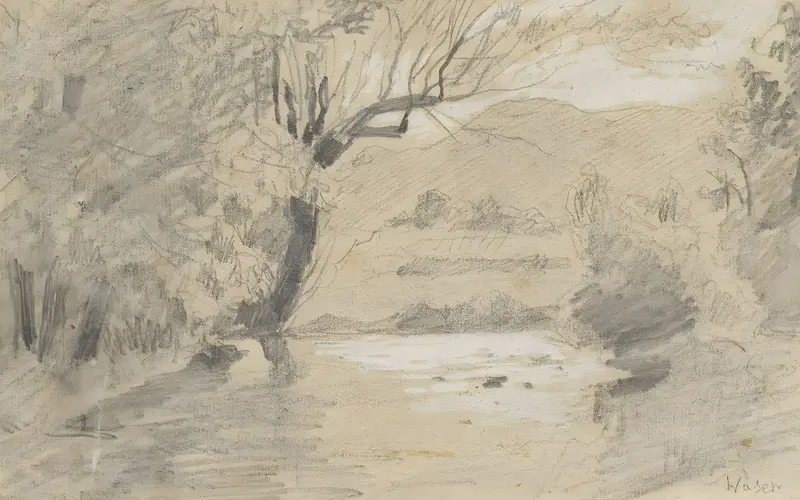
Flusslandschaft in Wasen (Emmental)
Albert Anker
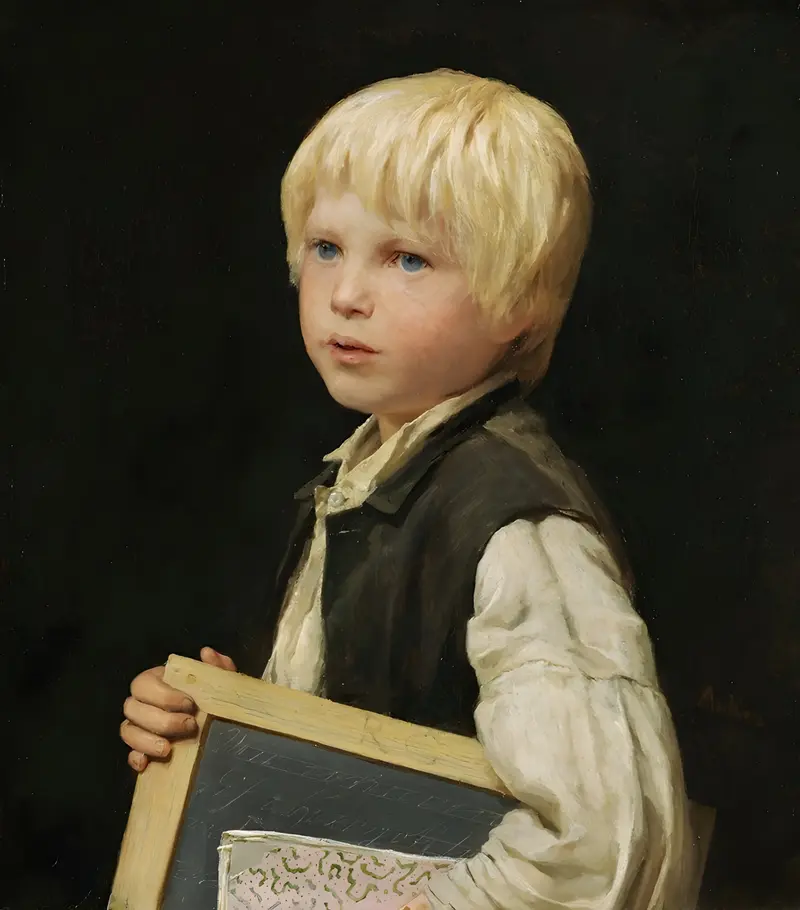
School Boy
Albert Anker
More Genre Scene Art

Banquet of the Officers of the St George Civic Guard
Frans Hals

Rembrandt and Saskia in the Scene of the Prodigal Son
Rembrandt van Rijn

Bal du moulin de la Galette
Pierre-Auguste Renoir

Quadrille at the Moulin Rouge
Henri de Toulouse-Lautrec

A Burial at Ornans
Gustave Courbet

When Will You Marry?
Paul Gauguin