
Anne Page and Slender — History & Facts
In Anne Page and Slender, the viewer is greeted by a lively scene filled with vibrant colors. The figures of Anne Page and Slender are central, depicted in a moment of interaction that suggests a narrative. The setting appears to be a garden or outdoor space, enhancing the cheerful atmosphere.
The bright hues of their clothing contrast with the greenery around them, adding to the overall liveliness of the composition. The painting is executed in oil on canvas, a common medium for the period. Smirke's technique showcases a blend of detailed brushwork and smooth color transitions, creating a sense of depth. The figures are rendered with attention to facial expressions, which adds to the storytelling aspect of the work.
The dimensions are approximately 60 x 80 cm, making it a medium-sized painting that invites close inspection. Robert Smirke was an English painter known for his historical and genre scenes, often drawing inspiration from literature. Anne Page and Slender likely references characters from Shakespeare's The Merry Wives of Windsor, showcasing Smirke's interest in theatrical subjects. This work reflects the Victorian fascination with narrative and character, typical of the era's art.
An interesting fact is that Smirke also worked as an illustrator, which may have influenced his approach to storytelling in painting.
More Artworks by Robert Smirke

Hotspur and the Plotters at Bangor
Robert Smirke
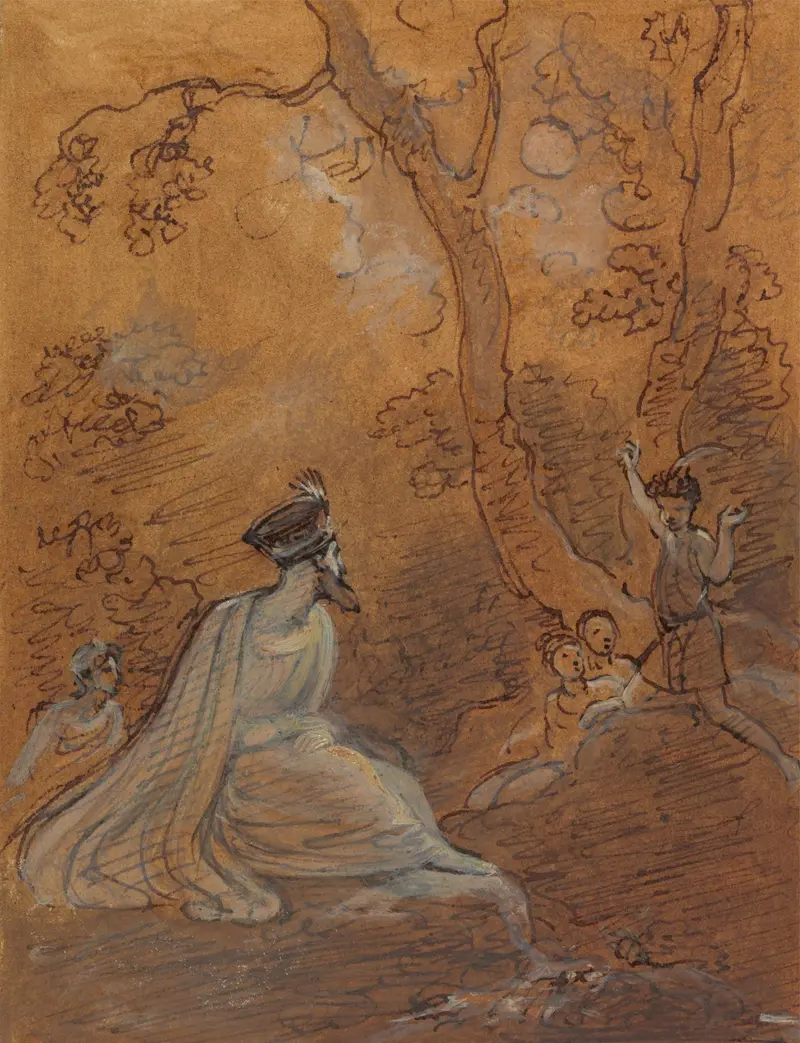
Oberon and Puck
Robert Smirke
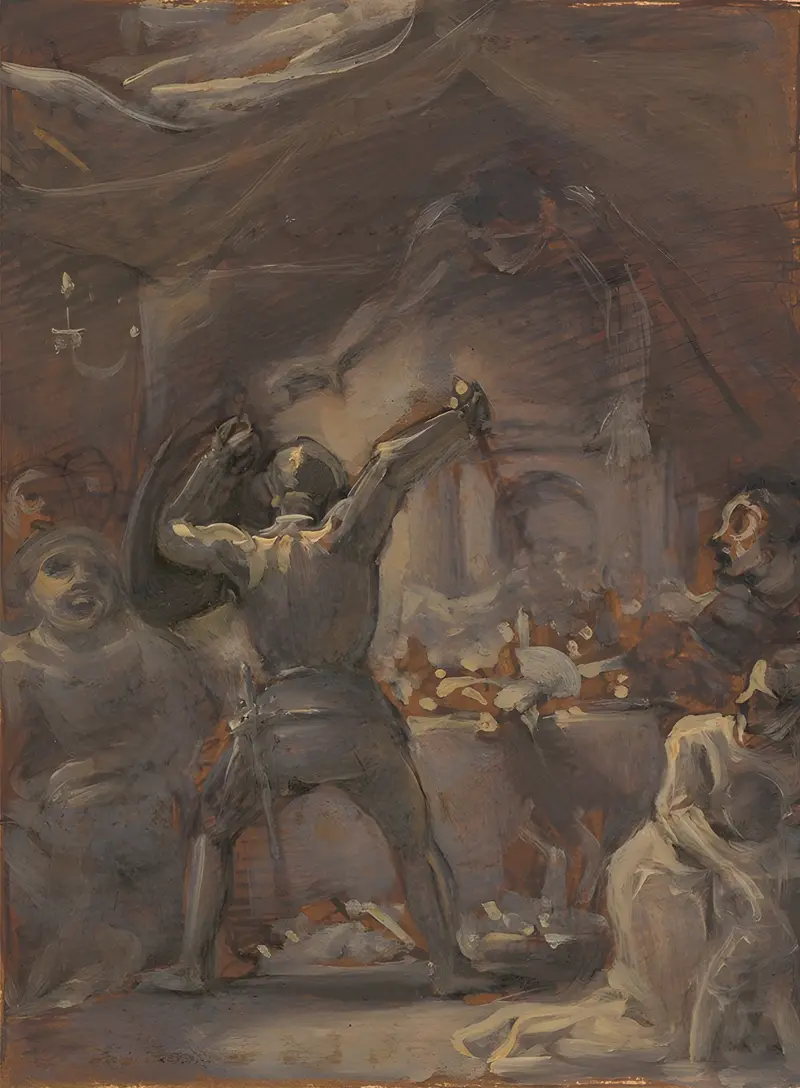
One from Illustrations to Shakespeare
Robert Smirke
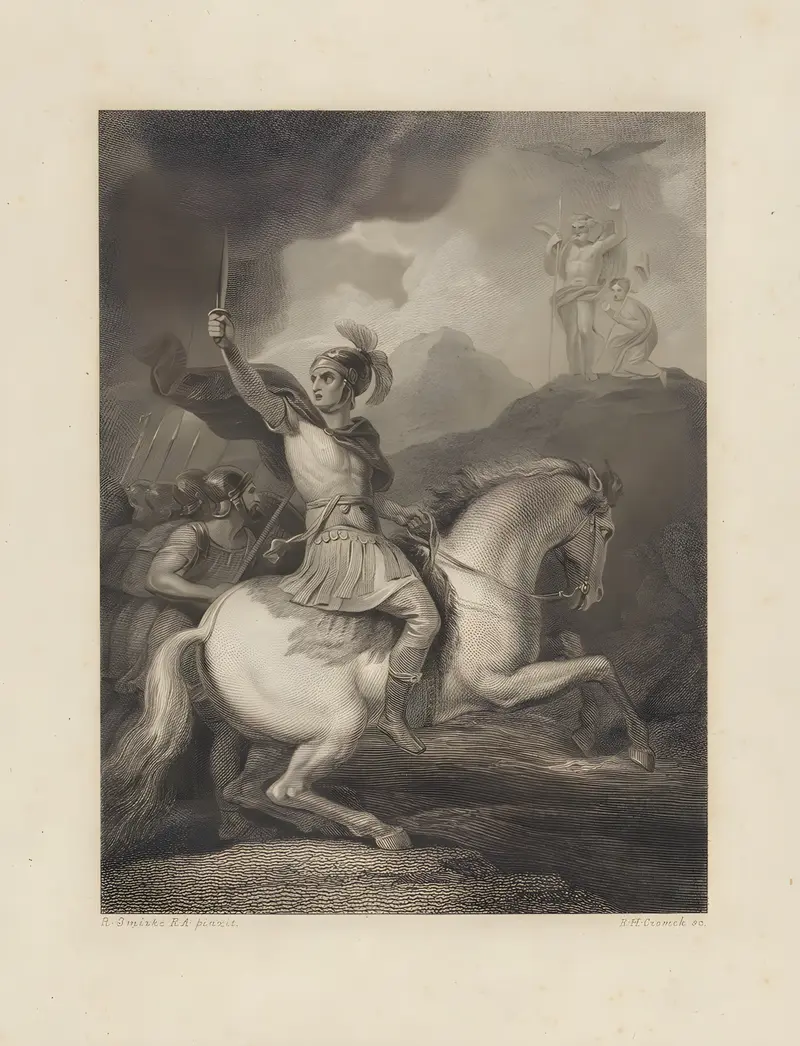
Cesar Passing the Rubicon
Robert Smirke
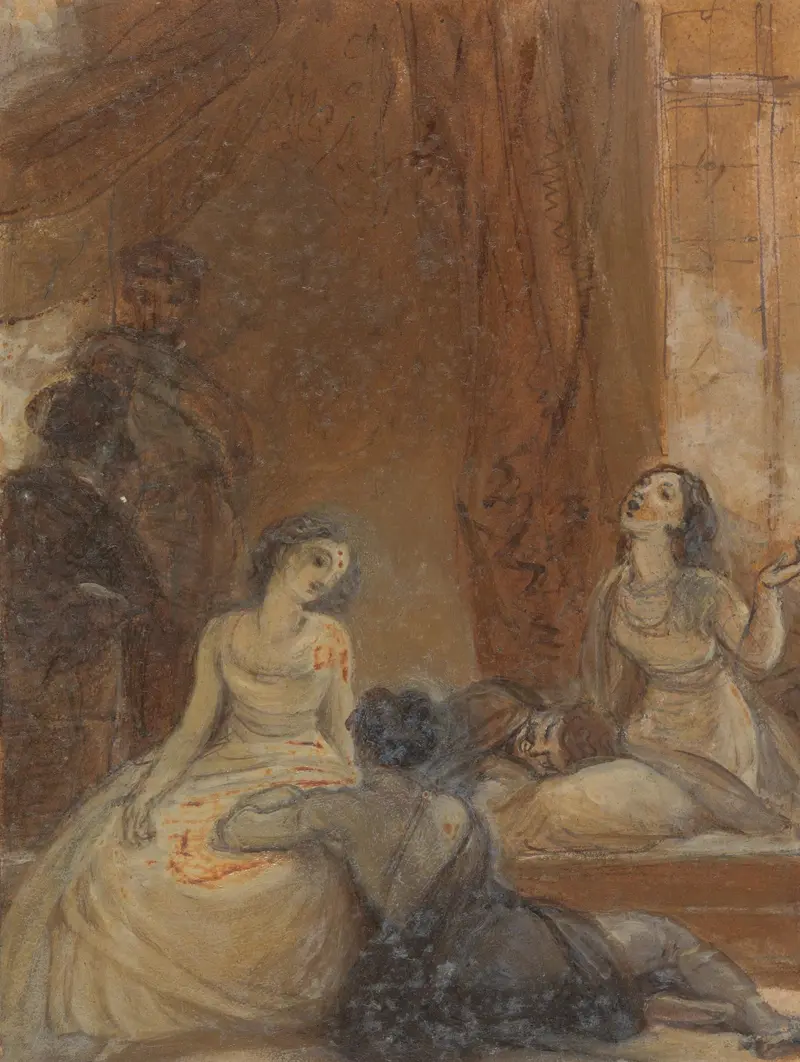
Lady Mortimer’s Welsh Song
Robert Smirke
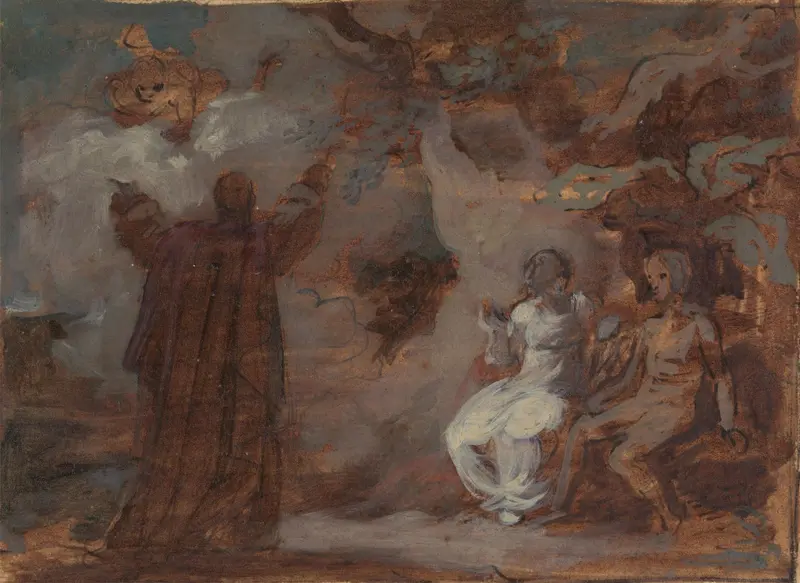
Prospero Conjuring a Masque for Ferdinand and Miranda
Robert Smirke

Master William Page and Sir Hugh Evans
Robert Smirke
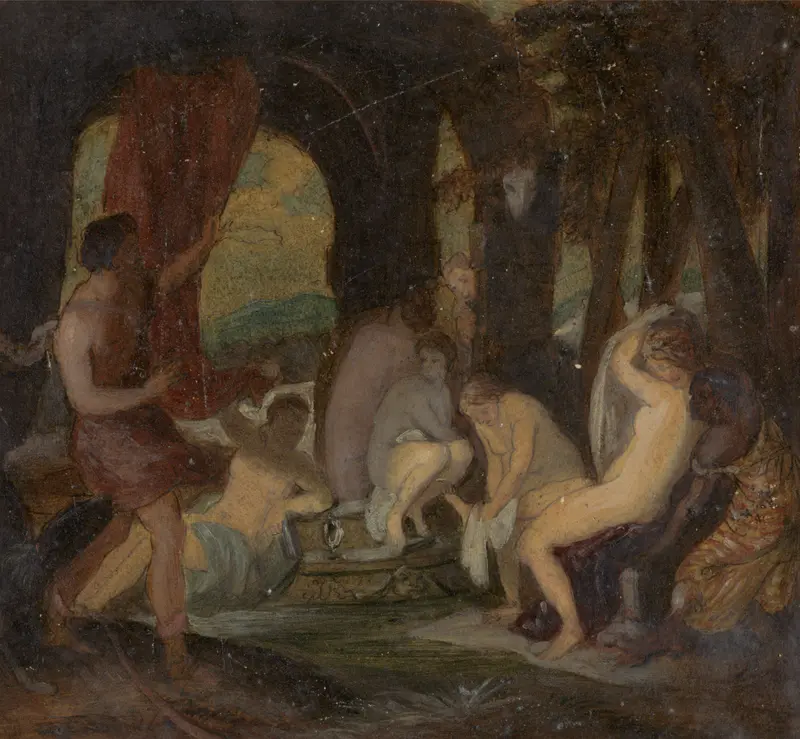
Diana and Actaeon
Robert Smirke
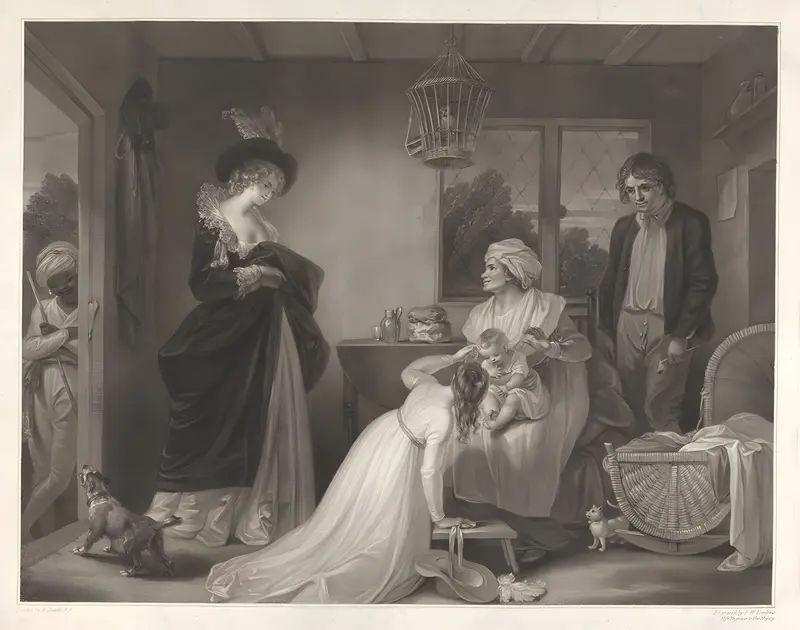
As You Like It; Act II, Scene VII; The Seven Ages Man (First Age)
Robert Smirke

As You Like It; Act II, Scene VII; The Seven Ages Man (Third Age)
Robert Smirke
More Genre Scene Art

Banquet of the Officers of the St George Civic Guard
Frans Hals

Rembrandt and Saskia in the Scene of the Prodigal Son
Rembrandt van Rijn

Bal du moulin de la Galette
Pierre-Auguste Renoir

Quadrille at the Moulin Rouge
Henri de Toulouse-Lautrec

A Burial at Ornans
Gustave Courbet

When Will You Marry?
Paul Gauguin