
Ansicht der Piazzetta in Venedig mit dem Dogenpalast und Blick auf Il Redentore — History & Facts
Could beauty survive in a century of chaos? In Ansicht der Piazzetta in Venedig mit dem Dogenpalast und Blick auf Il Redentore, a stillness envelops the grand piazza, as though time itself has paused to capture the fleeting grace of Venice. The painted scene radiates serenity, a refuge amidst the tumultuous currents of the mid-19th century, where political upheavals and social change loomed large. Look to the left at the imposing façade of the Doge's Palace, its intricate Gothic architecture bathed in soft, golden sunlight. Notice how the warm hues contrast with the cool blues of the sky reflected in the water, creating a harmonious dialogue between earth and heaven.
The figures in the foreground engage in quiet conversation, their gestures both intimate and distant, inviting the viewer to ponder their stories. The careful brushwork and delicate color palette evoke a sense of nostalgia, drawing you deeply into this serene moment. Beneath the surface beauty lies a tension between permanence and transience. The historical significance of the Doge's Palace symbolizes both power and decline, while the distant church of Il Redentore stands as a testament to faith amidst uncertainty.
Each element conveys a yearning for stability in a rapidly changing world, prompting reflections on the fragility of human endeavors against the passage of time. In 1849, the artist found himself amidst a period of great transformation in Europe. Painting from Venice, a city caught between its storied past and the upheaval of modernity, he captured not only the architectural splendor but also the soul of a city grappling with its identity. It was a time when art sought to preserve beauty and history as the world outside continued to evolve.
More Artworks by Carl Friedrich Heinrich Werner
Browse all →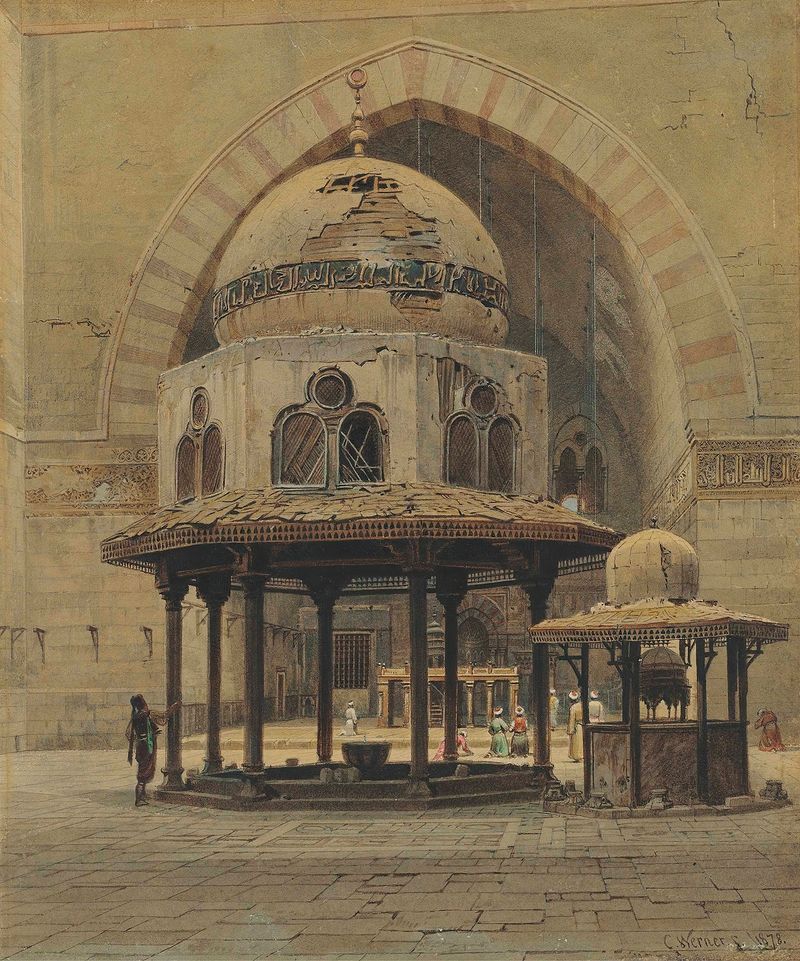
Mosque of Sultan Hassan, Cairo
Carl Friedrich Heinrich Werner
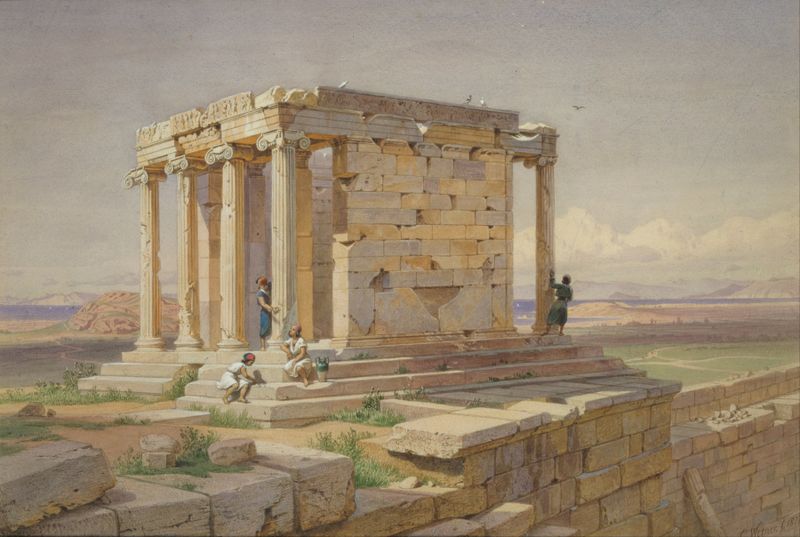
The Temple of Athena Nike. View from the North-East
Carl Friedrich Heinrich Werner
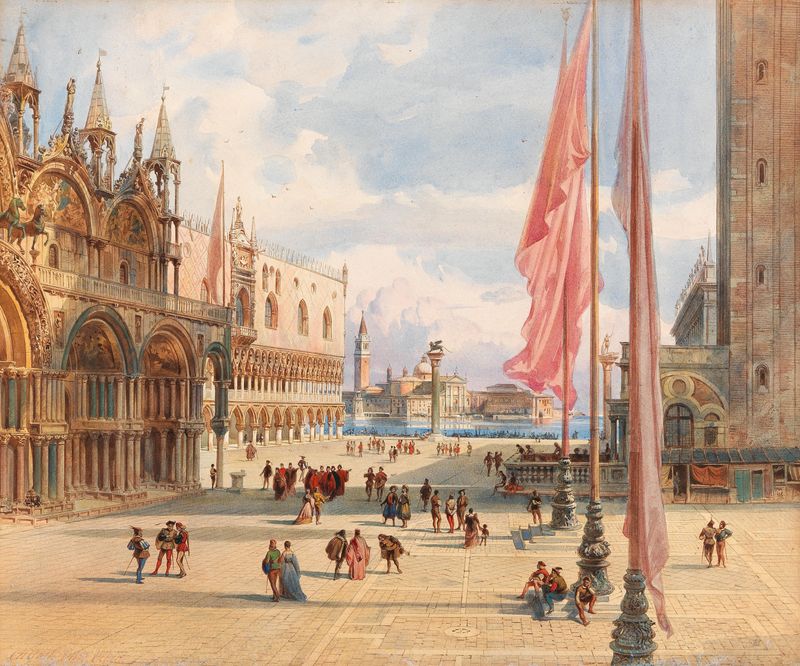
Marcus Square In Venice
Carl Friedrich Heinrich Werner

Canal Grande and Rialto Bridge
Carl Friedrich Heinrich Werner
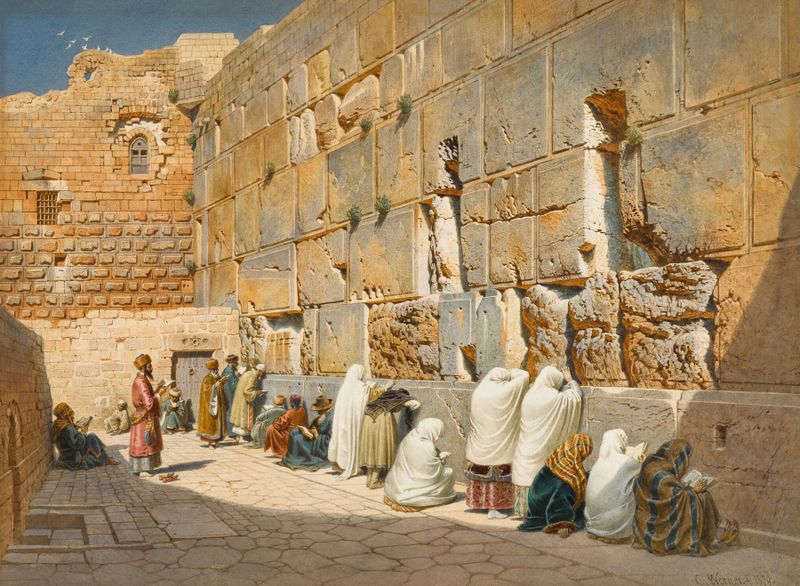
The Wailing Wall, Jerusalem
Carl Friedrich Heinrich Werner
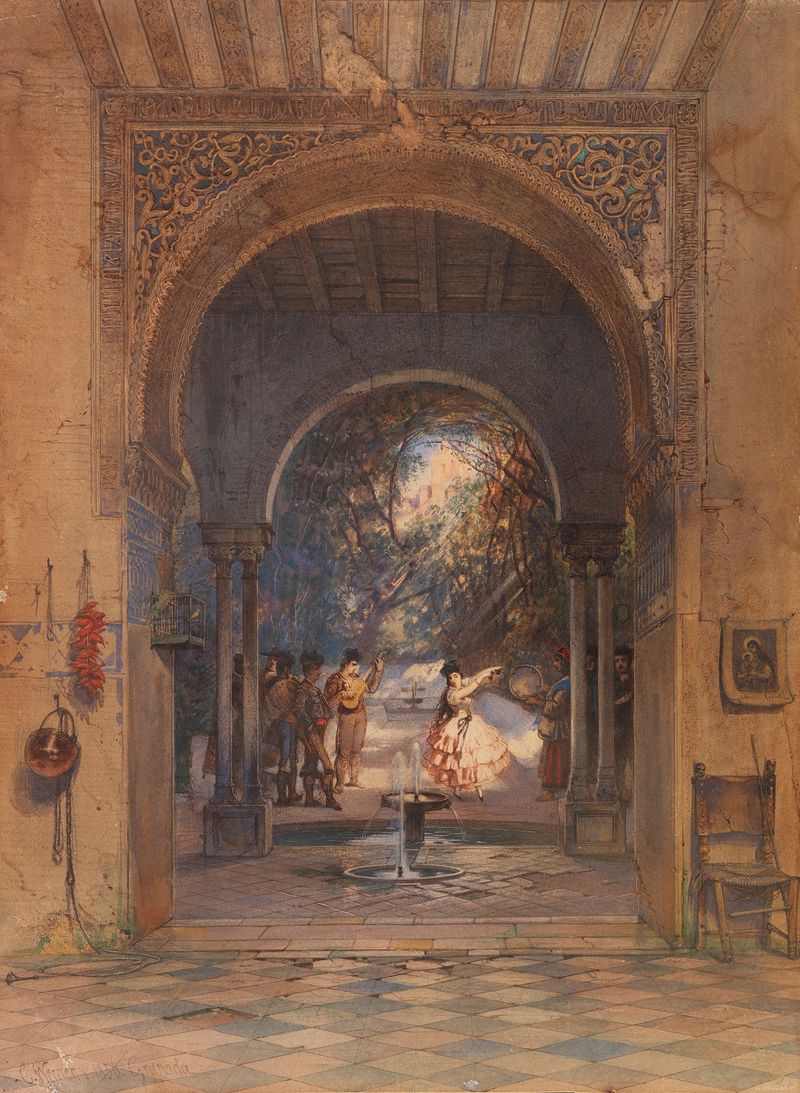
Kastagnettentänzerin in der Alhambra in Granada
Carl Friedrich Heinrich Werner
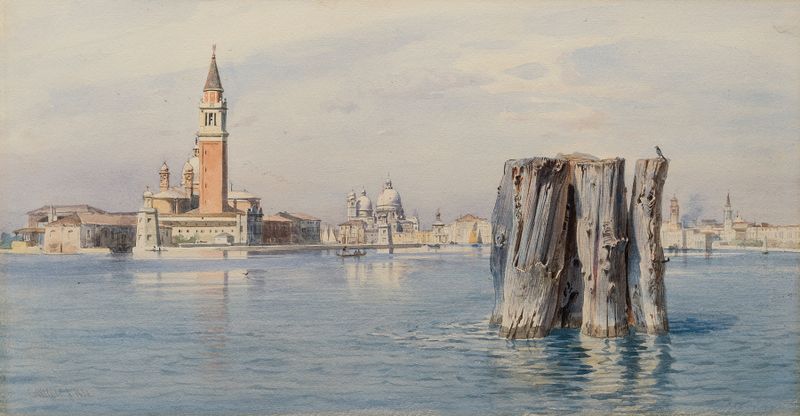
Ansicht von San Giorgio Maggiore und Santa Maria della Salute in Venedig
Carl Friedrich Heinrich Werner
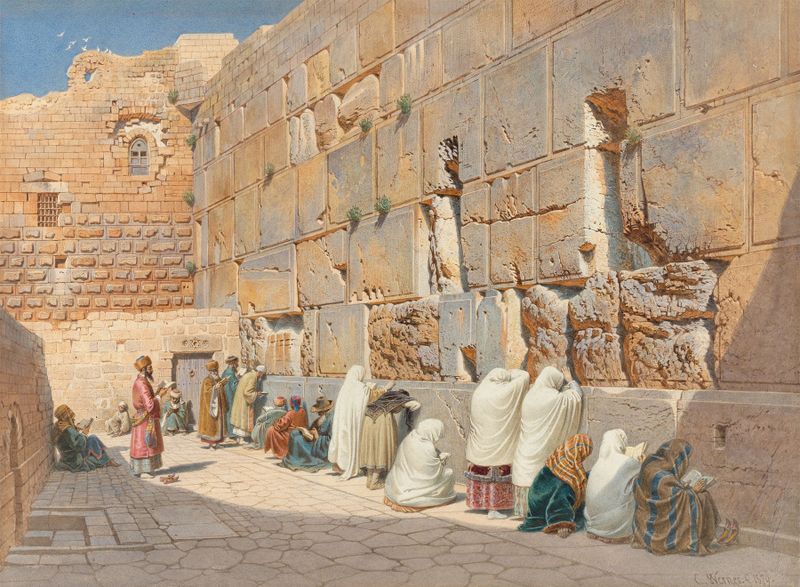
The Wailing Wall in Jerusalem
Carl Friedrich Heinrich Werner
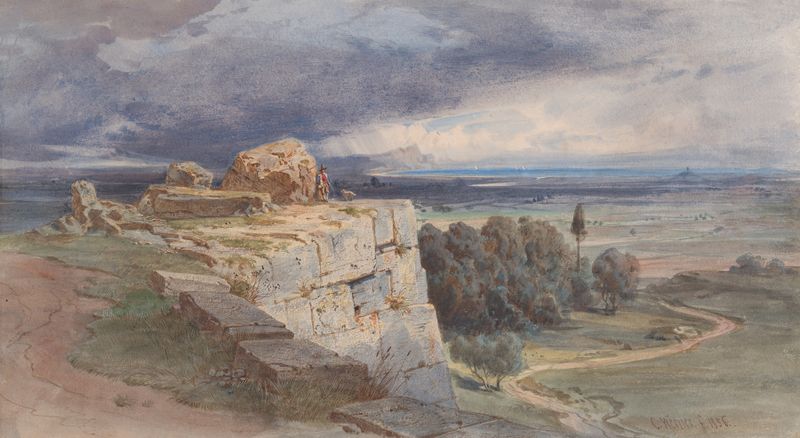
View of Norba from the North, towards San Felice Circeo
Carl Friedrich Heinrich Werner
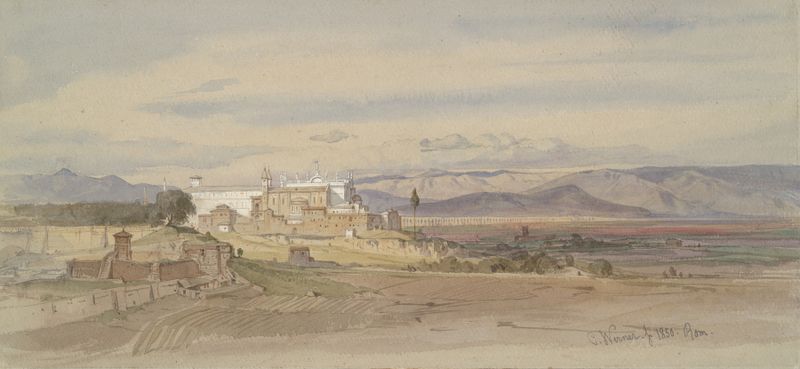
Roman Landscape with San Giovanni in Laterano
Carl Friedrich Heinrich Werner
More Architecture Art
Browse all →
The statue of Liberty
Frédéric Auguste Bartholdi

View of Houses in Delft, Known as ‘The Little Street’
Johannes Vermeer

View of Houses in Delft, Known as ‘The Little Street’
Johannes Vermeer

The Cathedral in Rouen. The portal, Grey Weather
Claude Monet

The yellow house
Vincent van Gogh

The Church in Auvers-sur-Oise, View from the Chevet
Vincent van Gogh