
Canal Grande and Rialto Bridge — History & Facts
When did color learn to lie? In Canal Grande and Rialto Bridge, the fluid dance of pigment on canvas challenges perception and beckons movement. The painted scene pulsates with life, teasing the viewer to question the very nature of reality and illusion. Look to the left, where the sunlit Canal Grande glistens, setting the stage for a vibrant tapestry of activity. The bridge, a graceful arch, draws the gaze upward, inviting exploration.
Cascading reflections ripple beneath the surface, their distortion imbuing the water with a sense of dynamism, a fleeting moment captured against the stillness of the surrounding architecture. The warm tones of the buildings contrast with cooler hues of the water, creating a dialogue that breathes warmth into the bustling scene. Delve deeper into the interplay of light and shadow. Notice how the figures are animated, their gestures hinting at stories untold—a merchant negotiating, a couple strolling, a gondolier guiding his vessel.
Each character, a brushstroke of life, stands against the still backdrop of time. The contrast between the lively activity on the bridge and the serene, almost languid flow of the canal evokes a profound tension between movement and stillness, echoing the eternal rhythm of Venetian life. In 1853, during a period of artistic exploration, the creator painted this piece while living in Germany. Influenced by the Romantic movement and the fascination with capturing the essence of place, he sought to immortalize the iconic Rialto Bridge within the vibrant milieu of Venice.
This work reflects both personal and societal aspirations, encapsulating a moment in a broader narrative of cultural appreciation and artistic innovation.
More Artworks by Carl Friedrich Heinrich Werner
Browse all →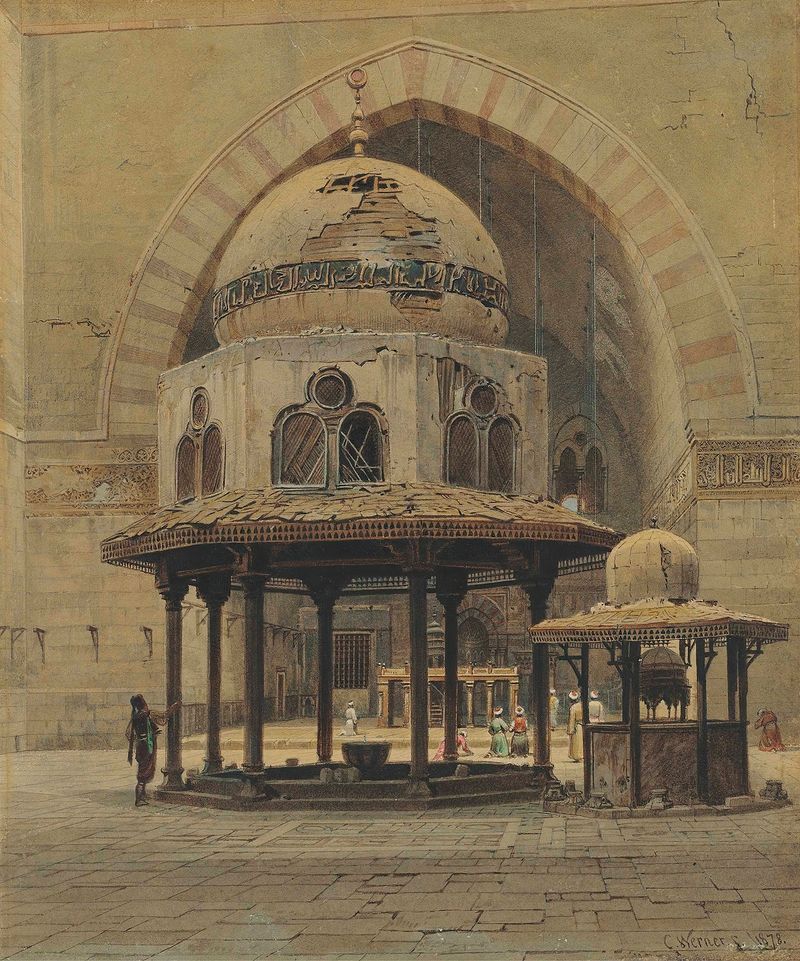
Mosque of Sultan Hassan, Cairo
Carl Friedrich Heinrich Werner
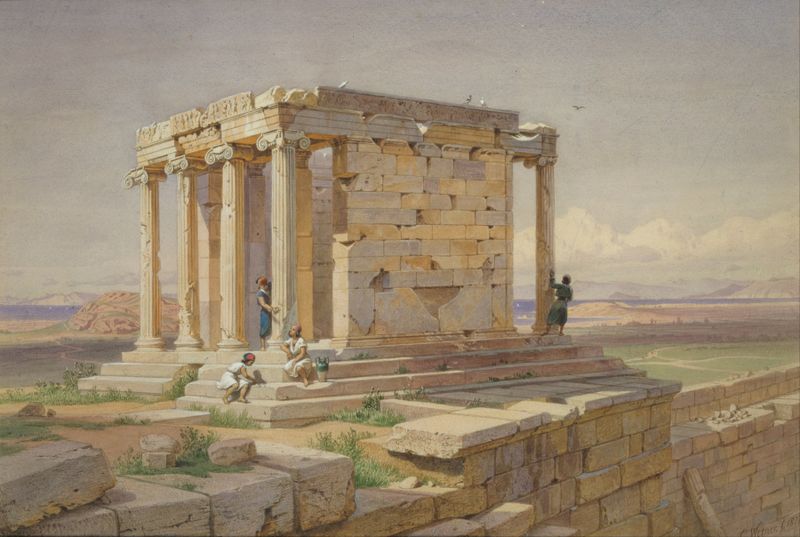
The Temple of Athena Nike. View from the North-East
Carl Friedrich Heinrich Werner
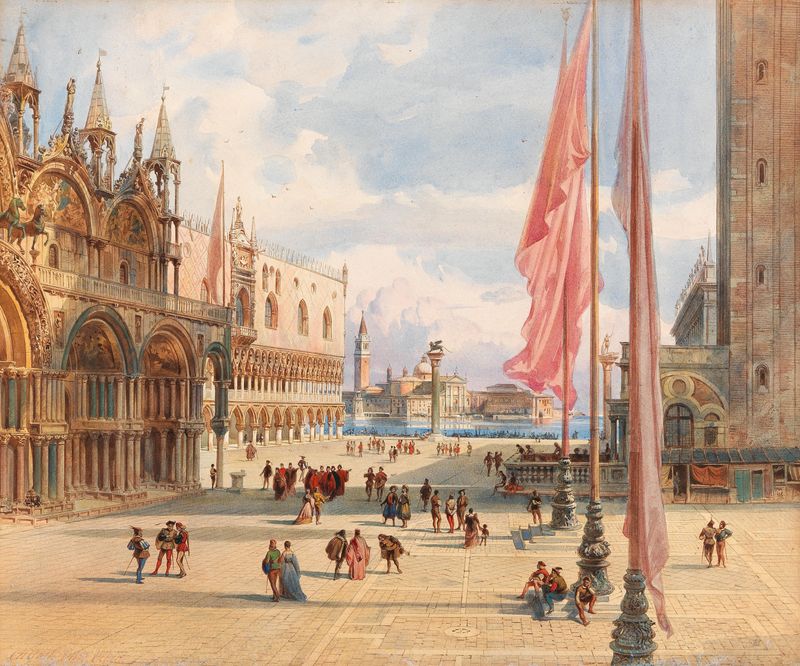
Marcus Square In Venice
Carl Friedrich Heinrich Werner
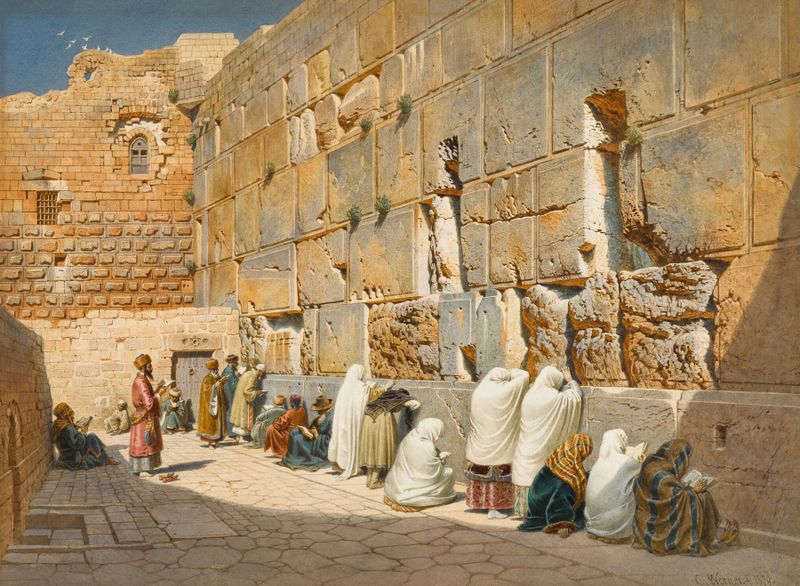
The Wailing Wall, Jerusalem
Carl Friedrich Heinrich Werner
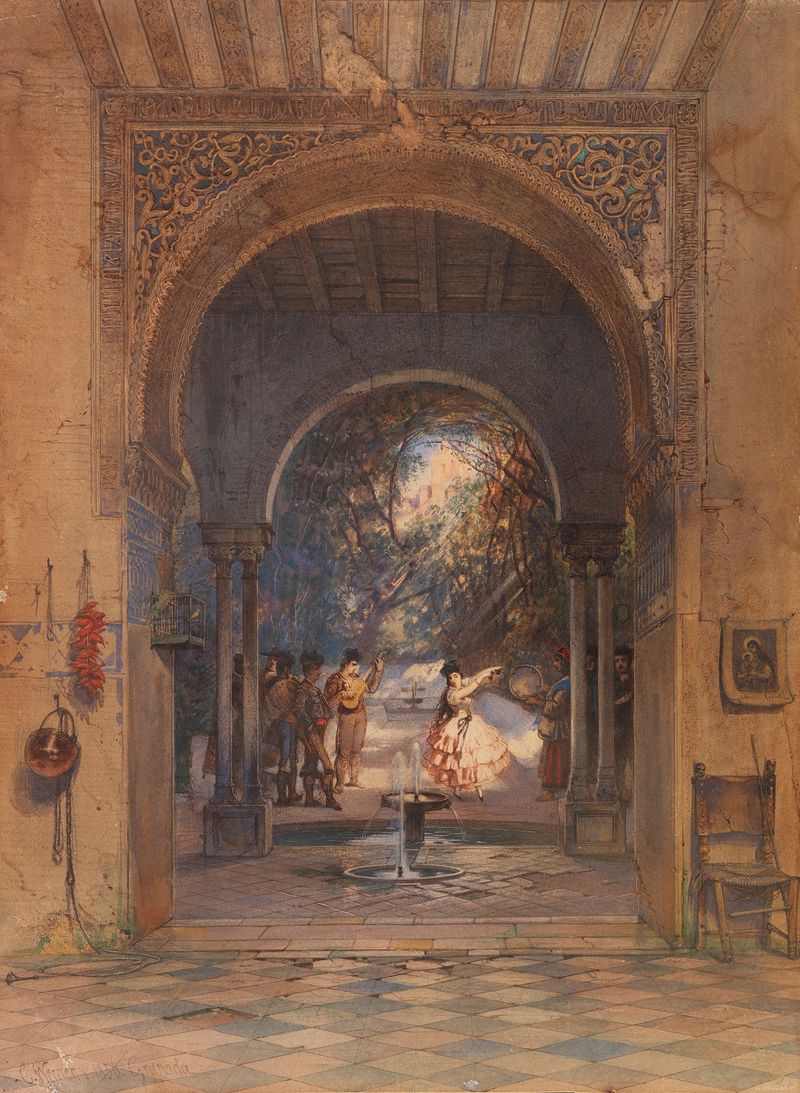
Kastagnettentänzerin in der Alhambra in Granada
Carl Friedrich Heinrich Werner
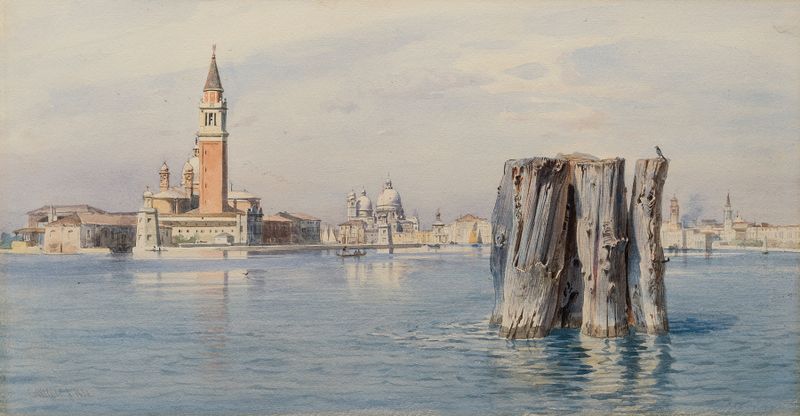
Ansicht von San Giorgio Maggiore und Santa Maria della Salute in Venedig
Carl Friedrich Heinrich Werner
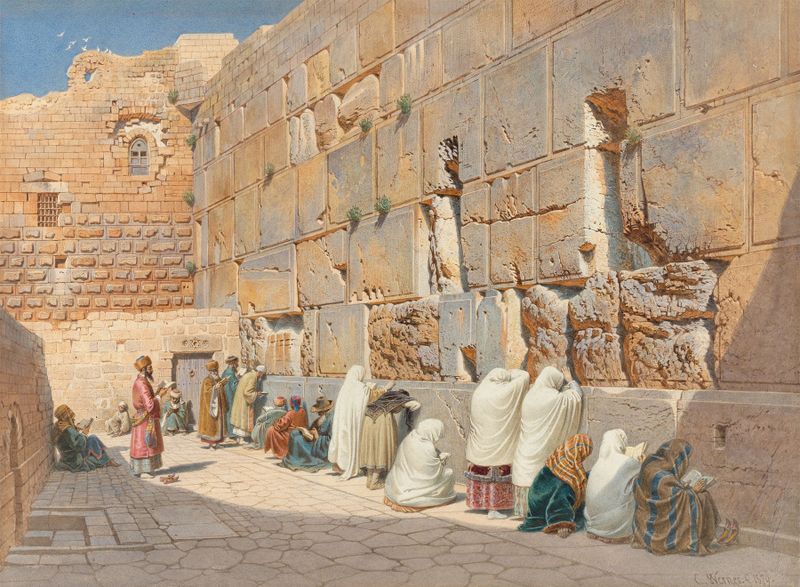
The Wailing Wall in Jerusalem
Carl Friedrich Heinrich Werner
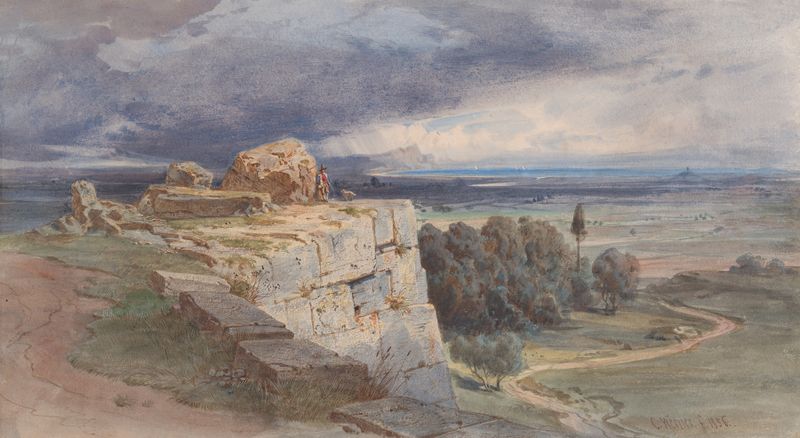
View of Norba from the North, towards San Felice Circeo
Carl Friedrich Heinrich Werner
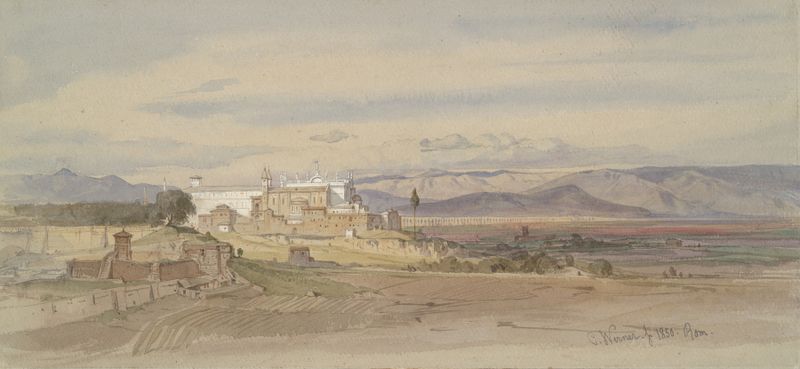
Roman Landscape with San Giovanni in Laterano
Carl Friedrich Heinrich Werner

Die Casa de Meleagro in Pompeji
Carl Friedrich Heinrich Werner





