Apotheose van Francesco Barbaro met deugden en Faam — History & Facts
Could a single brushstroke hold eternity? The vibrant skies and intricate forms in this captivating work invite us to ponder the nature of virtue and glory, weaving a narrative that transcends the confines of the canvas. Look to the center, where Francesco Barbaro is elevated, surrounded by personifications of virtues. Notice how the radiant light cascades around him, illuminating each figure in a dance of color and brilliance. The bold reds and soft whites contrast dramatically with the cool blues of the background, creating a stunning interplay that draws the eye.
The meticulous detail in the drapery enhances the sense of movement, as if the very fabric of the scene is alive, urging us to engage with the ideals portrayed. Hidden within the artwork are layers of meaning. The figures surrounding Barbaro—each embodying a different virtue—suggest a conversation between human aspiration and the celestial realm, blurring the lines between mortal and divine. The swirling composition reflects the chaos of life, while the harmonious arrangement implies an underlying order attainable through virtue.
This tension between the tumultuous and the serene resonates with viewers, inviting deep contemplation on the nature of success and moral integrity. Giovanni Domenico Tiepolo painted Apotheose van Francesco Barbaro met deugten en Faam between 1743 and 1747, during a period of notable artistic evolution in Venice. As Rococo flourished, he explored themes of enlightenment, reflecting the broader cultural currents of his time. His work not only showcases his mastery of form and color but also his philosophical engagement with the ideals of his era, propelling viewers into a world where art and virtue coalesce.
More Artworks by Giovanni Domenico Tiepolo
Browse all →
Engel met scapulier
Giovanni Domenico Tiepolo
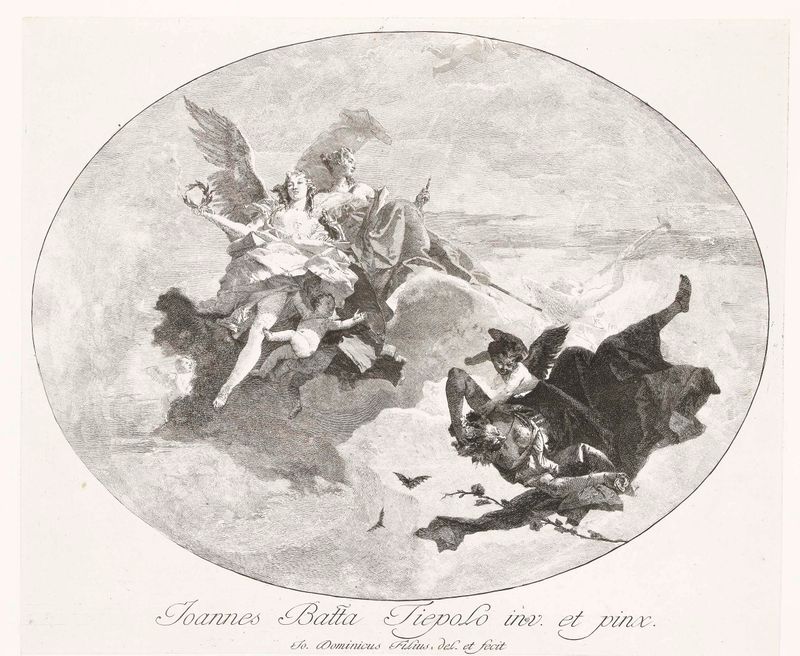
Deugd en Faam verjagen Gierigheid
Giovanni Domenico Tiepolo
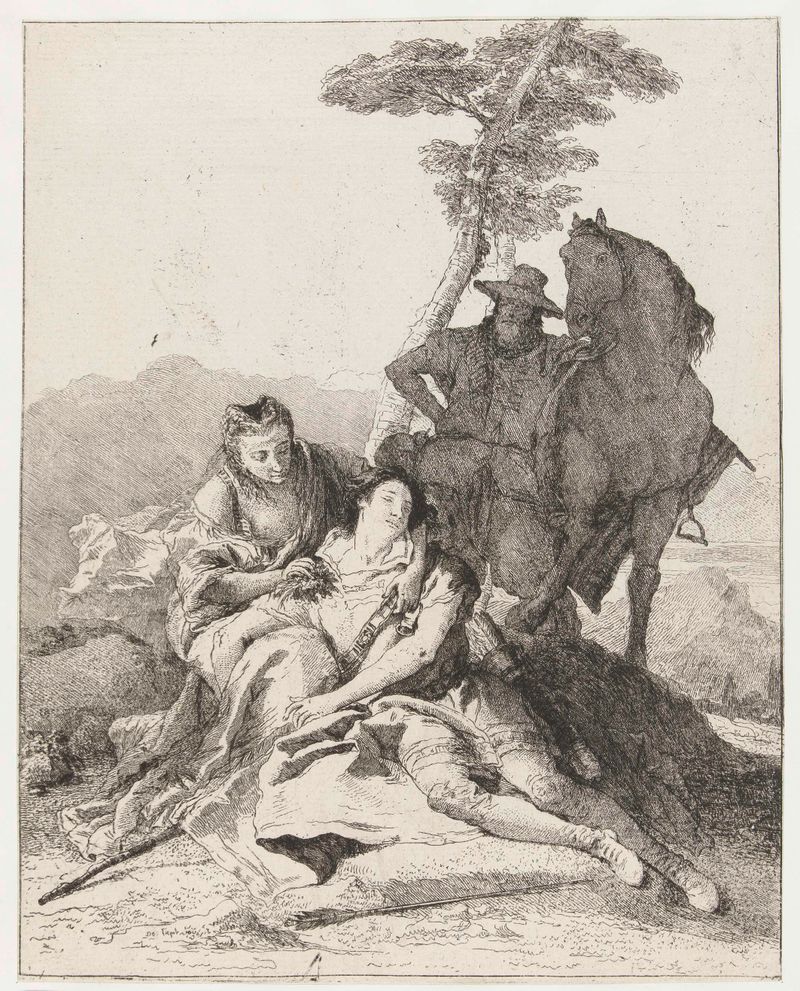
Angelica geneest de wond van Medoro
Giovanni Domenico Tiepolo
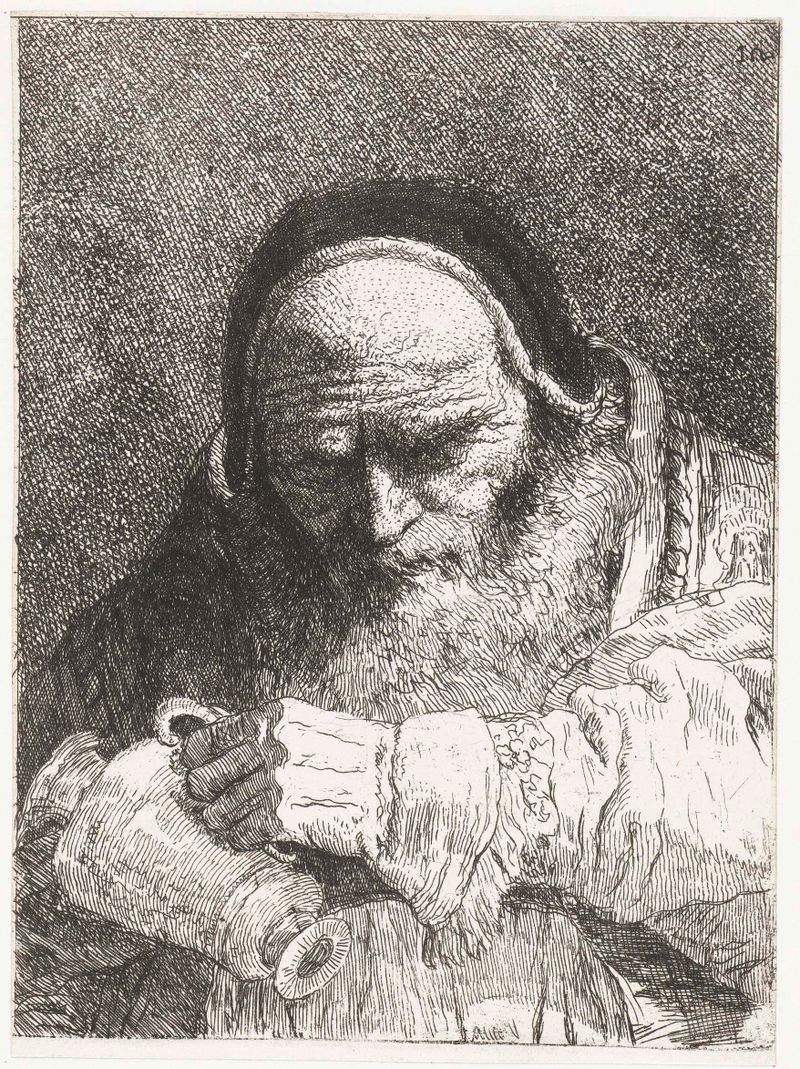
Paus met schenkkan
Giovanni Domenico Tiepolo

Heilige familie vertrekt door een stadspoort
Giovanni Domenico Tiepolo
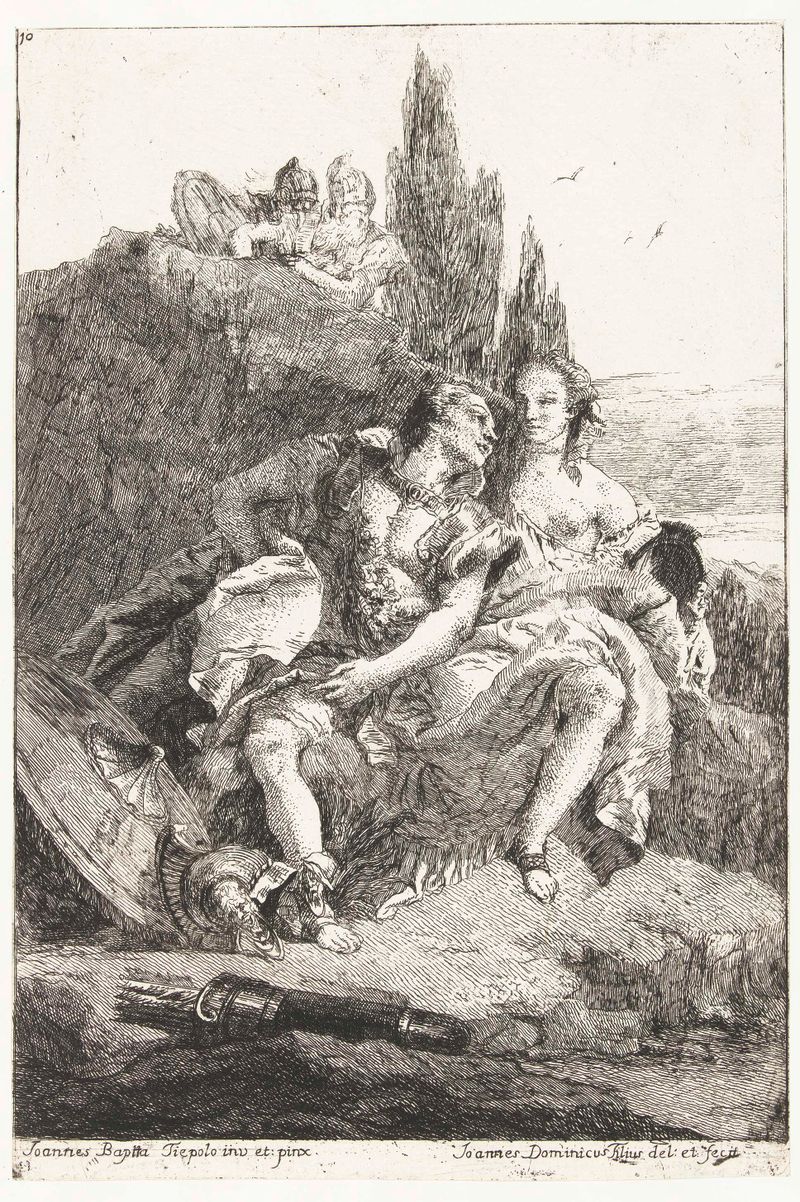
Rinaldo en Armida als liefdespaar aangetroffen bij een meer door twee ridders
Giovanni Domenico Tiepolo
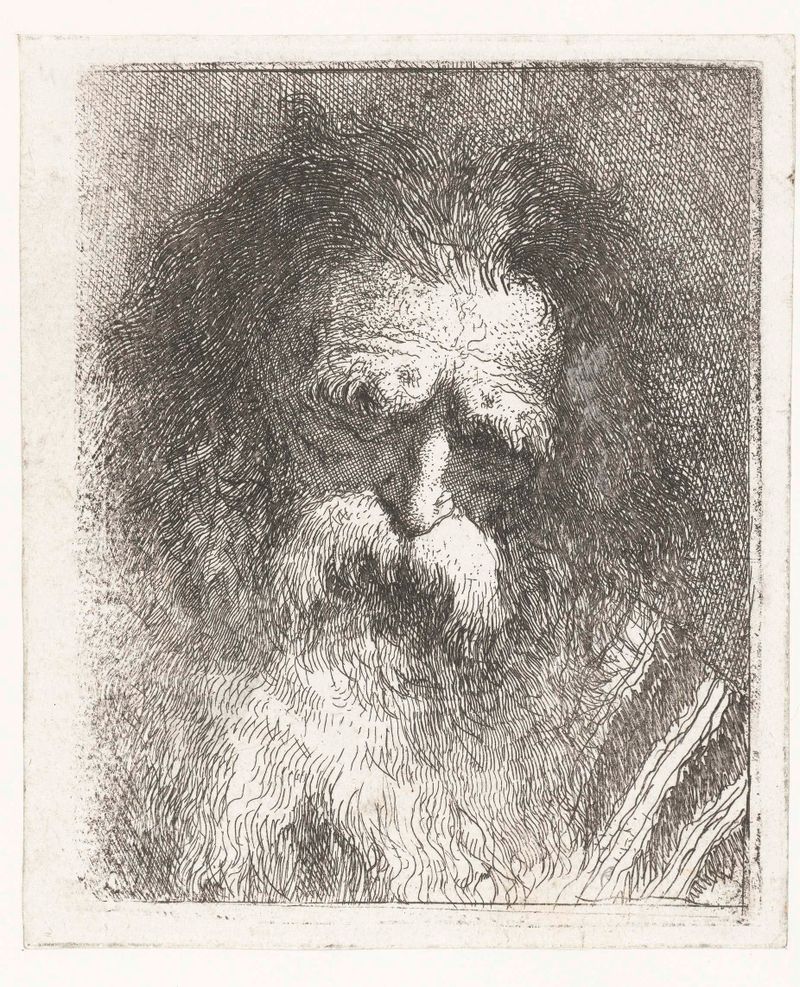
Oude man met borstelige wenkbrauwen en baard
Giovanni Domenico Tiepolo

Man met zwaard
Giovanni Domenico Tiepolo

Man met lange haren en zonder hoofddeksel
Giovanni Domenico Tiepolo

Man met ontblote schouder
Giovanni Domenico Tiepolo