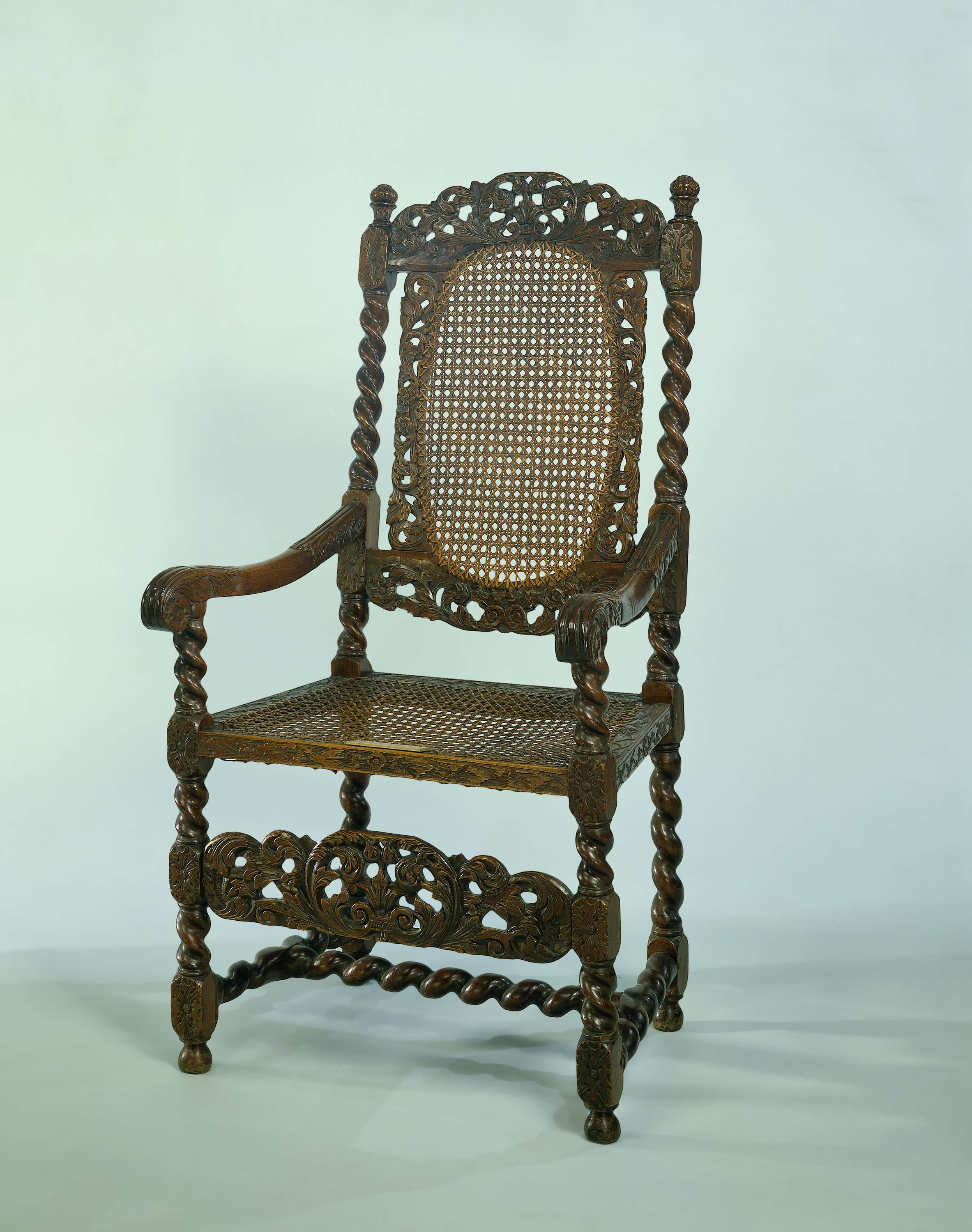
Armstoel waarvan de geslingerde rugstijlen worden bekroond door gedraaide vazen — History & Analysis
Did the painter know this moment would outlive them? In the stillness of a 17th-century workshop, the meticulous hands of an artisan devoted to their craft captured a fleeting obsession with form and function, imbuing it with a time-defying beauty. Look closely at the chair's elegantly twisted backrest, where the craftsmanship reveals a masterful play of light and shadow. The intricacies of the turned vases atop the armrests beckon your gaze, inviting an examination of their delicate curves and textures.
Notice how the rich wood grain serves as a canvas for the artistry, each contour telling a story of patience and dedication. The warm hues of the wood wrap around the piece like a comforting embrace, grounding the viewer in the tactile richness of the material. Beneath the surface lies a deeper narrative of aspiration and permanence—a reflection of society's aspiration towards refinement and beauty during a time of artistic flourishing. The chair's intricate design speaks to the tension between functionality and adornment, where the need for utility is gracefully harmonized with an obsession for decorative elegance.
Each twist and turn embodies the intersection of artistry and everyday life, making this piece not just furniture, but an ode to the human desire for lasting beauty. This work emerged between 1650 and 1700, during a period of robust craftsmanship and artistic exploration in Europe. The artisan, whose name remains a mystery, was likely influenced by the Baroque movement, which celebrated grandeur and detail. As the world evolved, the quest for exquisite domestic objects flourished, reflecting broader cultural shifts and the growing importance of personal expression through art.