At the Front — History & Facts
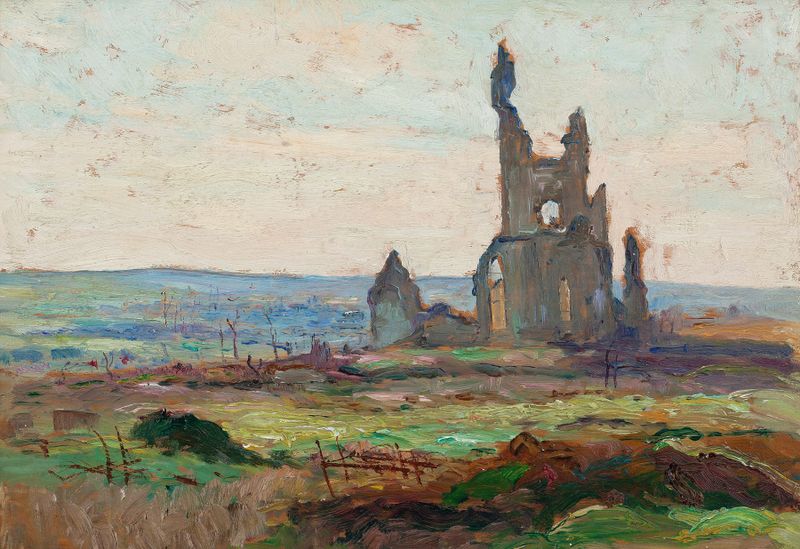
In the stillness of war, the weight of solitude is palpable, and the longing for connection echoes in the emptiness around us. Look to the center of the composition, where a lone figure stands amidst the desolate landscape. The muted palette of ochres and greys envelops the scene, creating a somber atmosphere that reflects the emotional toll of the moment. Notice how the soft brushstrokes delineate the figure, blending it into the surrounding terrain yet making it the undeniable focal point.
The horizon melts into a hazy distance, suggesting a world beyond, but the viewer’s gaze is tethered to the solitary presence. Delve deeper into the contrasts at play. The figure, wrapped in heavy clothing, appears both sturdy and vulnerable, embodying the dual nature of survival and isolation. The barren land serves as a stark reminder of loss, while the distant mountains loom like silent witnesses to the solitude of the individual.
Each detail—the frayed edges of the coat, the muffled earth tones—speaks to a profound sense of estrangement, evoking a universal longing for companionship amid the chaos of life. In 1918, as the world grappled with the aftermath of conflict, Cullen painted this work in Canada during a time when the impact of World War I loomed large over society. The artist, deeply influenced by the Canadian landscape and its emotional resonance, sought to capture not just the physical but the psychological scars of war. This profound exploration of loneliness amidst the backdrop of desolation reflects the artist's keen awareness of both his own experience and the broader human condition.