Summer near Beaupre — History & Facts
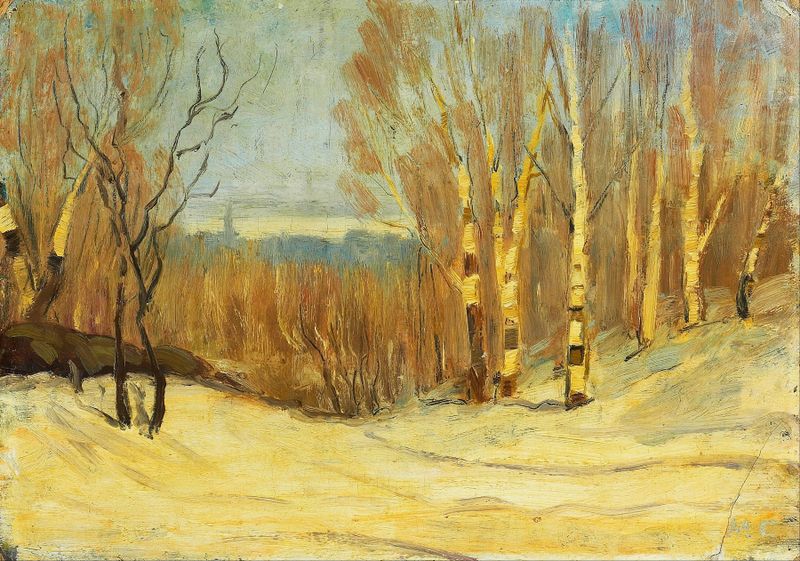
Can paint confess what words never could? In Summer near Beaupre, the canvas becomes a silent hymn to beauty, whispering secrets of a fleeting moment preserved in time. Look to the left, where dappled sunlight filters through a lush canopy of trees, casting intricate patterns on the ground. The gentle hues of greens and blues invite the viewer to breathe in the very essence of summer, while the brilliant strokes evoke the shimmering reflections dancing across the water’s surface. Notice how the horizon is kissed by a soft golden light, harmonizing with the earthy tones of the landscape that cradle the scene with warmth and serenity. Within this artwork, emotional contrasts spring to life.
The tranquil waters mirror a calm sky, yet the lively brush strokes suggest a hidden vitality pulsing beneath the surface, hinting at the transient nature of beauty. The juxtaposition of light and shadow speaks to the duality of existence—moments of peace intertwined with the inevitability of change. The meticulous details, from the fluttering leaves to the distant mountains, draw us into a contemplative space, where the harmony of nature unfolds gracefully. During the late 19th century, Cullen painted this work while immersed in the vibrant artistic community of Montreal.
It was a period marked by a burgeoning appreciation for Impressionism, and Cullen, often called the father of Canadian Impressionism, sought to capture the Canadian landscape with fresh vigor. As he painted Summer near Beaupre, he was exploring techniques that would define his legacy, embodying a spirit of both innovation and reverence for the natural world.