Moret, Winter — History & Facts
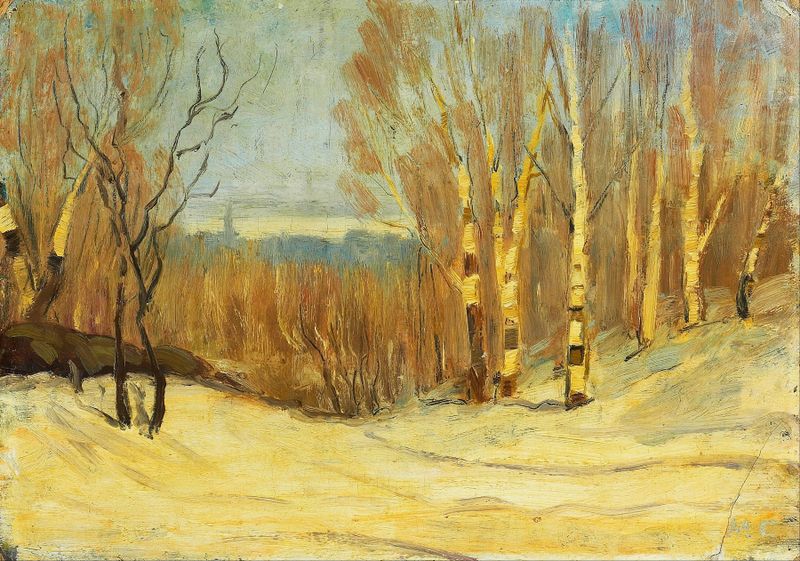
What if silence could speak through light? In Moret, Winter, a dream unfolds, captured in the delicate embrace of winter's chill, where the landscape whispers secrets only the soul can hear. Look to the soft blues and muted grays that define the canvas, inviting you into a tranquil world. The composition centers around a serene riverside, flanked by trees dusted with snow, their branches heavy under nature's white blanket. Notice how the pale sunlight filters through, casting gentle reflections on the water’s surface, which shimmers like a forgotten dream.
The subtle brushwork creates a sense of movement in the snow, evoking a quiet stillness that envelops the scene. Beneath this serene exterior lies the emotional tension of solitude and reflection. The stillness of the landscape contrasts with the vibrancy of the colors, suggesting a warmth beneath the cold facade. The distant figures, small against the vastness of nature, evoke feelings of insignificance in the face of winter’s beauty, yet they also symbolize resilience and the quiet strength of the human spirit amid desolation.
Each element in the painting, from the frosty air to the glowing light, deepens this connection between man and nature, amplifying the dreamlike quality of the moment. In 1895, when this piece was created, Cullen was deeply influenced by the Impressionist movement while living in Canada. The art world was evolving, embracing new techniques that focused on light and atmosphere. Cullen's exploration of winter scenes marked a significant phase in his career, reflecting both personal and collective experiences of isolation and introspection during a time of rapid change.