
Au Marais Inondé; Le Bergère — History & Facts
In the realm of art, this transformation speaks to the very essence of mortality and the fleeting nature of beauty captured on canvas. Notice how the viewer's gaze is immediately drawn to the foreground, where a solitary shepherdess stands amid the tumultuous landscape. Her figure, though small, commands attention against the swirling currents of the flooded marsh. Richly textured strokes of blue and green encapsulate the water's depth, while warm earth tones cradle the shepherdess, creating a poignant contrast that hints at her vulnerability in this vast, tumultuous world. Subtle details reveal the emotional weight within the scene.
The shepherdess’s serene expression juxtaposes the chaos of the high waters surrounding her, reflecting an inner calm amidst nature’s wrath. The gentle light sifting through stormy clouds adds an ethereal quality, imbuing the moment with a sense of reverence for the cycle of life and death, as the landscape itself seems to breathe and pulse with emotion. Painted during a time of great societal change in France, this work emerged between 1870 and 1918, when the artist found himself navigating personal and artistic challenges. Lepère, influenced by impressionism and the burgeoning modern art movement, strived to capture the essence of emotion and atmosphere amidst the turbulent backdrop of the world.
It was a period marked by both war and renewal, allowing him to infuse his art with deeper reflections on existence and the natural world.
More Artworks by Auguste Louis Lepère
Browse all →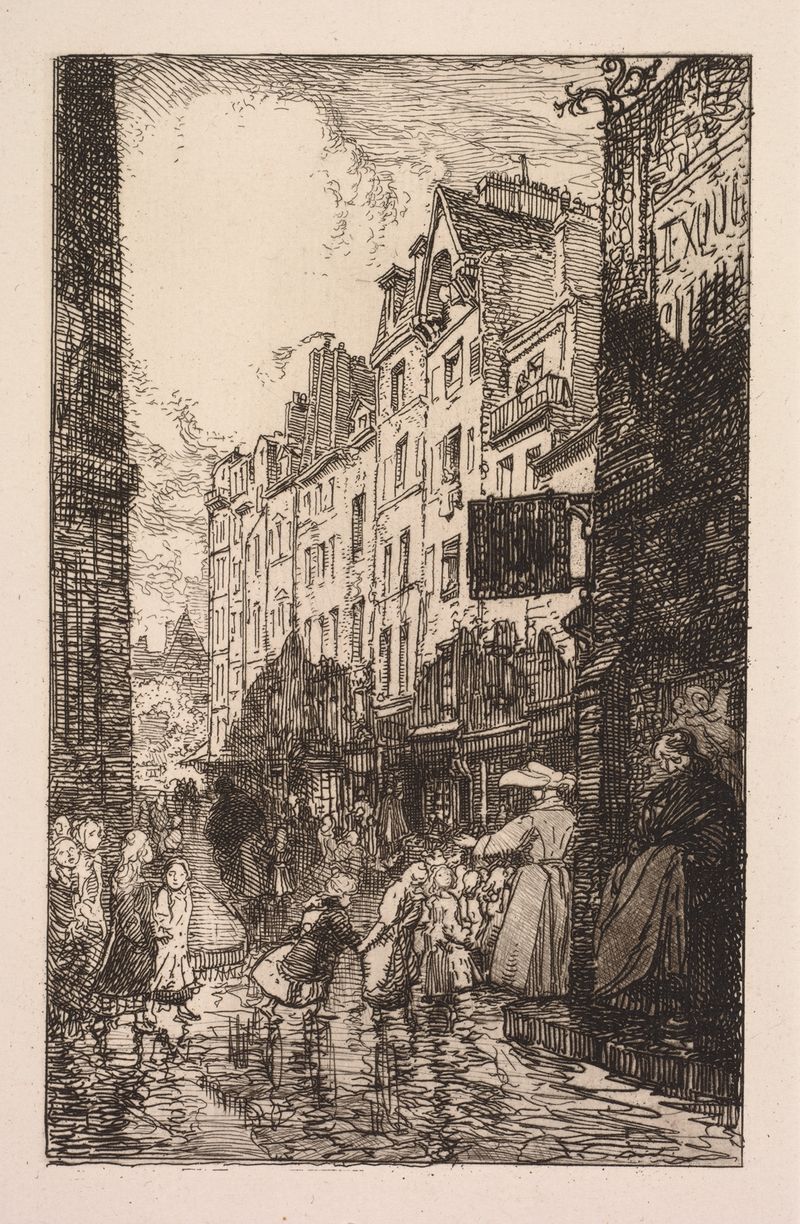
La Rue des Prêtres Saint-Séverin
Auguste Louis Lepère
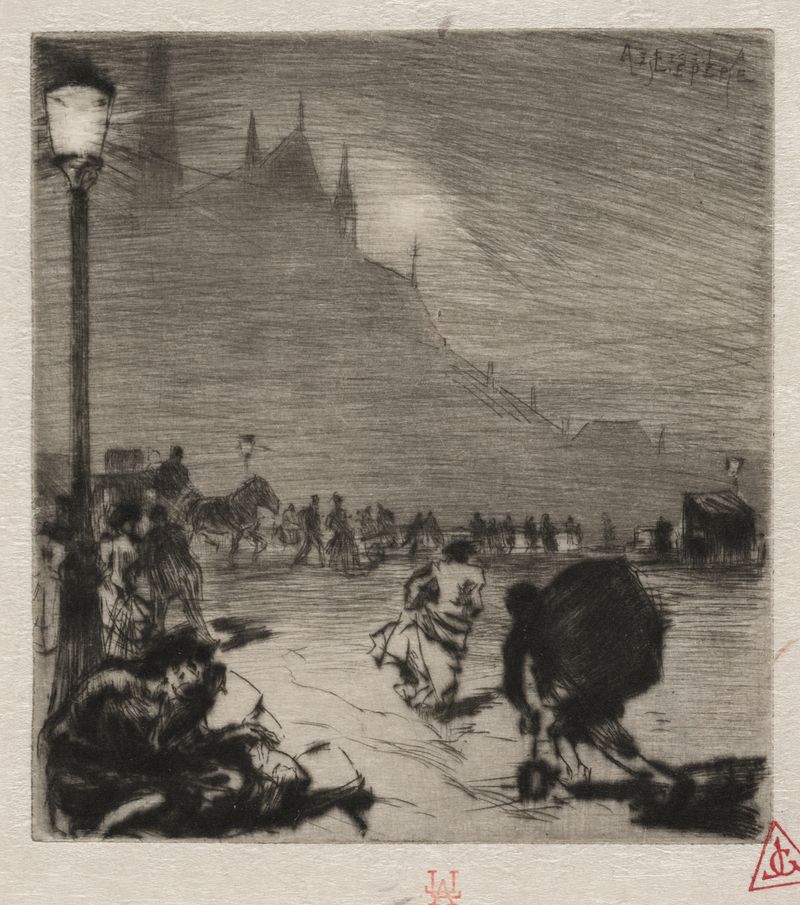
Au Coin du Pont-aux-Doubles
Auguste Louis Lepère
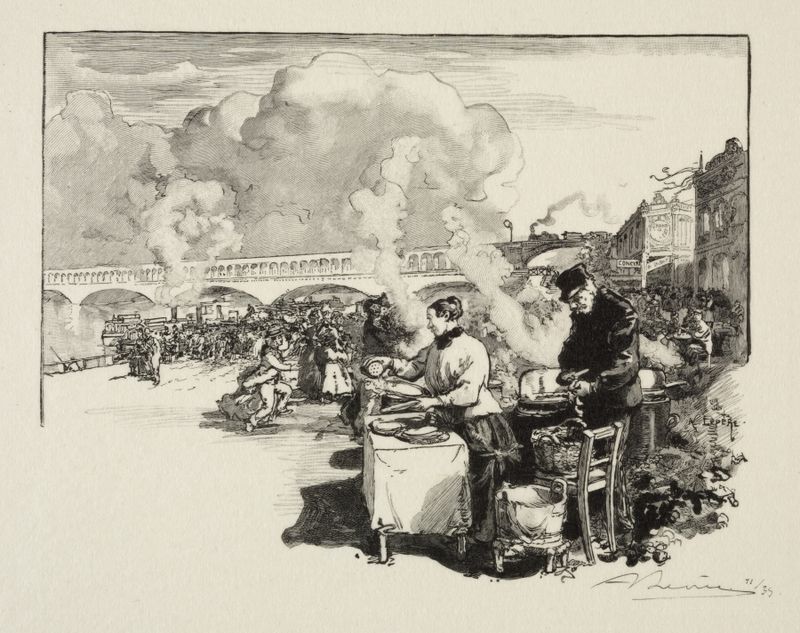
Debarcadère des bateaux-omnibus
Auguste Louis Lepère

La Seine, au quai de la Rapée
Auguste Louis Lepère
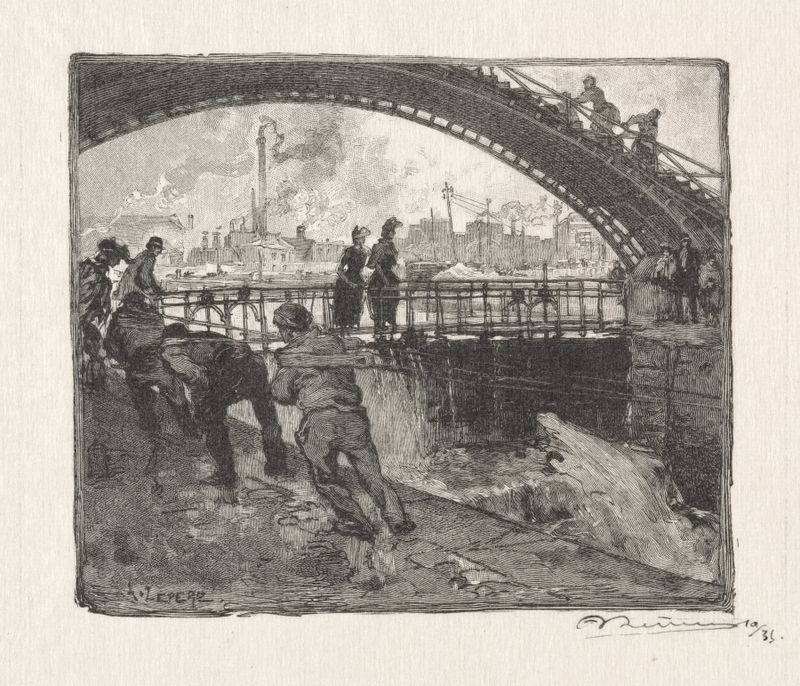
L’Ecluse du Canal St. Martin
Auguste Louis Lepère

Le Boulevard Montmartre, le Soir
Auguste Louis Lepère

Une Chasse au Mont Gérard
Auguste Louis Lepère
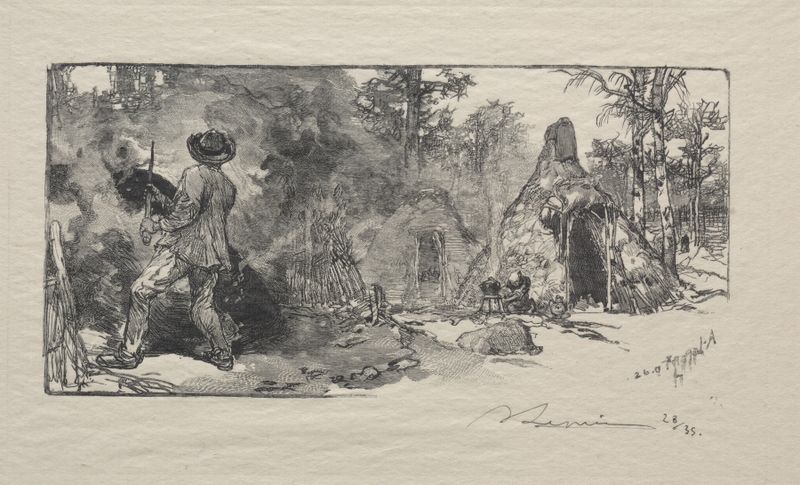
Les Charbonniere
Auguste Louis Lepère
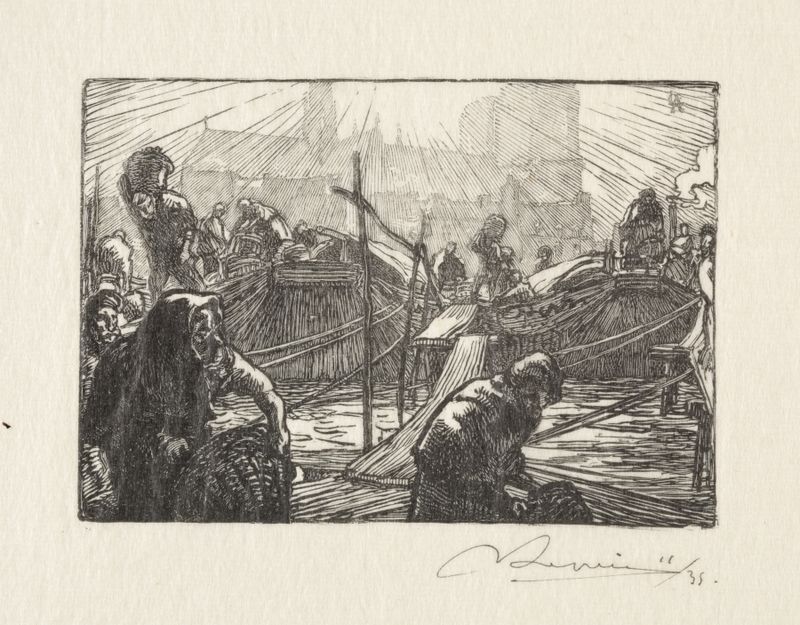
Notre Dame vue du Marché aux pommes
Auguste Louis Lepère

Le Palais des Arts Liberaux, Intèrieur
Auguste Louis Lepère





