
Auf der Alm — History & Facts
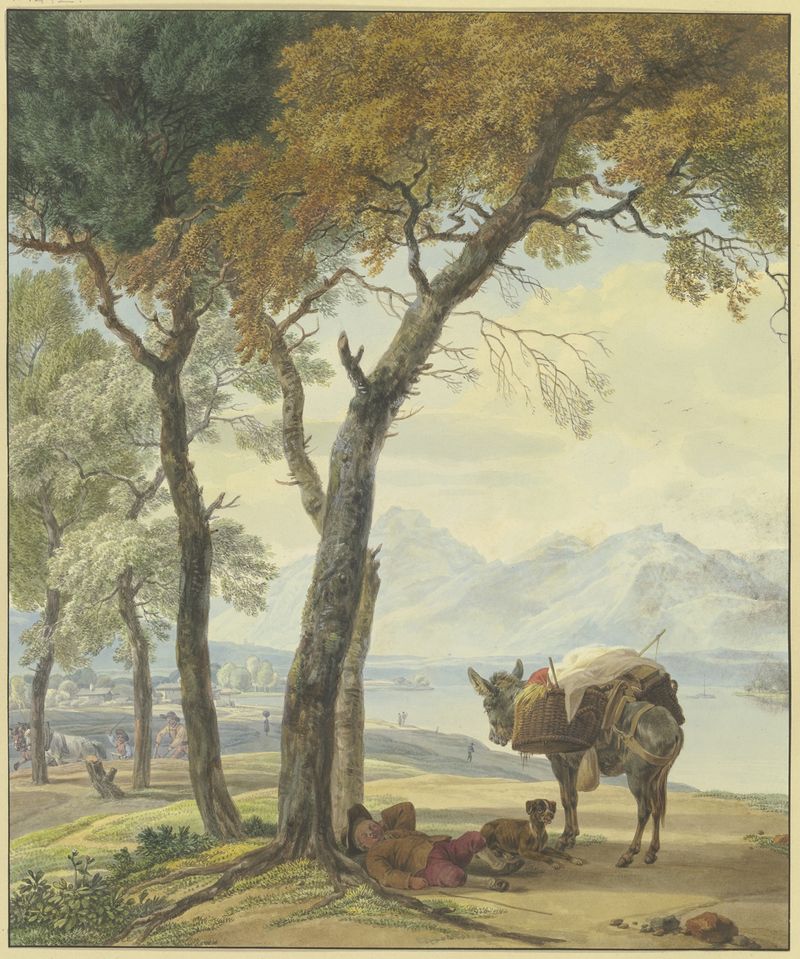
In the heart of nature’s embrace lies a divine connection, a fleeting moment captured for eternity. Focus on the lush, verdant mountainside where the gentle undulations of the land harmonize with the serene sky above. Notice how the light bathes the scene in a warm golden hue, casting playful shadows that dance upon the ground. The figures engage in a quiet communion with their surroundings, their simple gestures echoing the tranquility of the alpine landscape.
The artist’s brushwork is adept, marrying realism with a touch of idyllic beauty, inviting us to linger in this harmonious refuge. Underneath this pastoral tableau lies a deep exploration of human connection to nature. The juxtaposition of the figures against the vastness of the mountains suggests a fleeting insignificance, yet their joyful demeanor hints at a moment of divine grace. The subtle play of light and shadow symbolizes the transient nature of life, while the vivid colors breathe vitality into the scene, offering viewers a glimpse of a world untainted by modernity. Created in 1829, this work emerged during a period when Wilhelm von Kobell was deeply inspired by the Romantic movement, which sought to elevate nature and individual experience.
Painted in southern Germany, it reflects the artist’s desire to convey an emotional resonance with the landscape, capturing the spirit of a society beginning to grapple with industrialization and the encroachment of urban life on rural simplicity.
More Artworks by Wilhelm von Kobell
Browse all →
Der Postillon auf dem Weg nach Weilheim
Wilhelm von Kobell

Königsee with the Cliffs of St. Bartholomëe
Wilhelm von Kobell

Bauernwagen in bergiger Landschaft
Wilhelm von Kobell
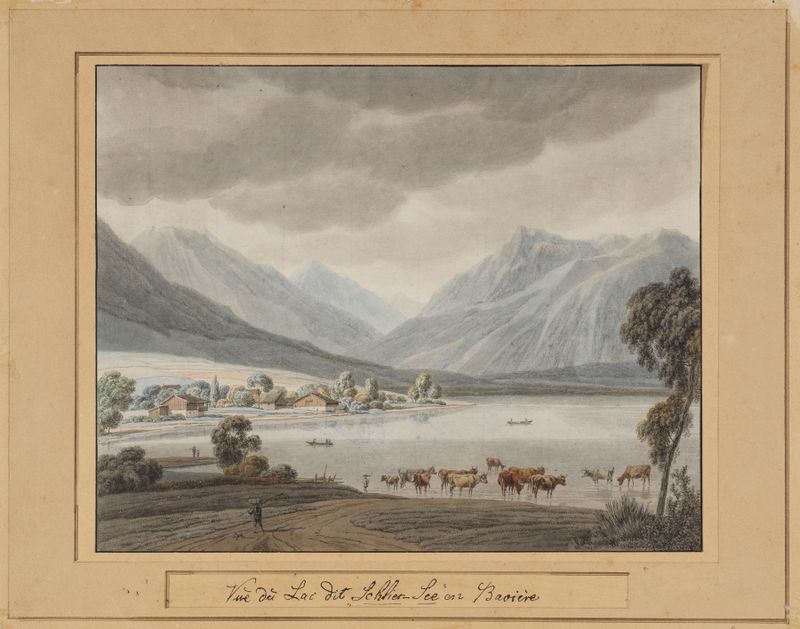
Schliersee
Wilhelm von Kobell
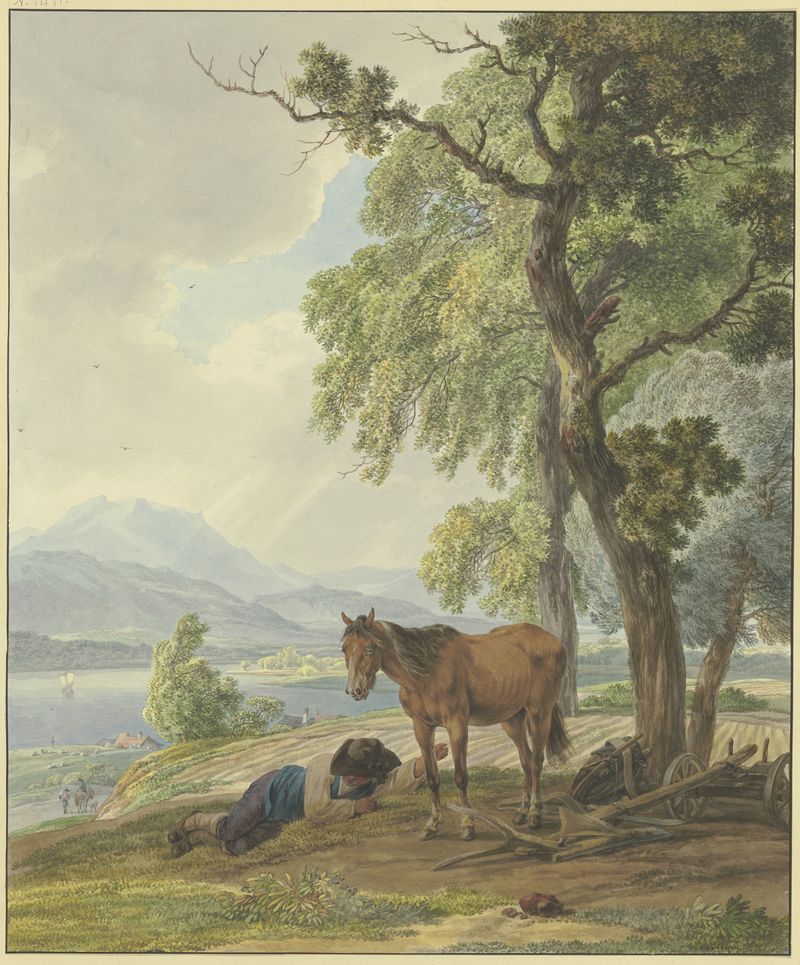
Ruhender Bauer mit seinem Pferd neben dem gepflügten Acker
Wilhelm von Kobell
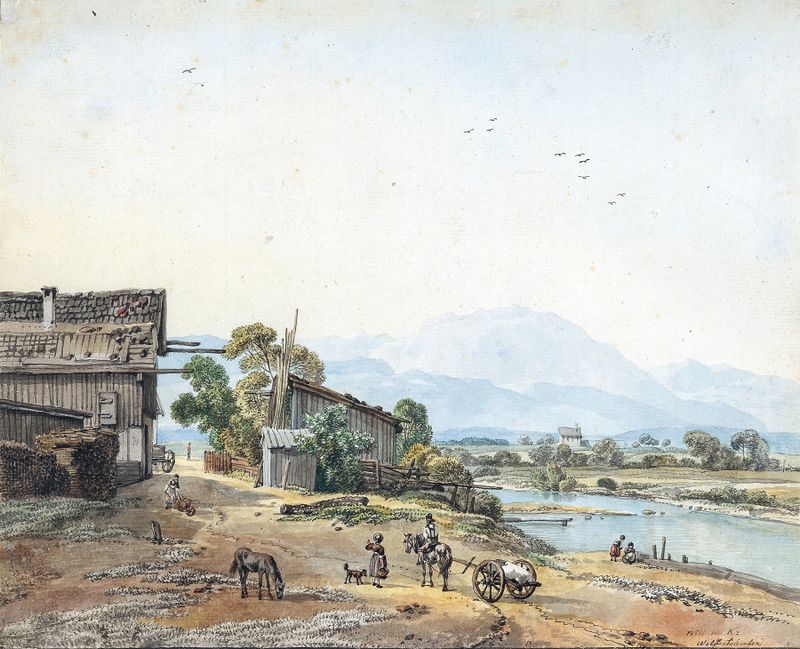
Wolfratshausen an der Loisach
Wilhelm von Kobell
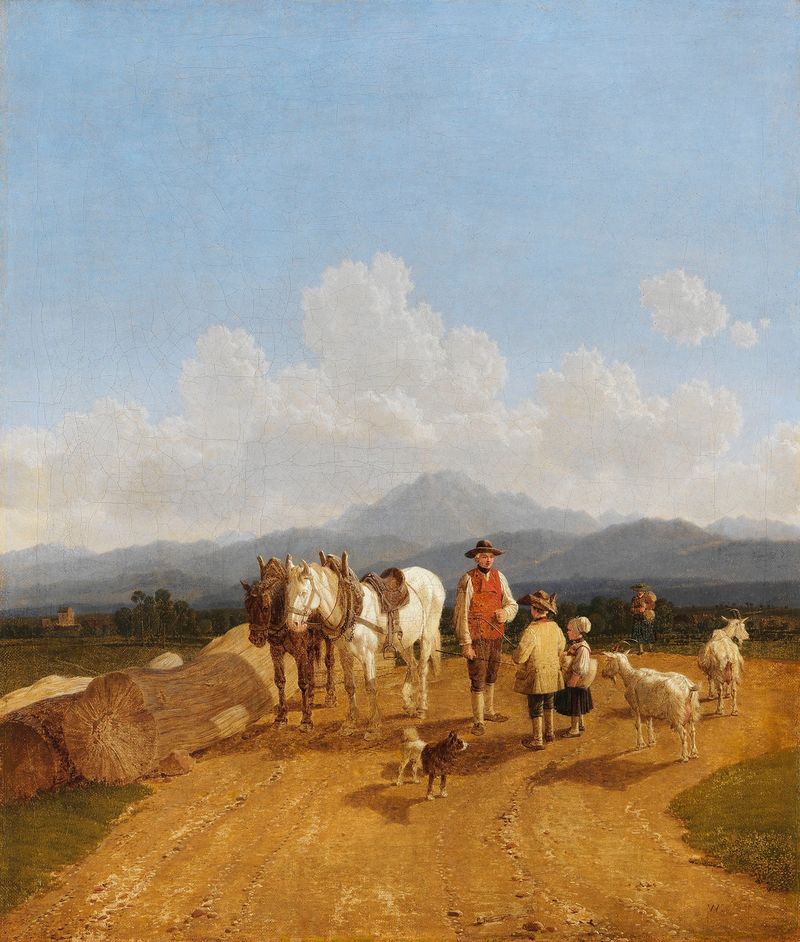
Bauer und Hirtenkinder in oberbayerischer Voralpenlandschaft
Wilhelm von Kobell

Begegnung auf der Landstrasse
Wilhelm von Kobell
Schlafender Eseltreiber unter einer Baum an einem See
Wilhelm von Kobell
Stagecoach in Winter
Wilhelm von Kobell





