
Bauer und Hirtenkinder in oberbayerischer Voralpenlandschaft — History & Facts
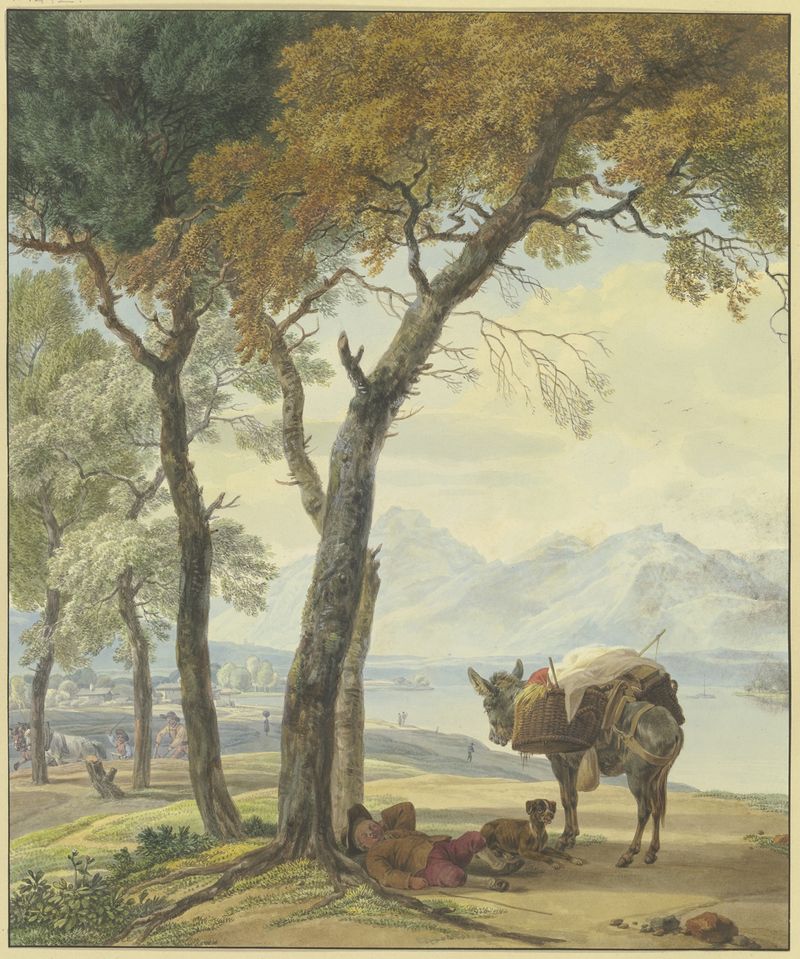
In the interplay of light and shadow, a hidden narrative unfolds, whispering secrets known only to the attentive observer. The chiaroscuro dances across the canvas, drawing us into a world where every shadow tells a story. Look to the left, where the gentle contours of the Bavarian Alps rise majestically, painted with soft pastels that evoke a sense of serene tranquility. Notice the delicate figures of the farmer and shepherd children, their postures conveying a simple yet profound connection with nature.
The warm golden light bathes their faces, creating a stark contrast with the cooler shadows that cradle the landscape, hinting at life’s complexities beneath the idyllic surface. Delve deeper into the details: the farmer's sturdy hands, weathered by toil, and the children's innocent expressions that flicker with a mix of playfulness and responsibility. Symbolically, the shadows cast by the figures suggest the weight of tradition and the passing of knowledge from one generation to another. The play of light signifies hope amidst uncertainty, as the idyllic scene masks the struggles inherent in rural life, inviting contemplation on the balance between joy and hardship. In 1822, Wilhelm von Kobell created this piece while deeply immersed in the Romantic movement, which sought to celebrate nature and the human experience.
Living in Bavaria, an area rich in picturesque landscapes, he was inspired by both his surroundings and the era’s embrace of emotional depth. This painting reflects not only his personal observations but also a broader artistic shift towards nature as a source of solace and reflection during a time of social upheaval in Europe.
More Artworks by Wilhelm von Kobell
Browse all →
Der Postillon auf dem Weg nach Weilheim
Wilhelm von Kobell

Königsee with the Cliffs of St. Bartholomëe
Wilhelm von Kobell

Bauernwagen in bergiger Landschaft
Wilhelm von Kobell
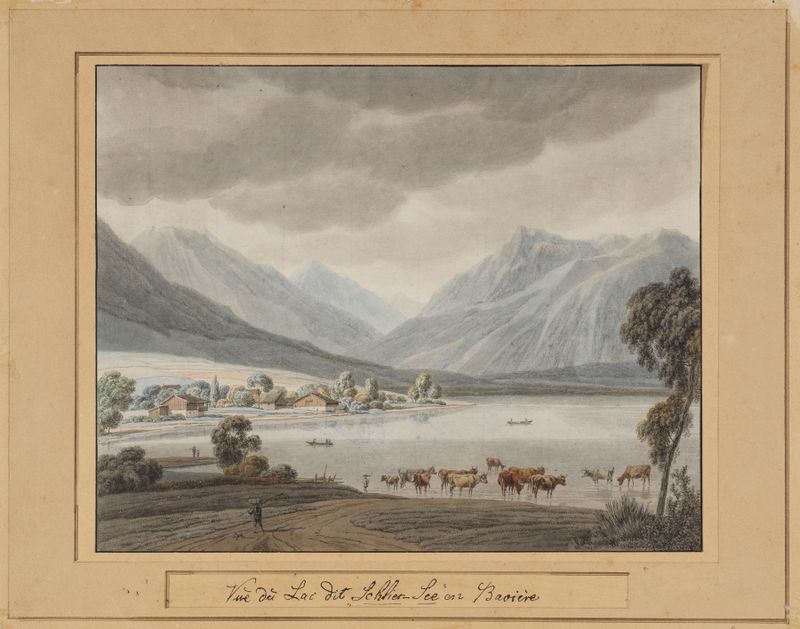
Schliersee
Wilhelm von Kobell
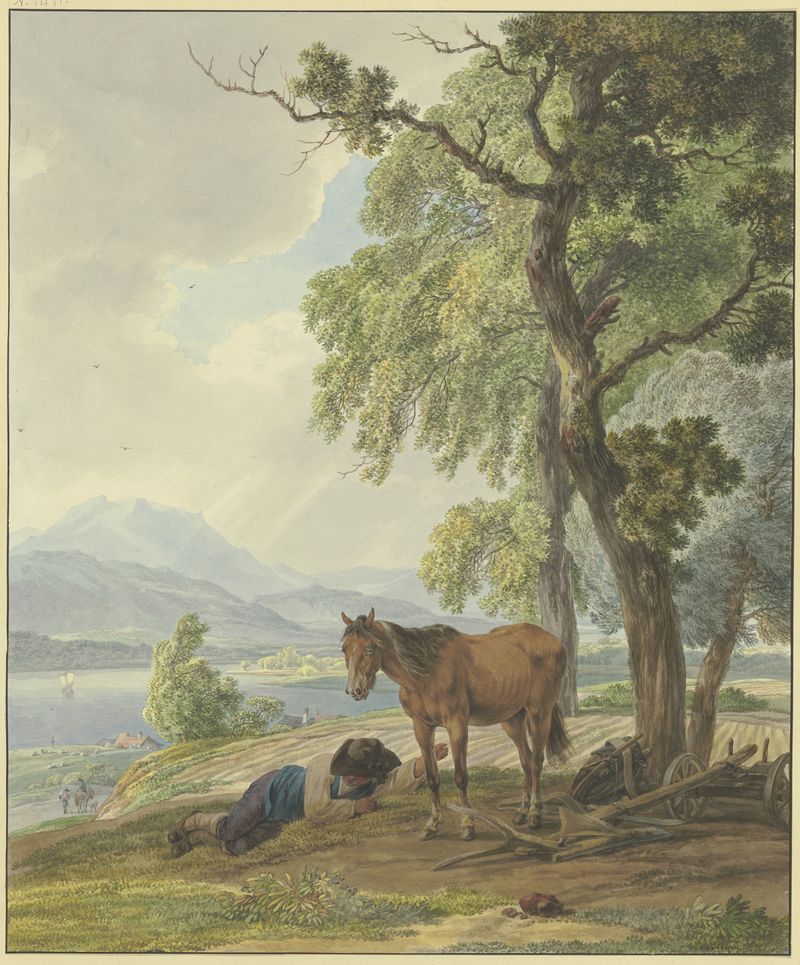
Ruhender Bauer mit seinem Pferd neben dem gepflügten Acker
Wilhelm von Kobell
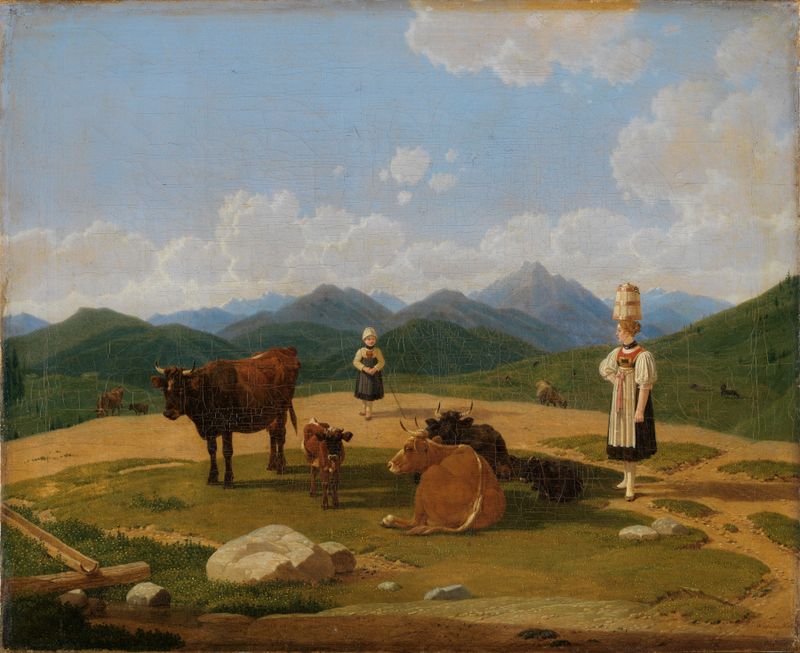
Auf der Alm
Wilhelm von Kobell
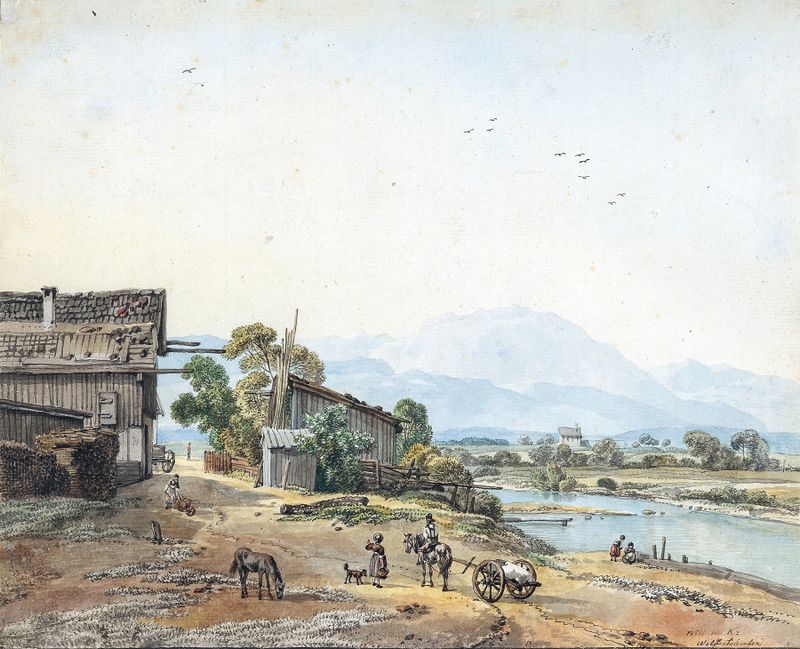
Wolfratshausen an der Loisach
Wilhelm von Kobell

Begegnung auf der Landstrasse
Wilhelm von Kobell
Schlafender Eseltreiber unter einer Baum an einem See
Wilhelm von Kobell
Stagecoach in Winter
Wilhelm von Kobell





