
Stagecoach in Winter — History & Facts
The canvas doesn’t lie — it simply waits. In the silence of winter, a stagecoach braving the elements beckons the viewer to confront the tension between man and nature, a haunting balance fraught with fear and uncertainty. Look to the right at the huddled figures within the coach, their faces obscured by heavy cloaks, embodying vulnerability. The artist employs a muted palette of grays and icy blues, contrasting sharply with the warm browns of the horses, suggesting a struggle against the unforgiving chill.
Notice how the snowflakes dance in the air, blurring outlines and merging the coach with its frosty surroundings, as if nature itself is threatening to reclaim what belongs to it. Delve deeper into the details: the way the coach wheels sink into the snow, hinting at the weight of trepidation each passenger bears. The stark, leafless trees stand as silent sentinels, their gnarled branches echoing the tension in the air. The horizon, a fading light, seems to whisper of an end, amplifying the sense of isolation and the fear that accompanies venturing into the unknown. Wilhelm von Kobell painted this work in 1798, during a period when neoclassicism was giving way to romanticism.
Living in Munich, he was deeply influenced by the natural landscapes surrounding him and the tumultuous political climate of Europe. This piece reflects not only the external struggles of its time but also a personal exploration of the human condition, navigating through the harsh realities of existence.
More Artworks by Wilhelm von Kobell
Browse all →
Der Postillon auf dem Weg nach Weilheim
Wilhelm von Kobell

Königsee with the Cliffs of St. Bartholomëe
Wilhelm von Kobell

Bauernwagen in bergiger Landschaft
Wilhelm von Kobell
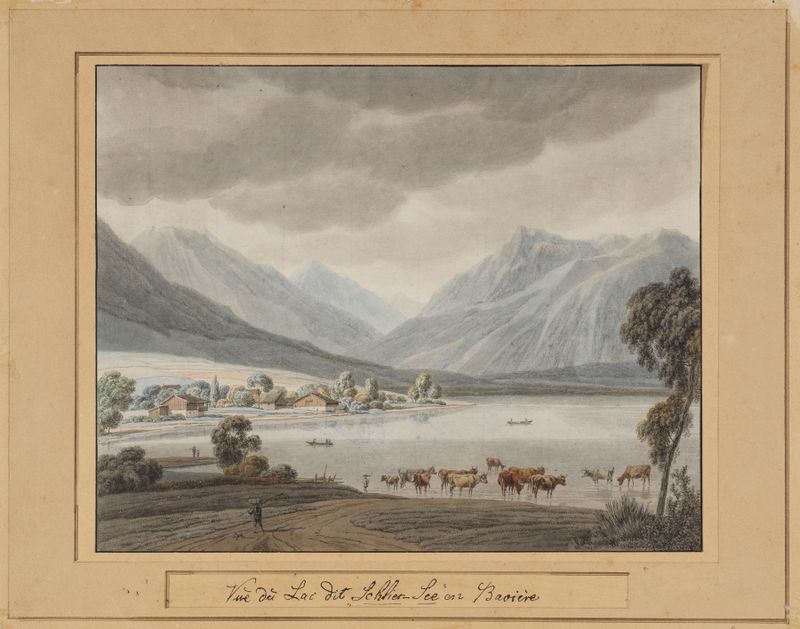
Schliersee
Wilhelm von Kobell
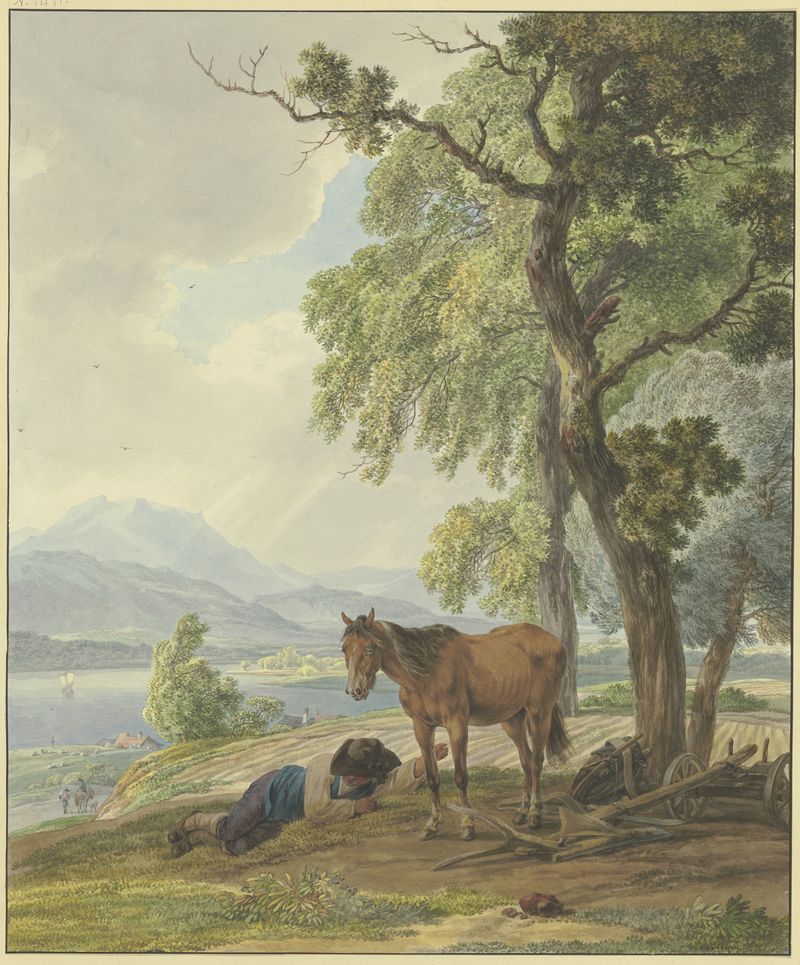
Ruhender Bauer mit seinem Pferd neben dem gepflügten Acker
Wilhelm von Kobell
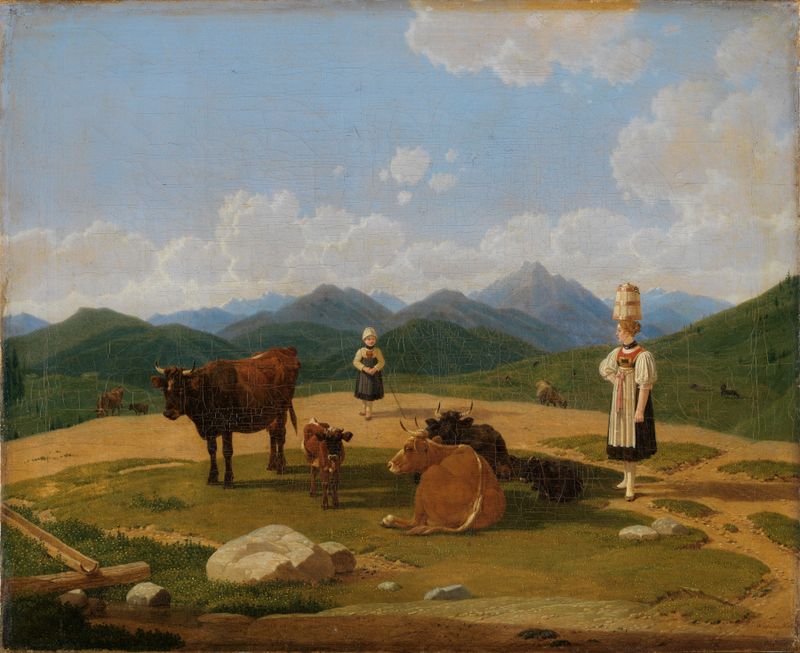
Auf der Alm
Wilhelm von Kobell
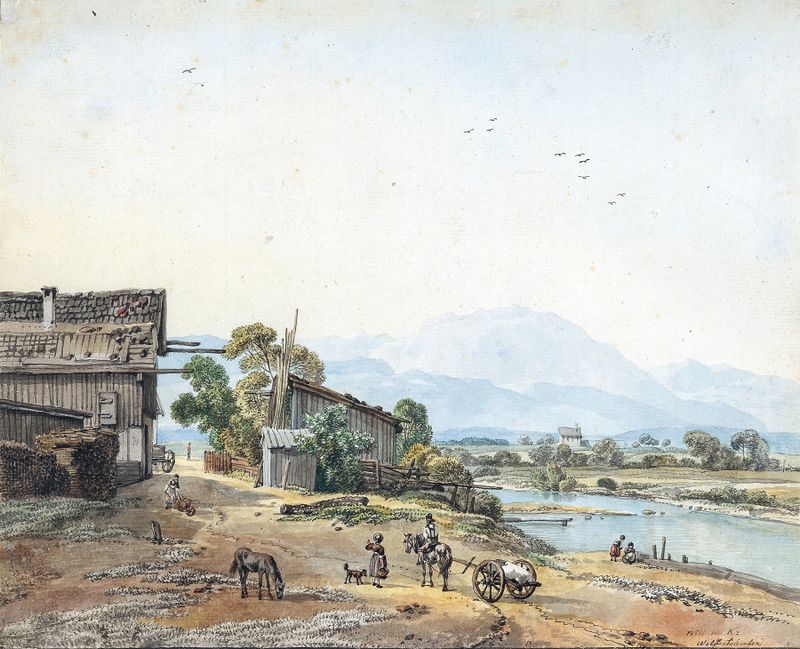
Wolfratshausen an der Loisach
Wilhelm von Kobell
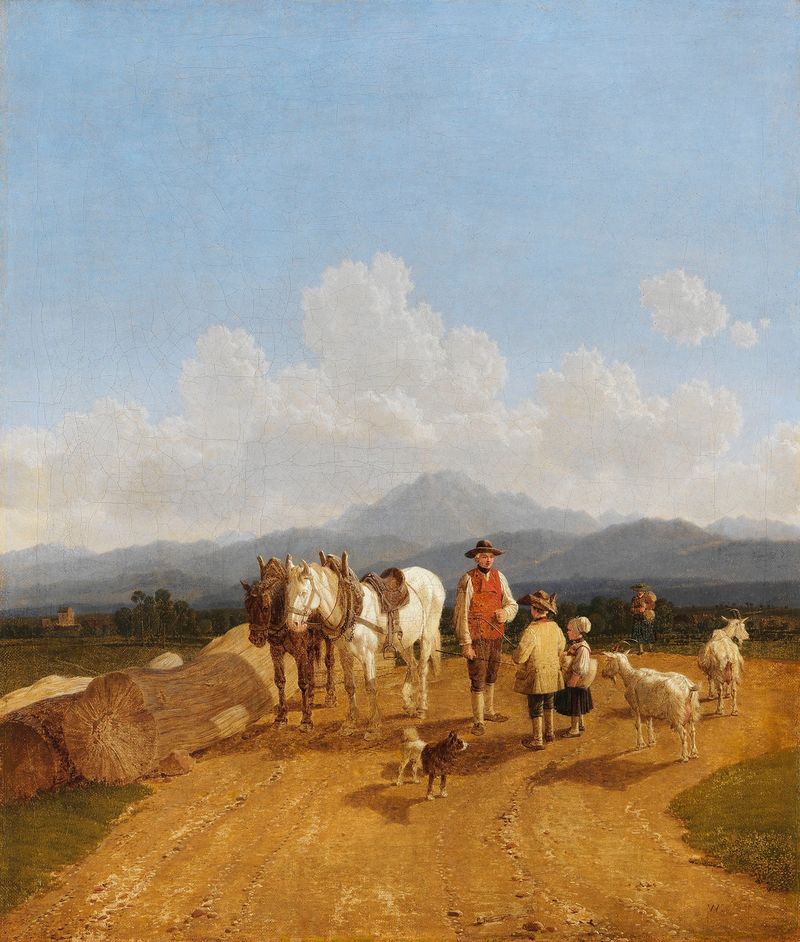
Bauer und Hirtenkinder in oberbayerischer Voralpenlandschaft
Wilhelm von Kobell

Begegnung auf der Landstrasse
Wilhelm von Kobell
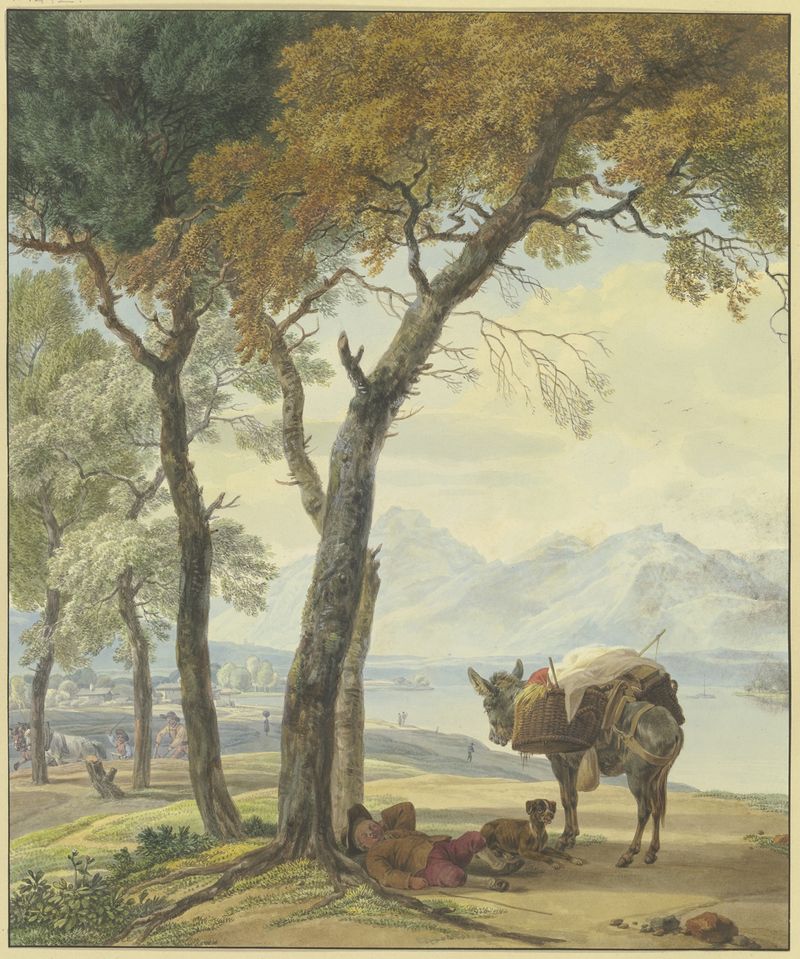
Schlafender Eseltreiber unter einer Baum an einem See
Wilhelm von Kobell





