
Aus der Wachau — History & Facts
What secret hides in the quiet of the canvas? In the stillness of Aus der Wachau, a world of awakening unfolds, inviting contemplation and curiosity. Focus first on the luminous hues that dance across the canvas, particularly the soft greens and warm golds that breathe life into the landscape. Notice how the gentle interplay of light and shadow creates depth, drawing the eye toward the horizon where the land meets the sky. The careful brushwork captures the essence of a serene morning, with delicate strokes lending texture to the foliage and ethereal clouds floating lazily above. The painting resonates with a sense of tranquility, yet hints at an underlying tension between the natural world and human presence.
The distant figure, perhaps a peasant or a traveler, merges almost seamlessly with the surroundings, suggesting a profound connection to the earth. This interplay evokes themes of solitude and contemplation, as if the viewer is invited to share in a moment of reflection while the world begins to stir from its slumber. Created during a time of shifting artistic movements in the late 19th century, the artist painted this work while navigating the transition from romanticism to impressionism. Charlemont was deeply engaged with the landscapes of his native Austria, capturing the enchanting beauty of regions like Wachau.
At this time, he sought to infuse his works with a sense of immediacy, exploring how light could transform a scene into an experience of awakening—both for the viewer and the subject captured within.
More Artworks by Hugo Charlemont
Browse all →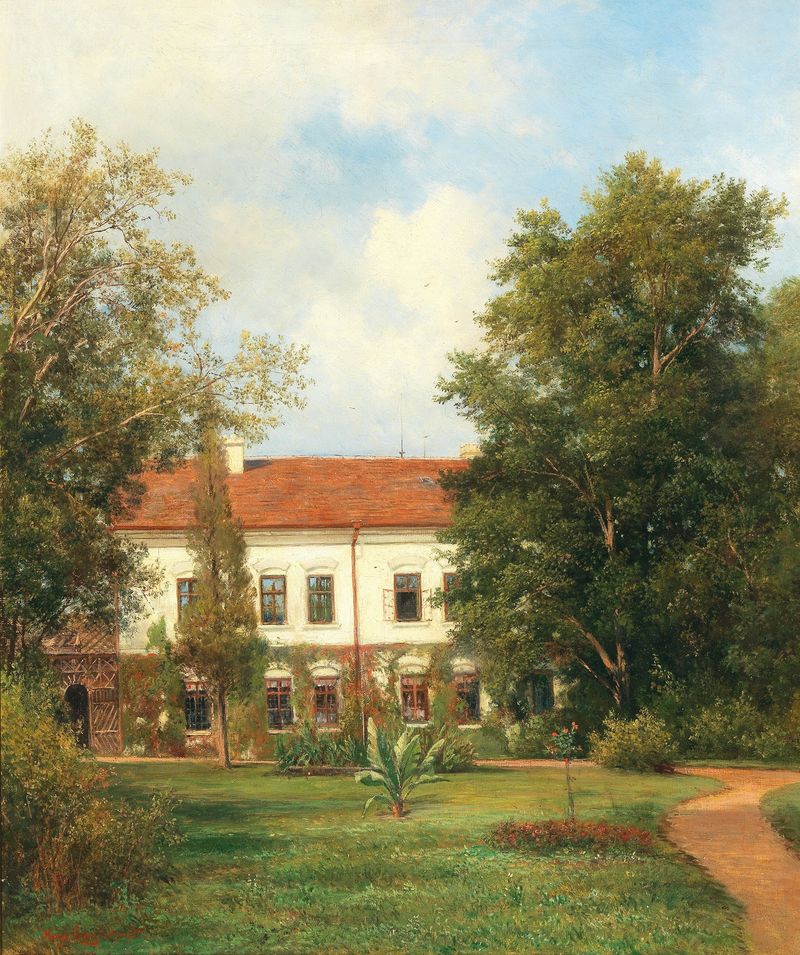
View of a Castle in Bohemia
Hugo Charlemont
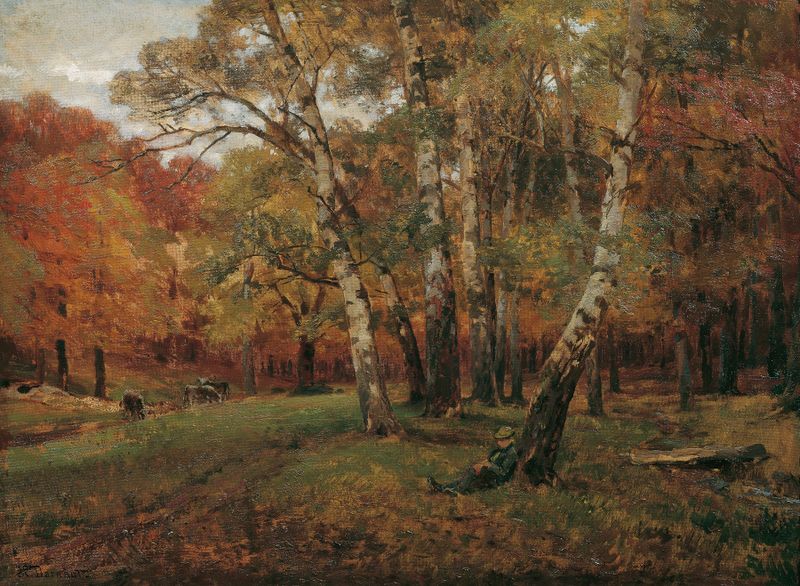
Die Ruine Starhemberg im Piestingtal
Hugo Charlemont
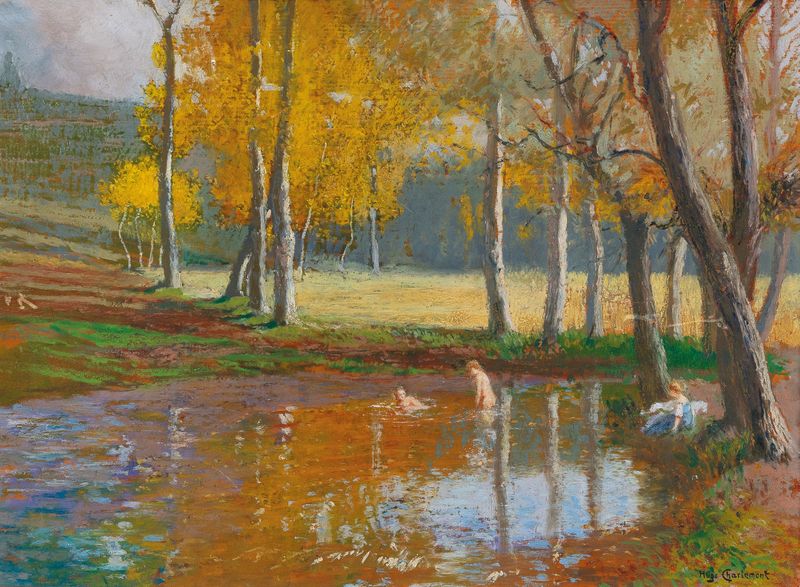
Bathers In A Woodland Pond
Hugo Charlemont
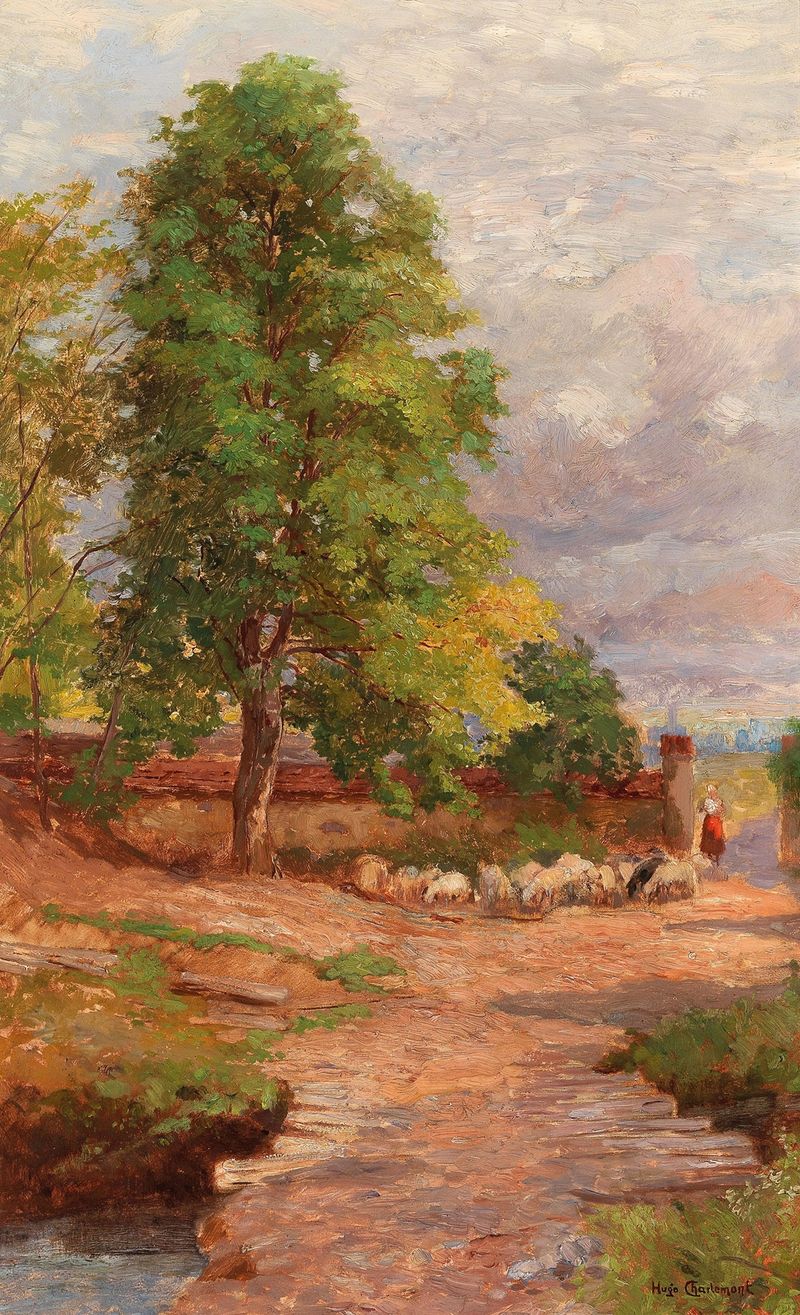
Old Chestnut Tree
Hugo Charlemont
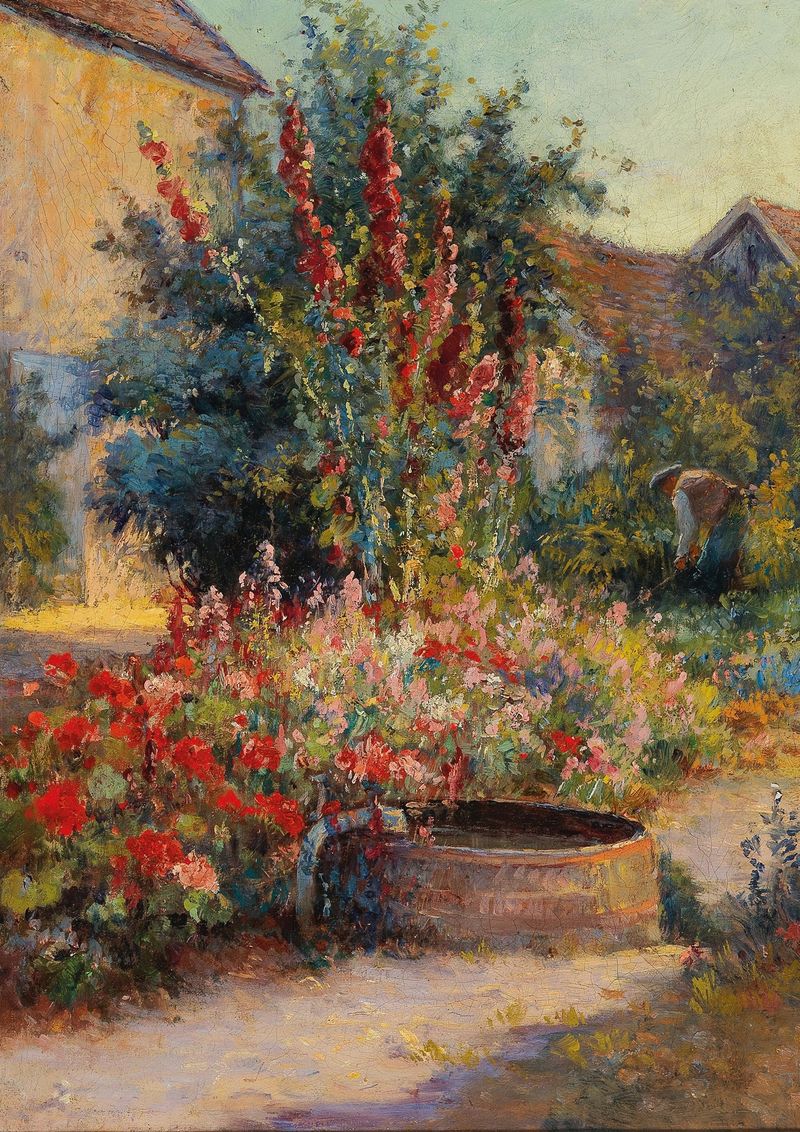
Garten in Brioni
Hugo Charlemont
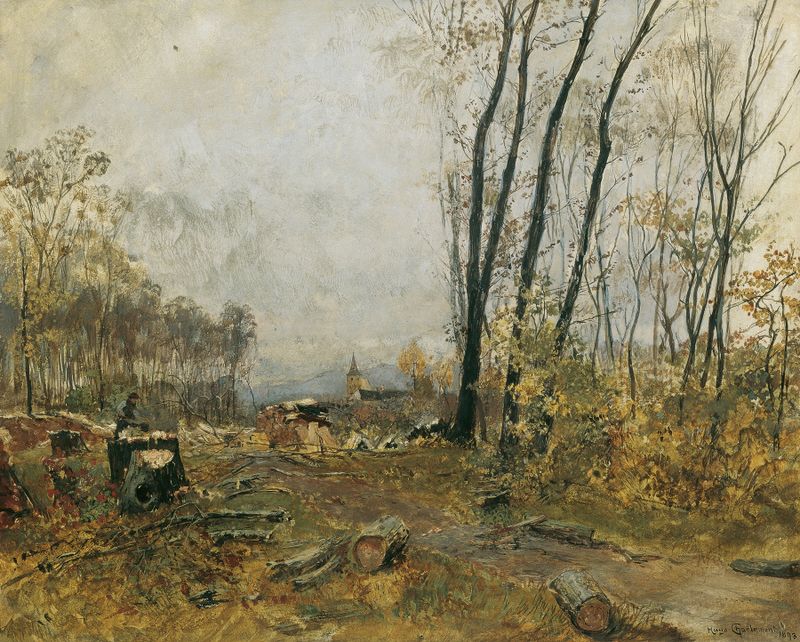
Au bei Klosterneuburg
Hugo Charlemont
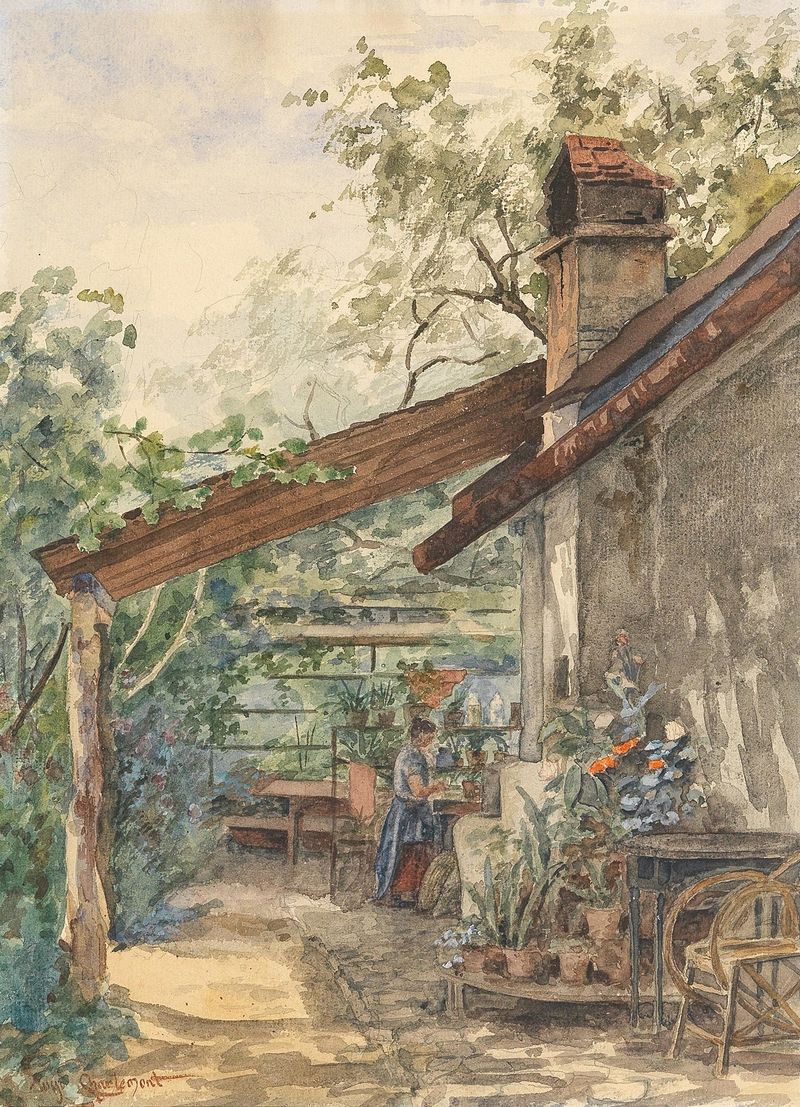
Pflanzendepot
Hugo Charlemont
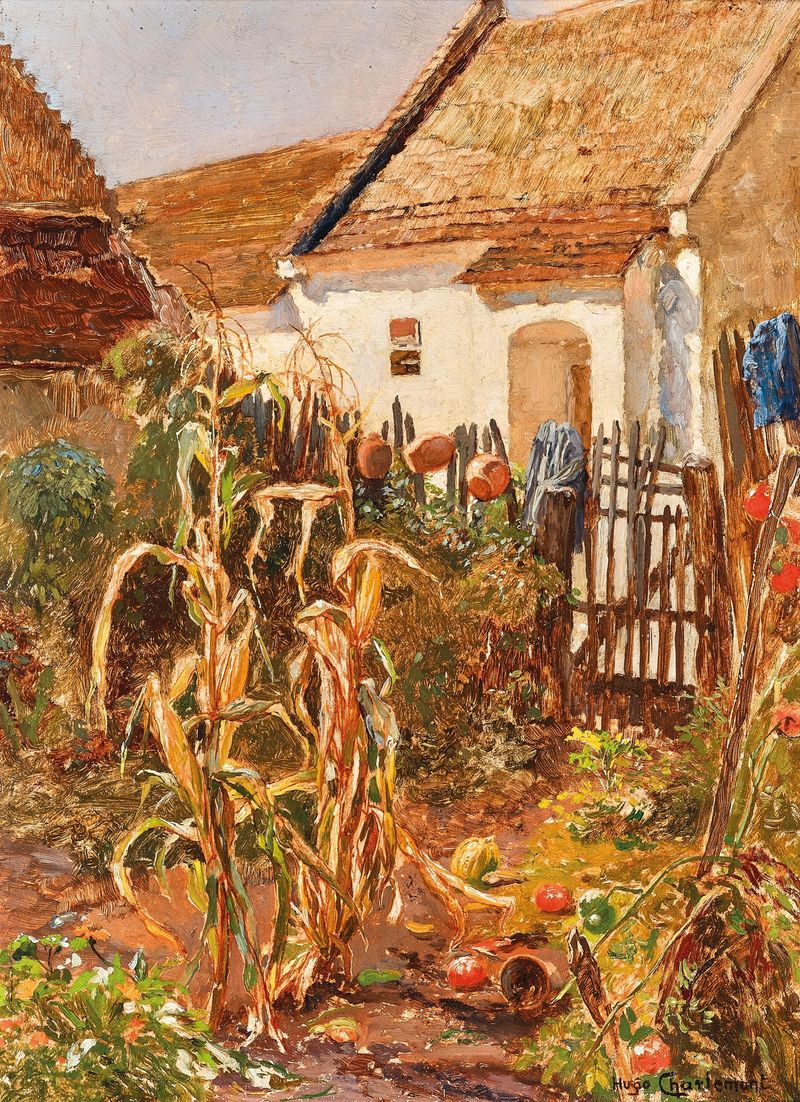
A rustic garden in the Wachau region
Hugo Charlemont
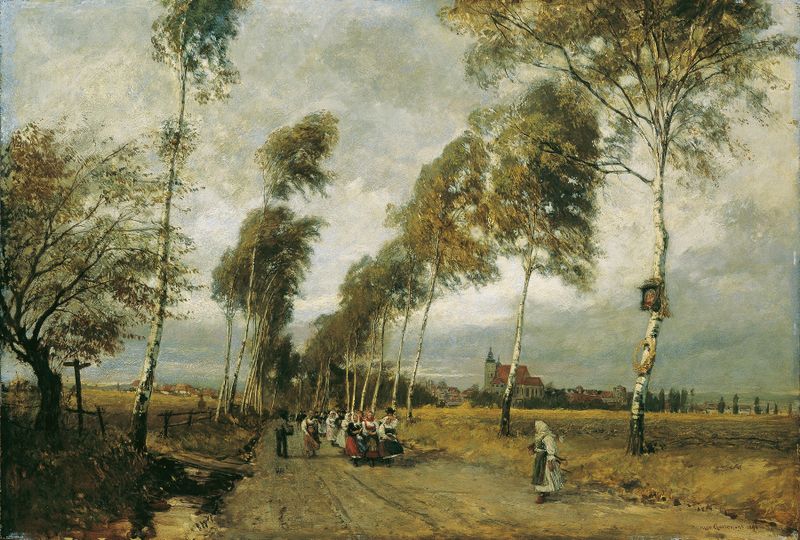
Landstraße mit Birkenallee
Hugo Charlemont
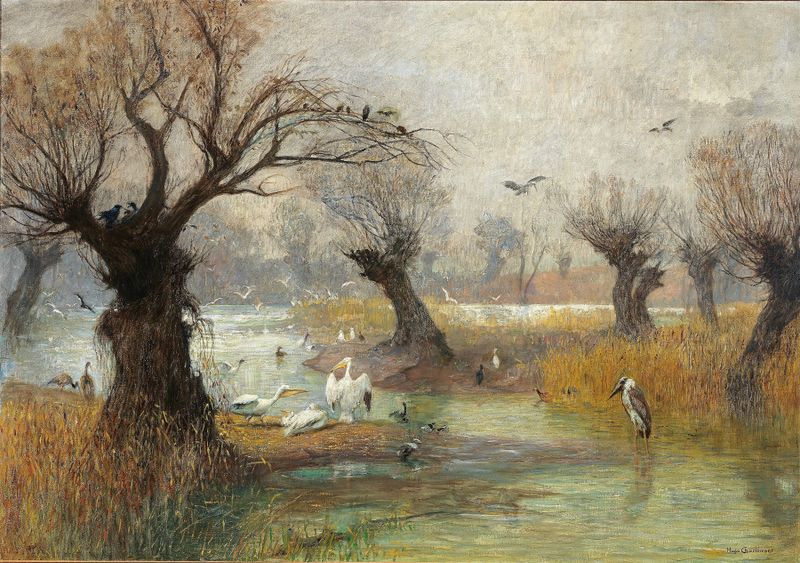
Pelikane am Flussufer
Hugo Charlemont





